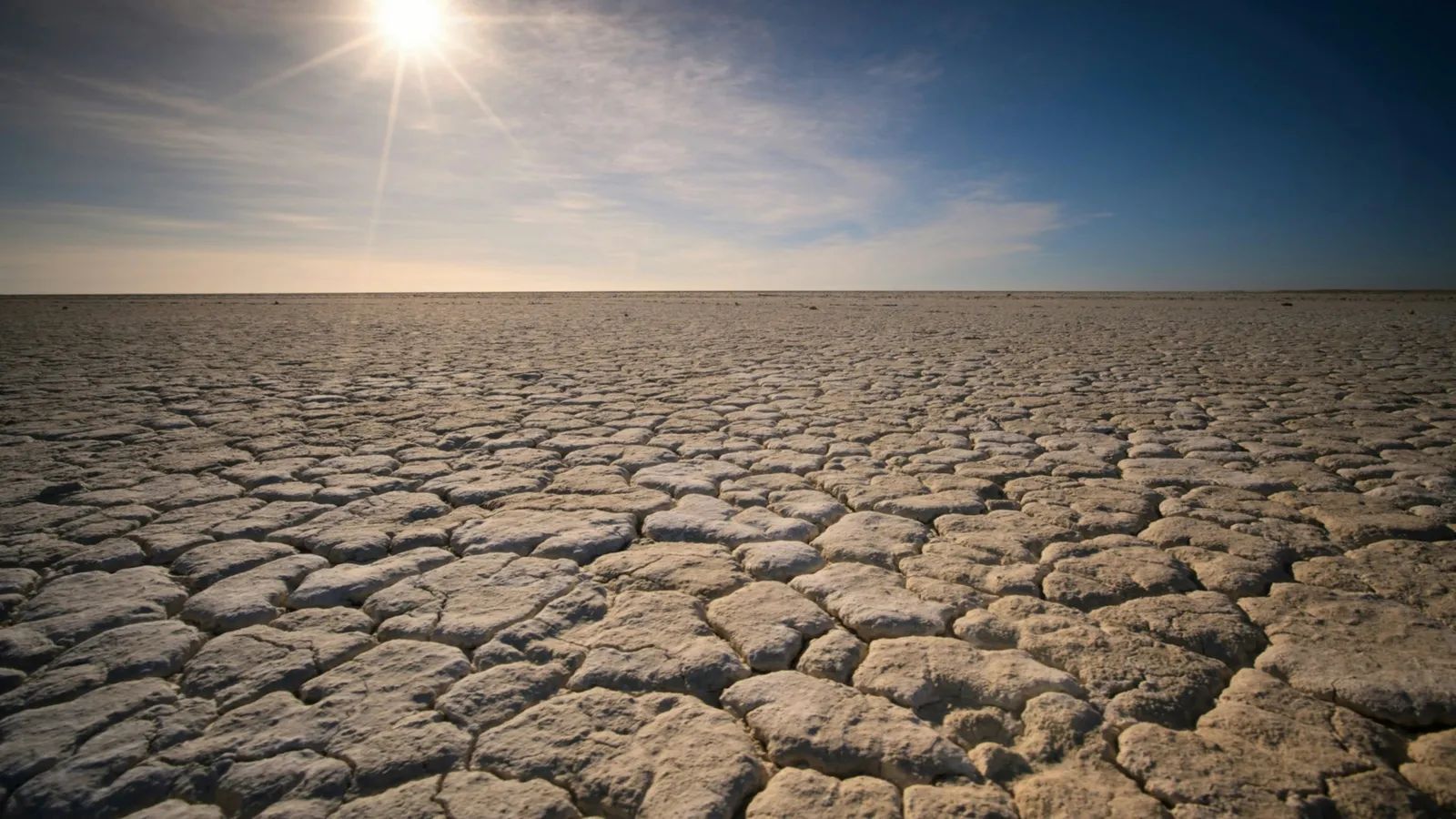
In 2025, drought covered roughly 30 percent of the world’s land surface, nearly twice the area affected in 2000. This expansion, driven by climate change, is altering how water-dependent pathogens move between hosts and humans in ways that contradict long-held assumptions. A new review of existing research highlights the resulting “drought-disease paradox,” showing that drier conditions can sometimes increase rather than reduce transmission risks. ([1])
Old Assumptions Meet New Realities
For years, researchers expected drought to limit waterborne illnesses and mosquito-borne diseases because both require standing water or moist environments to thrive. That logic held that shrinking water sources would simply reduce opportunities for pathogens to reach new hosts. Evidence now shows the opposite can occur when water bodies contract and concentrate animals, insects, and microorganisms in smaller areas.
The review paper, published in Trends in Ecology & Evolution, synthesized findings from 100 earlier studies to map these unexpected outcomes. It reveals that drought does not act as a simple brake on disease. Instead, it reshapes ecological interactions in ways that favor certain pathogens while disadvantaging others.
Mechanisms Driving the Paradox
As rivers, ponds, and wetlands shrink, animals and people are forced into closer proximity around remaining water points. This crowding raises the chance that parasites or bacteria move between species or from animals to humans. At the same time, stressed plants and wildlife may become more susceptible to infection, creating new pathways for disease.
Pieter Johnson, a disease ecologist at the University of Colorado Boulder and co-author of the review, noted that drought influences how plants and animals interact, including with parasites, and determines which pathogens gain or lose ground. The effect extends beyond immediate water shortage to broader changes in host behavior and immune response.
| Previous View | Updated Understanding |
|---|---|
| Drought reduces water sources and therefore lowers disease transmission | Drought can increase transmission by concentrating hosts and pathogens |
| Water-dependent pathogens decline uniformly | Some pathogens thrive while others decline, depending on ecological shifts |
| Focus mainly on direct water scarcity | Need to account for altered species interactions and stress responses |
Global Health Stakes and Remaining Gaps
Waterborne diseases already claim one child’s life every 90 seconds worldwide. As drought patterns intensify, health systems in affected regions face added pressure to monitor shifting risks rather than relying on historical patterns. Travelers and residents alike may encounter unfamiliar disease profiles in places once considered lower risk.
Significant uncertainties persist. The review underscores that scientists still lack detailed models capable of forecasting which specific pathogens will dominate under different drought scenarios. Without faster integration of ecological data into outbreak prediction tools, preparation efforts will remain reactive.
Next Steps for Research and Response
Experts emphasize the need for expanded field studies that track real-time changes in pathogen distribution during drought events. Improved collaboration between ecologists, hydrologists, and public-health agencies could help close the gap between observed patterns and actionable forecasts.
The review serves as a call to treat drought not only as a water and agricultural crisis but also as a driver of evolving disease dynamics. Addressing these links now may determine how effectively societies manage health risks in an increasingly arid future.