There’s a version of air travel that never shows up in the safety briefing or the airline’s glossy app. It plays out in small moments at the gate, a flight attendant’s quiet nod, a supervisor waving someone forward a few minutes early, a seat assignment that changes without anyone raising their voice.
Most travelers over 60 never ask for anything special, so they never find out how much flexibility actually exists inside the system. Some of it is federal law. Some of it is simply how experienced crews choose to run a cabin. Either way, it rarely gets announced, and it rarely shows up unless someone knows to ask.
1. Boarding early without a detailed explanation
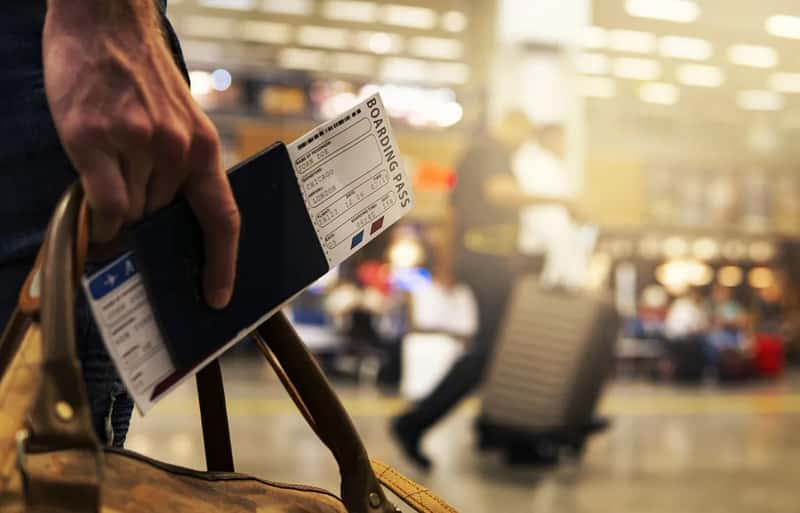
Most major U.S. airlines let passengers who need extra time board ahead of the general groups, and gate staff generally do not press for a diagnosis or paperwork. Most major airlines allow passengers who need a little extra time to board before the general boarding groups are called, and staff rarely make anyone justify the[1] reason in detail. A short sentence at the podium is usually all it takes.
American Airlines, for one, has folded this into its formal boarding structure rather than leaving it to chance. Travelers who need a bit more time to board, including families with children under the age of 2, will be allowed on board early, too.[2] The point is not to skip the line for convenience. It is to avoid the crush of the main boarding rush, when overhead bins fill fast and aisles get tight.
2. A seat that actually fits the body, not just the itinerary
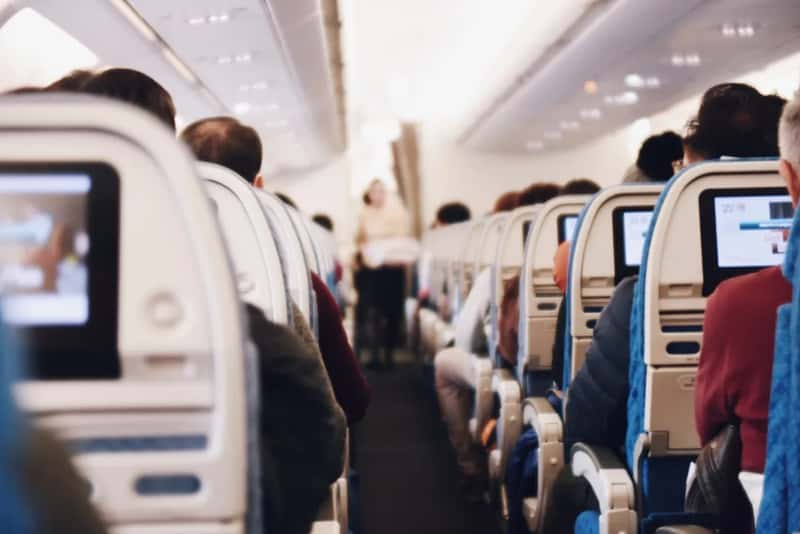
Seat assignment sounds minor until a flight runs five or six hours and a stiff hip or a bad knee is doing the complaining. Federal rules back this up directly. Airlines must provide specific seats to passengers who identify to airline personnel as needing the seat, if the seat exists on the same class of service on the aircraft, including a movable aisle armrest when the passenger uses an aisle chair to board and cannot transfer readily over a fixed aisle armrest.[3]
Legroom accommodations are written into the same framework. Greater leg room is provided when the passenger has a fused or immobilized leg.[3] Crews who notice someone shifting or wincing will often quietly check if a better seat has opened up, even without a formal request on file.
3. An adjoining seat for whoever is traveling with them
Traveling with a spouse, adult child, or aide who helps with mobility or medication is common for older flyers, and the rules recognize that a companion often isn’t optional. Airlines are required to provide upon request seats next to each other for passengers traveling with personal-care attendants, readers, or interpreters.[4] This keeps assistance close instead of scattered across rows.
It also reduces how often a flight attendant has to step in mid-flight, which airlines have practical reasons to want to avoid. As one gallery of crew practices put it plainly: this isn’t just about convenience, it’s often the difference between a passenger managing independently and needing crew intervention mid-flight.[5] Booking early and naming the specific need tends to make this smoother.
4. A hand with the overhead bin, without being asked twice
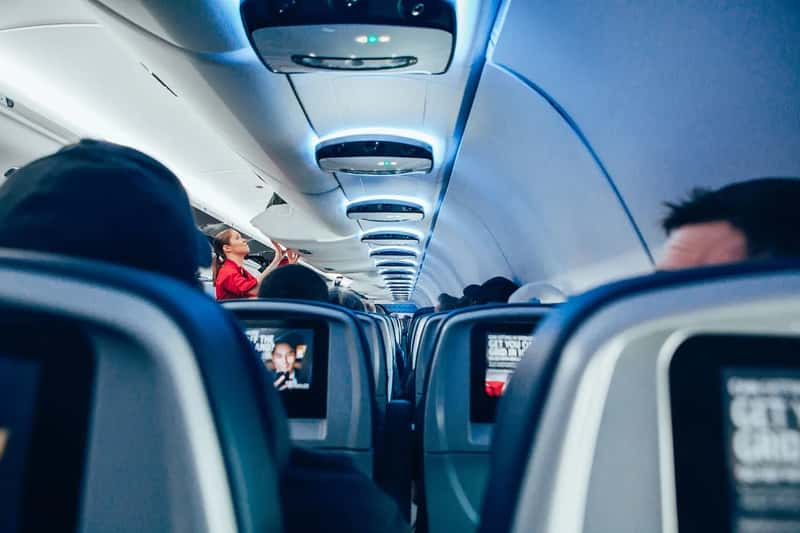
Lifting a rolling bag over your head is not a small task after 60, especially with a shoulder or back that has seen better decades. Crews are not required to lift every passenger’s luggage, but in practice, plenty step in. Flight attendants are not obligated to lift every bag for every passenger, but in practice many quietly step in when they see someone struggling, particularly during boarding for older travelers who requested assistance in advance.[1]
This is one of the clearer reasons airlines keep offering early boarding to begin with. Airlines that provide pre-boarding do so partly for this exact reason.[1] A little extra time and a little extra room near the bin tends to solve the problem before it starts.
5. Access to an onboard wheelchair for the lavatory
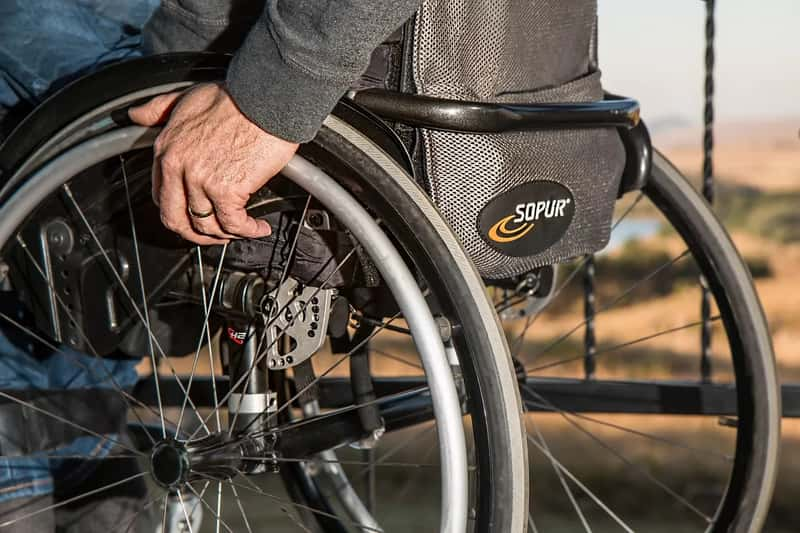
Few passengers realize this piece of equipment exists until they see it rolled down the aisle for the first time. It’s a narrow chair built specifically to move through a plane’s tight center aisle, and it’s required by law on qualifying aircraft. Any airplane that seats more than 60 passengers must make an onboard wheelchair available to a disabled passenger who requests one, regardless of the availability of wheelchair accessible lavatories.[6]
Crews are trained to help with the transfer, though there are limits to what they’ll physically do. Flight attendants assist passengers as they transfer between their seat and the wheelchair, but they will not generally lift or carry passengers.[6] Requesting this in advance, ideally 48 hours out, tends to make the process far smoother once wheels are up.
6. A calmer path through TSA screening
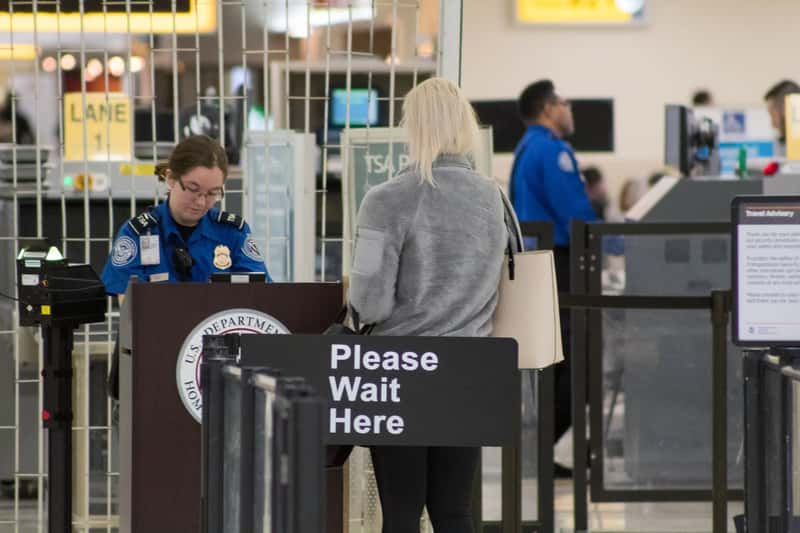
Airport security isn’t run by the airline, but it shapes the whole travel day, and there’s a real accommodation built in for older flyers. Passengers 75 and older can receive some form of expedited screening through risk-based intelligence-driven security that allows TSA to better focus resources on passengers who more likely pose a risk.[7] That includes footwear. Passengers may leave on their shoes, however removal of light jackets is required for Advanced Imaging Technology screening.[7]
For anyone who has trouble standing for the full screening process, there’s a further option. Passengers can request to be seated during this portion of the screening, and passengers 75 and older who are unable to stand for screening will be screened through other security methods.[7] It’s a small adjustment, but for someone with balance issues or joint pain, it removes one of the more physically demanding parts of the entire trip.
7. Wheelchair or cart assistance from curb to gate
The distance between an airport entrance and a departure gate has grown considerably over the decades, and that walk alone can be exhausting for older travelers. Airlines are legally obligated to help with it. Passengers have the right to assistance at airports.[3] That covers wheelchairs, motorized carts, and staff who walk alongside a passenger who just needs a bit more time and support.
The person pushing that wheelchair often isn’t an airline employee at all, but a contracted ground service worker trained specifically for this task. Requesting it at booking, or at check-in with enough lead time, tends to produce a smoother handoff between the curb, security, and the gate. It’s one of the most used, least discussed accommodations in the entire system.
8. Quiet rest areas or accommodation during long layovers
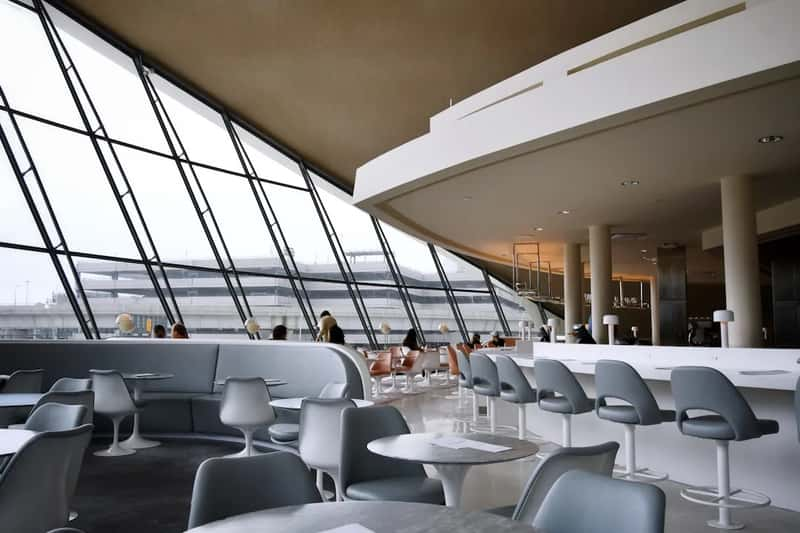
A three-hour layover in a hard plastic gate chair is a different experience than most people over 60 need to have. Gate staff have more discretion here than passengers usually assume. Gate agents may also provide access to quiet rest areas, medication refrigeration, or other comfort accommodations for senior travelers who ask directly.[8]
The tone of the request matters more than most people think. The phrase that actually works involves identifying as a senior traveler with medical considerations and asking calmly whether there are quieter rest areas or accommodation options during a layover, since tone matters and demanding rarely works as well as asking kindly.[8] These aren’t advertised benefits, so they tend to go to the people who simply ask.
9. Priority seating near accessible facilities on larger aircraft
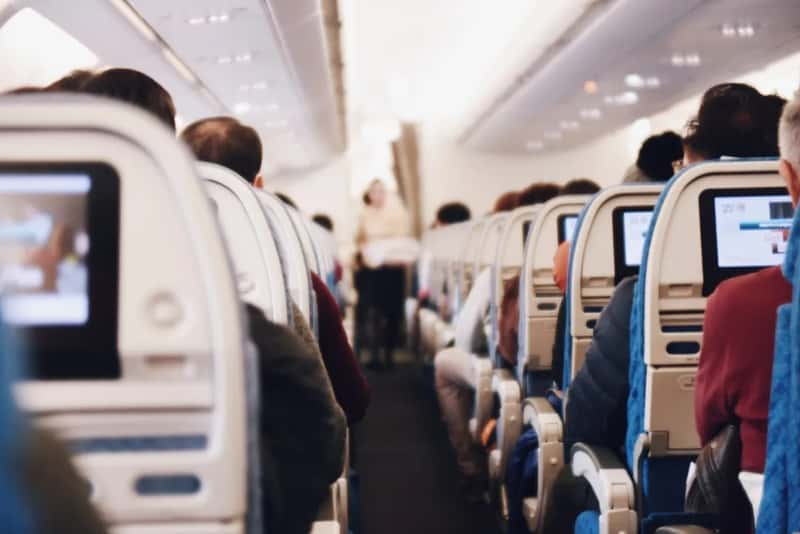
On wide-body jets flying long international routes, where a passenger sits can determine how far they have to walk for basic necessities. This matters more than it sounds, especially for anyone managing a chronic condition or recovering from a recent procedure. On aircraft with an upper and lower deck, an elderly passenger might want to avoid a seat reachable only[5] by stairs or a long corridor from the nearest accessible restroom.
Federal accessibility rules require certain aircraft to include features that support this kind of seating request. New aircraft delivered to U.S. airlines after April 1992 are required to have features for passengers with disabilities that include movable aisle armrests on at least half of the aisle seats, priority stowage space for wheelchairs in the cabin for aircraft with 100 or more seats, and at least one accessible lavatory if the aircraft has more than one aisle.[9] Naming the specific concern when booking, rather than a vague preference, tends to get the request taken more seriously.
10. Extra time and a quieter deplaning process
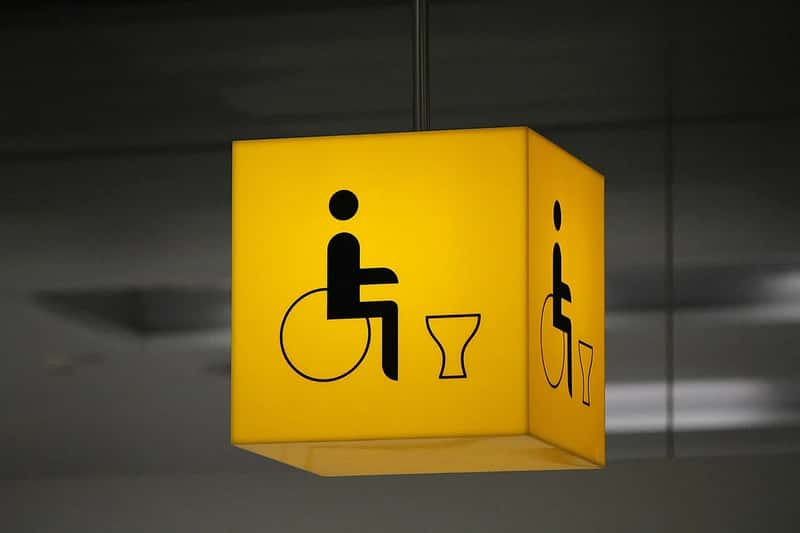
The rush to stand up the second the seatbelt sign turns off is one of the more chaotic parts of any flight, and it’s genuinely hard on someone with limited mobility. Crews often ask passengers to remain seated briefly so that anyone needing extra time or an aisle chair can exit first, without a crowd pressing in behind them. This isn’t written into every airline’s public policy, but it’s a routine judgment call made by flight attendants who have done this job long enough to recognize who needs the space.
It ties directly back to the same wheelchair assistance rules that apply at boarding. Passengers who arranged an onboard wheelchair or ground wheelchair for arrival are protected by strict handling rules once the doors open. Passengers may not be left unattended in a ground wheelchair or boarding chair in which the passenger is not independently mobile for more than 30 minutes.[4] That timing rule alone tells you how seriously this part of the process is meant to be handled.
11. A seat change to fix a problem quietly, without a scene
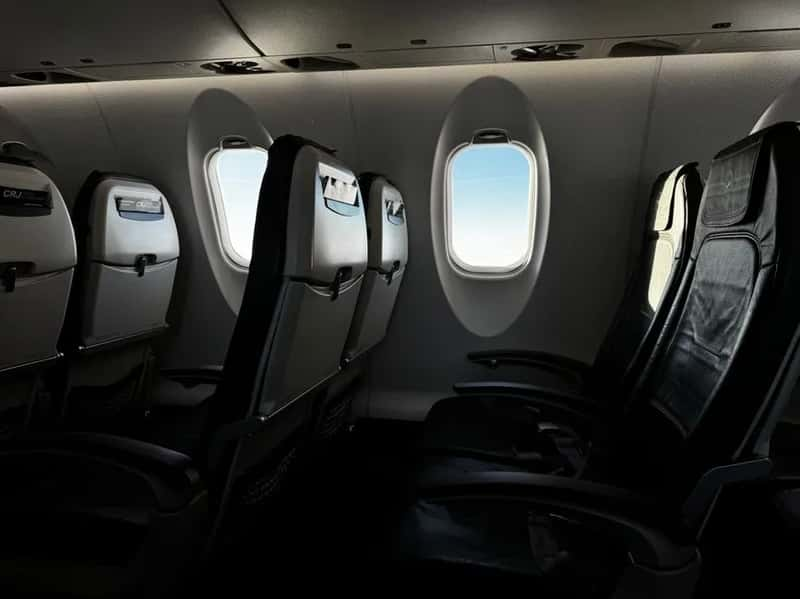
Sometimes the accommodation isn’t something requested in advance at all. It’s a flight attendant noticing, mid-flight or right at boarding, that someone is struggling in their assigned seat and finding a way to move them without drawing attention to it. Flight attendants who notice a passenger shifting uncomfortably will often quietly offer to help find a better spot if one opens up.[5]
Some airlines have built formal discretion into this practice under what are sometimes called sensitive traveler policies. Under sensitive traveler policies, gate agents at several major carriers can quietly move senior passengers to exit rows, aisle seats, or even premium economy at no charge, provided the request is framed as a comfort or mobility need rather than a simple preference.[10] It’s rarely guaranteed and depends heavily on how full the flight is, but it happens more often than most travelers expect.
None of these eleven accommodations require a passenger to prove much of anything beyond stating a need clearly and calmly. Some are backed by federal regulation under the Air Carrier Access Act, enforced through the Department of Transportation. Others are simply habits built into how experienced gate agents and flight attendants do their jobs, passed down through training rather than posted on a website.
The common thread running through all of them is timing and clarity. Requests made at booking or check-in, stated plainly and without over-explaining, tend to get honored more consistently than ones raised in a rush at the gate. For travelers over 60, knowing that this quiet flexibility exists, and knowing roughly how to ask for it, often makes the difference between a flight that feels manageable and one that doesn’t.