Most people think being a “good” flyer just means showing up early and packing light. That’s cute, but it’s not what separates the travelers gliding through security from the ones sweating through a TSA pat-down while their flight boards without them. The real differences are smaller, weirder, and mostly invisible to the average passenger standing in line right next to them.
The gap has actually widened over the past year, not shrunk. New scanners, new ID rules, and new fees have quietly rewritten the airport experience, and most travelers haven’t gotten the memo yet. Here’s what frequent flyers, TSA insiders, and the fine print of 2025 and 2026 policy changes actually reveal.
#13 – They Know Which Checkpoint Has the New Scanners Before They Pack
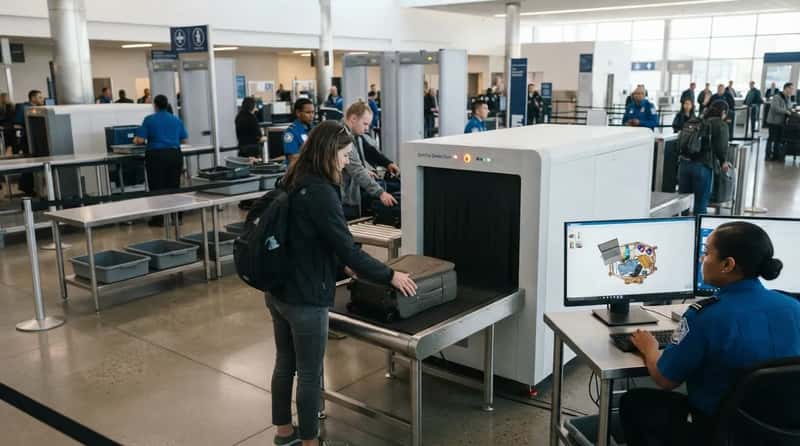
Frequent flyers no longer pack liquids and laptops the same way at every airport, because the rules genuinely aren’t the same everywhere anymore. The TSA has installed CT scanners in 285 U.S. airports, roughly two-thirds of the 435 airports with screening checkpoints. That means a third of the country is still running the old rules while the rest quietly moves on.
Fast Facts
- 285 of 435 U.S. airport checkpoints now run newer CT scanners
- That’s roughly two-thirds of all screening checkpoints nationwide
- The remaining third still enforces the old liquids-and-laptops rules
Here’s the part most travelers miss: some checkpoints already let passengers leave liquids and laptops packed, but TSA won’t flip the switch nationwide until every lane has the same equipment, because partial rollout just creates confusing gaps instead of fixing anything. Pros check their departure and connecting airports ahead of time instead of guessing. Everyone else finds out the hard way, mid-line, with a bin full of confiscated sunscreen.
#12 – They Don’t Assume “Shoes Stay On” Means the Old Rules Are Gone
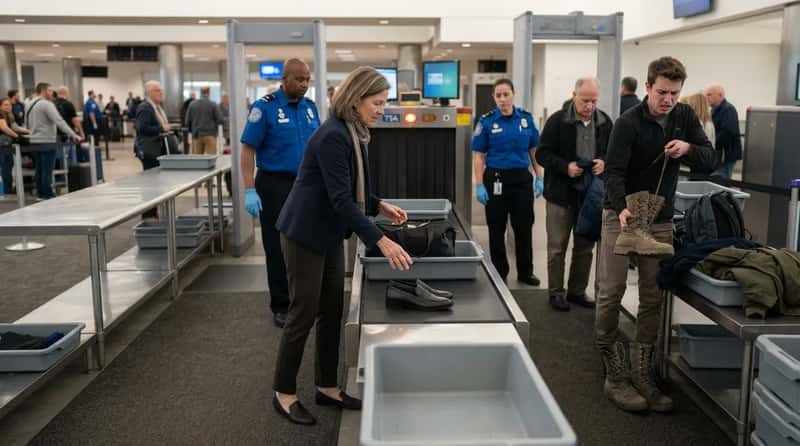
Here’s a surprising one: the shoe rule really did change, but the habit of pros hasn’t. In July 2025, TSA eliminated the long-standing requirement for most passengers to remove their shoes at security checkpoints, citing improved screening technology. That’s a genuine, permanent shift, not a rumor floating around a Facebook group.
But experienced flyers still keep their shoes easy to slip off, because “most passengers” isn’t “all passengers.” Officers retain full discretion to ask individual travelers to remove footwear for extra screening, and pros treat that as a live possibility, not a relic. Everyone else wears complicated boots with six eyelets and acts shocked when they’re the one pulled aside, turning a 40-second checkpoint into a five-minute production.
#11 – They Fixed Their ID Problem Months Before Deadline Panic Hit
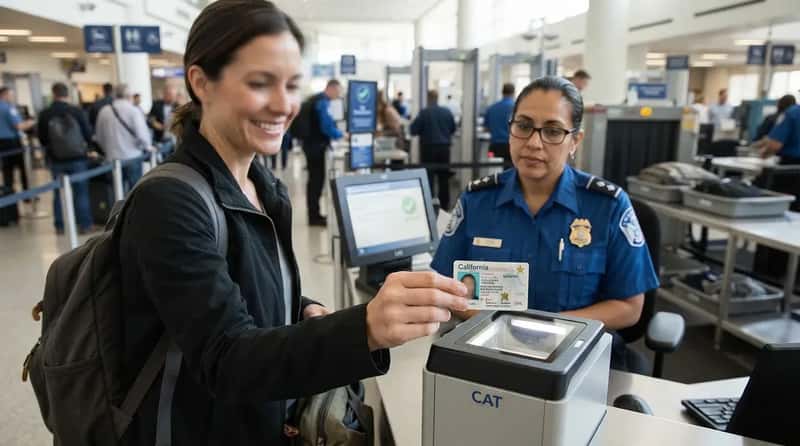
This is the one that’s actually cost people flights, not just time. REAL ID enforcement began on May 7, 2025, and state-issued driver’s licenses that aren’t REAL ID compliant are no longer accepted as valid ID at airports. That deadline came after nearly two decades of delays, and plenty of travelers assumed it would slip again. It didn’t.
Now there’s a second wave most people still don’t know about. Travelers without a REAL ID or other approved identification will face a $45 fee, dubbed the “TSA ConfirmID Fee,” starting February 1, 2026, and must verify their identity through a biometric or biographic system before passing through a checkpoint. Pros checked their license for the star months ago. Everyone else is about to find out what “additional screening” really means.
#10 – They Picked Their Trusted Traveler Program Based on Math, Not Hype
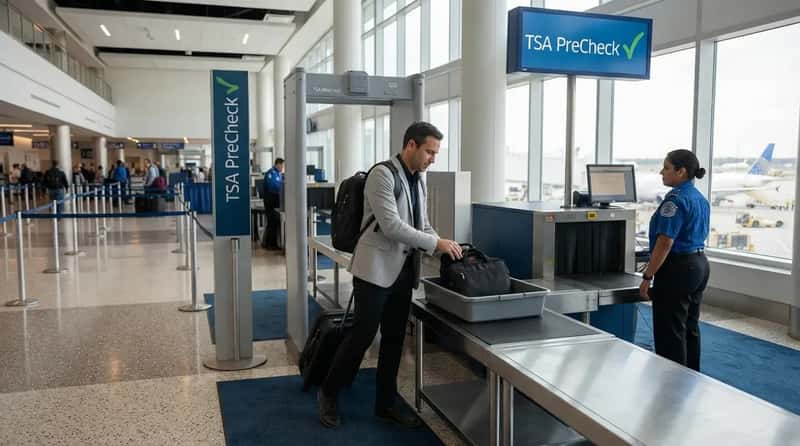
Not every frequent flyer program is worth the same money, and pros know exactly which one fits their actual travel pattern. TSA PreCheck is available at over 200 U.S. airports, costs $78 to $85 to enroll, and lasts five years once approved. That’s a genuinely different value proposition than a membership you renew every twelve months.
Quick Compare
- TSA PreCheck: $78-$85 for five years, 200+ airports, speeds up the actual security line
- CLEAR: $209 per year, uses biometric lanes to skip ahead at the gate
- Smart move: Road warriors often stack both; occasional flyers usually just need PreCheck
Compare that to CLEAR, which works differently and costs differently. CLEAR runs electronic gates for members, and a CLEAR+ membership costs $209 annually. Pros stack the two together if they’re road warriors, or skip CLEAR entirely if they only fly twice a year. Everyone else buys whichever one had the flashiest kiosk ad at the airport.
#9 – They Know the Face Scan at the ID Podium Is Optional
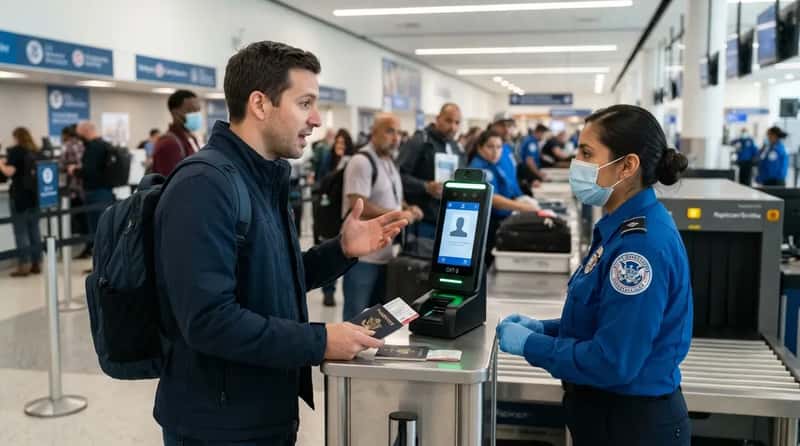
This is the habit that genuinely surprises people the first time they hear it. Government oversight reporting in 2025 said CAT-2 facial recognition devices were deployed at more than 250 U.S. airports, with more recent estimates putting current deployment closer to 350 airports nationwide. Most travelers walk up, get scanned, and never ask a single question.
But here’s what almost nobody realizes: facial recognition at TSA checkpoints is completely voluntary, and travelers have the legal right to decline the scan and request a manual ID check instead. No special paperwork, no advance notice required. Pros who’d rather not have their face scanned simply say so out loud. It’s a small stand, but it’s one most flyers don’t even know they’re allowed to take.
#8 – They Bring an Empty Bottle, Never a Full One
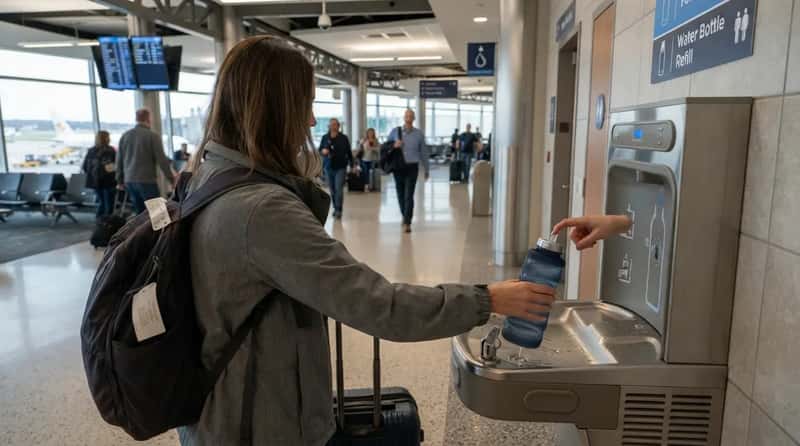
This trick sounds too simple to matter, but it saves real money and real hassle at every single airport in the country. Empty bottles pass through screening with no issue, so pros bring a collapsible or reusable bottle empty and fill it after the checkpoint. No confiscation, no overpriced $6 water bottle at the gate.
Everyone else either buys bottled water twice or tries to sneak a full one through, hoping the officer doesn’t notice. It usually gets noticed. The habit isn’t about being cheap, either. It’s about not wasting five minutes of a tight connection arguing over a $2 bottle of water that was never going to survive the checkpoint anyway.
#7 – They Know Peanut Butter Can Ruin a Morning
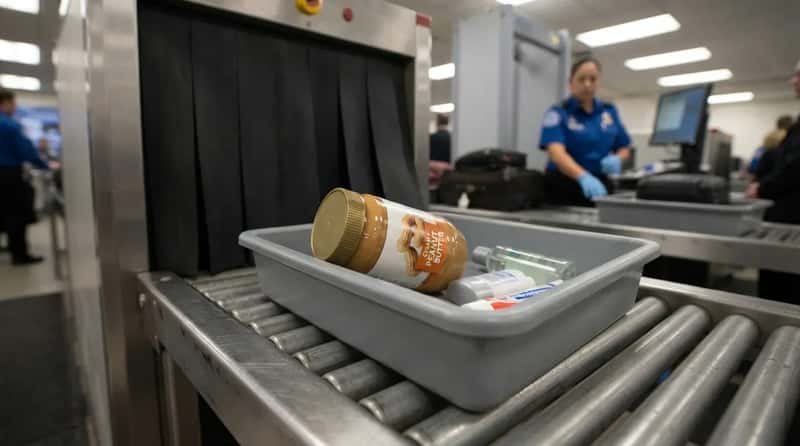
Here’s the one that catches even seasoned travelers off guard. Common items travelers forget count as liquids include toothpaste, shampoo, conditioner, lotion, sunscreen, makeup, hair gel, deodorant, peanut butter, jam, salsa, and dips. Yes, peanut butter. It behaves like a gel to a scanner, and TSA treats it exactly that way.
Worth Knowing
- Peanut butter, hummus, and salsa all count as “liquids” to a scanner
- Toothpaste, lotion, sunscreen, and hair gel fall under the same 3.4-ounce cap
- Anything spreadable or gel-like gets treated the same as a bottle of water
TSA still catches items travelers forget about constantly, including peanut butter, hummus, dips, and similar spreads when they exceed the 3.4-ounce limit. Pros pack spreads and dips into checked luggage automatically now, without even thinking about it. Everyone else loses a jar of homemade salsa to the checkpoint trash can and spends the whole flight annoyed about it.
#6 – They Stopped Trusting Their Bulging Carry-On
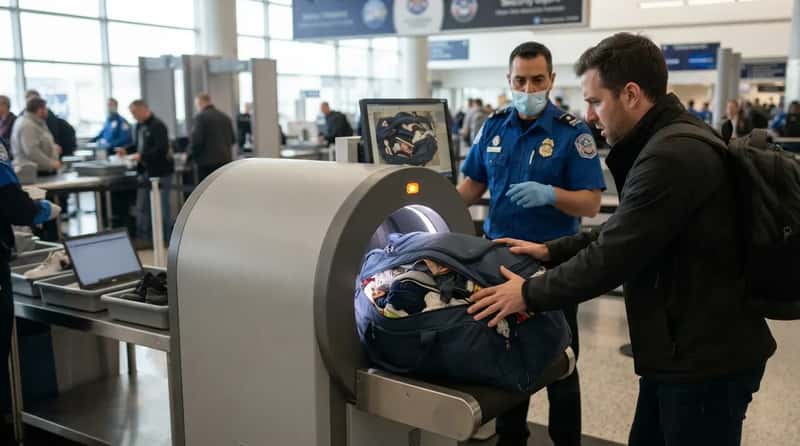
Newer technology created a strange new problem nobody saw coming. Newer CT machines let travelers keep laptops and liquids packed, but their smaller openings mean some bulging carry-on bags no longer fit through the scanner at all. The upgrade meant to make screening faster is, for overpacked bags, actually creating a brand-new bottleneck.
Pros who fly often now pack flatter, more compressed bags specifically because of this. They know a stuffed backpack that used to slide through a standard X-ray might get flat-out rejected by a CT machine’s tighter frame. Everyone else keeps cramming souvenirs into an already-bursting duffel and wonders why they got flagged for a manual bag check at a checkpoint that’s supposedly faster than ever.
#5 – They Never Trust the Rules From Their Last Trip
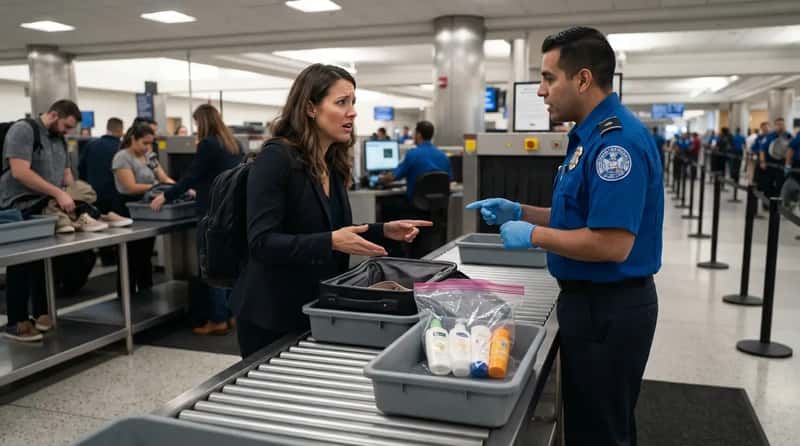
This is the habit that prevents the most confusion, and almost nobody talks about it. Airport rules aren’t just inconsistent airport-to-airport anymore; they’re inconsistent terminal-to-terminal at the exact same airport. One traveler flew through LAX in December 2025 with 6-ounce bottles after reading about CT scanners going in nationwide.
The agent explained that particular checkpoint lacked CT scanners, and everything over 3.4 ounces got thrown out anyway.
Traveler account, LAX, December 2025
Pros treat every single trip as its own fresh situation, no matter what worked last month. Everyone else assumes last month’s experience still applies, and gets burned standing right there at the bin.
#4 – They Have Their Boarding Pass Loaded Before They Leave the Car
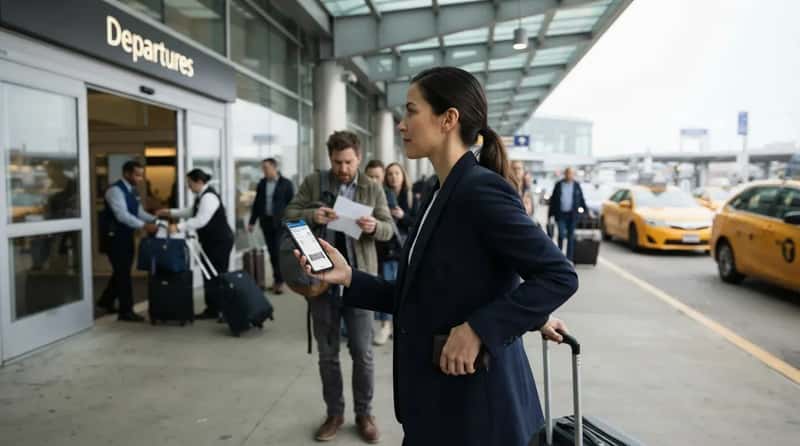
This one’s less about technology and more about not being the person holding up the line at 6 a.m. Digital ID and mobile boarding passes have quietly become standard tools for anyone who flies more than a couple times a year. Fourteen states now support driver’s license or state ID in Apple Wallet, with Illinois becoming the latest to launch mobile ID capabilities in November 2025.
Pros have their airline app open, their boarding pass loaded, and their ID ready to display before they’re even through the terminal doors. Everyone else is still digging through a bag for a printed itinerary while three people wait behind them, phones already scanned and moving toward the gate.
#3 – They Know PreCheck Still Beats the Fancy New Scanners
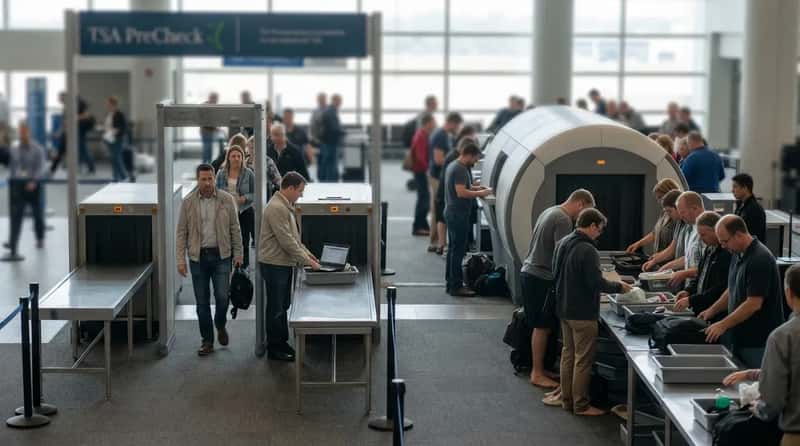
Here’s a genuinely controversial take that pros have quietly accepted while everyone else assumes new tech made expedited programs pointless: it hasn’t. As CT scanners become more common in standard lanes, the case for PreCheck actually got more nuanced, not weaker. TSA has said PreCheck retains unique advantages such as expedited screening, shorter lines, and fewer requirements for removing shoes, belts, and light jackets, benefits that have nothing to do with scanner deployment.
Why It Stands Out
- Shorter, dedicated lines even at checkpoints with the newest CT scanners
- No need to remove shoes, belts, or light jackets in the PreCheck lane
- Perks that have nothing to do with which scanner happens to be installed
In other words, the scanners solve the liquids-and-laptops problem. They don’t solve the line problem. Pros still pay for PreCheck because the line itself is the real time-saver, not the packing convenience. Everyone else assumes the new scanners made the whole program obsolete, and ends up standing in the exact same long line as before.
#2 – They Watch the Line in Front of Them, Not Their Phone
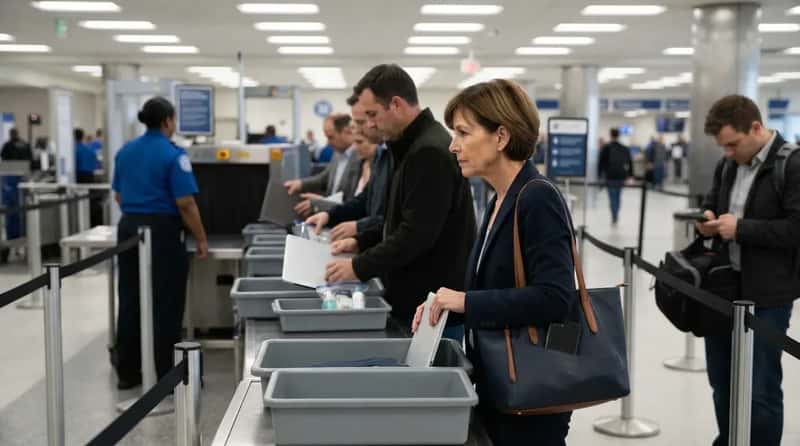
This sounds almost too simple to be a real strategy, but it’s one of the most reliable habits frequent flyers swear by. Because CT scanner rollout is inconsistent even within a single airport, the smartest move isn’t researching your airport online beforehand. It’s watching what the travelers directly ahead of you are doing at the actual checkpoint.
If everyone in front is pulling out laptops and liquids bags, that lane doesn’t have the new tech yet, no matter what an article said last month. Pros adjust instantly and follow the visible pattern. Everyone else confidently tells the officer “the new rules mean I don’t have to take this out,” and gets corrected in front of a growing line of irritated strangers.
#1 – They Accept That the Officer Always Has the Final Word
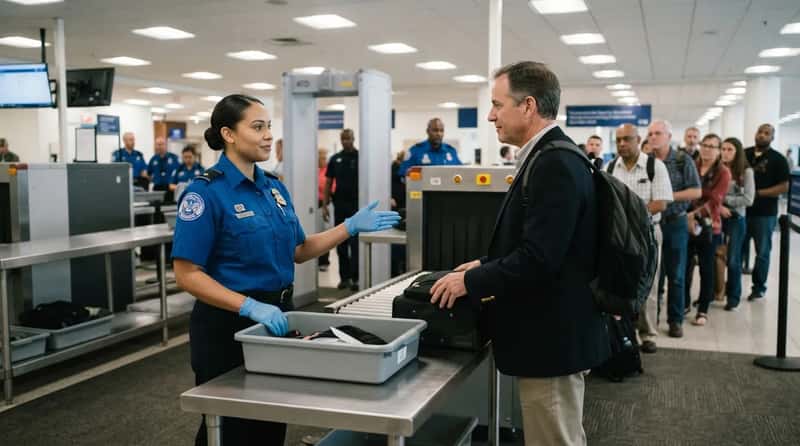
This is the habit that matters more than every scanner, app, or membership card combined, and it’s the one most travelers resist the hardest. No matter what technology exists, what a blog post claims, or what happened on your last trip, TSA officers at each specific checkpoint determine the actual procedure based on what equipment is running that day.
Pros walk up to every checkpoint assuming they know nothing about that specific lane, that specific officer, or that specific day. It’s an oddly humble habit for people who fly constantly, and it’s exactly why they rarely get stuck arguing at security. Everyone else treats airport rules like a fixed rulebook instead of a live, shifting situation, and that mismatch is where almost every meltdown at security actually starts.
None of these habits require special access, elite status, or insider connections. They’re mostly about paying attention to what’s actually changed instead of relying on what used to be true. Airports right now are running two different systems side by side, old and new, and the travelers who notice that distinction are the ones who breeze through while everyone else gets stuck explaining themselves at the checkpoint.
Which of these did you already know, and which one is about to change how you pack for your next flight?