When most people dream about crystal-clear turquoise water and beaches that look straight out of a travel magazine, they think they need to book a flight halfway across the globe. The Maldives. The Seychelles. Some exotic place that requires planning months in advance, dropping thousands of dollars, and dealing with international travel headaches.
Here’s the thing, though. You don’t.
Tucked away in America’s own backyard are island paradises that rival anything the Indian Ocean has to offer. Places where the water is so clear you can see your toes wiggling in the sand twenty feet below. Best part? If you’re a US citizen, you can visit without ever touching your passport. Sounds crazy, but it’s true.
The Remote Wonder: Dry Tortugas National Park
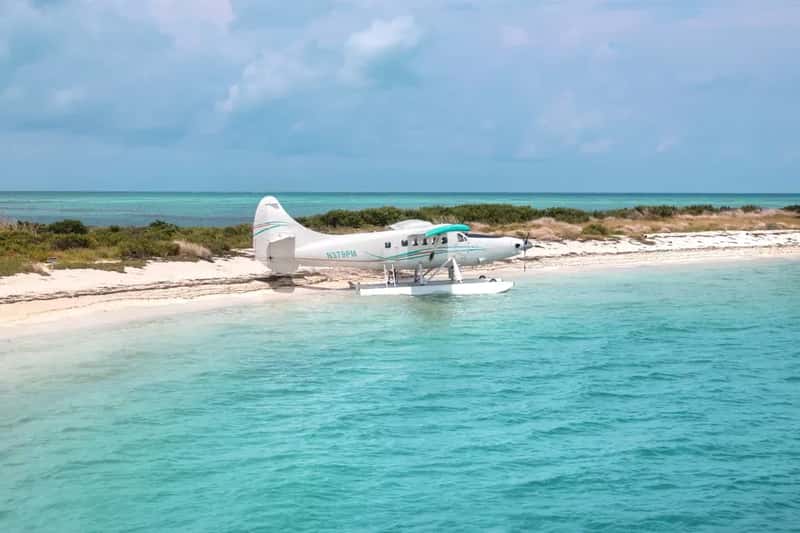
Sitting seventy miles west of Key West, Florida, the Dry Tortugas has the clearest water in Florida, by far, with its remote location and deep surrounding water allowing the water to be extremely clear and free from suspended debris. This isn’t some crowded tourist trap where you’re fighting for elbow room on the sand.
Accessible only by boat or seaplane, the park is known the world over as the home of magnificent Fort Jefferson, picturesque blue waters, superlative coral reefs, and marine life. The journey itself feels like an adventure. Visibility typically ranges from 60 to 120 feet, making it absolutely ideal for snorkeling and diving.
Think about that for a second. Over a hundred feet of visibility underwater. That’s insane.
- Location: 70 miles west of Key West in the Gulf of Mexico
- Park Size: Over 99% water – approximately 100 square miles total
- Marine Life: Over 400 species of reef fish, sea turtles, nurse sharks
- Historical Feature: Fort Jefferson – the largest masonry structure in the Western Hemisphere
What Makes Dry Tortugas Water So Exceptionally Clear
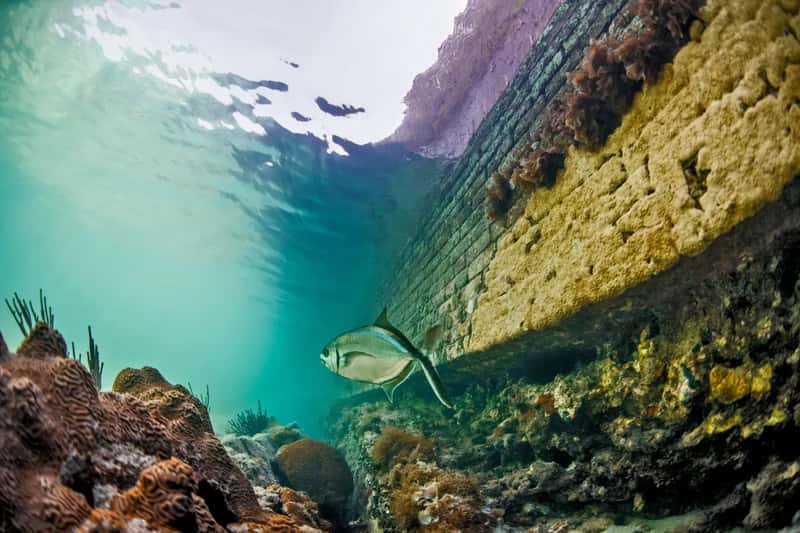
There’s actual science behind why this place looks like someone turned up the saturation filter on reality. The water in Dry Tortugas National Park is renowned for its exceptional clarity due to several factors, with the islands situated far from major sources of pollution, resulting in minimal sediment runoff and pollutants in the water.
Nearly 99 percent of the park’s hundred square miles are submerged beneath crystalline waters. It’s basically a massive underwater wonderland with a few tiny islands poking out. The clearest conditions typically occur from November to April due to fewer winds.
The surrounding deep ocean acts like nature’s own filtration system. Without rivers dumping sediment or urban runoff clouding things up, the water stays pristine year-round.
Getting to Dry Tortugas: Ferry or Seaplane
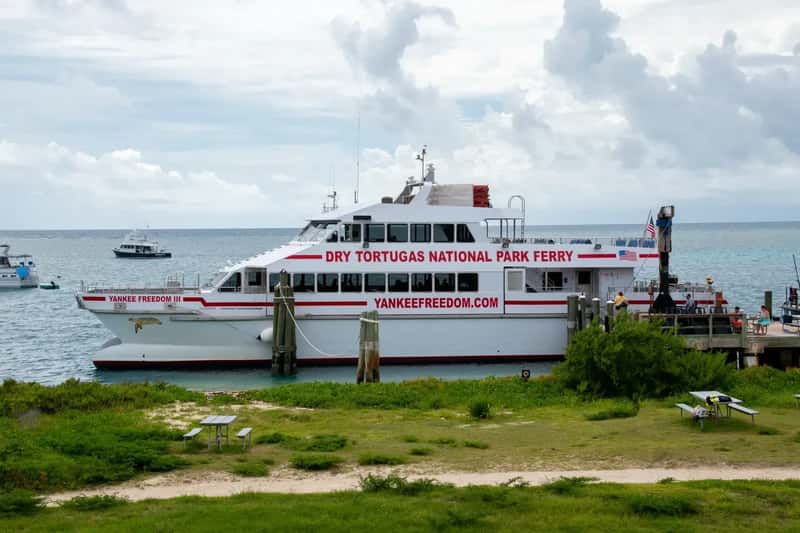
Located 70 miles off Key West, Florida’s coast, there are three ways to get to Dry Tortugas National Park: taking your own boat, a charter seaplane, or the most popular option, taking the Yankee Freedom Ferry. Let me tell you, each option has its perks.
The ferry ride takes about two and a quarter hours each way. A day trip to Dry Tortugas aboard Yankee Freedom costs $220 for adults and $165 for children age 4-16 (2024-2025 rates), with the price including entrance fees, a 45-minute ranger-led tour of Fort Jefferson, use of snorkel equipment, and two meals. Not exactly cheap, but considering what you get, it’s honestly worth every penny.
The seaplane flight takes less than 45 minutes, giving visitors the most time on the island. If you’ve got the budget and want to maximize your beach time, this is the move.
Quick Comparison:
| Option | Travel Time | Island Time | Cost (Adult) |
|---|---|---|---|
| Yankee Freedom Ferry | 2.5 hours each way | 4.5 hours | $220 |
| Seaplane (Half-Day) | 40 minutes each way | 2.5 hours | $470+ |
| Seaplane (Full-Day) | 40 minutes each way | 6.5 hours | $820+ |
Puerto Rico’s Hidden Gem: Flamenco Beach on Culebra
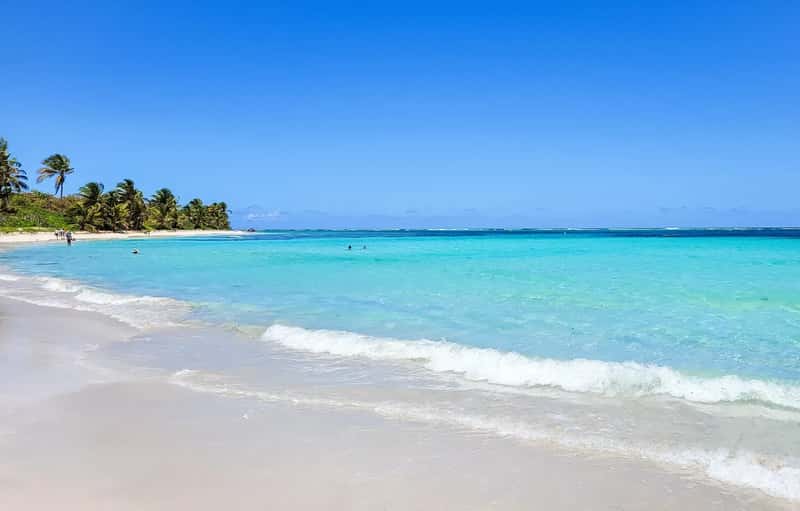
Now let’s talk about the other contender for America’s clearest water. Ranked as one of the top beaches in the world, Flamenco is a postcard-perfect stretch of white sand and turquoise waters, with the beach being practically waveless, which makes it ideal for snorkeling, swimming, and unwinding.
I know what you’re thinking. Puerto Rico? Really? Yes, really. Characteristic of Flamenco is the beach’s white sand and shallow, clear waters. This mile-long crescent of paradise on the island of Culebra consistently shows up on lists of the world’s best beaches, and it absolutely deserves the recognition.
Accessible by plane or boat from Puerto Rico, it ranked the 3rd best beach in the world with a TripAdvisor Travelers’ Choice Award in 2013, and regained its Blue Flag Beach international distinction in 2016. Those aren’t participation trophies.
Beach Highlights:
- Beach Length: 1 mile of white sand
- Location: Culebra Island, 20 miles off Puerto Rico’s east coast
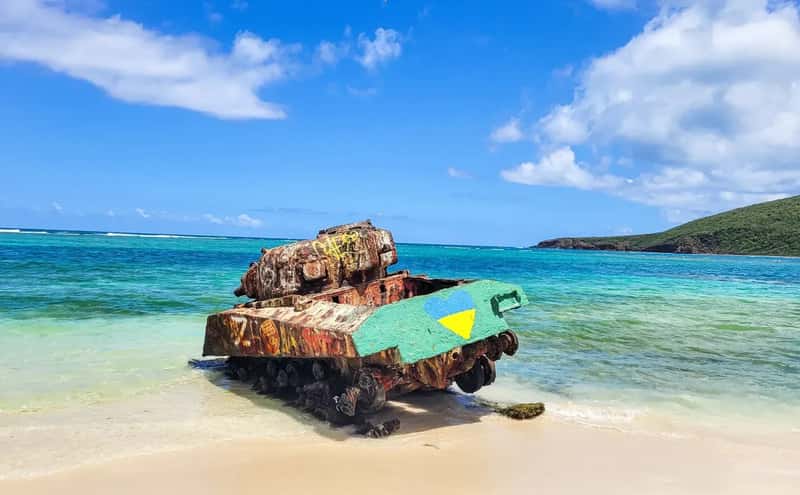
- Features: Iconic WWII tanks, calm protected waters, lifeguards on duty
- Amenities: Food kiosks, bathrooms, showers, camping areas, parking
(Note: Puerto Rico is a US territory, meaning US citizens do not need a passport to visit, and the currency is the US Dollar.)
Why Culebra Doesn’t Require a Passport
Here’s where it gets really good for American travelers. United States citizens and permanent residents don’t need a passport to travel to Puerto Rico or the US Virgin Islands. Since Culebra is part of Puerto Rico, it’s technically domestic travel.
Puerto Rico is a territory of the United States, and citizens of the United States do not require a passport to visit the island. Your driver’s license works just fine. It’s like flying to Hawaii, except the water somehow looks even more unreal.
For international visitors, the same visa requirements that apply to entering the mainland United States apply here. Still, for roughly half the country’s population, this Caribbean paradise is a domestic flight away.
Reaching Flamenco Beach: Ferry vs Flight Options
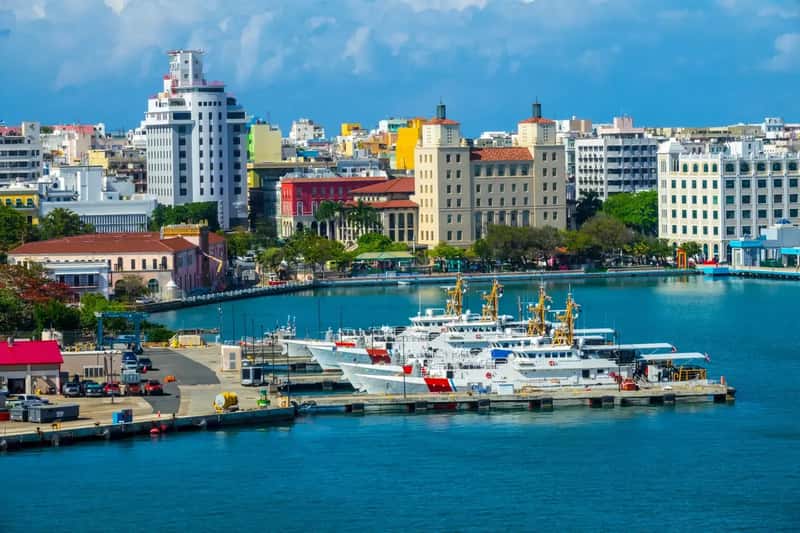
Flamenco Beach is located on the island of Culebra, just 20 miles off the east coast of Puerto Rico, and you cannot drive directly there, but must drive to the ferry terminals in Ceiba, which is an hour-and-a-half-long drive from San Juan, then take a taxi van from the terminal port that drives you directly to Flamenco Beach.
Ferry tickets cost $2.50 each way (plus a $2 environmental fee), with the ferry to Culebra taking about one hour from the Ceiba Ferry Terminal. That’s ridiculously affordable. Honestly, I’ve spent more on a sandwich at the airport.
The downside? The sea can be notoriously rough between Puerto Rico and Culebra, so ferry travel isn’t recommended for those prone to sea sickness or those on tight schedules, as you should expect hiccups. Pack the Dramamine.
Flights take just 15 to 20 minutes from Ceiba Airport, with one-way fares starting at roughly $50 from Ceiba and $90 to $115 from San Juan. Way faster, and your stomach will thank you.
Getting There at a Glance:
- Ferry from Ceiba: $2.50 per person + $2 environmental fee | 45-60 minutes
- Flight from Ceiba: ~$50 one-way | 15-20 minutes
- Flight from San Juan: $90-$115 one-way | 15-20 minutes
- Taxi to Beach: ~$5 from Culebra ferry terminal
- Beach Parking: ~$6.25 (cash only)
- Beach Entrance: $2 per person
Activities and Marine Life at Both Destinations
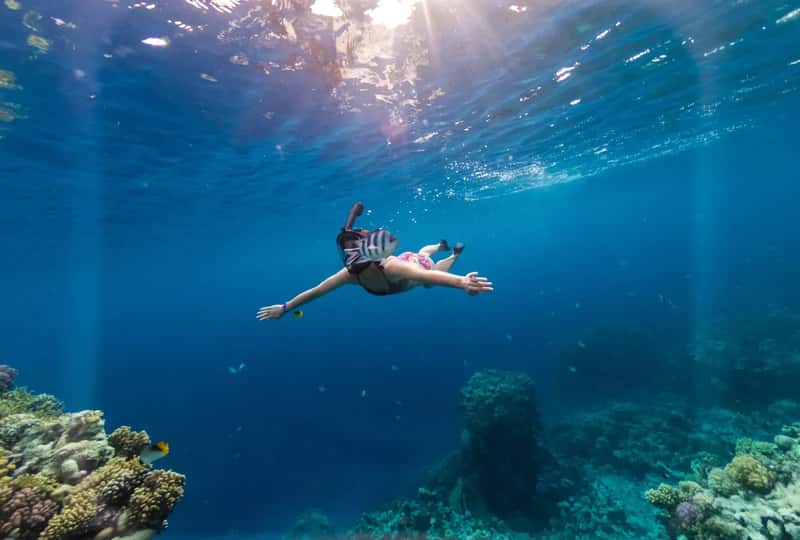
Both locations offer spectacular snorkeling. The Dry Tortugas park is home to over 400 species of reef fish, sea turtles, nurse sharks, and vibrant coral reefs. Swimming through schools of tropical fish in water so clear it barely feels real is something everyone should experience at least once.
The waters off Flamenco beach are home to species of parrot fish, blue tang, multiple species of wrasse, and other Caribbean species, with occasional leatherback and hawksbill sea turtles seen as the beaches of the Culebra archipelago are also a major breeding ground for them. Spotting a sea turtle gliding through crystal water is genuinely magical.
Fort Jefferson at Dry Tortugas adds a unique historical dimension. The centerpiece of Dry Tortugas National Park is Garden Key and Fort Jefferson, the Western Hemisphere’s largest masonry structure, with approximately 16 million bricks used to construct its 8-foot thick, 50-feet-tall walls. You can explore a Civil War-era fortress in the morning and snorkel pristine reefs in the afternoon.
Top Activities at Each Location
Dry Tortugas:
- Snorkeling in 5-15 feet of crystal-clear water
- Exploring Fort Jefferson (self-guided or ranger-led tours)
- Bird watching (over 200 species migrate through)
- Camping under the stars (advance reservations required)
- Beach lounging on pristine sand
Flamenco Beach:
- Swimming in calm, protected waters
- Snorkeling near rocky areas and reefs
- Photographing iconic WWII tank ruins
- Beach camping (5 zones available)
- Trying authentic Puerto Rican food at kiosks
Best Times to Visit for Optimal Water Clarity
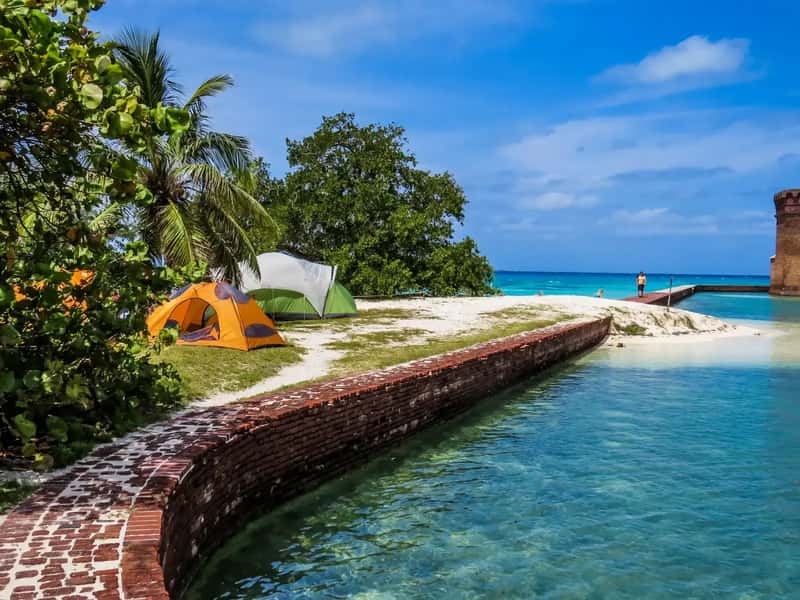
Timing matters if you want to see these places at their absolute best. The best time to visit Dry Tortugas is from November to April because the weather stays cooler, drier, and less humid, with temperatures ranging from the mid-60s to mid-80s°F.
Summer brings warmer water but also hurricane season. Summer is a prime time to visit, but there is always the possibility of a tropical storm during hurricane season from June to November. Worth keeping in mind when booking.
For Culebra, late November to June offers dry weather and calm seas, ideal for beach activities and snorkeling, with mid-April to June or November to early December providing fewer crowds and lower prices. Shoulder season is clutch for avoiding the masses while still getting perfect beach weather.
Seasonal Breakdown:
- Peak Season (Dec-Apr): Best weather, calmest seas, highest prices, most crowds
- Shoulder Season (Nov, May-June): Good weather, fewer crowds, better prices
- Hurricane Season (June-Nov): Warmer water, possible storms, lowest prices
Which Destination Should You Choose
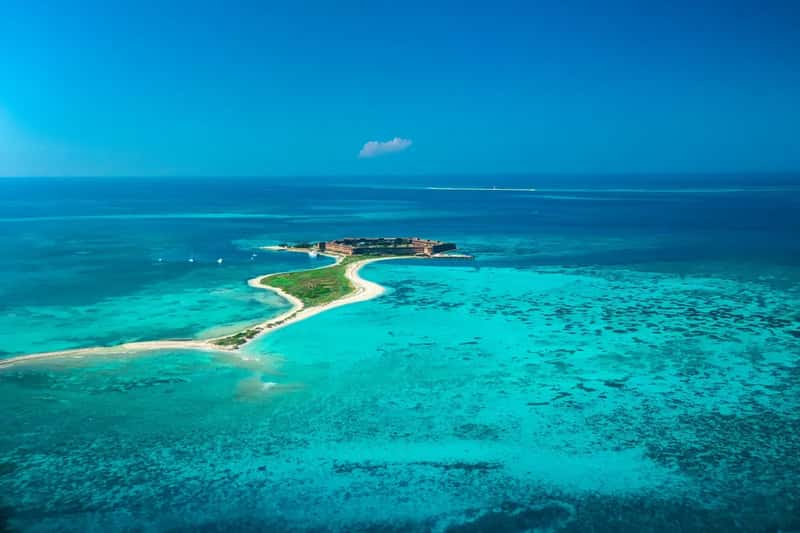
Honestly? Both have their strengths. Dry Tortugas wins for sheer remoteness and that “end of the world” feeling. Accessible only by ferry or seaplane, Dry Tortugas offers some of the clearest water in North America. If you want bragging rights and an adventure, this is your spot.
Flamenco Beach on Culebra is more accessible and family-friendly. The crystal-clear water with gentle waves, painted in endless shades of blue, makes Flamenco Beach a healing chromotherapy experience, with an entire day revealing a spectacular display of changing water colors from clear glass and soft baby blue to turquoise and deep emerald green.
Budget also plays a role. Culebra is significantly cheaper to reach and explore. You can do the whole trip for a fraction of what the Dry Tortugas costs. Yet both deliver on that jaw-dropping water clarity that rivals anywhere on Earth.
Decision Matrix:
| Factor | Dry Tortugas | Flamenco Beach |
|---|---|---|
| Water Clarity | Exceptional (60-120 ft visibility) | Outstanding (crystal clear) |
| Accessibility | Challenging (ferry/seaplane only) | Easy (ferry/flight from PR) |
| Cost | High ($220+ per person) | Budget-friendly ($2.50-$50) |
| Amenities | None (bring everything) | Full service (food, showers, shops) |
| Best For | Adventure seekers, history buffs | Families, beach lovers |
The Verdict: America’s Caribbean Secret

The Maldives are beautiful. Nobody’s denying that. But why spend twelve hours on a plane and thousands of dollars when you’ve got world-class beaches right here? Puerto Rico (a US territory and commonwealth) is home to some of the clearest water, with Flamenco Beach on the island of Culebra requiring some planning but being completely worth the visit.
These aren’t just decent alternatives. They’re legitimate contenders for the clearest, most beautiful water you’ll ever swim in. The fact that you can reach them without international travel hassles is just the cherry on top. Whether you choose the remote splendor of Dry Tortugas or the accessible paradise of Flamenco Beach, you’re in for an experience that’ll have you questioning why you ever considered leaving the country for tropical perfection.
So what’s stopping you? The water’s waiting, and trust me, it’s every bit as incredible as those overfiltered Instagram photos suggest. Maybe even better.