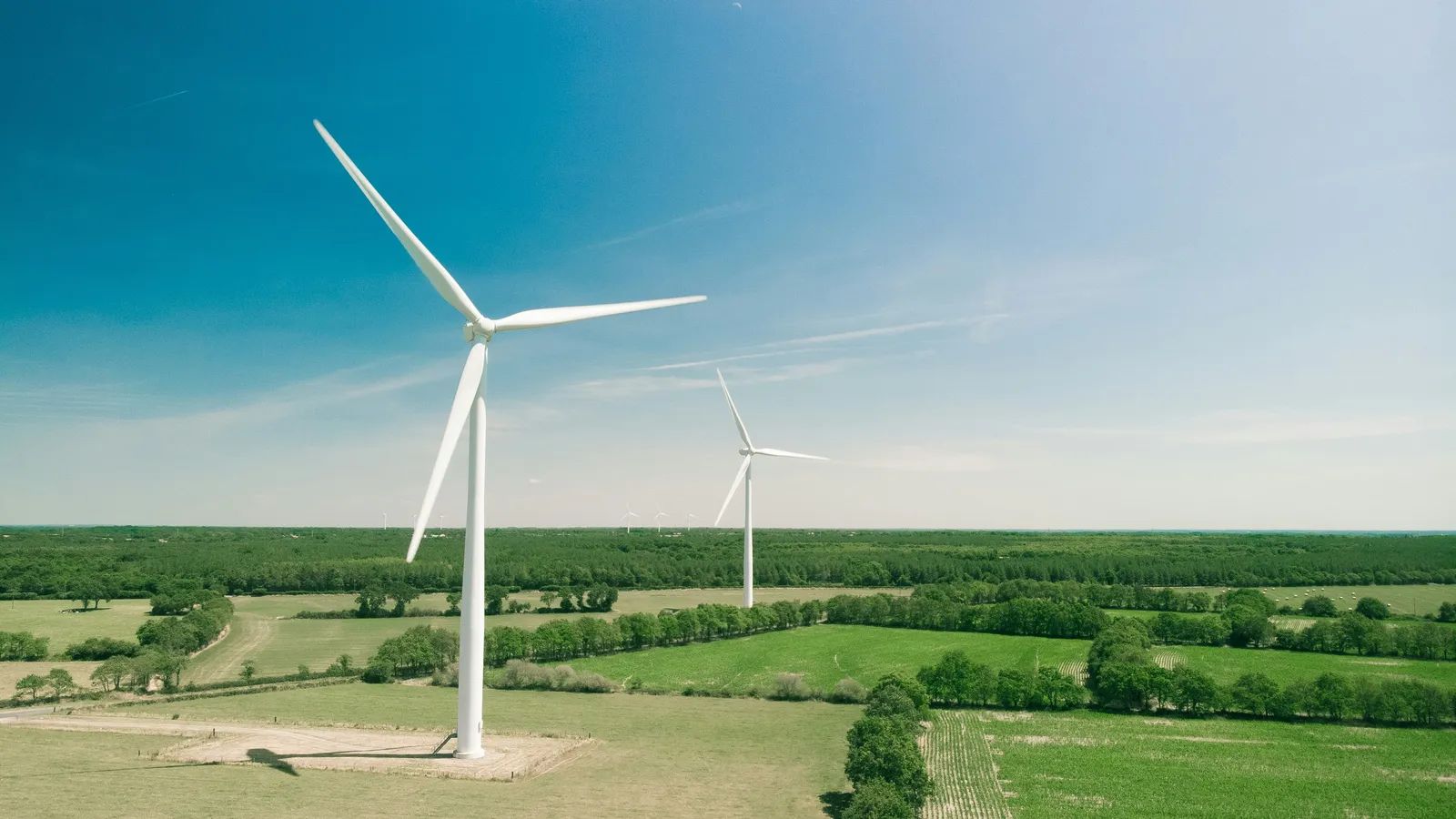
Schipkau, Germany – A prototype wind turbine has reached its full height of 365 meters (1,197 feet) at an existing wind farm in the Lusatia region of eastern Germany, standing taller than the Eiffel Tower and described by its developer as the world’s tallest. The structure, built by Dresden-based engineering firm Gicon, marks a notable step in the area’s shift from its lignite mining past toward renewable energy projects. It is scheduled for inauguration in mid-November.
Scale That Stands Out
The turbine’s hub sits 300 meters (984 feet) above the ground, with rotor blades extending the total reach to 365 meters. That exceeds the Eiffel Tower’s 330 meters (1,083 feet) and comes within a few meters of Berlin’s television tower, Germany’s tallest building at 368 meters (1,207 feet). Conventional turbines usually operate with hub heights well below 200 meters (656 feet), making this installation visibly distinct on the landscape southeast of Berlin. The project’s location in sparsely populated Lusatia adds to the visual impact. The open terrain allows the full height to register clearly against the horizon, offering a striking point of reference for anyone traveling through the region.
Engineering Choices Behind the Height
Gicon designed the tower specifically to access stronger and steadier winds available at greater elevations. Chief executive Jochen Grossmann noted that at 300 meters the site delivers consistent airflow that supports more than twice the electrical output of an identical turbine placed at standard heights. The same conditions also allow generation across a larger portion of the year. Construction took place at an established wind farm, which helped integrate the new prototype into existing infrastructure. The company completed the final assembly this week, bringing the full structure into view for the first time.
What Comes Next for the Prototype
With the tower now at its maximum height, attention turns to the mid-November inauguration. The installation serves as a working demonstration of how greater elevation can improve performance in wind energy. Observers in the region will watch how the unit performs once operational, particularly during periods when lower turbines might produce less. The project reflects ongoing changes in Lusatia, where former mining sites have increasingly hosted renewable developments. This turbine adds a prominent new landmark to that transition.