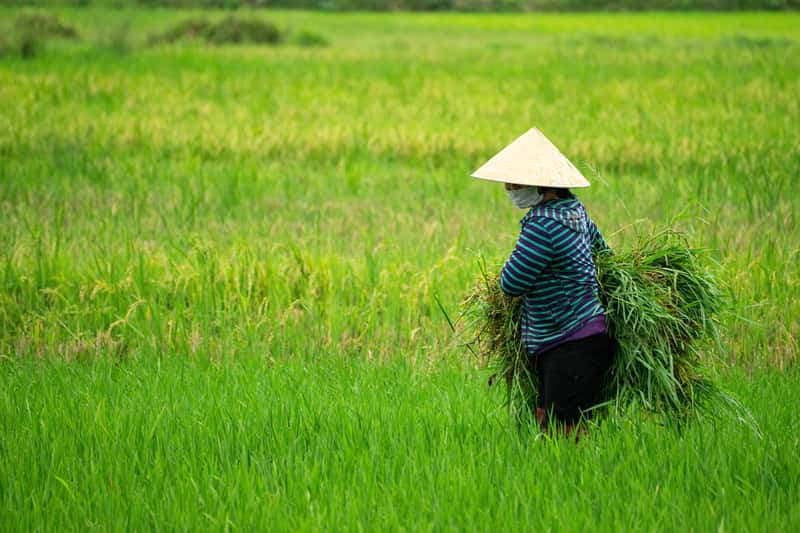
Rice paddies from the Ganges Delta to the Mekong have quietly delivered one of agriculture’s most remarkable growth stories of the past decade. What was once considered an ambitious ceiling for the world’s most consumed staple grain has been shattered repeatedly, with global output climbing well past the 520 million ton mark that once seemed like a distant milestone.
Today, the story is even bigger than that number suggests. According to the latest data tracked by the United States Department of Agriculture, worldwide rice production has pushed into territory that would have seemed almost unthinkable just a decade ago, and the momentum behind that growth is now finally showing its first real signs of cooling.
A New Era of Record Harvests
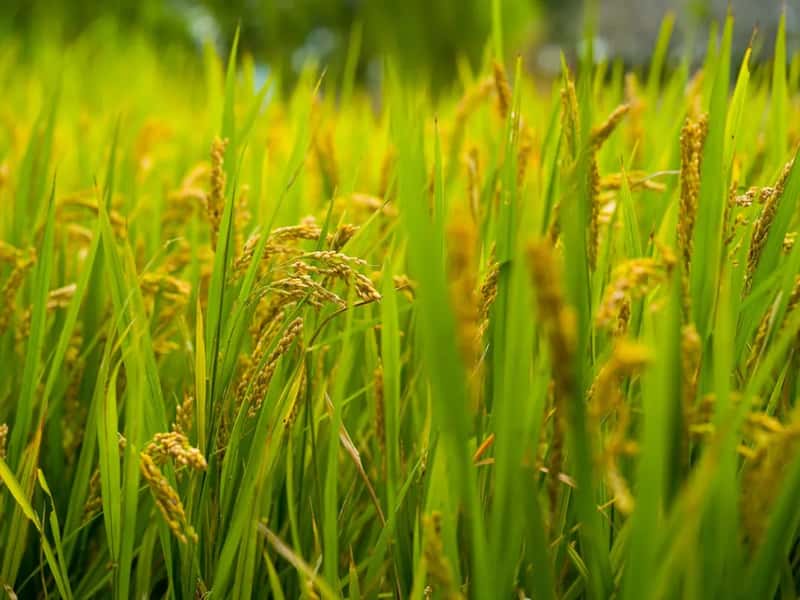
The trajectory of global rice production over the past several seasons has been one of near-uninterrupted growth. By the 2024/25 marketing year, output had reached what USDA analysts described as a genuinely historic figure, and the following season pushed the number even higher. Global 2025/26 production was raised by 1.9 million tons to 544.7 million, mainly on India, where the Government’s Third Advanced Estimate was raised to a record 154.0 million tons.
That figure represents a staggering jump from where the industry stood just a few years earlier, when crossing 520 million tons on a milled basis was itself treated as a landmark achievement. India and China are projected to remain the top two rice-producing countries, accounting for more than half of global rice output. The scale of that concentration means that whatever happens in these two countries essentially dictates the shape of the entire global market.
India’s Extraordinary Run At The Top
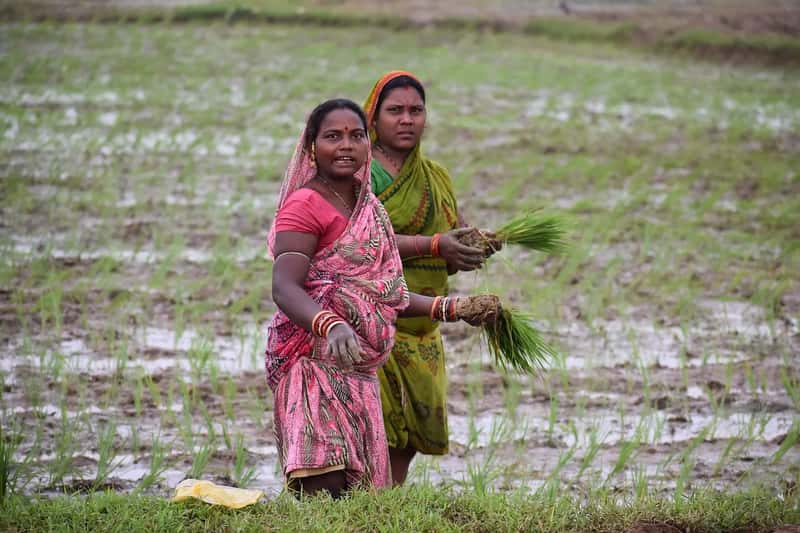
No country has driven this growth story more than India. Output for India, now the largest rice producer after overtaking China in the last 2 years, was pegged at 152 million tons, reflecting a tenth-consecutive record year. That kind of sustained, unbroken run of records is almost unheard of in a commodity as weather-dependent as rice.
Favorable monsoons, expanding irrigation, and government price support programs have all played a part in that streak. The scale of India’s harvest has had ripple effects far beyond its own borders, since the country has also become the dominant force in global rice trade, a role it continues to defend even as its own domestic consumption climbs to new highs alongside production.
China’s Steady But Slowing Contribution

China remains the world’s second-largest rice producer, though its trajectory looks noticeably different from India’s. Domestic demand pressures in the country are shifting in ways that reflect deeper demographic change rather than simple supply constraints. China’s use is forecast 2.1 million tons lower to 145.1 million on a declining population and changing consumer preferences.
Even so, China continues to produce close to 147 million tons of milled rice a year, a volume that dwarfs most other producing nations combined. The country’s shift toward other grains and proteins as diets diversify is a slow-moving trend, but it is one that rice analysts are watching closely, since a shrinking population base could gradually reduce China’s need for imported and domestically produced rice alike over the coming years.
Southeast Asia’s Enduring Export Engine
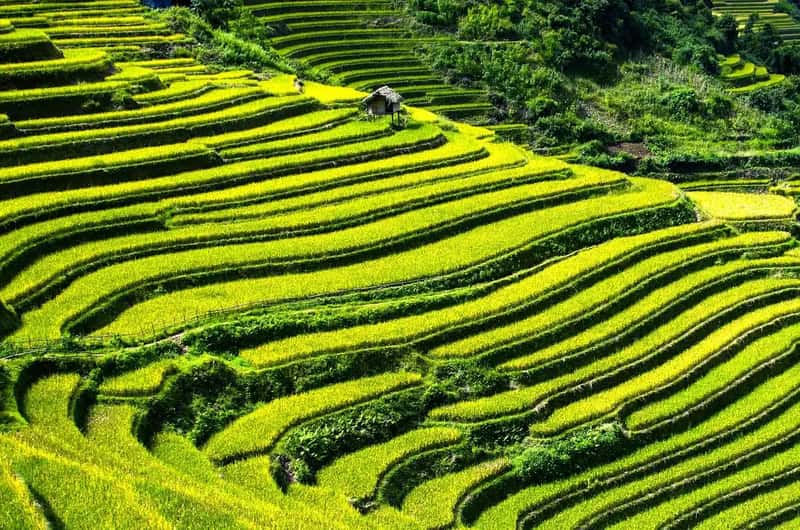
Vietnam and Thailand continue to anchor the export side of the global rice trade, filling gaps left by fluctuating harvests elsewhere. Exports will continue to be led by India with 25.0 million metric tons or 40 percent of global trade given its ample exportable supplies and competitively priced exports, while Vietnam and Thailand, the second- and third-largest exporters, are forecast higher given growing demand from key African and Southeast Asian markets.
Burma has also carved out a growing niche as a low-cost supplier of broken rice, particularly to China. Burma’s 2026 export forecast was raised 400,000 tons to 2.2 million based largely on a strong shipment pace of competitively priced broken rice to core markets, primarily China. These smaller exporters may not move the same volumes as India, but their flexibility helps stabilize prices whenever a larger producer faces a rough season.
The United States: A Shrinking Footprint
While Asian output has surged, American rice farmers have been retreating from the crop in significant numbers. Sustained low prices and rising input costs have pushed growers toward other row crops. Rice growers intend to plant 2.319 million acres of rice in 2026, about 18 percent fewer acres than in 2025, with acreage declines largest for long-grain rice, which dropped 22 percent from 2025 to 1.648 million acres, the lowest since 1983.
Arkansas, the country’s leading rice state, has felt this contraction most acutely. Arkansas, the largest rice-producing state, leads the reduction in long-grain rice acreage, dropping 280,000 acres from 2025 to 900,000 acres, the lowest since 1987. Combined with weaker export competitiveness against South American suppliers, the American rice sector now represents a shrinking slice of a growing global pie.
Record Consumption Keeps Pace With Supply

Rising production has been matched, almost step for step, by rising demand. Billions of people across Asia, Africa, and Latin America depend on rice as a dietary staple, and that dependence continues to grow alongside population increases in many of these regions. Global consumption for 2026/27 is projected 3.8 million tons higher to a record 541.4 million tons, on higher use by several countries.
India remains the engine behind much of that consumption growth, supported by government distribution programs. India’s use is forecast 4.0 million tons higher at a record 128.0 million tons on population growth and continued distributions from the government’s Public Distribution System. That combination of rising output and rising appetite has kept the global rice market remarkably balanced, even as individual countries see sharp swings in their own supply and demand pictures.
Trade Flows And Falling Prices
Global trade in rice has also reached fresh highs, even as prices for many exporters have slid to multi-year lows. Global rice trade in calendar year 2026 was projected at a record 62.8 million tons, as increased export projections for Burma and China more than offset a reduction for Cambodia. Abundant supplies from major Asian exporters have kept a lid on prices across most benchmark markets.
That price weakness has been especially pronounced in the United States. The January 2026 WASDE report pegged the average farm price at 10.50 dollars per hundredweight, down from 14.00 dollars per hundredweight during the 2024/25 marketing year. Trade disruptions have also played a role in shaping regional flows, as seen when the Philippines, a major buyer of Vietnamese rice, announced a 60-day import ban that started September 1 to address low domestic paddy prices and extended the ban through December 31, 2025.
The Turn In The Cycle: A Cooling 2026/27 Outlook
After years of relentless growth, the global rice market is now bracing for its first genuine pullback in production since the middle of the last decade. World rice production is forecast down 5.0 million tons to 537.8 million tons, the first decrease since 2015/16, with the largest production declines expected for India, Burma, and the United States.
India’s role in this shift is particularly notable given its remarkable prior streak. Global rice production in 2026/27 is forecast at 537.8 million metric tons, down 5.0 million metric tons from the prior year, as after 10 consecutive years of growth, India is expected to decline from last year’s record as producers plant fewer acres to rice. Even with that pullback, the forecast level would still rank among the largest harvests ever recorded, underscoring just how far the baseline for “normal” production has shifted upward over the past several years.
What This Means For Global Food Security
For the roughly half of humanity that relies on rice as a dietary staple, these production swings carry real weight. A market that can absorb a five-million-ton production dip without triggering shortages or price spikes is a market that has built genuine resilience, largely thanks to the record stockpiles accumulated during the recent run of bumper harvests. Global ending stocks in 2025/26 were projected at 188.8 million tons, with China and India together accounting for about 80 percent of global ending stocks, partly due to government stockholding programs.
Those reserves, concentrated heavily in just two countries, remain the single biggest buffer standing between the world’s rice supply and any future weather shock or geopolitical disruption. As global consumption edges toward its own new records right alongside production, the balance between the two will remain the defining storyline for the world’s most important grain heading into 2027 and beyond. The past decade proved that rice output could climb far higher than anyone once expected. The coming years will test whether that growth can be sustained, or whether the world has just witnessed the peak of an extraordinary agricultural run.