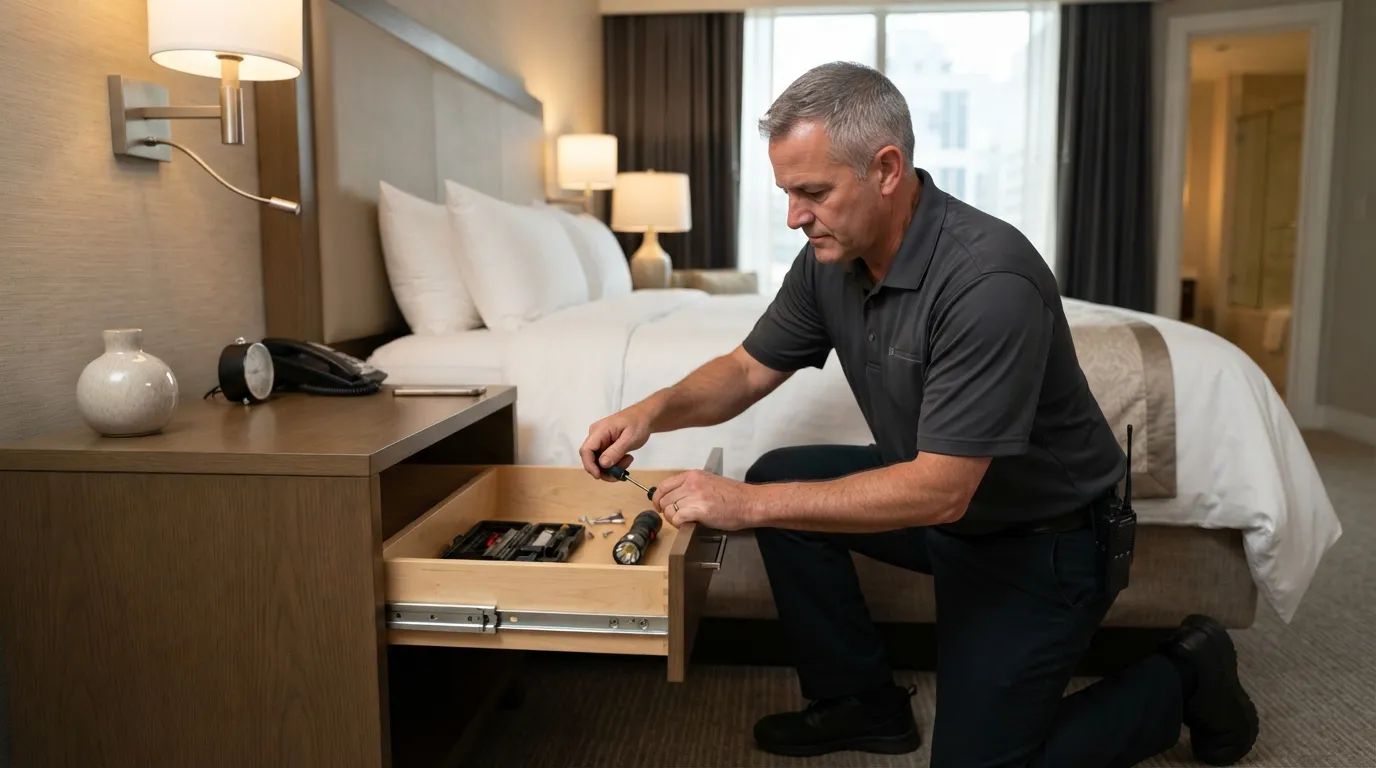
You’d expect hotel managers to spend their days putting out fires. The smart ones spend them hunting for problems you’ll never see, because by the time a guest speaks up, the damage is usually done. These are 23 of the quiet fixes that happen behind the lobby smile.
Here’s the twist: most unhappy guests never say a word. They nod at checkout, head home and let the review do the talking. Some of the fixes ahead are almost comically small, and a few are far more serious than anyone at the front desk wants to discuss.
#23 – The Dead Bulb That Makes a Room Feel Neglected

It’s the smallest fix on the list, and it can do the most damage when it’s missed. A burnt-out bedside lamp rarely triggers a phone call. It triggers a feeling, and suddenly the guest starts noticing every other tired corner of the room.
That’s why many properties build lamp checks into routine room inspections. Housekeepers see more rooms than anyone, so they’re often the first to spot the problem. One dark lamp can change how a guest judges the entire room.
#22 – The TV Remote Nobody Wants to Touch
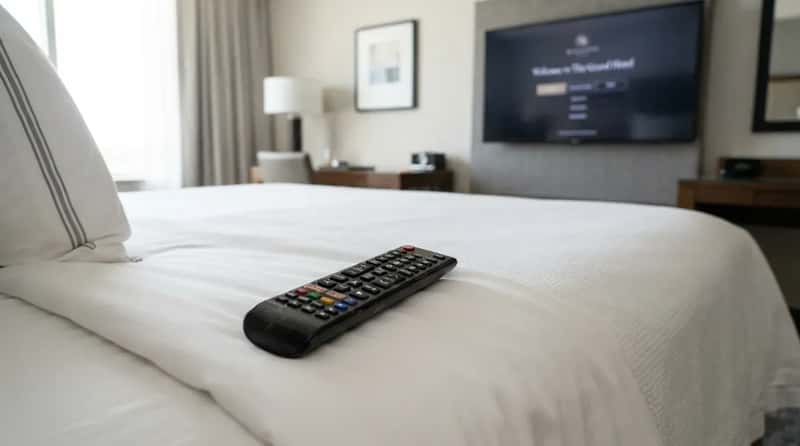
Ask a manager what guests grab first, and the remote is near the top of the list. It’s also one of the easiest things to miss during a room clean. Sticky buttons, dead batteries and missing remotes are classic “small thing, big review” problems.
Many hotels now wipe down high-touch items on a set routine, and some seal remotes in protective covers so they’re easier to clean. The first object a guest picks up can set the tone for how clean the whole room feels. If it feels grimy, everything else has to work harder to earn that trust back.
Fast Facts
- In J.D. Power’s 2025 hotel study, about 40% of guests called a smart TV or streaming ability a necessary amenity.
- That makes the remote the control center of the room’s entertainment.
- The usual culprits are dead batteries, sticky buttons and a remote that vanished between stays.
- It’s among the cheapest items in the room to replace.
#21 – The Wi-Fi That Quietly Wrecks a Business Trip

Wi-Fi stopped being an amenity a long time ago. It’s an expectation. Guests show up with a phone, a laptop and a tablet, and they assume everything will connect the moment they walk in. When it doesn’t, the complaint is rarely polite.
For business travelers, the stakes can be bigger than one room. An unstable connection can sour an entire corporate account, which is why many properties test speeds room by room. One bad connection can cost a hotel far more than a single booking.
#20 – The Hair Dryer That Smells Like Something Burning
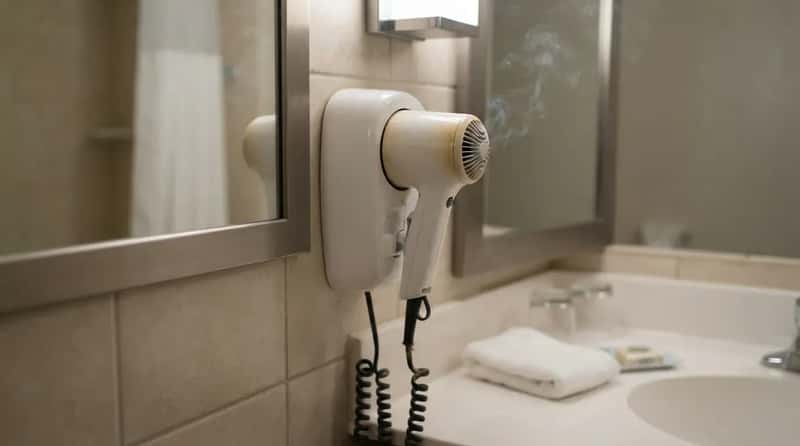
Hair dryers are among the most-used items in a hotel bathroom, and among the most likely to give out. A weak motor, a frayed cord or a clogged filter can turn a rushed morning into a complaint. Managers often test them during inspections for that reason.
A burning smell isn’t just annoying. It’s a safety red flag. Dust and hair collect in the intake, and the unit works harder as it clogs. A worn-out dryer can be a bigger hazard than a slow one, so careful properties swap them out before they get that far.
#19 – The Towels That Look Tired Before They’re Even Used

Gray, scratchy or frayed towels are a quiet giveaway. They may be perfectly clean and still look worn out. Guests judge freshness with their eyes and hands, not by anything on a laundry log.
That’s why many hotels retire linens at the first sign of fading, thinning or stains. Some managers argue a towel says more about a hotel’s standards than the lobby does. One shabby towel can make every other detail look suspect.
#18 – The Smell That Ends a Stay Before It Starts

Mildew, stale smoke, old carpet, something a previous guest left behind: a bad odor is a genuine dealbreaker, and managers treat it with urgency. Guests notice a smell within seconds of opening the door. Most never mention it. They just write the review.
Heavy air fresheners often make things worse, which many managers will tell you. Masking a smell backfires because guests can tell something is being covered up. The real fix is tracking down the source, whether that’s a drain, a vent or a damp corner.
#17 – The Room That Never Cooled Down Before You Arrived
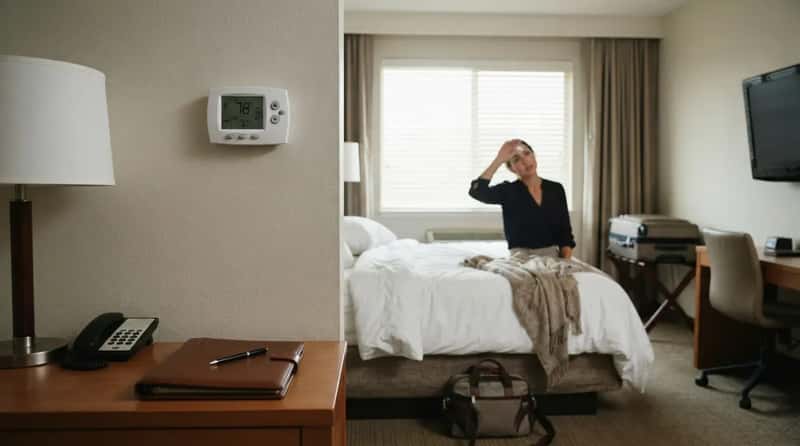
Heating and air conditioning problems show up on nearly every list of common guest complaints. Guests regularly report rooms that were too hot because the AC wasn’t working properly. Many don’t call for hours. They just endure a miserable first night.
Managers try to catch this early. Some check thermostats and airflow during turnover and set vacant rooms to a sensible temperature. A stuffy room at check-in can sour the mood before the bags are even down. Prevention beats a late-night maintenance call every time.
#16 – The Shower That Goes From Freezing to Scalding
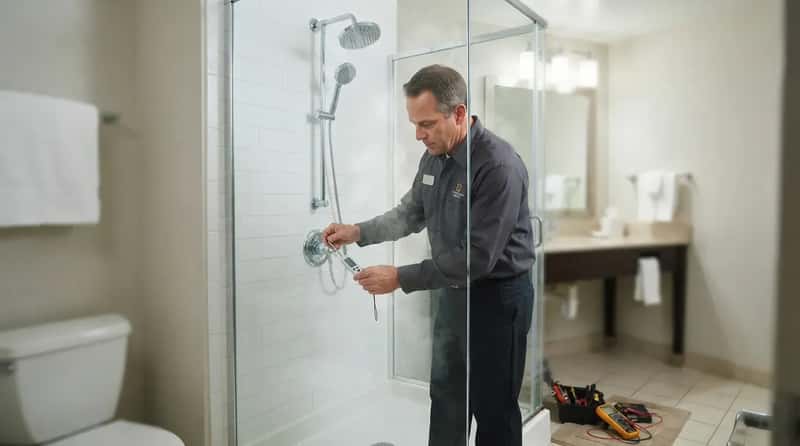
Water temperature and pressure rank among the most common maintenance complaints. A slow drain or a shower that never gets hot feels like a failure of the basics. Guests rarely forgive it.
Engineers often run every shower between stays to check flow and heat. Clogs and mineral buildup can creep in unnoticed. A guest can forgive an old building, but rarely a cold shower. That’s why many properties treat water checks as routine rather than an emergency.
#15 – The Hallway Door That Slams Like a Gunshot
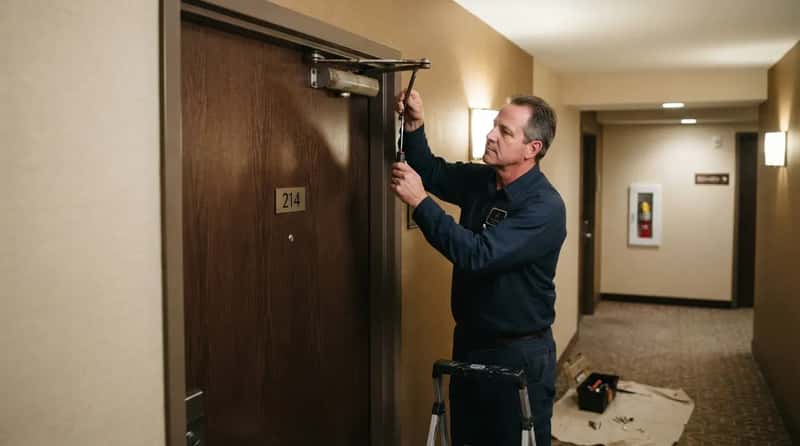
Loud footsteps, door slams and hallway chatter can wreck a night’s sleep. A worn door closer can wake an entire floor. Guests tend to blame the people outside, but the hardware is often the real culprit.
Managers can adjust closers and add door seals, which are among the common soundproofing steps suggested for hotels. Sometimes the loudest problem in a hotel is an inexpensive part. Fixing it can make a huge difference overnight.
#14 – The Curtain Gap That Wakes You at 5 a.m.
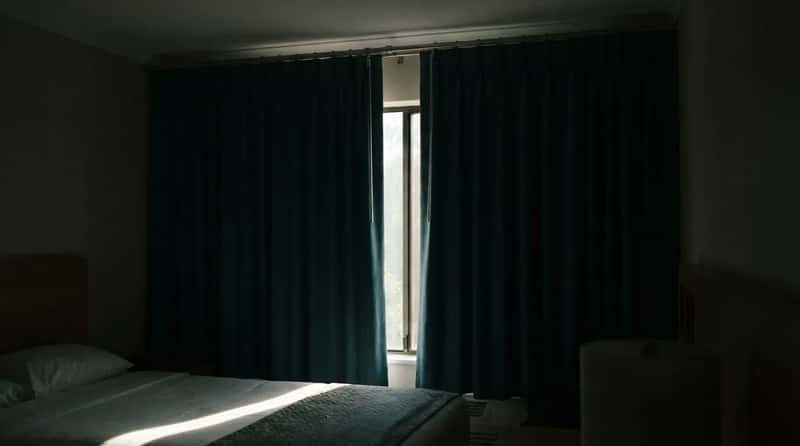
A thin strip of light between two curtains sounds trivial. For a light sleeper, it can ruin the night. Managers know that sleep is what guests are really paying for.
That’s why many hotels check that curtains overlap and close fully. Travelers today think about the whole sleep environment: sound, light, temperature and pillow support. A crooked curtain rod can undo a pricey mattress.
#13 – The Bedside Outlet That Doesn’t Work
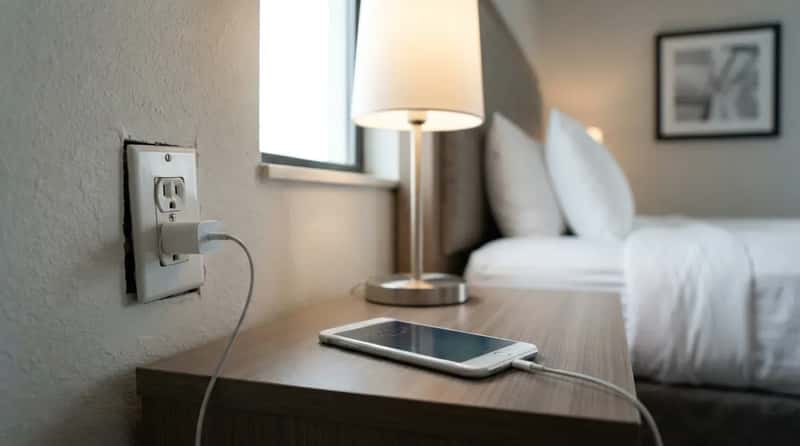
A phone is now a guest’s alarm clock, camera and boarding pass all at once. When the outlet by the bed is loose or dead, it becomes instant frustration. Managers who check them know exactly why.
Many properties have added USB ports and extra outlets for this reason. Loose faceplates and dead sockets also get flagged during inspections. A dead outlet can become a guest’s very first complaint of the stay. It’s cheap to fix and costly to ignore.
#12 – The Surprise Fee That Turns a Smile Into a Scowl

Billing problems show up often on lists of guest complaints. Overcharges, inaccurate bills and unexpected extras like resort or parking fees can lead to tense moments at the desk. Many managers audit folios before checkout to head off a fight.
Some hospitality veterans argue that a surprise fee does more harm than a higher advertised rate ever would. Guests feel tricked, and that feeling sticks. A bill that doesn’t match expectations can undo a perfect stay in under a minute. Clear communication at check-in prevents most of it.
#11 – The Room Handed Over Before It Was Ready
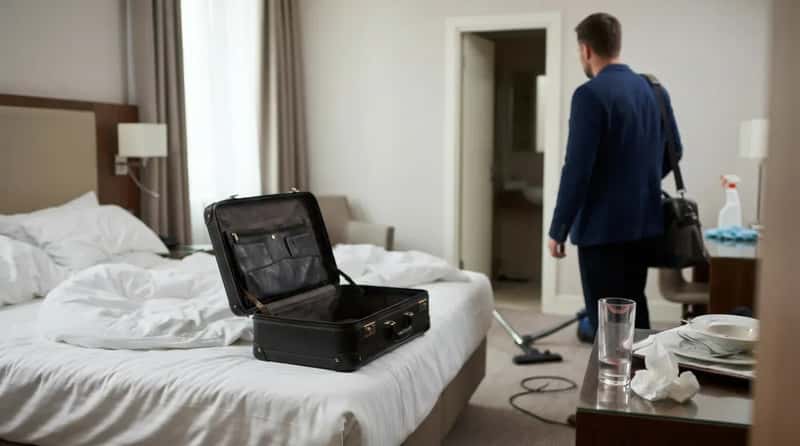
Few things sting more than walking into a room that isn’t finished. A used glass, an unmade bed or a missing amenity tells the guest they were an afterthought. Managers dread this one.
Better scheduling, clear checklists and accountability systems all reduce the odds of a room being released too soon. Some hotels also require supervisors to double-check rooms before arrival. The room a guest judges first is often the one that got inspected last. A second pair of eyes catches what a rushed turnover misses.
Quick Compare
- Rushed turnover: one person cleans, restocks and signs off alone.
- Supervisor-checked turnover: a second person walks the room before the guest does.
- What the guest notices: the first feels like an afterthought, the second feels like nothing at all, which is the goal.
#10 – The Missing Shampoo, Coffee Pod and Extra Pillow

Poorly restocked amenities appear on guest complaint lists again and again. Guests report everything from unclean bathrooms to hair in the bed to missing supplies. Each one feels minor on its own, but together they leave a mark.
Managers often use set “par levels” so every room starts with the same supplies, and carts are stocked by checklist, not memory. Running out of a small item can make a guest feel the hotel doesn’t care about details. When it’s done right, nobody ever notices.
#9 – The Mattress That Looks Fine and Feels Terrible

Guests don’t complain about the bed often. When they do, it’s at full volume. A sagging mattress can’t hide under fresh sheets, and wear builds so slowly that it’s easy to miss.
Many hotels rotate and replace mattresses on a schedule and inspect for stains and sagging. Pillows tend to wear out faster than people expect. A bed that looks perfect can still fail the only test that matters. Smart managers treat the sleep surface as their most important asset.
Worth Knowing
- J.D. Power’s 2025 hotel study found bed comfort ratings rose 0.04 points year over year.
- Furnishings and decor condition, and bathroom fixtures, each rose 0.05 points.
- The study drew on 39,219 guests who stayed between May 2024 and May 2025.
- Translation: guests notice when hotels invest in the things they touch and sleep on.
#8 – The Water Nobody Runs in Empty Rooms
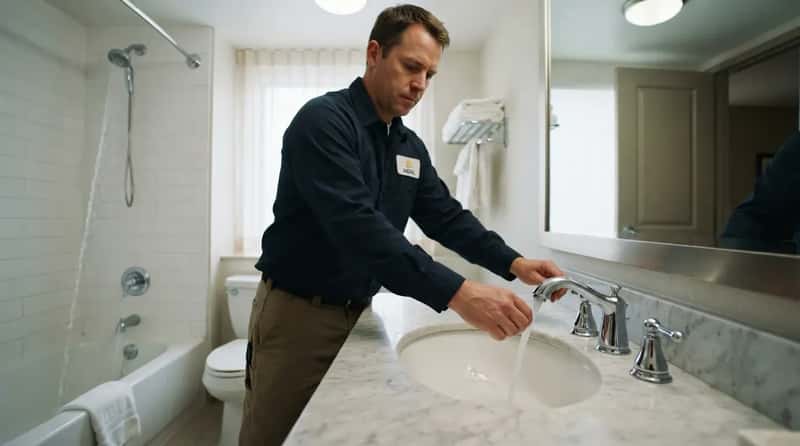
Water that sits in pipes can become a health concern. The CDC recommends that large buildings, including hotels, have a water management program to reduce the risk of Legionella. Guests never see this work, and that’s exactly the point.
In practice, it can include flushing fixtures in unused rooms and monitoring water temperature. An empty room can quietly become a health risk if its water never moves. It’s one of the least glamorous parts of hotel management, and one of the most important.
#7 – The Smoke Detector That Chirps at 3 a.m.
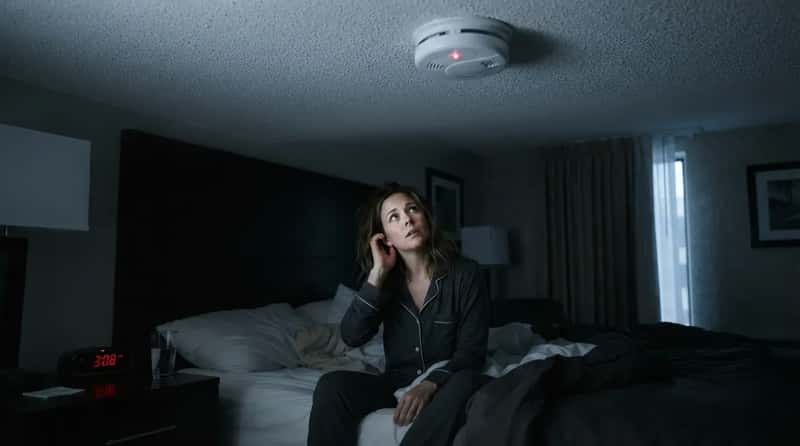
A low-battery chirp is a tiny safety issue that creates a huge problem. It jolts guests awake and makes them wonder what else in the building is failing. Managers know alarms need both working power and quiet upkeep.
Many properties test detectors on a regular schedule and replace batteries or whole units before they fail. Safety devices are the one area where “good enough” doesn’t exist. The most annoying sound in a hotel can also be the most important one.
#6 – The Parking Mix-Up Nobody Explains

Limited spaces, steep parking fees and a garage three blocks away can all frustrate guests. It’s a surprisingly common source of anger, especially in cities. Many guests only learn the rules after they’ve already arrived.
Managers who want to avoid the blowup make rates and directions clear before arrival. Some post signs and give staff a simple script. A guest confused about parking is already annoyed before reaching the front desk. Clear information is cheaper than an apology.
#5 – The Pool Party Under a Quiet-Weekend Booking

Guests who expect tranquility are often blindsided by loud music or late-night parties. Resorts deal with this more than most. A wedding or event can collide head-on with a family trying to sleep.
Managers can set quiet hours and place light sleepers farther from the action. Some warn guests when events are planned. Many of the loudest hotel nights could be avoided by simply telling guests what’s coming. Honest notice often earns more goodwill than a refund does.
#4 – The Room Type That Doesn’t Match the Booking

Inaccurate reservations are among the common complaints on hotel lists. A guest who booked two beds and got one is rarely patient about it. Managers try to catch mismatches before the car even pulls up.
Many front desks review upcoming arrivals each morning and match rooms to requests. They also keep an eye on blocked or out-of-service rooms. Most room mismatches could be solved a day before the guest ever walks in. The best fix is a quiet one, made before anyone knows there was a problem.
At a Glance
- When it’s caught: during the morning review of that day’s arrivals.
- What gets checked: bed type, room category and special requests.
- The hidden trap: a room that’s blocked or out of service but still shows as available.
- The payoff: a guest who never learns anything went wrong.
#3 – The Check-In Line That Eats the First Hour

Check-in delays show up on lists of the most common hotel complaints. After a long trip, a slow line can set the tone for the whole stay. Managers can see it coming at predictable times of day.
Many properties add staff during busy arrival hours or offer mobile check-in. Some pre-assign rooms so keys are ready on arrival. A line at the front desk can make a perfect room feel like a disappointment. The quickest fix is often scheduling, not technology.
#2 – The Walked Guest Nobody Wants to Talk About

Overbooking sits alongside cleanliness, noise and billing errors as one of the most frequent and damaging complaints in hospitality. “Walking” a guest means sending them to another hotel, often after a long day of travel. Managers hate it, so they work hard to avoid it.
Many hotels watch arrivals and cancellations closely and plan ahead. Some arrange transport and cover the first night’s cost at the other property. The best managers apologize before the guest even realizes there’s a problem. It’s about owning the mistake early and making the fallout as painless as possible.
#1 – The Problem You Never Tell Anyone About
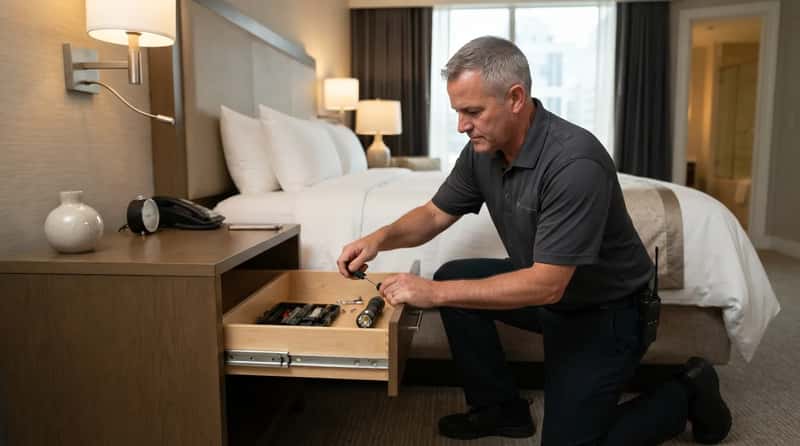
This is the real reason managers fix things early. Guests rarely tell the front desk in real time. They save it for a post-stay review, and by then there’s nothing left to repair because the guest is already gone.
The numbers explain the urgency. J.D. Power found that just 12% of hotel stays involve a problem, such as an odd odor, a housekeeping issue, excessive noise or a check-in dispute. But when that problem does hit, satisfaction scores fall dramatically. That’s why the best fix is the one a guest never sees.
The best hotels aren’t the ones that handle complaints gracefully. They’re the ones where the complaint never gets a chance to exist. Dead bulbs, slamming doors, stale odors and slow check-ins all share one trait: guests rarely say a word, but they remember every one.
So the next time you walk into a room where the lamp works, the Wi-Fi connects and the hallway is silent, remember it wasn’t luck. Somebody got there first.