The gate is right there. You can see it.
You check anyway.
Then again. Then once more, just to be sure.
Your boarding pass hasn’t changed. The number hasn’t moved. But your hand still reaches for the phone, and your eyes still scan the screen for something – anything – that might confirm you are in the right place.
Here is the uncomfortable truth. That behavior isn’t about the gate. It never was. The identity gap – the space between who you are expected to be and who you actually are – closes in transit. And in that closing, all the unresolved architecture of your earliest years comes flooding through the departures terminal with you, rolling carry-on luggage and all.
You call it being organized. Psychology calls it something else.
The Loop That Feels Like Control
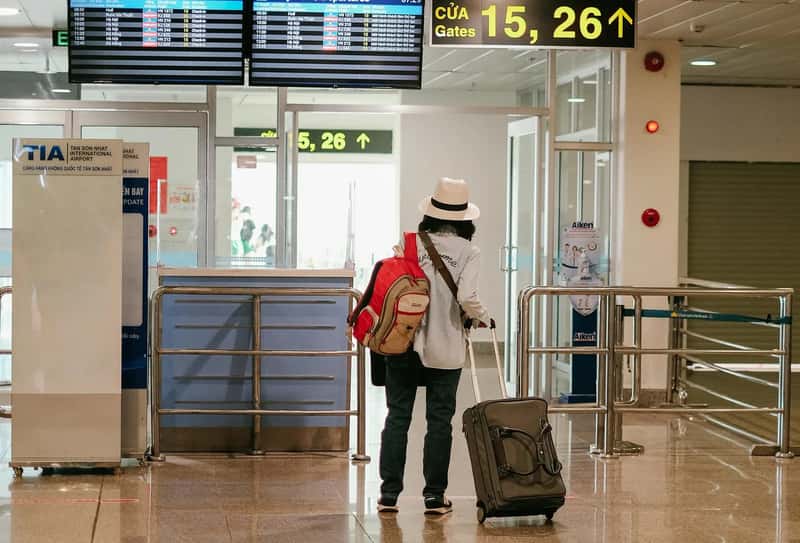
You’ve checked the gate. You know the gate. And still, the urge comes again – quiet, insistent, familiar.
The urge to complete the ritual can build as a source of “internal pressure” – heightened anxiety, discomfort, and a sense of incompleteness – that checking is ultimately carried out against the person’s rational choice.
That’s the mechanism. Not stupidity. Not neurosis. A loop.
When individuals have the fear that they could be harmed, they check to ensure their environment is safe. This behavior is reinforced and repeated over time because it alleviates the anxiety elicited by the obsession, albeit only in the short-term.
In the airport, “harm” doesn’t mean a crash. It means missing the plane. It means being left. It means the most primal abandonment script your nervous system knows playing out again, live, under fluorescent lights, with a three-dollar coffee going cold in your hand.
The loop isn’t irrational. It’s a survival response wearing the costume of logistics.
The Wound Behind the Boarding Pass
Nobody builds these loops from scratch as an adult. They are inherited. Constructed in earlier years, in rooms you no longer live in, by people who may not have even known they were teaching you fear.
Fear of abandonment is rooted in the past, often in childhood. When children receive little affection, lack emotional connection to their primary caregivers, or feel unsafe in their presence, they come to believe people can’t be trusted. They fear future physical and emotional abandonment because it’s what they know.
The airport becomes a stage set for re-enactment. The plane is the caregiver who might leave without you. The gate number is the reassurance you keep asking for.
Early experiences, such as caregivers inconsistently responding to crying, shape children’s expectations of relationships, fostering anxiety and hypervigilance to maintain connection.
The grown version of that child now checks the departures board twelve times.
Same fear. Different setting.
The Temporary Identity
There is a reason the airport feels like relief to some people. Not anxiety – relief.
Due to the haziness of time and place, airports create a sense of disorientation. We define ourselves in terms of time and place. We know who we are in relation to our daily routines and our familiar environments. Remove those anchors, and something loosens.
Something breathes.
One of the most profound psychological effects of airports is how they temporarily strip away our usual identity markers. In the international transit zone, national boundaries become fluid, and our usual social roles temporarily suspend.
For a person who has spent years performing a version of themselves that doesn’t quite fit – the compulsive gate-checker finds, in transit, something rare. A moment where they are no one yet. Where the next version of themselves hasn’t been assigned. Where the fear, for a few minutes, loses its address.
The checking begins when that freedom starts to feel too good to trust.
The Hypervigilant Nervous System
It is not willpower that drives the checking. It is wiring. Childhood wiring, specifically – laid down in the earliest years of emotional development and refined every time love felt conditional or inconsistent.
When we have experienced insecure attachment, our nervous system becomes wired for hypervigilance or withdrawal. These responses are our body’s way of protecting us from perceived threats in relationships.
High attachment-related anxiety is expressed in hyperactivating strategies and seeing the self as unworthy of love and others as unreliable. Hyperactivating strategies are characterized by hypervigilance to threat and associated with negative emotions and behaviors when dealing with conflict.
In a departure terminal, “threat” is not abstract. It is the board that might change. The announcement that might redirect. The small, lurching possibility that you have, once again, somehow, been left behind.
Your nervous system has been waiting for this moment since childhood. Of course it checks twice. Of course it checks twelve times.
The Exit Strategy That Isn’t About Escape
I have stood in terminals at 4 AM with my boarding pass in one hand and my phone in the other, refreshing the gate information for a flight that hadn’t changed in three hours. I told myself I was being responsible. I told myself that organized people do this. I told myself a lot of things while the fluorescent lights hummed and the cleaning crew worked quietly around my vigilance.
What I wasn’t telling myself: I was six years old again, standing in a school car park, waiting to be collected. Watching other kids leave. Watching the lot empty. Counting the seconds.
The gate was never the point. The gate was a stand-in for something far older.
For people who grew up in environments where departure was controlled – where leaving was a privilege that could be removed, where the door was always metaphorically locked – the first flight out becomes an assertion of autonomy. A proof of concept. Evidence, repeated and renewed, that they are still allowed to go.
The Doubt Engine
Compulsive checking doesn’t just live at airports. But airports accelerate it – compress it – give it nowhere to hide.
People with checking compulsions share an exaggerated fear of uncertainty that makes them doubt their abilities to perform ordinary tasks of daily living correctly or avoid making social blunders. Being unsure of themselves, they’re constantly beset by thoughts and feelings of being irresponsible, careless, and seriously messing up.
Now layer that onto the architecture of abandonment anxiety.
You are not just afraid of the wrong gate. You are afraid that a mistake – any mistake – confirms a deeper, more devastating story. That you are the kind of person things go wrong for. That you are the kind of person who gets left.
By immediately reducing fear, checking prevents the natural process of anxiety from gradually fading on its own over time. The person never learns to become comfortable with normal levels of uncertainty.
So the doubt engine keeps running. Gate after gate. Flight after flight. Year after year.
The Body Keeps the Boarding Pass
This is not a metaphor. This is neurology.
When a person fears abandonment, their amygdala – the brain’s threat center – becomes highly reactive. Even minor signs of disconnection, a short reply, a canceled plan, can trigger an alarm. The brain, conditioned by past pain, interprets these cues as signs of rejection, even when none exist.
A gate change is a minor sign of disconnection.
A boarding delay is a canceled plan.
The amygdala does not distinguish between a flight itinerary and a relationship dynamic. It registers threat. It triggers checking. It keeps you scanning.
Hypervigilance stems from early attachment experiences where caregivers were inconsistently responsive, leading to the internalization of an unstable relational framework. That framework travels with you. It has its own seat on every flight you’ve ever taken.
The Non-Place and the Non-Self
Anthropologists have a term for spaces like airports. Non-places. Corridors of transit devoid of fixed identity, where the usual rules of selfhood do not apply.
Once you step foot through the door of an airport, you give up your anonymity, offering your government-issued identification and surrendering to security searches. In a way, you temporarily lose your free will as you walk through the crowded and unfamiliar halls until you reach your departing gate.
And here is the dark irony. The person most drawn to these non-places – the compulsive traveler, the gate-checker, the chronic departee – is often the person most in need of a stable self.
The departure hall is one of the few places in modern life where your identity is genuinely suspended. The identity gap – the space between who you are expected to be and who you actually are – closes in transit.
The checking is an attempt to anchor something in a space specifically designed to have no anchors.
It will never work. But the need to try is very human, and very old.
The Ritual That Keeps the Fear Alive
Here is what the research says that nobody wants to hear at the gate.
The checking doesn’t help. Not really. Not in any lasting way.
The momentary relief produced by compulsions such as checking also prevents individuals from habituating to their distress, which can result in a paradoxical increase of obsessional anxiety over time.
Every time you check the gate number and feel that brief exhale of relief, you are teaching your nervous system one thing: that the threat was real, and that checking saved you from it. So the next time, the threat feels even realer. And checking becomes more necessary.
When checking temporarily reduces anxiety, the brain learns that checking “works,” making it more likely to happen again.
The ritual is not managing the fear. The ritual is feeding it. One confirmation at a time.
The gate stays the same. The fear grows larger.
The Gate You’re Really Checking
Twelve checks. Twelve reassurances. Twelve small pleas to a universe that once told you, in the language of childhood, that your place was not guaranteed.
Experiences from childhood can shape how we view social inclusion. If a person has experienced neglect, bullying, or social exclusion during childhood, it can lead to a fear of being left out in adulthood. Early negative social experiences can impact how we perceive our worth in relationships and social settings.
The gate is not the gate. The gate is every time you waited and wondered. Every time you were not certain you would be chosen, collected, remembered. Every classroom and car park and front door where the story could have gone differently.
Attachment wounds in childhood – growing up with neglect, abandonment, or inconsistent caregiving – can create lasting fears of being left out or forgotten.
You are not checking for a flight.
You are checking for evidence that this time, you will not be left behind.
And here is the thing about that evidence. No number of confirmations will provide it. The reassurance dissolves within minutes. The doubt returns. The phone comes out again. Not because the gate changed – because the wound never healed.
The airport terminal is merciless in its clarity. Strip away the job title, the address, the relationship status, the curated version of yourself you carry into every room – and what remains, standing alone at Gate 14C with a boarding pass and a racing heart, is the part of you that never fully believed it was allowed to stay.
Every traveler who has ever compulsively checked a departure board is, on some level, still waiting in that car park. Still counting the cars. Still rehearsing the backup plan for what happens if no one comes.
The flight will board. You will find your seat. The plane will leave on time. And somewhere over the clouds, for just a little while, the child who learned to survive by staying vigilant will finally, briefly, rest – not because the fear is gone, but because at 35,000 feet, there is nothing left to check.