Most travelers think of a hotel stay as a private transaction between them and a bed. Behind the scenes, though, every room tells a story to the people who clean it, and that story gets discussed at length in break rooms and group chats. Housekeepers, front desk agents, and managers see patterns repeat across properties and price points, and certain guest habits show up on almost every list they compile when asked what actually ruins their day.
None of these habits are secret rule violations or dramatic scandals. They’re small, everyday choices that quietly shape how staff remember a guest long after checkout. Here’s what hotel employees consistently name as the behaviors that turn someone into the guest nobody wants to see again.
1. Treating housekeeping like they’re invisible

Of all the complaints staff raise, this is the one that comes up most, and it rarely has anything to do with a single messy room. Of every habit on this list, this is the one staff bring up most, and it’s rarely about any single mess, it’s the guests who won’t make eye contact, won’t say hello in a hallway, or talk over them like the room somehow cleans itself.[1] A basic acknowledgment costs nothing, yet it’s surprisingly rare.
A simple nod or thank you costs nothing and takes two seconds, yet staff say it’s rarer than almost any other courtesy on this list.[1] The effect isn’t confined to one interaction either. When guests treat housekeepers rudely, dismiss them, or make them feel invisible, it ripples through the whole team, since a luxury hotel runs on its people, and those people talk to each other, and a rude interaction with one staff member affects the mood, the morale, and ultimately the service that every other guest receives that day.[2]
2. Hanging the Do Not Disturb sign all day, then complaining the room wasn’t touched
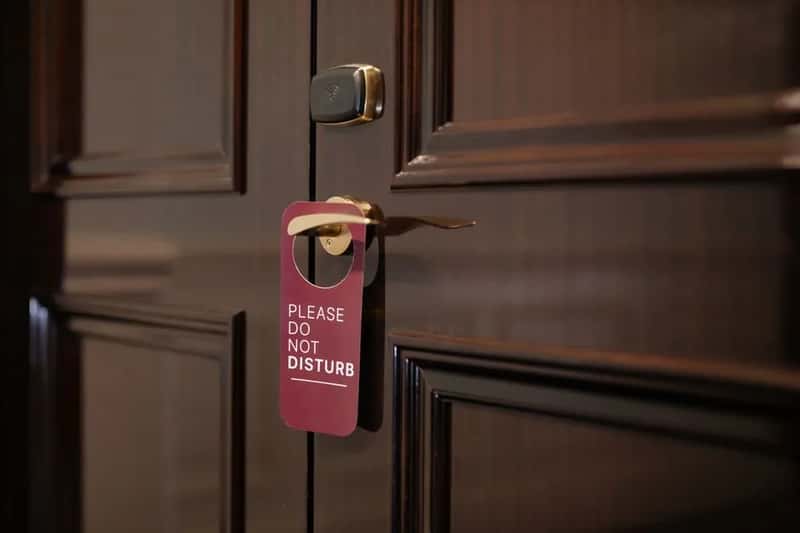
This is the contradiction staff mention almost more than any other single habit. This is the single most common complaint housekeepers bring up, and it’s almost always self-inflicted, as guests hang the sign out first thing in the morning, disappear for the day, and come back furious that the room looks exactly like they left it, even though housekeepers can’t read minds, and they definitely can’t walk through a locked door.[1] Staff simply cannot act on a request they never received.
The policy behind this is strict for a reason. If the sign is up, staff are trained to skip the room entirely, no exceptions, which creates a strange standoff where guests feel neglected and housekeepers feel blamed for something completely out of their control.[1] Some housekeepers have noticed an even more deliberate version of the pattern, where guests will hang the sign specifically when they see housekeeping approaching, like a game of hotel hide and seek, then remove it an hour later and complain that their room hadn’t been cleaned.[3]
3. Never tipping housekeeping, not even once
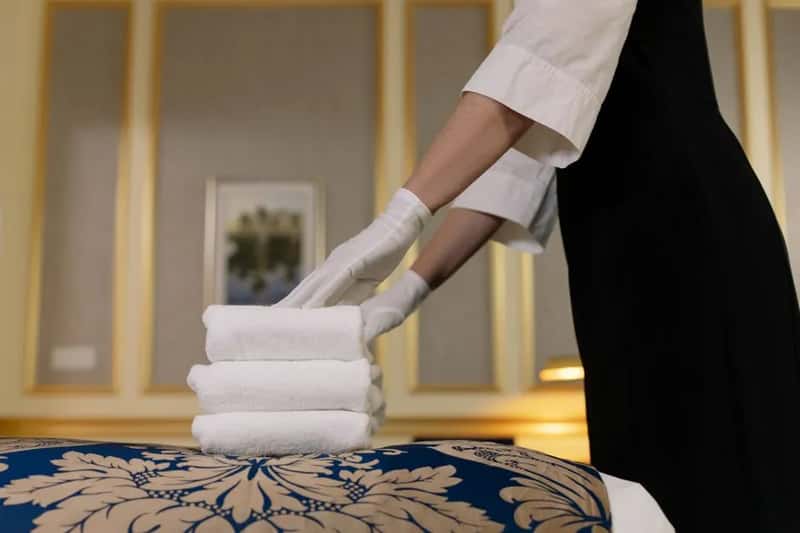
Housekeeping tipping has quietly become one of the more contentious habits in modern travel, and staff notice the pattern immediately over a multi-night stay. Recent survey data backs up what employees already sense on the floor. The percentage of Americans who always tip hotel housekeepers has been steadily declining, falling to just 23% according to a Bankrate survey.[2]
The math is simple from the staff side of the equation. Rooms with heavy mess, extended stays, and repeated extra requests take noticeably longer to turn around, and a lack of any gratuity for that extra effort tends to stick in a housekeeper’s memory of a particular guest far longer than the money itself would suggest.
4. Using white towels as napkins, makeup wipes, and grease rags
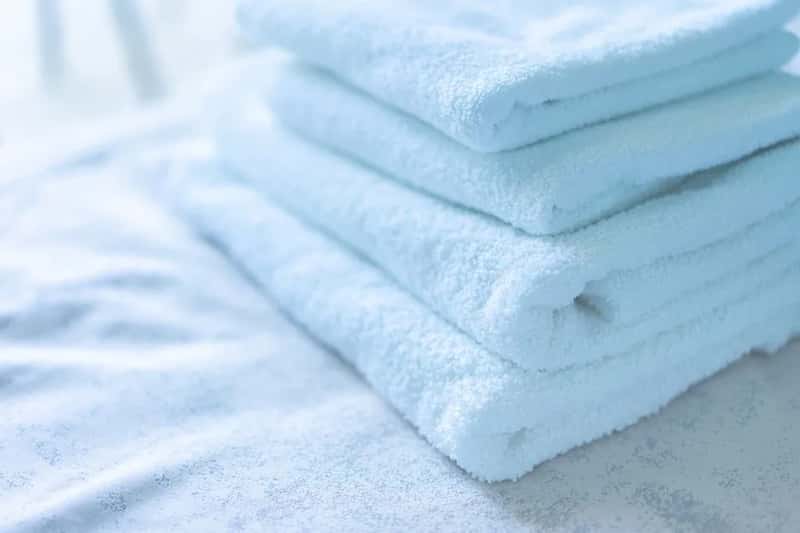
Bath linens are expensive to replace, and hotels budget carefully around expected wear. Staff say certain substances turn a normal towel into a write-off almost instantly. Nothing burns through a hotel’s linen budget faster than a guest who treats bath towels like disposable shop rags, and housekeepers say greasy hands, BBQ sauce, and makeup are the worst repeat offenders on white cotton.[1]
The problem isn’t limited to towels sitting in a hamper somewhere out of sight either. Housekeepers said guests often wipe greasy food-covered hands on white towels, sheets, and comforters instead of using paper towels or napkins, and BBQ sauce and makeup stains are especially common and difficult to remove.[4] Once a stain sets into cotton fibers, it’s often permanent, meaning the hotel absorbs the cost of an entire linen replacement for what should have been a two second decision to grab a napkin instead.
5. Letting trash pile up everywhere except the actual trash can
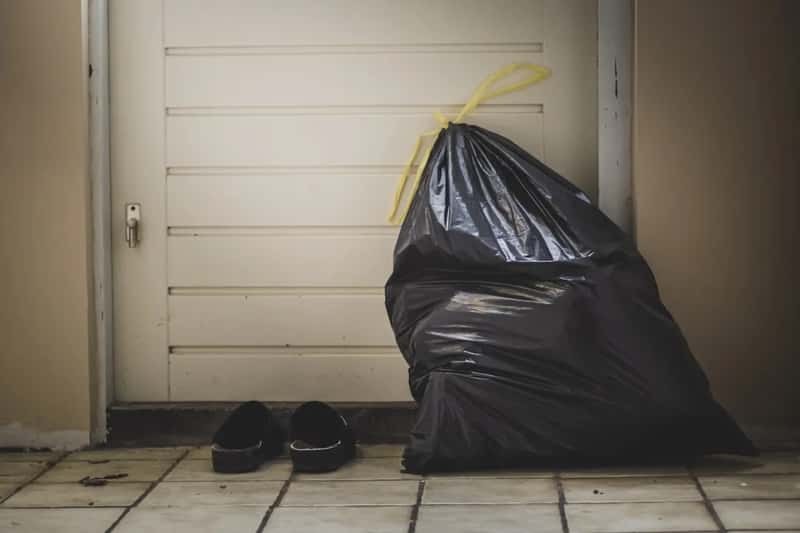
This particular habit is less about the mess itself and more about what it signals to the person who has to walk into that room. One of the most common complaints was guests scattering trash all over the room while the garbage can sits practically empty, with food containers, drink bottles, wrappers, and tissues left across tables and floors slowing down cleaning and creating unnecessary work.[4]
Certain food items make the problem noticeably worse than others. Seafood containers left behind are apparently the worst offenders, since the containers left in the room for days created a smell that permeated everything and required industrial strength fresheners to combat.[3] Even a well tipped stay can leave a sour impression if the housekeeper spends an extra twenty minutes just clearing a room before the actual cleaning can start.
6. Sitting there and watching housekeeping clean
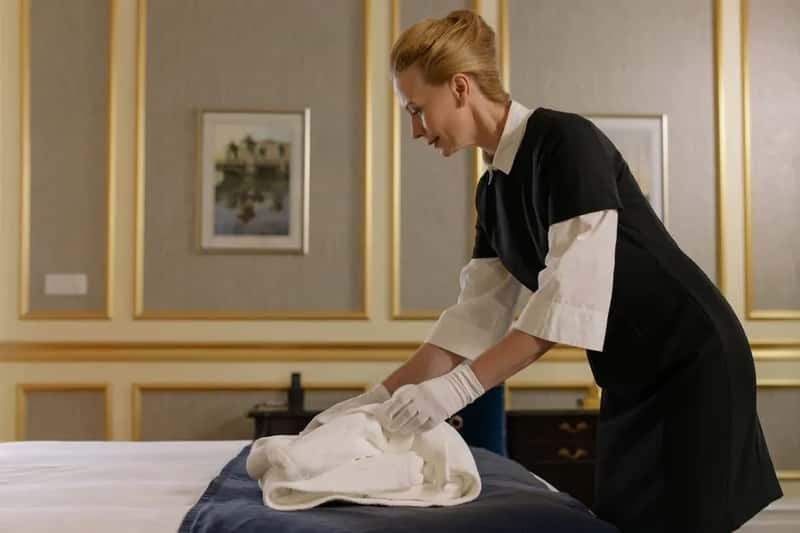
It sounds harmless, maybe even polite, to stay in the room while it’s being serviced rather than clearing out. Staff overwhelmingly disagree. Housekeepers overwhelmingly said they hate cleaning while guests sit there watching them work.[4]
The specific scenario that comes up most involves remote work rather than simple lounging. Many said they’d rather come back later than vacuum around someone attending Zoom meetings or lounging in bed.[4] It slows the job down, adds an awkward layer of self consciousness to routine tasks, and often means the room gets skipped and rescheduled anyway, which helps nobody.
7. Asking for towels or service while the Do Not Disturb sign is still on the door
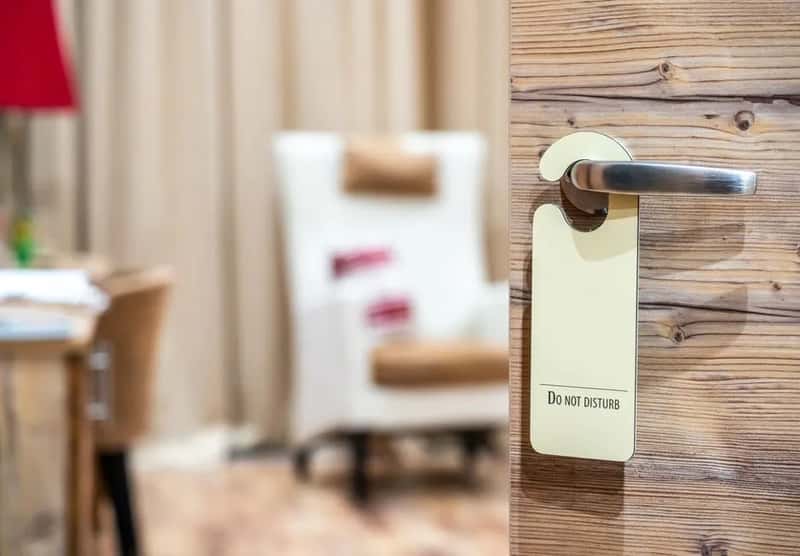
This is a variation on the sign problem, and it puts staff in a genuinely impossible position rather than just an inconvenient one. Front desk teams get calls constantly asking for exceptions to a rule that exists for security, not convenience. Guests sometimes call down asking for fresh towels or trash pickup while the sign is still on the door, and staff have to explain plainly that they cannot do both.[5]
The rule isn’t a matter of preference on the housekeeper’s part. A housekeeping manager described how this puts housekeepers in a terrible position, since they are not allowed to let anyone into a room, ever, a rule that exists for security reasons even though guests frequently ask anyway.[5] Guests often try creative excuses to get around it, but the policy doesn’t bend, and every attempt to argue the point just adds friction to an already busy shift.
8. Falsely accusing staff of theft when something goes missing

Losing a valuable item while traveling is genuinely stressful, and it’s understandable that panic sets in fast. Staff say the instinct to blame housekeeping first, before checking anywhere else, is one of the more damaging habits a guest can display. Accusing hotel staff is one of the worst things you can do when staying in a hotel, and it’s one of those things hotel keepers truly dislike, since they hate being the first suspects whenever guests misplace their belongings.[6]
In the vast majority of cases, the item simply ended up somewhere unexpected rather than in anyone’s pocket. The better approach is to be certain of what really happened before raising a false alarm, since in most cases it’s the guest’s fault, as hotel staff work under strict rules that prevent them from stealing from their customers.[6] Housekeepers also point out that missing items get blamed on staff far more often than staff actually take anything[1], which makes an accusation land especially hard on someone who had nothing to do with it.
None of these habits require special effort to avoid. A little courtesy toward the people cleaning up after a stay, some basic honesty about the Do Not Disturb sign, and a bit of care with towels and trash go a long way toward making a guest forgettable in the best possible sense, rather than the kind of guest a housekeeping team remembers for years.