The wheels touch the tarmac.
Your chest tightens.
Something that felt alive – something that had been running loose and unguarded – quietly begins to fold itself back into a smaller shape.
You stare out the oval window and you know, without quite having the language for it, that you are not simply landing in a city. You are landing back inside a version of yourself you didn’t miss as much as you thought you would.
This is the quiet, cavernous distance between who you are required to be – the job title, the family role, the neighbour, the dutiful adult – and who you actually become when nobody who knows your name is watching. Travel doesn’t create that other person. It simply removes the lid. It takes away the architecture of obligation long enough for something truer to surface. And then, ruthlessly, it ends.
1. The Mourning Is Real – And It Has a Name
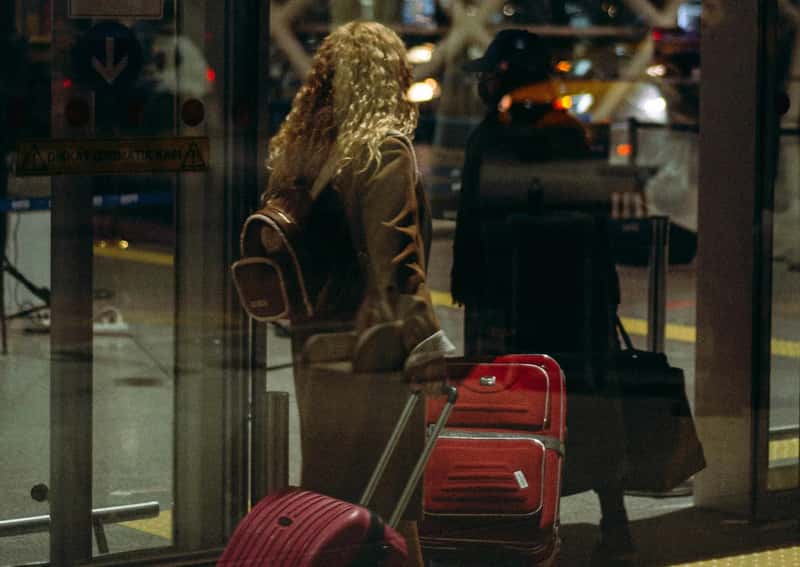
We need to stop softening this.
What you feel when the plane lands isn’t tiredness. It isn’t jet lag wearing a costume. It is grief – low, specific, and surgical.
Psychologists describe post-travel depression as a form of situational grief, mourning an experience that brought joy but cannot be relived in the same way. But that framing, tidy as it is, still misses the deepest cut. Because you aren’t just mourning a place. You are mourning a person – the one you became there.
Even joyful chapters require closure. The sadness that follows is often a quiet form of mourning. It is not dramatic. It is acknowledgment that something meaningful has finished.
That something is you. The version of you that finally had enough room to breathe.
2. The Temporary Identity
Here is a truth that most people feel but few say out loud: the person you become on the road is not a fantasy. They are not a vacation persona stitched together from cocktails and sunsets. They are a more complete draft of who you actually are.
Research documents how travelers often experiment with new behaviors, interests, and self-presentations while traveling alone, using these experiences to test potential identity elements. That testing is not escapism. It is excavation.
You find, somewhere between a delayed bus and a meal eaten alone at a table for one, that you are more curious than you thought. More patient. More open. More yourself.
What can leave a lasting impression is not just feeling happier abroad but how different one feels as a person.
And then the trip ends. And the excavation site gets covered over again.
3. The Architecture of Expectation
Home is not just a geography. It is a set of instructions.
It tells you how to sit, who to be, what to want, and what to suppress. During solo travel, we are free from all kinds of expectations. The self is relational, so it is formed by our relations with others. Who we are is not only who we decide we are but how others formulate that conception.
That’s the trap. The people at home – the ones who love you most – are often the ones holding the firmest blueprint of who you’re supposed to be. Not out of malice. Out of habit. Out of a portrait they painted years ago and haven’t updated since.
Abroad, nobody has that portrait. You move through a city and you are a stranger, which means – paradoxically – you are finally free to be yourself. The relief of anonymity is the relief of authorship. You get to write yourself without their footnotes.
4. The Brain on Movement
Travel doesn’t just shift your mood. It rewires your operating system.
Travel shifts how your brain operates while you are inside it. The environment demands attention, whether you are navigating unfamiliar streets or translating a menu in real time. Listening sharpens, small decisions carry weight, and your body moves more than it does at home. You fall into bed tired in a satisfying way.
That is not a small thing. That is a whole different neurological register. A different pitch of aliveness.
This new and exciting environment is constantly creating new connections within the brain, forcing you to come up with solutions for problems you face on your travels.
And then you come home. And the inbox is full. And nothing requires your full attention in that way. And the brain, which had been running hot and bright, begins to dim. The contrast doesn’t feel like relief. It feels like loss.
5. The Compass, Not the Crash
I remember landing back in my home city after three weeks abroad. I had been in a country where I didn’t speak the language, where I had to be completely present just to order dinner, where I had slept in four different beds and woken up each morning with a low, humming sense of forward motion.
Standing in the familiar arrivals hall, I felt the specific grey descend. Not sadness, exactly. Something heavier and more precise. The feeling of a door closing. I stood by the baggage carousel watching everyone else move efficiently back into their lives, and I thought: I don’t want the version of me that waits for this carousel.
What I didn’t understand then – and only understand now – is that the feeling wasn’t a malfunction. The depression that followed wasn’t a crash. It was a compass. It was pointing, clearly and without apology, at something that needed to change. The grief of return is almost always the grief of clarity. It is what happens when the lights get turned on.
6. The Reverse Culture Shock Nobody Warns You About
We prepare for culture shock going out. We plan for the unfamiliar – the different food, the language barrier, the customs that don’t match our own. Nobody prepares us for the shock of coming back.
What many people call post-travel depression often overlaps with reverse culture shock. We expect culture shock when we land somewhere unfamiliar. We rarely expect it when we return to the place we thought we knew best.
Home feels foreign in a way that is harder to name. Home did not change while you were gone. The cabinets are still in the same place. The commute takes the same time. The grocery store still plays the same music. Nothing shifted on the surface. But you did, and that difference can sit quietly under everything.
You walk through your own front door and feel like a guest in a house that has your name on the lease but not on its bones.
7. The Identity Gap Nobody Talks About
There is the person the world at home sees. And there is the person you were last Tuesday, eating something you couldn’t pronounce, talking to a stranger you will never see again, laughing in a way that was completely unperformed.
Here is the identity gap nobody talks about: the version of you who existed last Tuesday in a narrow cobblestone street, eating something you couldn’t pronounce, laughing with strangers – that person felt real. This version, the one standing in the fluorescent light of your own life, checking a work inbox that never actually emptied – this one feels like a costume.
That feeling is not ingratitude. It is not wanderlust dressed up as philosophy.
It is your most honest self recognizing the performance. It is the gap between alignment and role-play. It’s about alignment. The life you’d returned to no longer aligned with the person the trip had quietly confirmed you were.
8. The Cost of Compression
Every time you come back and compress that expanded self back into the container of your daily life, there is a cost. It is not dramatic. It does not announce itself.
But it accumulates.
Without integration, we may even feel despondent about losing a way of being – a way of thinking, feeling, viewing the world, and interacting with others – that felt harmonious, healthy, and authentic at the time.
The cost of that compression is a kind of low-grade identity dilution. We talk about burnout, workload, engagement. But we rarely talk about identity dilution. The slow erosion of clarity.
Each return that goes unprocessed is a slow agreement to be slightly less than what you briefly became. The suitcase gets unpacked. The tan fades. The clarity, if you don’t protect it, goes with both.
9. The Dopamine Story Isn’t the Whole Story
The clinical explanation is tidy. Dopamine spikes during travel. Novelty floods the reward system. You come home, the novelty ends, the levels drop, and you feel flat. Case closed.
But the dopamine story is a reduction. It explains the mechanism without explaining the meaning.
It reduces a crisis of identity into a question of brain chemistry. And that framing, however comforting, lets us off the hook from asking the harder question: what is it about the life I’ve returned to that cannot hold me?
The quiet disaster of post-vacation depression that no wellness article wants to touch: sometimes the reason returning home hurts is because home, in its current form, is wrong for you.
Not forever. Not catastrophically. But meaningfully. And meaningfully is enough to pay attention to.
10. The Exit Strategy You Actually Need
The answer is not another flight. Not yet.
The answer is integration – the slow, disciplined work of carrying the person you became back into the life you’ve built. Not wholesale reinvention. Intentional translation.
One’s attitudes, character, and identity can shift while abroad, upon one’s return, and when re-adjusting to one’s home life. The newfound sense of self can, sadly, be lost – or mostly lost – when coming back home. But it doesn’t have to be. This means taking steps to make the new model of self a reality, rather than let it be a slice of time to fondly look back on.
Instead of trying to recreate the trip, identify what felt most alive while you were away. Maybe it was slower mornings, longer walks, or deeper conversations. Bring those elements home with intention. Restructure small parts of your week.
The grief of landing is real. Honour it. But then ask it what it is trying to tell you. Because the trip didn’t break your life. It just turned the lights on. And now you can see the walls.
Seeing the walls is not a tragedy. It is the beginning of deciding what to do with the room.
There is a particular kind of silence that waits for you in your own hallway. Not the silence of peace. The silence of a space that has not changed while you have. It holds the shape of the person who left, and you step back into it like stepping into a coat that no longer quite fits – familiar in its weight, slightly wrong in its dimensions.
The mourning is the most honest thing you will feel all year. It is the part of you that has tasted a more complete version of yourself and refuses to fully forget what that tasted like. Grief, when it is this specific, is never just sadness. It is a record of what mattered. It is evidence that something was real.
So let the plane land. Let the mourning come. But somewhere between baggage claim and the familiar dark of your own street, make a quiet promise to the version of you that was briefly, completely, unapologetically alive – that you won’t leave them entirely behind in the departure lounge this time.