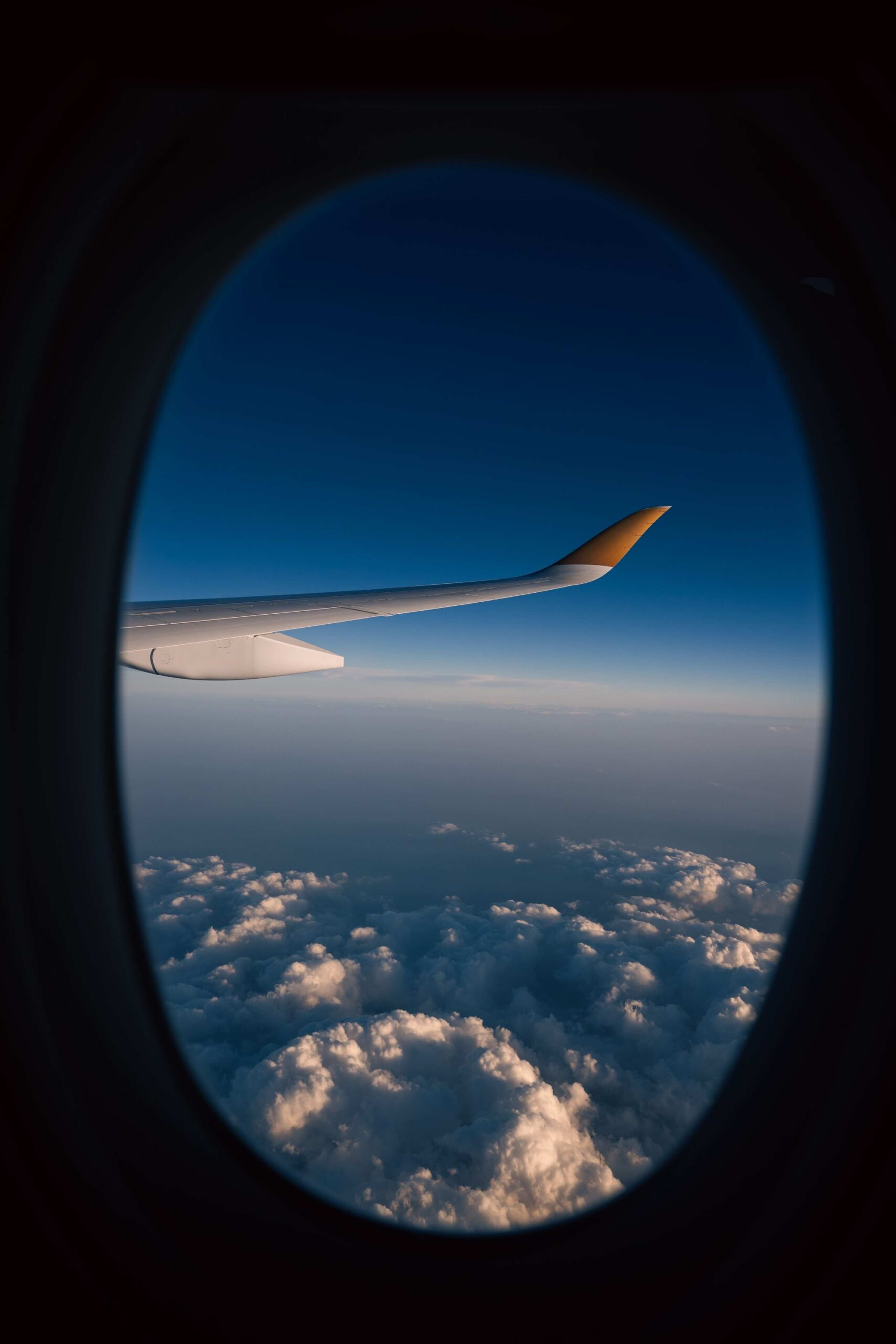
You are standing on a street corner you don’t recognize.
The signs are in a language your mouth can’t shape.
The smell of something fried and unfamiliar drifts past you like a dare.
Your phone is dead. Or maybe you chose not to look at it.
And somewhere, quietly, underneath the low hum of panic – there is something else. Something that feels dangerously close to joy.
This is the space between the version of you who once couldn’t find the exit and the version of you who now, passport-worn and street-smart, chooses to walk deeper into the unknown anyway. The gap between the person who was once told – or told themselves – that they weren’t capable, and the person who keeps showing up in foreign cities just to prove that old voice wrong.
Most of us travel for the photographs. For the itinerary. For the story we’ll tell at dinner parties. But some of us travel for something quieter and more urgent. We travel to settle old scores – not with other people, but with older, smaller, more frightened versions of ourselves.
1. The Temporary Identity
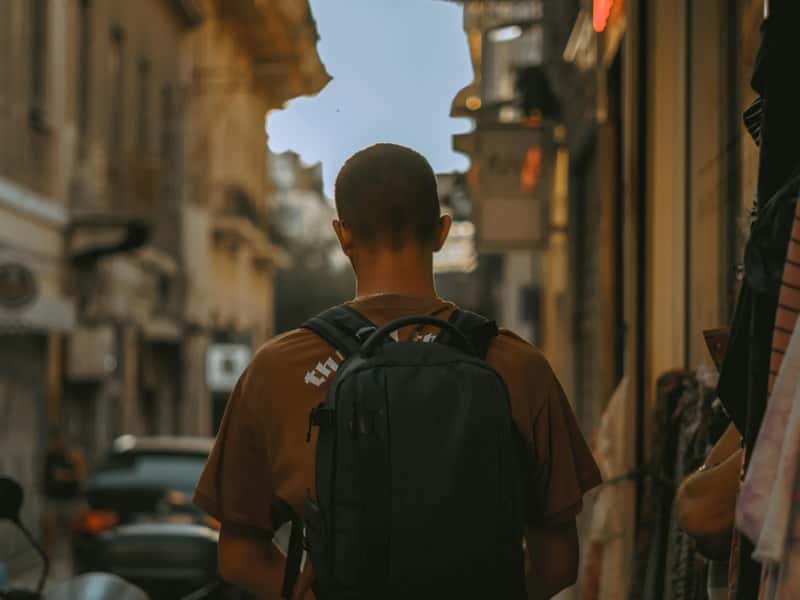
When you land in a city where no one knows your name, something extraordinary happens.
You stop being the version of yourself that your job built.
You stop being the version that your family shaped.
You stop being the character everyone back home has already decided you are.
Travel moves us away from the things that normally define us and thrusts us into a blank canvas – one where we are temporarily free from personal history, expectation, and routine. This is not escapism. This is excavation.
In the temporary identity, you get to ask a question you rarely have the courage to ask at home: Who am I when no one is watching?
The answer arrives slowly. In a café where you order by pointing. On a bus where you miss your stop and don’t panic. In the moment you realize you’ve been wandering for two hours and you are not afraid.
The temporary identity isn’t fake. It might actually be the most honest version of you that’s ever existed – unburdened by the sediment of other people’s expectations, moving through a world that doesn’t need you to perform.
That lightness you feel? That’s not vacation.
That’s clarity.
2. The Old Fear You Packed Without Knowing
Every traveler carries two bags.
The one with the clothes. And the one with the fear.
The fear that you’re not smart enough to navigate this. The fear that you’ll get it wrong – the train, the currency, the cultural custom. The fear that you’re fundamentally someone who gets lost and stays that way.
That fear didn’t originate in the airport. It was packed years ago, by a child who was corrected too often. By a teenager who was told to be more careful, more cautious, more realistic. By a young adult who failed publicly and quietly decided that uncertainty was the enemy.
Solo travel dramatically reshapes one’s identity by shedding attachments and inner roles. But here’s what no one tells you: the shedding isn’t painless. It requires you to first acknowledge the weight you’ve been carrying. The old fear doesn’t evaporate the moment you board the plane. It sits with you on the taxi to the hotel. It whispers in the first unfamiliar street. It waits.
And then you navigate anyway.
And it gets a little quieter.
That’s the whole game.
3. The Dopamine of Direction
There is something neurologically electric about finding your way.
Not with GPS. Without it.
The act of orienting yourself in an unknown space – reading shadows, following the logic of a city’s grid, asking a stranger using only your hands – is the brain doing something ancient and deeply satisfying.
Neuroimaging research has revealed that the hippocampus, a brain region critical for spatial navigation, exhibits increased activity when individuals explore unfamiliar locations, indicating its role in rapidly encoding novel environmental information.
Your brain, in other words, is lit up. Alive in a way it rarely is during the commute to the office or the scroll through the feed.
From a psychological standpoint, novelty is a key component of our brain’s reward system – it triggers the release of dopamine, the “feel-good” chemical.
But getting found after being lost delivers something even more specific than novelty. It delivers proof. The dopamine isn’t just chemical. It’s biographical. It writes a new sentence into the story you tell about yourself.
The sentence reads: I found my way.
And it echoes backward, into every moment you thought you couldn’t.
4. The City as Mirror
Foreign cities are brutally honest mirrors.
They don’t care about your reputation. They don’t know your history. They don’t adjust their pace for your comfort.
A narrow street in Lisbon doesn’t widen because you’re anxious. A metro system in Tokyo doesn’t simplify itself because you’re tired. The souk in Marrakech doesn’t quiet down because you need a moment.
The city is indifferent. And in its indifference, it reveals you.
As one researcher put it, “doing tourism can be germane to our negotiation of identity amid moments of disorientation and belonging.” Disorientation itself has been defined as leading travellers to experience geographical, emotional, psychological, as well as physical dislocation.
But dislocation, in small and chosen doses, is precisely what allows you to see your own edges clearly.
You discover that you are more resourceful than the old fear claimed.
You discover that you can tolerate ambiguity. That you can read a room – even a room that speaks a different language.
The city doesn’t give you this. You had it already.
The city just had enough contrast to let you finally see it.
5. The Anecdote That Lives Inside Every Map
I remember getting lost in a city I will not name – because the city is beside the point.
What matters is this: I had been walking for three hours. My phone was in my bag and I had decided, with the particular stubbornness of someone who needs to prove something to no one in particular, that I would not look at it.
There was a version of me – younger, more convinced of his own limitations – who would have sat down on the nearest curb and waited for someone else to fix it. Who would have experienced being lost not as a puzzle but as a verdict.
That version of me had a voice. A specific one. It sounded like certainty. It said: You don’t know where you are. You never do.
But there I was. Reading the sky. Noting the direction of traffic. Listening for water, for crowds, for the particular density of noise that clusters around a train station.
And twenty minutes later, I found the square I’d been looking for.
I didn’t celebrate. I just stood there for a moment, very still, letting the knowledge settle in somewhere deeper than the surface.
Each independent decision in travel, from routes to meals, conveys preferences – and the crossing of new boundaries builds self-reliance; obstacles in travel are proof of one’s own judgment.
The map was never the point. The proof was.
6. The Exit Strategy as Self-Mythology
Every time you find your way out of a foreign street or a missed connection or a language barrier that felt like a wall – you are writing mythology.
Not the grand kind. The quiet, personal kind.
The kind that accumulates into a self-concept sturdy enough to stand on.
Travel improves psychological resilience through conquering travel difficulties related to an unfamiliar environment, socializing with new people, navigating new social dynamics, and forcing individuals to learn and adapt to life outside of their comfort zone.
Each exit found becomes a reference point. The next time life presents a maze – and it will, not in cobblestoned alleys but in boardrooms and hospital waiting rooms and conversations that feel impossible – the mythology whispers back: You’ve been lost before. You always find the way out.
This is not naïve optimism. It is evidence-based confidence, built one disoriented afternoon at a time.
The exit strategy isn’t a map.
It’s a memory.
And memories, once earned in the body, are harder to argue with than any voice that says you can’t.
7. The Version You Left at the Departure Gate
There is always someone you leave behind when you travel.
Not a person. A self.
The self that needed the familiar. The self that required the safety of a scripted day. The self that had quietly agreed with the world’s verdict that you were the kind of person who stays within the known perimeter.
Rather than helping us find ourselves, travel can actually help us dislocate from the sense of ourselves that is defined by other things and other people – travel can actually help us lose ourselves. And this loss, despite how frightening it sounds at the gate, is actually a form of relief.
You leave that version at departures. You don’t check it back in on the return.
Or maybe you do. Maybe you land and step back into the old routines and the old self reassembles around you like a familiar coat.
The emptiness of returning from travelling is not a simple feeling of nostalgia and space – it may be a sign of just a small expansion of your identity that can’t fully be embraced in your past context.
That discomfort when you return? That’s not the travel ending.
That’s the gap between who you were and who you have become, making itself known.
8. The Language You Speak in Silence
When you cannot speak the local language, something fascinating happens to communication.
It goes deeper.
You learn to read faces with a precision that years of fluent conversation had made lazy. You learn that a shrug can mean ten different things depending on the shoulders. That a smile offered slowly is different from one offered quickly. That eye contact in a foreign city is its own dialect.
It is through temporary disorientation that travellers experience heightened awareness to difference and an increased capacity to witness.
This hyperawareness is not just social. It is self-referential. When you can no longer hide behind the fluency of your native tongue, you are forced to become aware of every signal your own body sends out. You learn, sometimes painfully, that nervousness broadcasts loudly. That confidence is posture before it is words.
In the silence between languages, you hear yourself more clearly than you have in years.
The foreign city doesn’t teach you to communicate.
It teaches you to listen – first to the city, then to yourself.
9. The Address You Can’t Explain
There is a particular kind of place you find only when you are lost.
The courtyard that appears between two unremarkable walls. The bookshop with the sleeping cat and the owner who speaks to you in a language you don’t know and somehow you both understand everything. The café at the end of a lane that dead-ends into water, where the coffee is too strong and the afternoon light does something extraordinary to the table.
You cannot find these places on any map. You cannot search for them. They require your disorientation as an entry fee.
Few studies examine why some tourists aim to be disoriented and psychologically ‘disconnect’ from their usual comfort zone in order to increase the level of emotions of the places they visit. But any seasoned wanderer will tell you, instinctively, without requiring a study: the best things are found when you are not looking for them.
The address you can’t explain is a coordinates problem for other people.
For you, it exists as a feeling. A specific quality of light and proximity and luck that science hasn’t fully charted.
And it only finds you when you are willing to be, for a little while, genuinely lost.
10. The Message to the Person You Used to Be
Here is what no one says clearly enough.
The pride you feel when you find your way out of a foreign city is not about the city.
It is a letter.
Written in sweat and wrong turns and the particular relief of a recognizable landmark emerging from the confusion – it is a letter addressed to an earlier version of yourself. The one who doubted. The one who was smaller, not in stature, but in the circumference of what they believed they were capable of.
Travel presents opportunities for personal development in areas of self-efficacy and confidence due to the constant adjustments people make to different cultures, languages, and environments. But the real letter isn’t about self-efficacy as a concept. It is about one specific afternoon in one specific city where you were uncertain and overwhelmed and you kept walking anyway.
The message to the person you used to be is not triumphant. It is quiet.
It says: We made it. We always make it.
It says: The thing you were afraid of – not knowing where you were – turned out to be the exact condition under which you found out who you are.
That is the pride. Not arrogance. Not performance. A bone-deep, private recognition that something old and limiting has been quietly disproven, one foreign city at a time.
And the past version of you – the one who hesitated at every threshold, who mapped every possible escape before stepping into any room – receives that letter. Not in any mystical sense. But in the only sense that matters: you remember. You carry the evidence of your own resilience forward, and it changes the way you walk into the next room, the next city, the next unknown.
The strange thing about getting lost is this. The city returns you to yourself – not to the defended, curated self you present at home, but to something rawer, quieter, and more capable than you’d given yourself credit for. The disorientation was never the problem. The disorientation was always the door.
Some doors don’t have signs. Some streets don’t lead where they appear to lead. Some versions of yourself only emerge when the usual landmarks have vanished and the only navigational tool you have left is the oldest one: the quiet, persistent belief that you can figure this out.
You found the square. You found the station. You found the way back. And somewhere in finding it, without quite meaning to, you also found the answer to a question you stopped asking years ago – not where am I, but who am I when I have no choice but to keep moving.
Stand still with that for a moment.