The airport terminal is dark at 5 AM.
You are fully awake.
Everyone else is a blur of coats and carry-ons.
You are somehow both here and not here – present in body, absent in documentation, invisible by design.
You will visit seven countries this year. You will remember every cobblestone, every impossible sunset, every meal that tasted like someone’s grandmother made it specifically for you. But you will have almost no photographs of yourself in any of it. You’ll have the world behind you. You just won’t be in it.
That isn’t modesty. That isn’t some enlightened rejection of social media vanity. That is a rule – older than your passport, older than your phone – that says: don’t be seen too much or something bad will happen.
The identity gap isn’t between who you are at home and who you are abroad. It’s between the person who bravely books the flight and the person who flinches at the idea of pointing a camera at their own face in a foreign square.
1. The Invisible Traveler
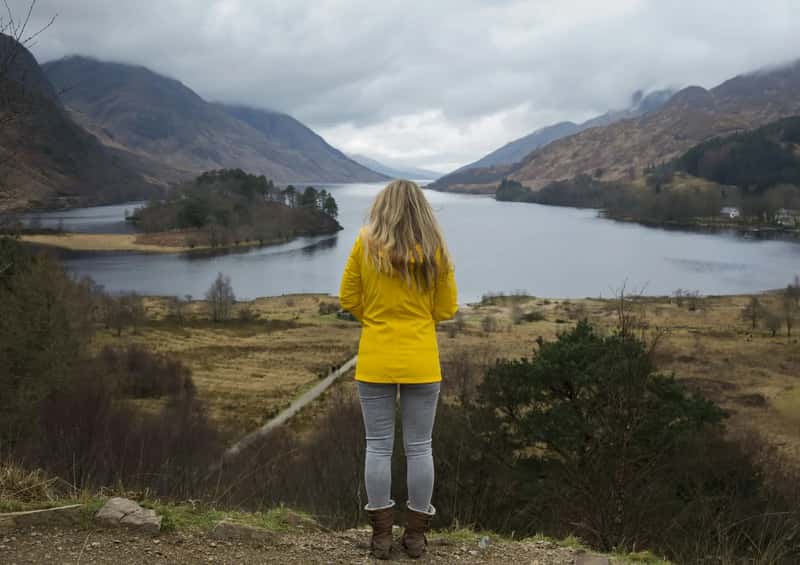
You photograph everything except yourself.
The fountain. The alley. The dog sleeping in a patch of Lisbon sun.
Everything gets documented – except the one thing that was actually there witnessing it all.
At its core, the selfie is a contemporary tool for self-exploration and identity construction. The act of taking and sharing selfies can be seen as an attempt to assert one’s existence. But for you, asserting your existence feels like tempting fate. You have perfected the art of tourism without presence. You move through spaces like a ghost – deeply affected, totally hidden.
This isn’t about aesthetics. It isn’t about not knowing your angles or hating the front-facing camera. It is about a much older, much quieter conviction: I should not take up too much room.
As early as childhood, we’re conditioned to shrink ourselves to fit into the space others expect us to occupy. It’s that unspoken rule – be small, be quiet, don’t take up too much space.
You brought that rule through customs.
It didn’t cost you anything extra in baggage fees.
2. The Original Programming
There was a room. There was a version of you that was loud, present, and hungry for attention.
Then someone – a parent, a teacher, a sibling with sharper elbows – sent a signal.
The signal wasn’t always a shout. Sometimes it was a look. A dismissal. A sigh so precise it became a verdict.
Shame can be imprinted implicitly in the earliest months or years of childhood and lodges mostly in the right brain, with its strong connections to the emotional and survival centers of the brain.
The brain stored that moment not as a memory but as a law.
Disturbing early childhood memories are processed by the right brain and stored nonverbally, beneath conscious awareness – as images, feelings, bodily sensations, and survival tendencies.
So now, thirty years later, you stand in front of the Colosseum at golden hour and feel a peculiar shame about raising your phone toward your own face. The shame doesn’t have a name. It doesn’t need one. It just sits in your chest like a small, heavy stone and says: Who do you think you are?
That voice is not yours. It was installed.
3. The Imaginary Audience
Here is the cruel architecture of it: you are in a city where no one knows you, surrounded by strangers who will never see you again – and you still feel watched.
The imaginary audience is a psychological state in which people have the mistaken impression that throngs of people are intently listening to or watching them. While this state may occur at any age, all adolescents experience it. This belief causes adolescents to construct imaginary situations in which they anticipate others’ reactions to them in social situations that have not yet occurred.
For most people, this fades with time. For those who were shamed into smallness, it doesn’t fully go away. It just travels with you.
The imaginary audience follows you to Marrakech. It sits across from you in the Thai street food stall. It hovers just behind your shoulder every time you think about pointing the camera at yourself instead of the scenery.
Maybe you were taught to shrink yourself growing up. Maybe you learned that being “too much” wasn’t safe – or that being seen came with strings attached.
The audience isn’t real. The feeling is very, very real.
4. The Visibility Tax
Some of us were raised in homes where visibility cost something.
Being noticed meant being assessed. Being assessed meant being found lacking. Being found lacking meant something was withheld – love, approval, peace.
Parents who set exceptionally high standards and focus on mistakes rather than successes instill a fear of failure and criticism. This can result in a lifelong struggle to avoid the spotlight, fearing judgment and disapproval.
So you learned to pay the visibility tax in advance by simply not being visible.
It worked. Nobody could criticize what they couldn’t see. You got smaller and safer simultaneously.
Shame becomes a destroyer that threatens to shatter the attachment–caregiving bond and the developing self. The message is “Stop in your tracks, or I’ll abandon and not protect you anymore.” This message bodes for relationship collapse and tells the child they are in danger.
The danger has long since passed. But your nervous system never got the memo. It still charges you the tax every time you try to simply be photographed in a beautiful place.
5. The Exit Strategy (A Personal Detour)
I need to tell you something about a market in Porto.
I was alone. The light was obscene in its perfection – amber and slanted, the kind of light that makes even cement look like it belongs in a painting. A woman next to me was laughing with a fishmonger, completely unself-conscious, her phone extended toward herself and the chaos behind her.
I stood there for eleven minutes. I know because I checked my watch three times. I wanted to take a photograph of myself in that light. I wanted to exist in that frame.
I couldn’t do it.
Not because I didn’t know how. Because something in my chest tightened – the same tightening I remember from being eight years old and wanting to tell a story at the dinner table, then looking at a face that said, we’ve heard enough from you.
What looks like personality is often old conditioning disguised as character.
I left the market with photographs of fish and strangers and that woman’s easy joy. I had no photograph of myself. I told myself I didn’t need one.
That was the exit strategy. Reframe the absence as a choice. That’s how the rule survives into adulthood: it disguises itself as preference.
6. The Residual Self-Image
Even when no one from your past is watching, you see yourself through their eyes.
The self-image formed in childhood doesn’t update automatically.
Poor self-image may be the result of accumulated criticisms that the person collected as a child which have led to damaging their own view of themselves. Children in particular are vulnerable to accepting negative judgments from authority figures because they have yet to develop competency in evaluating such comments.
You grow up. You get on the plane. You see new things. But the internal photograph – the one your family or early caregivers took of you – doesn’t get replaced just because the geography does.
Travel offers a radical opportunity. Could solo travel be popular because we are unconstrained by other’s expectations of us? It’s easier to rebrand ourselves, so to speak, when nobody who knows us is watching.
But here is the deeper truth: the warden isn’t external anymore. You internalized the critic years ago. They live in the same body that boards the flight. They’re in the window seat, telling you to stay small even over international waters.
7. The Permission Problem
Nobody said you couldn’t take a selfie.
Nobody needed to. The conditioning is complete enough that you police yourself.
Apologizing before you speak can become a social reflex when your voice used to be corrected, interrupted, or treated like a burden. You learn to soften your entrance. You try to make your presence easier for everyone else to handle.
The selfie is just the tip of this iceberg. It is the most visible, most photographic symptom of a much larger permission problem.
You wait to be invited into your own experience. You document the world around you while you hover just outside the frame. You are the witness, never the subject.
Feeling more comfortable being chosen than choosing can come from early environments where desire felt risky. Maybe your preferences were ignored. Maybe taking initiative brought criticism. Being selected by someone else then started to feel safer than selecting for yourself.
Nobody is going to grant you permission in a piazza in Florence. You have to take it.
8. The Temporary Identity
Here is what travel does that is both gift and trap: it makes you temporary.
When you are temporary, the old rules feel suspended. You can be anyone. Counterintuitively, placing yourself in uncertain situations ultimately builds greater confidence. Travel increases our tolerance for uncertainty and enhances our psychological flexibility, contributing to a stronger sense of self.
But the trap is this: because you feel temporary, you don’t fully commit to existing in the moment. You stay light. Unattached. Unphotographed.
You tell yourself that this is mindfulness – being present without documenting. Sometimes it is. But sometimes it is the old disappearing act wearing the costume of enlightenment.
First-person photos, which capture the scene as viewed through one’s own eyes, best represent the physical experience of an event. On the other hand, third-person photos, such as selfies, are more effective in conveying the deeper meaning of an event in people’s lives.
When you refuse to be in the photograph, you are not just skipping documentation. You are quietly saying: my presence in this moment doesn’t carry meaning worth preserving.
That is the childhood voice. Not wisdom. The childhood voice.
9. The Body in the Frame
There is something specifically physical about selfie resistance.
It isn’t just psychological. It lives in the body. The hand that won’t quite extend. The face that arranges itself into something apologetic before the shutter even clicks. The immediate urge to delete.
Shame is typically characterized by a negative evaluation of the self and hence prompts the person to show defensive and avoidance behavior.
That avoidance is physical. It is in the posture. It is in the held breath. It is in the way you crop yourself to the edge of the frame – visible but barely, present but only technically.
Adverse experiences in childhood, such as being overly criticised or observed in a critical way, can lead to scopophobia later in life. Children who were frequently under intense scrutiny or who were made to feel uncomfortable when being watched may develop this fear as adults.
The body remembers being watched badly. So it makes itself a smaller target. Even in Rome. Even in Kyoto. Even when the only person watching is a street pigeon with no particular opinion about you.
10. The Reclamation
This is the heaviest point, so read it slowly.
Taking a photograph of yourself is not vanity. It is not narcissism. It is not the shallow compulsion of the algorithmically anxious.
For those of us who were trained into invisibility, it is an act of radical self-confirmation.
People have a reasonable need to feel that their lives are important and that they are visible to others. Visibility is the end result of achievement or success, and it cannot be faked in order to make visibility an end in itself. But visibility also begins with the simplest declaration: I was here. I mattered in this moment. I existed in this specific light.
Trying to shrink to shape yourself into something you’re not for the sake of external approval will always result in pent up frustration and tension. You start experiencing life a lot more lightly when you allow yourself to just be exactly who you are.
The selfie, for the person who was taught to disappear, is a subversive act. It says: I refuse the old rule. I am the center of this moment – not because I demand everyone’s attention, but because I am a person, and persons are allowed to occupy frames.
Healing is about reclaiming your visibility, your voice, and your life. It is also about reclaiming your image – literally, photograph by photograph, in whatever city will have you.
The rule that being seen is dangerous was never yours. It was handed to you by people who were probably handed it by someone else. It was a survival strategy for a situation that no longer exists, enforced in a house you no longer live in, by voices that no longer have jurisdiction over your face in the Venetian afternoon light.
You are allowed to be in the photograph. You are allowed to take up the space of a full human being within the frame. You are allowed to look directly at the lens without apologizing for what it finds.
The world you are moving through is not the room where you first learned to make yourself small. The strangers passing behind you in that square are not critics. The light does not require you to earn its attention. It is simply falling on you, the way light falls on everything it touches – indifferent to whether you deserve it, generous regardless.
Point the camera at yourself. Hold it there for one uncomfortable second longer than feels safe. Let it click. And for once, do not immediately look away from what it shows you.