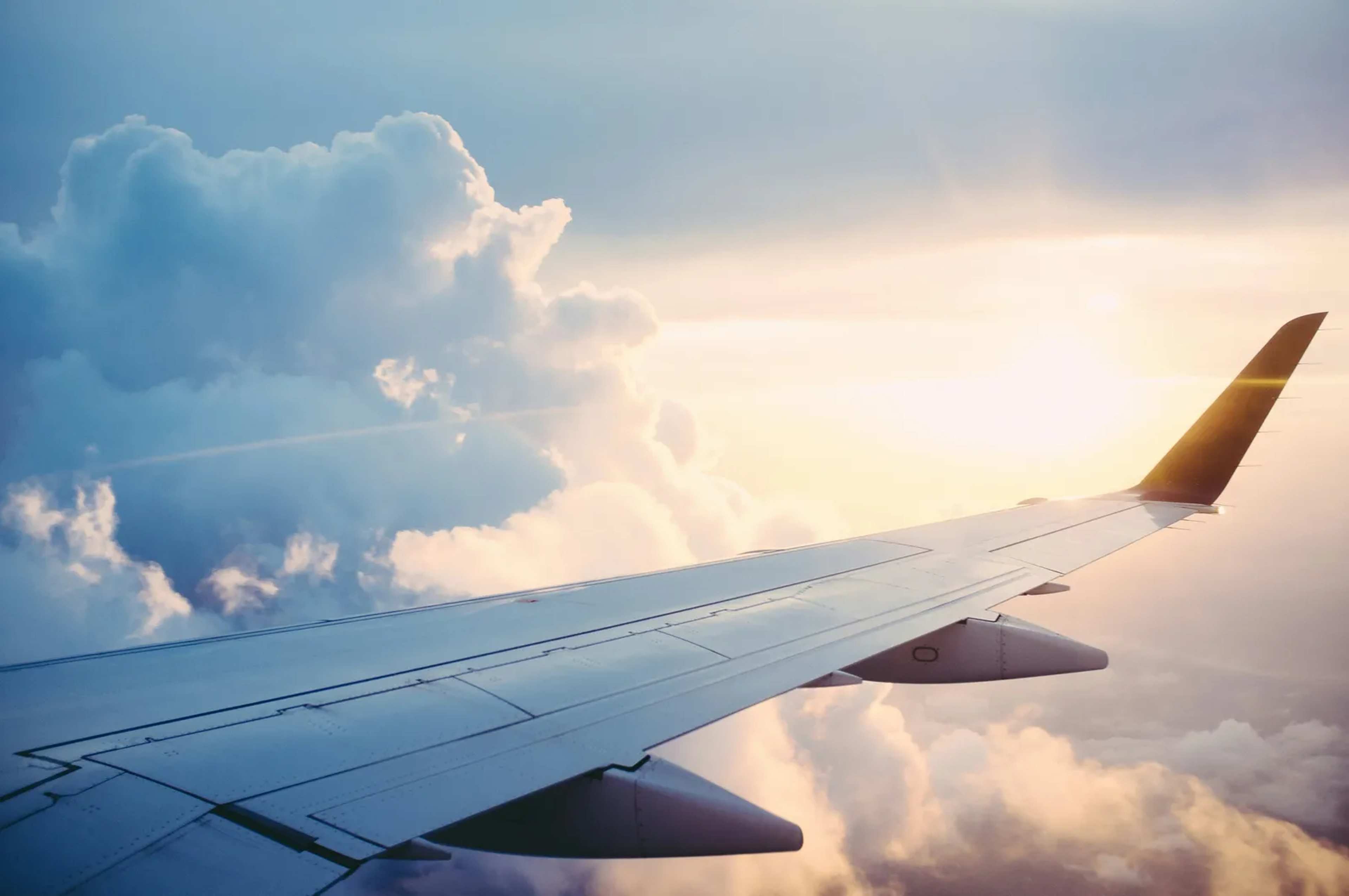
The cabin door seals shut.
Thirty thousand feet of borrowed sky stretches beneath you.
You need a glass of water. You’ve needed it for forty minutes.
And still – you wait. You rehearse the sentence. You add “I’m so sorry to bother you” before you’ve even pressed the call button.
This is not politeness. This is not courtesy. This is a wound that learned to wear a blazer and book a window seat.
There is a particular kind of traveler – careful, self-erasing, perpetually grateful for being allowed to exist in a space they paid for – who carries something ancient and heavy into every airport, every aisle, every foreign city. They move through the world like they are guests in a house they were never fully invited into. They apologize before they ask. They shrink before they speak. They tip extravagantly out of guilt, not generosity.
The airport strips identity down to its bones. No desk. No title. No home. Just you, a boarding pass, and forty years of learned smallness folded into a carry-on.
1. The Invisible Child
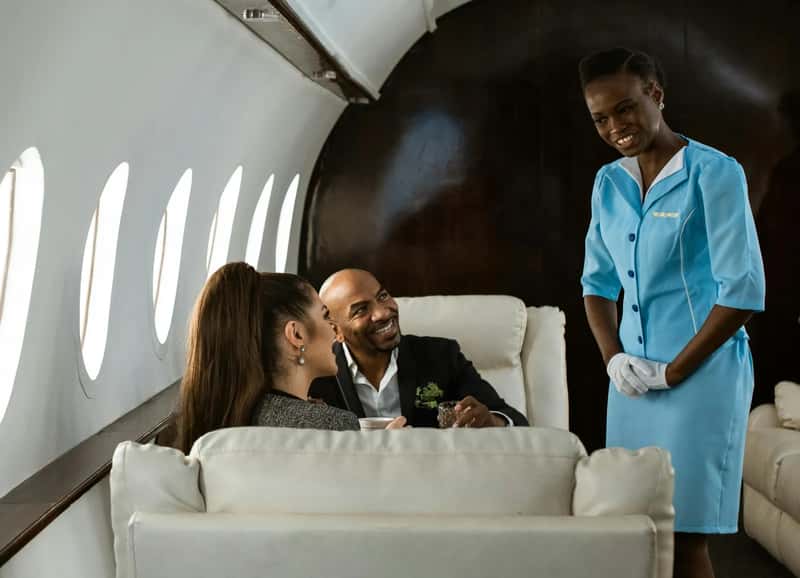
Children who felt invisible or overlooked during their formative years often apologize excessively as adults. When a child feels that they’re not seen or heard, they may internalize the belief that they’re not important or that their needs are a burden to others – leading to a constant need to apologize for speaking up, for having needs, or even for simply existing.
That child grows up. Boards a plane. Needs a blanket.
And feels, in that precise moment, like the most inconvenient person alive.
The cabin becomes the childhood home. The flight attendant becomes every adult who looked through you. The request – the perfectly reasonable, passenger-rights-guaranteed request – becomes an act of transgression.
You don’t ask loudly. You wave tentatively. You whisper “sorry” before the words fully form.
It’s as if you’re saying sorry for taking up space in the world. Recognizing the link between feeling invisible in childhood and excessive apologizing in adulthood is key to breaking the cycle.
You were seen. Just not enough. And the body never forgot.
2. The Emotional Thermostat
You learned to read rooms before you learned to read books.
Children in dysfunctional families often become the emotional regulators. They learn that keeping others happy keeps them safe.
On a plane, this survival software runs on autopilot. You scan the flight attendant’s expression before you press the button. Is she busy? Does he look stressed? Are there other passengers more deserving of attention?
In families where unpredictability is common, children may learn to become skilled at anticipating the needs of others – perhaps learning to read a parent’s face before they spoke, or figuring out that being agreeable kept the peace. That instinct becomes a reflex where taking responsibility keeps us safe, even into adulthood.
The plane is just a new theater for an old performance.
You scan. You calculate. You minimize your need. You apologize as a preemptive strike.
Not because the flight attendant is threatening. But because once, long ago, someone was.
3. The Fawn Response at Altitude
Psychology has a name for this. It lives alongside fight, flight, and freeze.
The idea that people-pleasing is a trauma response is part of what mental health professionals call the “fawn response.” In addition to the well-known fight, flight, and freeze reactions, fawning is another way the body and brain respond to conflict – instead of confronting or avoiding a relational problem, the fawn response means appeasing someone.
At 35,000 feet, there is nowhere to run. The freeze response is useless. The fight response is catastrophic.
So you fawn. Perfectly. Automatically. With a smile that costs you something.
Fawning often first develops in early childhood when a traumatic event has been perpetrated by a parent or primary caregiver. A child who has been abused may learn to fawn to avoid any further abuse.
Travel collapses control. It removes the familiar. And when the familiar disappears, the nervous system reaches for its oldest, most reliable tool.
You say sorry. The word arrives before the thought. It always has.
4. The Earned Love Blueprint
Some of us were loved conditionally. We just didn’t know that wasn’t normal until much later.
When affection depends on grades, behavior, or accomplishments, children learn they must constantly earn their place in relationships. Any perceived failure to meet expectations triggers an avalanche of apologies. These patterns create adults who apologize for not being enough.
On a plane, this translates into a specific kind of performance. You pre-justify the request. You frame your need as a burden. You soften the ask until it barely resembles an ask at all.
“I’m sorry, I know you’re busy, I don’t want to be a problem, but maybe – if it’s not too much trouble – could I possibly…”
They expect that for others to like them, they must consistently put the feelings and needs of others above their own. They do this because they have been raised to believe that they will only be loved for what they give and not for who they are.
The flight attendant is just doing their job. But somewhere beneath the cabin pressure, you are still earning your seat at the table.
5. The Shrinking Suitcase
I still catch myself doing it. Last year, somewhere over the Atlantic, I needed the overhead bin repositioned. A simple ask. The kind any passenger makes without ceremony.
I rehearsed the sentence four times. Added three qualifiers. Considered just not asking at all.
And when I finally spoke, the first word out of my mouth was “sorry.”
If you constantly apologize for things like asking questions, taking up space, or having basic human needs, you might be carrying invisible childhood wounds that shaped your adult behavior in ways you never realized.
I grew up in a house where need was noise. Where wanting something meant disrupting something. Where the safest version of yourself was the smallest one.
Low self-esteem can make you feel you don’t deserve love or support. Apologizing becomes a way to shrink yourself, to avoid imposing on others. You doubt your worth and feel the need to justify your existence.
A suitcase holds everything you need. But what do you do when you’ve been taught to pack yourself away too?
6. The Conflict Avoidance Detour
Some travelers reroute entire itineraries to avoid turbulence. Not meteorological turbulence. Interpersonal turbulence.
Would you rather apologize for something you didn’t do than risk even the smallest disagreement? This peace-at-any-price mentality often stems from childhoods where conflict meant danger, abandonment, or emotional withdrawal.
Travel is a landscape of minor conflicts. The wrong seat assignment. The missing meal choice. The delayed boarding that nobody is explaining. In each of these micro-moments, the childhood-trained nervous system fires the same ancient signal: smooth it over, shrink, apologize.
In families where arguments or disagreements led to explosive confrontations or punishments, you might have adopted apologizing as a means of keeping the peace. Saying sorry becomes a defense mechanism to de-escalate situations before they turn hostile.
The aisle is not your battleground. But your body thinks it might be.
Every unanswered need becomes a potential detonation. So you defuse it early. With a word that costs you your dignity in small, invisible installments.
7. The Hypervigilant Radar
You notice everything. You always have.
Do you walk into a room and immediately scan everyone’s mood? Can you sense when someone’s energy shifts, even slightly? This emotional radar might feel like a superpower, but it often comes from growing up in an environment where reading the room was essential for emotional or physical safety.
In an airport or on a plane, this radar works overtime. You track the flight attendant’s pace. You clock the tension in the galley. You feel the passenger behind you shift their weight and immediately wonder if it’s somehow your fault.
Internally, they’re exhausted. Because managing everyone else’s emotional temperature while ignoring your own is unsustainable work. It’s a full-time job with no days off, and the only payment is the temporary relief of not being blamed for something.
Travel should be escapism. But you can’t escape a nervous system.
The hypervigilant traveler doesn’t see destinations. They see potential disappointments. Exits. Faces that might, at any moment, shift into something threatening.
8. The Permission Seeker
You don’t just apologize for your needs. You ask permission to have them.
The words “sorry to bother you” have probably left your mouth more times than you can count. You preface every need with an apology, as if your existence itself requires permission. This isn’t politeness – it’s a learned response from watching someone minimize their own needs so consistently that you internalized the message that wanting anything is an imposition.
In the context of travel, this manifests with quiet devastation. You don’t flag down the flight attendant – you wait until they pass near you. You don’t request the vegetarian option you pre-ordered – you eat whatever arrives. You don’t ask about the turbulence – you grip the armrest and manage alone.
Growing up, expressing needs might have been met with anger, dismissal, or punishment. So we learned to suppress them entirely. Now, as adults, we apologize for having preferences, opinions, or basic human requirements.
Permission was never yours to ask for. But nobody told you that early enough.
9. The Perfectionist Passenger
You prepared for this trip obsessively. Every detail locked down. Every contingency planned.
Because perfectionism fuels the cycle. If you hold yourself to impossibly high standards, you may feel compelled to apologize for even minor slip-ups – or for things that aren’t your responsibility at all.
Needing help mid-flight is an imperfection. It means the plan broke. It means you required something. And somewhere in the architecture of your childhood, requiring something meant being too much.
If you can’t make mistakes, you won’t give anyone a reason to be angry with you. This exhausting logic drives many chronic apologizers to pursue impossible standards. We apologize not just for actual mistakes but for any perceived imperfection.
The plane becomes a performance stage. The request – the blanket, the water, the aisle seat – becomes a scene where you might be judged as difficult, demanding, not worth the trouble.
You were never too much. You were just raised in rooms that made you feel that way.
One of the most important things to understand about chronic over-apologizing is that it’s not a conscious decision. The person isn’t thinking, “I should take the blame for this to keep the peace.” The apology fires before thought even enters the equation. It’s a reflex, hardwired by thousands of repetitions in childhood.
This is the real cost of childhood invisibility. It doesn’t stay in the childhood home. It books the seat next to you. It fills out the same passport. It follows you through every customs line, every hotel lobby, every moment when you could have simply asked – and didn’t.
The traveler who apologizes for basic requests is not weak. They are not rude. They are not strange. They are someone who learned, very young and very thoroughly, that their needs were a disturbance in someone else’s peace. That love was conditional. That space was borrowed, not owned. That asking cost something.
You survived a childhood that required you to shrink yourself. The plane did not ask that of you. The flight attendant did not ask that of you. The world beyond your origin story does not ask that of you.
The water is free. The blanket is free. The aisle is wide enough for two people.
You are allowed to need things without explaining why.