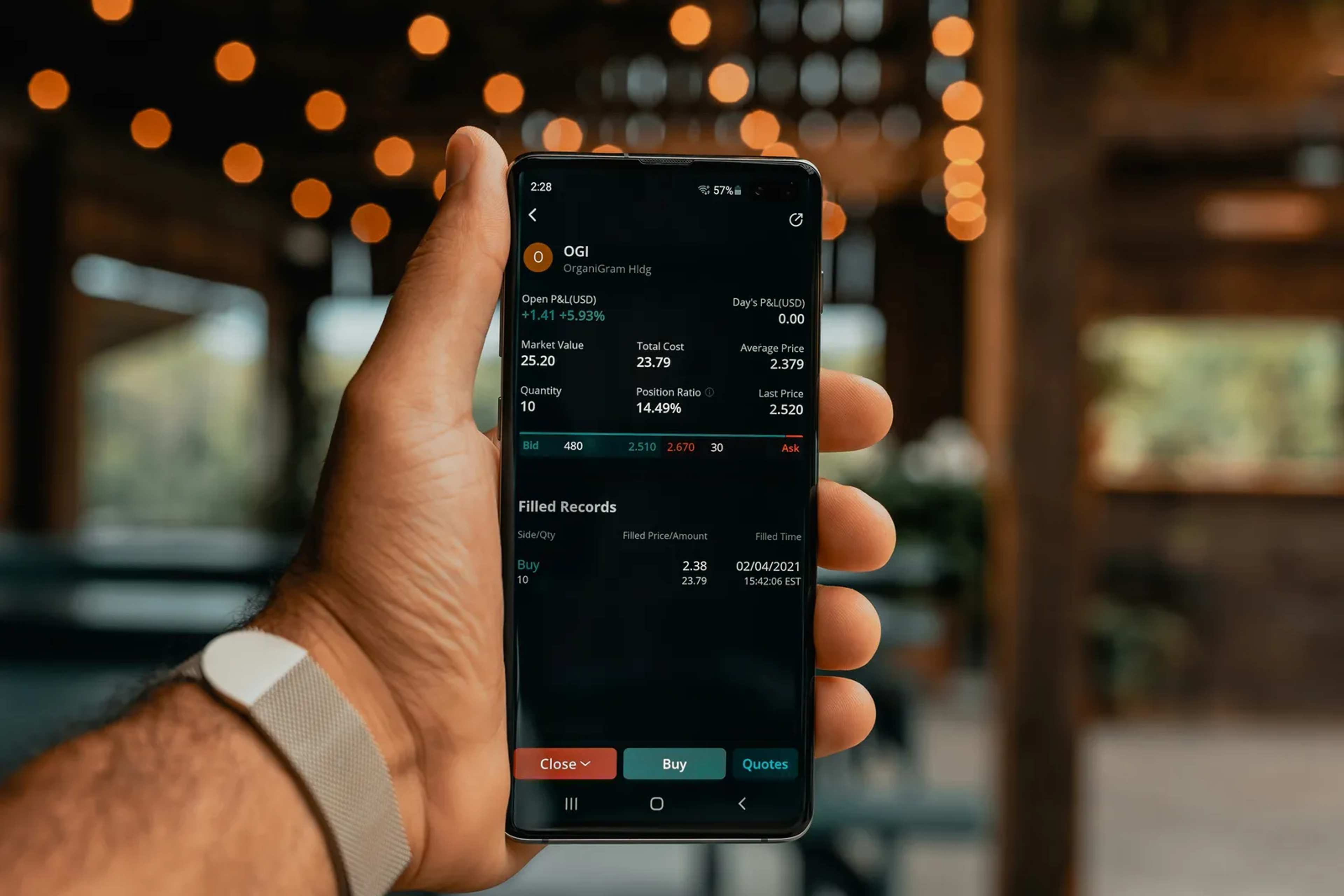
You open a new tab.
You type the city’s name plus the word “jobs.”
You tell yourself it’s just curiosity.
It isn’t.
There is a specific kind of person who does this. They scroll job listings in cities they are only visiting for a long weekend. They calculate rent differentials at midnight in hotel rooms that smell like someone else’s soap. They screenshot apartments they will never rent in neighborhoods they will leave by Sunday. They are not being irrational. They are doing something far more precise than it looks. They are holding an alternate self up to the light, turning it slowly, checking to see if it fits.
The gap between who we are and who we sense we were supposed to become is one of the quietest forms of suffering. If there is a distance between who you are and who you want to be, escape can soften the sting of that reality – but rather than taking action to close the gap, you numb the pain of seeing it. The job search tab is not a plan. It is anesthesia. It is a controlled dream, opened and closed before anyone can see it.
1. The Temporary Identity
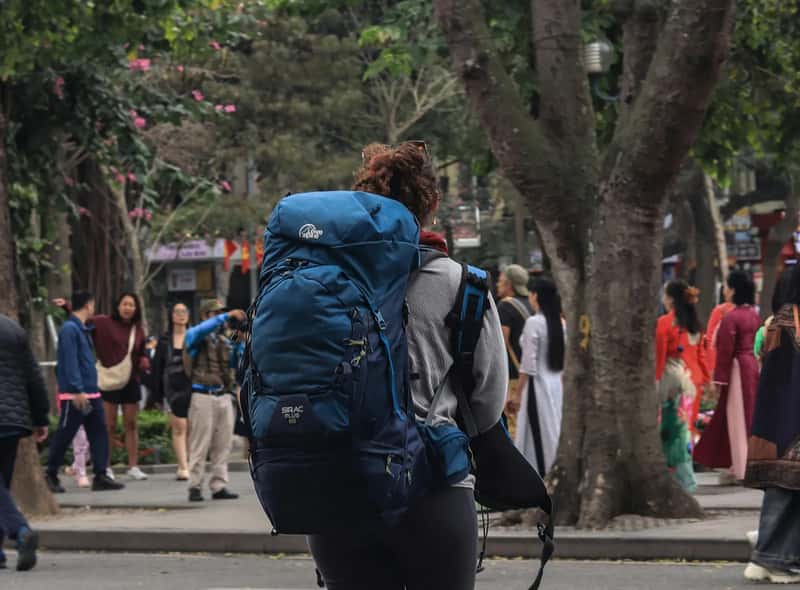
Every city offers you a costume.
Not a disguise. A costume. There is a difference.
A disguise is meant to deceive others. A costume is meant to let you try on the version of yourself that didn’t get laughed at, overlooked, or told to be quieter at the dinner table. Travel is “a means to reshift and reorganize identities,” and when you research jobs in a new city, you are doing exactly that – reorganizing. You are asking: who would I be if I started here, with none of my history dragging behind me like a long shadow?
The temporary identity is seductive precisely because it is unchallenged.
No one in Lisbon knows about the promotion you didn’t get. No one in Nashville knows your mother’s tone of voice when she said your name in disappointment. You arrive clean. You arrive unwritten.
The tragedy is that the self you carry inside is not checked at the border. It comes with you. It always does. But for a few hours with the job listings open and the city’s skyline outside the window, the temporary identity feels absolutely real.
2. The Exit Strategy
There is a special comfort in knowing you could leave.
This is not about actually leaving. This is about the feeling of having a door. People who research jobs in other cities are often not planning to move – they are constructing an emergency exit in their minds, and the construction itself is the relief.
Creating a physical distance between sources of discomfort can create a feeling of safety. The exit strategy is a self-protection mechanism. It whispers: you are not trapped. You have choices. You could, if you wanted, become someone who lives in a city with better light.
Childhood teaches some people very early that they have no exits.
A chaotic household. An unstable parent. A neighborhood where the rules changed without warning. When you grow up without reliable exits, you spend adulthood quietly building them everywhere you go – in fantasy, in browser tabs, in job listings at 1 AM in a hotel room in a city you are leaving on Tuesday.
The exit strategy is not weakness. It is a child’s solution, carried forward into a body that is technically free, but has not yet fully believed it.
3. The Clean Slate Architecture
The fantasy is not really about the city.
It is about the absence of accumulated evidence against you.
Every place you have lived long enough has absorbed your failures. The coffee shop where you had the bad phone call. The street corner where the relationship ended. The apartment where you understood, slowly and badly, that something in you wasn’t working the way you’d hoped. Places become archives of your worst moments. While moving is often stressful, it also presents an opportunity for personal growth and renewal, with a change in location bringing new experiences and a fresh perspective on life.
The clean slate architecture is the belief that a new city means a new record.
No accumulated evidence. No witnesses.
This is why the job listings matter. A job is a social contract. It says: this city will hold you. It gives the fantasy a structural foundation – income, routine, colleagues who will only know the you who showed up confident on the first day. The clean slate is not about reinvention. It is about finally getting to meet the person you think you are underneath all the evidence to the contrary.
4. The Parallel Life Simulation
You see a listing. Software manager. Austin, Texas. Reasonable salary. The office is near a river.
And without deciding to, you run the simulation.
You imagine the apartment – probably with high ceilings. The coffee shop two blocks away. The drive to work on a Tuesday with no one in the car who remembers you before you became whatever you are now. A person who expresses a desire to live somewhere quieter has stated a preference. A person who can describe their Wednesday routine in detail has built a life. The former is fantasy. The latter is architecture.
The parallel life simulation is running dozens of these at once.
Each city holds one. Each job listing is a doorway into a room where a different version of you is doing fine.
That version did not absorb the lesson that they were too much, or not enough, or somehow structurally wrong in ways that couldn’t be fixed. They just went to Austin one day, took the job near the river, and became – quietly, without ceremony – okay.
5. The Wound Geography
I used to do this in every airport.
Not just cities I visited. Any city with a departures board. I would look at the destinations – Denver, Toronto, Edinburgh, São Paulo – and I would feel something loosen in my chest. Not relief exactly. More like the memory of relief. The idea that distance could be a cure.
I understand now what I was actually measuring. I was measuring how far I would have to go to outrun a version of myself that was formed somewhere specific, by something specific, in a house that no longer exists. The wound has geography. It is located somewhere in a childhood room, in a specific quality of afternoon light, in the sound of a door closing in a particular way.
Travel activates entirely different neural networks than our day-to-day routines, making it a potent escape mechanism. The sensory overload of a new place floods the brain’s reward circuitry with enough novelty to temporarily drown out everything else. That drowning out is what we are after. The wound’s geography is neutralized, temporarily, by the geography of somewhere new.
What we are searching for in those job listings is a city that the wound has not yet reached.
6. The Reinvention Protocol
The reinvention fantasy has a very specific texture.
It feels like standing in a new kitchen on the first morning. Coffee you made yourself. Sunlight you haven’t memorized yet. A version of your daily life that hasn’t been contaminated by the person you were before you understood what contamination was.
Many avid travelers claim they travel to “discover” themselves by being open to new experiences. But discovery is rarely what’s happening. What’s happening is more surgical. You are not looking for something unknown about yourself. You are looking for confirmation that the self your childhood tried to reduce you to is not the final version.
The reinvention protocol is hope in disguise as practicality.
The job listing makes it feel responsible. Logical. Grounded. It is not a fantasy, you tell yourself – it is research. But research is what we do when we want permission to believe something. The new city, the new job, the new kitchen with the untested light: these are not plans. They are rehearsals for the life that the wound interrupted.
7. The Identity Audit
Every city you visit asks you a question.
The question is not on any sign. It doesn’t come from the locals or the coffee or the architecture. It comes from the fact of being somewhere that does not know you yet. The city holds up a mirror that has no history in it.
Escapism in psychology is any behaviour we use to avoid difficult feelings and emotions – feelings that are part and parcel of being human, things like disappointment, guilt, loss, and sadness. But the identity audit is something slightly more deliberate than escapism. It is active. It is a person walking through a foreign neighborhood and taking stock: does this feel right? Does this feel like me? Not the me I became, but the me I was before the story got written for me by people who were themselves only half-formed?
The job listings are the audit’s instrument.
Could I work here? Could I live here? Could I be the kind of person who buys groceries in this market and walks home on this specific street? Each question is really one question: is there a version of me that is still intact somewhere? The identity audit never fully concludes. But every city adds a data point.
8. The Controlled Grief
There is a grief that has no funeral.
It is the grief for the life that was disrupted before it could fully form. The childhood that had too much chaos in it. The adolescence that spent itself managing what should have been managed by adults. The young person who learned to be useful instead of present, competent instead of loved, mobile instead of rooted.
The advantages of travel escapism may still come at a cost, which is leaving certain issues unaddressed. That cost is paid later, with interest, in the form of the same problem wearing different clothes in a different season of your life.
The controlled grief is what happens when you open that job listing tab.
You are allowed, for a few minutes, to believe the grief could be resolved by geography. That if you just moved to this city, took this job, lived in this neighborhood, the thing that was lost could somehow be recovered. The grief is controlled because the tab can be closed. The fantasy can be suspended. You can go back to your actual life without having had to fully feel what the search was actually about.
The browser tab is the safest place to mourn.
9. The Permission Structure
Some people were raised without permission to want things for themselves.
Permission to take up space. Permission to choose the life that fits rather than the life that was assigned. Permission to leave – not just a city, but a version of themselves that was built to serve someone else’s comfort.
The desire to escape, in itself, is neither good nor bad. In some cases, the function of escapist strategies is to allow us to better deal with a world that is too overwhelming – a world that seems impossible to manage. The permission structure is what gets quietly dismantled in a home where your needs were secondary, conditional, or invisible.
The job listings in other cities are a way of practicing permission.
No one is watching. No one will be disappointed. You can look at a posting for a graphic designer in Copenhagen or a project manager in Melbourne and say, without consequence: I could want that. The fantasy is safe to have because it is only a search. It is a rehearsal for the radical act of deciding that your wants are valid – not someday, not after you’ve earned it, not once you’ve been small enough for long enough. Now. Here. In this tab that no one else can see.
10. The Self That Survived
Every city you research is a letter to the child who didn’t know they were going to make it.
This is the heaviest one. The one that takes the longest to see clearly.
All of the alternate lives you simulate in other cities – the cleaner selves, the reinvented selves, the selves with better kitchens and jobs near rivers – they are not replacements for who you are. They are evidence. Many people experience the “I could live here” sentiment when traveling – it’s a testament to the transformative power of travel that makes us rethink our life choices. But that rethinking is not dissatisfaction. It is proof that something in you never stopped reaching.
The child who was wounded did not stop imagining. That is the survival.
If no new place seems to settle the agitation or claustrophobia one feels, either there or when returning home, then there may be deeper issues at play. Not problems to be ashamed of. Not failures of character. Issues, in the clinical and compassionate sense – unfinished conversations between who you are now and who you were then, in a room that shaped you before you had any say in the matter.
The self that survived is the one scrolling job listings at midnight. It is not broken. It is restless in the way that living things are restless. It is looking, still, for proof that it belongs somewhere on its own terms.
The cities are not the answer. They were never the answer. The return is the real destination. It always was. Because the thing you went to escape is still sitting in the apartment, right where you left it, wearing the same expression, having not moved an inch. This is not a defeat. It is an invitation – the most honest one you will ever receive.
The alternate life you keep searching for in other cities is not somewhere on a map. It is not contingent on a different zip code, a different climate, a different set of colleagues who don’t yet know your tells. Restlessness may require changes to the internal environment, not the external one. This is not a prescription for staying still. It is a permission slip for going deeper instead of further – for asking not which city would finally feel like home, but what it would mean to feel at home in the self that has already survived everything it was told might break it.
Close the tab. Not because the searching is wrong. But because the thing you are searching for has been in the room with you the whole time, waiting quietly for you to stop running long enough to notice it was never lost – only set down, briefly, in a house that wasn’t safe enough to hold it.