The food arrives.
You reach for your phone before your fork.
You shoot. You filter. You pocket the image. You never look at it again.
Somewhere between the steam rising off the plate and the first bite, you left the room. Not physically. Not visibly. But you stepped out of the moment and into a performance – a quiet, compulsive broadcast to nobody in particular, or perhaps to everyone at once.
This is the Identity Gap. The distance between the person savoring a meal in a foreign city and the person anxiously producing evidence that the meal existed. Between who you are when you’re fully alive to an experience and who you need to be seen as. Between the traveler and the content.
1. The Proof Reflex
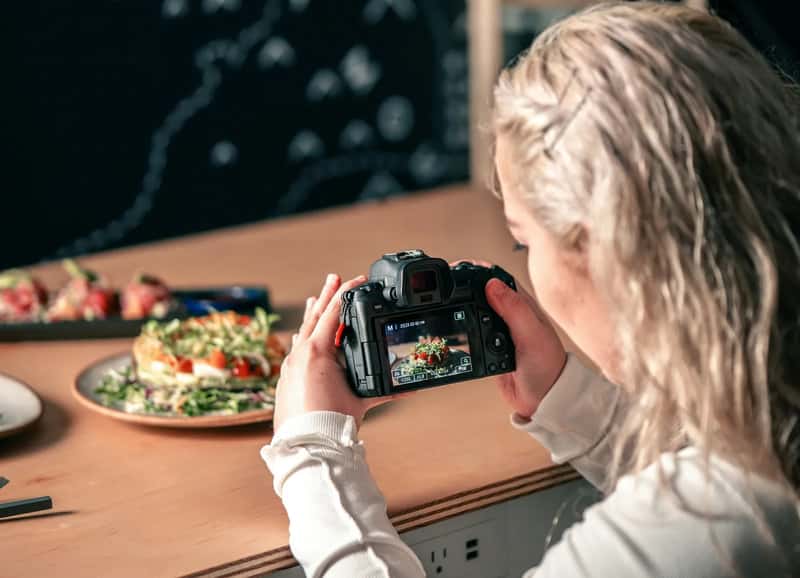
It happens before thought. Before gratitude. Before hunger, even.
The camera comes out. Every meal. Every sunset. Every doorway. The rhythm is so practiced it no longer feels like a choice.
But here’s the thing about reflexes: they are always protecting something.
The Proof Reflex is your nervous system insisting that this moment – this beautiful, fleeting, irreplaceable moment – is not enough on its own. That joy, unwitnessed, is somehow lesser. That an experience without a timestamp is an experience that didn’t quite happen.
Research has shown that merely intending to take photos for sharing can reduce the enjoyment of an experience compared to taking photos for personal use. Increased self-presentational concerns mediate this effect, raising anxiety and shifting focus away from the experience and toward the self.
The reflex fires. The moment dims. You get the shot but lose the scene.
And the cruelest part? You never even open the photo again.
2. The Validation Architecture
You didn’t build this alone.
Every algorithm that ever rewarded a food photo with engagement. Every friend who said “oh, where is that?” Every quiet hit of dopamine that followed a double-tap – all of it was laying bricks.
The cycle of social media posting and validation affects the dopamine levels in your brain, and those boosts and drops build insecurity, forcing you to be constantly self-aware of how your experience compares to others.
The architecture holds you up. But it also holds you captive.
This behavior reflects a deliberate editing of identity to align with social feedback, digital performance, and standards of beauty, relevance, or success – a practice that, according to research, heightened feelings of FOMO, especially when posts failed to attract sufficient engagement.
The photo is not documentation. It is a bid. A submission to a system that grades your joy and reports back with numbers.
The architecture feels like shelter. It is actually a cage built from your own need to be seen.
3. The Ghost at the Table
You are present. And yet.
There is a version of you – the most alive version, the one who can smell the spice in the air and feel the heat of the bowl – who keeps getting edged out by the version holding the phone.
You are, in effect, haunting your own trip – a ghost in your own hotel room, present in body but distributed across a dozen other timelines.
The table is set. The people are there. The meal is extraordinary.
But part of you is already somewhere else – editing, captioning, anticipating a response that won’t arrive for hours.
While people are busy photographing their food and sharing it online, they have less time to communicate with their friends and family. One of the functions of eating – enabling families and friends to gather together and enhance intimacy – is lost.
You’re a ghost at your own feast. The meal is magnificent. And you were almost there.
4. The Identity You’re Curating
Ask yourself honestly: who is this photo for?
Not in theory. Not in the abstract answer you give yourself about memories and archives. In this exact, specific moment – who is the intended audience of this image you will never revisit?
What we yearn for is identity enhancement. We are people who can make our way in a foreign setting. We can handle the vicissitudes of international travel. We’ve been to attractions that most will never see. People back home should know – and we will help them know – that we have gone and conquered and come back unscathed.
That impulse is ancient. It is woven into the social fabric of what it means to be human.
But the curated identity is not the same as the lived one. When you begin curating your experience rather than moving through it, you stop experiencing and start producing. The place becomes a backdrop. You become a brand.
And no brand has ever truly tasted anything.
5. The Ritual That Replaced the Feeling
I remember sitting in a small restaurant in Lisbon – marble tables, noise, someone’s grandmother refilling glasses like it was 1987. The fish was perfect. The wine was cold. The window showed a city that didn’t care whether I was there or not.
And I took twelve photographs of the plate.
I never once sat back and simply existed inside that room. I was too busy preserving it. By the time I left, I had images. I did not have the memory.
This quickly rounds into a vicious circle. Devoted food documenters may get so accustomed to photographing their meals that abstaining from the ritual can make them feel like an important ingredient is missing.
The ritual had eaten the feeling whole. The camera had become the experience, and the experience had become the camera’s subject.
I had preserved the meal. I had not lived it.
6. The Fear Beneath the Filter
Let’s name it properly.
This is not a photography habit. This is not a memory-keeping instinct. This is a fear – quiet, persistent, and surprisingly precise – that your joy is not real unless it is witnessed. That the experience does not count unless it is recorded. That you, unobserved, are somehow not enough.
FOMO preys on low self-esteem, loneliness, and fear of social exclusion, and it can lead to feelings of anxiety and depression.
FoMO, as a constant fear of not living up to the experiences of others, can further erode self-esteem.
The photo is a small, desperate act of self-legitimization. “I was here. I felt this. Someone, please confirm it mattered.”
And the terrifying, liberating truth is this: the confirmation was never coming from outside.
It was only ever going to come from you.
7. The Memory Paradox
Here is where the psychology gets genuinely cruel.
You take the photo to remember. But the act of taking it may be exactly what ensures you forget.
Recent psychological research suggests that people who naturally skip documenting their meals demonstrate specific presence traits that many of us struggle to develop in our hyper-connected world.
Studies show that people who eat without photographing report higher satisfaction with their meals and better memory of what they consumed.
The camera was supposed to be the archive. Instead, it became the thief.
You traded the sensory richness of the moment – the temperature, the smell, the ambient noise, the specific quality of the light – for a two-dimensional rectangle you will scroll past in six weeks without recognition.
Taking a photo adds a visual timestamp to the emotion you were feeling in that moment, even if you never post it. Over time, your camera roll becomes a soft archive of who you were, where you went, and what you were hungry for – physically and emotionally.
But only if you actually look at it. And you don’t. That’s the whole point.
8. The Belonging Loop
Underneath the photo habit is something older than Instagram.
It is the need to belong. To signal membership. To say: I am the kind of person who eats here, who travels here, who lives like this.
People can satisfy the psychological needs of “belongingness and love” and “esteem” according to Maslow’s hierarchy of needs as they can share their experiences and show off to the world what they are eating.
People are social animals and we’re hardwired to fear exclusion. For early humans, being included in group activities was necessary for survival. This is why rejection can be such a painful experience; the brain is wired to seek a sense of belonging and acceptance by others.
The food photo is tribal signaling with a Valencia filter.
And like all tribal signals, it costs something. It costs you your seat at the actual table – the one made of wood, not pixels, where a real meal is going cold while you adjust the angle on your phone.
The loop runs. You post. You wait. You need. You post again.
The loop is not nourishment. It is hunger pretending to be a feast.
9. The Quiet Cost of Constant Curation
Every photo you take is a small tax on your presence.
Paid automatically. Paid without protest. Paid so routinely that you no longer notice the account draining.
Energy that used to go toward curating a life for others now goes toward actually living it – when people finally reclaim it. But most people never reclaim it. They just keep paying.
Unmet expectations for social validation can exacerbate feelings of exclusion and diminish self-esteem. Social media’s quantifiable engagement metrics can distort users’ perceptions of self-worth, actively shape their identity, and promote a reliance on external approval.
The curation becomes the personality. The aesthetic becomes the self.
And one day – over a meal that should have been transcendent, in a city that deserved your full attention – you realize you can no longer locate the difference between who you are and what you broadcast.
That is the quiet cost. Not dramatic. Not sudden.
Just an erosion so gradual it looked, for a long time, like a choice.
10. The Table You Keep Leaving
Every time you lift the phone before the fork, you leave the table.
Not just the physical one. The deeper one. The table where your actual life is being served – imperfect, unfiltered, unshareable, and devastatingly real.
There is power in keeping some things to yourself. There is a kind of internal validation – savoring quiet victories, enjoying solitary pleasures, finding joy in unwitnessed moments – that creates a more stable sense of self-worth.
It’s a common human trait to seek affirmation and praise from others, but when it becomes a constant need, it could be indicative of an unhealthy pattern. The quality of your life isn’t measured by the approval of others.
The table you keep leaving is the only one that matters.
It is set with everything you came here for – the strangeness, the flavor, the specific weight of being alive in a place you’ve never been before. It asks nothing of you except that you sit down. That you stay. That you taste what is actually in front of you.
The image can wait. It can wait forever, actually.
The meal cannot.
There is a version of travel – and a version of living – that requires no audience. It is quieter than the one you have been performing. It is also considerably more nourishing. The moments that end up mattering most are almost never the ones that were photographed. They are the ones where the phone stayed in your pocket, where the light was wrong for a good shot, where nothing was particularly shareable – and where something cracked open anyway, wide and warm and entirely your own.
The fear that your joy isn’t real unless it’s recorded is, at its root, a question about worthiness. A suspicion that you, simply present, simply alive, simply eating a bowl of something extraordinary in a city that doesn’t know your name – are not enough. That the experience requires a witness to justify its existence. But joy does not require a witness. It requires you. Only you. Fully in the chair, fork in hand, eyes open, phone face-down on the table like a small and necessary act of self-respect.
Put the camera away. The food is getting cold. And for the first time in a long time, that’s exactly where you need to be.