You land. You exhale. You reach for your phone.
Not to call someone you love. Not to sit with the strangeness of a new city pressing against your skin.
To frame the shot.
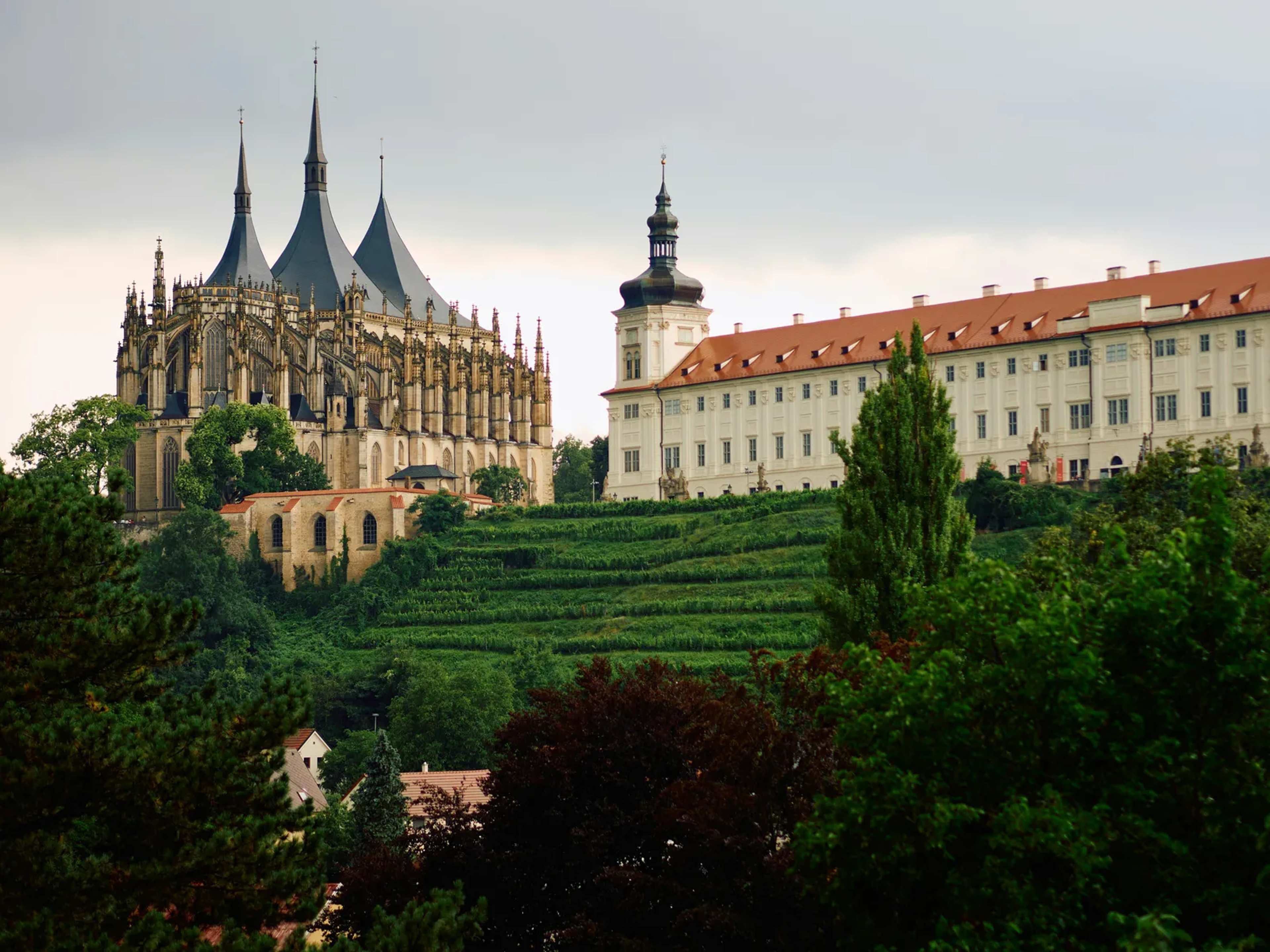
The cathedral. The coastline. The table set with food you haven’t tasted yet. All of it captured, filtered, submitted – like a report card handed up to a teacher who has been dead for years.
Here is the quiet truth nobody says out loud on the departure concourse: some of us don’t travel to arrive somewhere. We travel to prove something. And the proof lives in a grid of photographs that performs a version of us we’re still not entirely sure we believe in. Performance-based worth can latch onto anything: grades, job titles, productivity, even being “the chill one.” When your identity is built around winning, your nervous system learns to fear off days. Travel, it turns out, is just the newest scoreboard.
1. The Report Card You Never Stopped Filing
Think back.
Every A got a celebration. Every ordinary Tuesday got a long, disappointed silence.
Sometimes “too much praise” looks like constant superlatives – “perfect,” “genius,” “the best,” and “so talented” heard far more than “you worked hard” or “you kept going.” Over time, the brain can treat daily life like a performance where only the highlight reel counts.
That highlight reel followed you into adulthood.
It moved from the refrigerator door to the Instagram grid. The audience changed. The compulsion didn’t. Now instead of spelling trophies and swim ribbons, you post time zones and cobblestoned alleyways as evidence that you are still, reliably, extraordinary.
The photos aren’t memories. They’re submissions. They’re your continued application to a standard that was never really yours to begin with.
And the cruelest part? Sometimes the clearest sign is emotional: compliments feel like oxygen and silence feels like a drop in altitude. You know this feeling. You’ve felt it waiting for the likes to load.
2. The Contingent Self
Psychologists have a name for what was done to you.
Person- or trait-related feedback involves a global assessment based on a specific behavior or performance – praise or criticism that comments on children’s abilities, goodness, or worthiness, or that expresses the adult’s global evaluation of the child on the basis of the child’s performance.
The lesson was not: “You did well.” The lesson was: “You are well – because you did well.”
Those are catastrophically different sentences.
The first gives you something to build on. The second gives you something to maintain – and maintenance is exhausting. It is a life lived on the edge of a ledge, constantly checking the distance to the ground.
So you travel. You document. You post evidence of a self that is curated, lit from the left, and ready for review. Because somewhere deep in the nervous system, in the place where childhood learned to survive, you still believe the applause is all that separates you from the silence.
3. The Instagram Aesthetic as Performance Costume
Research into travel photography and online identity reveals something forensically uncomfortable.
New social norms of using travel images for impression management have emerged, with a clear motive to match the “Instagram aesthetic.” A refreshed code of choreographed movements as photographic practices has emerged that did not exist before the popularization of Instagram. Less than 2% of photos analyzed solely feature the landscape – reinforcing the shift to self-presentation strategies as the foremost importance.
Less than two percent.
The mountain is a backdrop. The ruin is a prop. The foreign market with its riot of color and smell and noise – it is a set.
And you are the lead actor in a production you didn’t consciously audition for. Images of the “self” become advertisements of the self that are published to boost a curated personal brand. The child who was praised for outstanding performance became the adult who cannot stop performing – even on vacation, especially on vacation.
4. The Exit Strategy
Travel has always promised escape.
But escape from what, exactly? The city you live in? The job that hollows you out? Or the self that keeps showing up no matter how many passport stamps you accumulate?
Travel photography and online sharing have become significant means for tourists to document their travel experiences, display identity, and express emotions. These digital images not only reflect tourists’ travel experiences but also influence their behavioral expressions and identity formation within a socio-cultural context.
The body goes somewhere new. The identity follows its old programming.
You swap one city’s anxiety for another city’s version of it. The performance-based child becomes a performance-based traveler. The anxiety of the classroom – Am I good enough? Did I do enough? Will they approve? – becomes the anxiety of the airport carousel, the hotel wi-fi, the photo that refuses to look as luminous as the experience felt.
You didn’t escape. You relocated the stage.
5. The Moment I Recognized My Own Grid
I was sitting in a café in Lisbon – yellow walls, three espressos in, the kind of afternoon that feels borrowed from a better version of your life – when I caught myself doing it.
Not eating. Not thinking. Not watching the light move across the tiles in that slow, stupefying way that Lisbon light does.
Composing. Angling. Deleting. Recomposing.
I had twelve near-identical photos of a pastel de nata I had not yet tasted. I was constructing evidence of a moment I was not actually inhabiting. And in the space between the shutter click and the caption, I felt the old familiar hunger – not for the custard tart, but for the validation that would confirm I had been somewhere worth being.
This shows up as constant measuring. You track your output, your response rate, your habits, your appearance, your tone. You keep “score” because scores feel certain and uncertainty feels shaky.
The score, that afternoon, was twelve photographs and zero minutes of presence.
6. The Spatial Self and the Identity It Can’t Shake
There is academic language for what you do when you tag a location.
The concept of the “spatial self” encapsulates the process of online self-presentation based on the display of offline physical activities, analyzing the ways offline experiences are harnessed and performed online.
You are not just checking in to a place. You are checking in an identity. You are stamping your résumé with proof of coordinates – Marrakech, Kyoto, Patagonia – as though geography confers character. As though the passport tells the story the interior cannot.
For those raised on performance-based praise, geography becomes the new grade. The feedback circuit between content creation and external validation subtly reshapes the digital self, with appearance, performance, and conformity taking precedence over authenticity.
You traded the classroom for the globe. The grading system never changed.
7. The Shame Underneath the Sunsets
Here is what lives beneath the golden-hour photographs.
Person praise, but not process praise, predisposes children – especially those with low self-esteem – to feel ashamed following failure. Person praise seems to make children attribute failure to the self.
That shame did not stay in childhood. It traveled with you.
It lives in the photo you deleted because the angle was wrong. In the caption you rewrote four times. In the trip you chose because it would look better than the one you actually wanted to take. The shame is not about the photo. It never was. It is the old, quiet terror that without the performance, there is nothing underneath worth seeing.
When children have low self-esteem, adults are motivated to raise their self-esteem through person praise and inflated praise. But such praise leads these children to pursue self-validation goals, which lower motivation and feelings of self-worth in the face of setbacks – creating a downward spiral.
You spiral now in the comments section, waiting for someone to tell you the trip was real.
8. The Dopamine Architecture of the Approval Loop
The mechanism is not complicated. It is just ruthless.
Whether it’s scrolling, posting, or waiting for that little dopamine hit from a notification, social media can have a profound impact on how you feel about yourself.
For a person raised to perform for approval, the notification is not a bonus. It is the point. The trip is fuel for the notification. The notification is confirmation of the self. The self requires constant re-confirmation because it was never given a foundation that could hold its own weight in silence.
Research describes a psychological dependency including a “tolerance” of the effects of praise followed by “withdrawal” and eventually “cravings” for more. To satisfy a praise addiction, students may come to engage in behaviors for the sole purpose of getting the next hit of validation.
The beach wasn’t enough. The beach plus one hundred and forty-seven likes – that was the actual destination.
9. The Ideal Self Wearing a Boarding Pass
There is a psychological theory that maps the precise territory of your travel grid.
Self-Discrepancy Theory suggests that our self-esteem is influenced by the gap between the actual self – who we believe we are – the ideal self – who we want to be based on our aspirations – and the ought self – who we think we should be based on societal or external expectations. On social media, the “ideal self” often takes center stage. The pictures we post, the captions we write, and the way we curate our profiles are carefully crafted to showcase the best version of ourselves. While there’s nothing inherently wrong with wanting to present ourselves in a positive light, this process can create a disconnect between the actual self and the ideal self.
The gap between those selves is not a flaw. It is a wound.
And travel – gorgeous, expensive, Instagram-lit travel – is one of the most socially acceptable bandages you can apply to it. Nobody questions a person who “loves to explore.” Nobody looks too hard at whether the exploring is curiosity or compulsion.
Among younger consumers, the main purpose of taking photos is not to preserve travel memories, but to be able to share the photos with a friendship circle. The memory is secondary. The audience is primary. The self performing for the audience is, at its core, still a child in a classroom, raising a hand, hoping to be called on.
10. The Return Flight Nobody Talks About
The hardest part of any trip for a performance-raised traveler is not the going.
It’s the coming back.
Because the trip, while it was happening, was at least generating content. The return is the audit. The scroll back through the images. The calculation of engagement. The low, grinding awareness that the photographs were more vivid than the moments they were taken in – and that this gap, this hollow space between the living and the documenting, might be the truest thing you know about yourself.
Self-worth is measured by external validation, and anxiety, preoccupation, and compulsive checking ensue. Research demonstrates that individuals who place significant emphasis on online validation experience lower self-esteem and increased stress.
The return flight deposits you back into the life the travel was supposed to upgrade. The kitchen. The ordinary light. The Tuesday that doesn’t photograph well. And without a departure gate on the horizon, the nervous system that was trained to perform has nowhere to perform to.
It’s been described as living on a tightrope. Praise puts you high up. Mistakes feel like a fall. With that setup, your nervous system spends a lot of time bracing. The return flight is simply the moment the tightrope goes slack – and you feel, for the first time in weeks, exactly how hard you’ve been working to stay above the ground.
There is a different kind of traveler. You have glimpsed them occasionally – in the corner of a slow café, no phone on the table, watching rain move down a window with the specific, unhurried attention of someone who is not trying to prove they are here. They are simply here. It looks, from the outside, almost suspicious. That kind of stillness. That willingness to let the moment be unwitnessed.
The shift from performing travel to inhabiting it is not dramatic. It does not require a digital detox retreat or a manifesto. It asks for something smaller and far more frightening: the willingness to have an experience that no one else will ever validate. A meal you ate alone that you never photographed. A coastline you watched until the light died and then walked away from. A trip that existed only in the soft, unreliable archive of your own memory – which is to say, a trip that existed only for you.
That is the one photo you never post. The one where you are finally, quietly, facing the right direction – not toward the camera, but toward the thing itself. The world. The moment. The unremarkable, extraordinary fact of being somewhere without needing anyone to know.