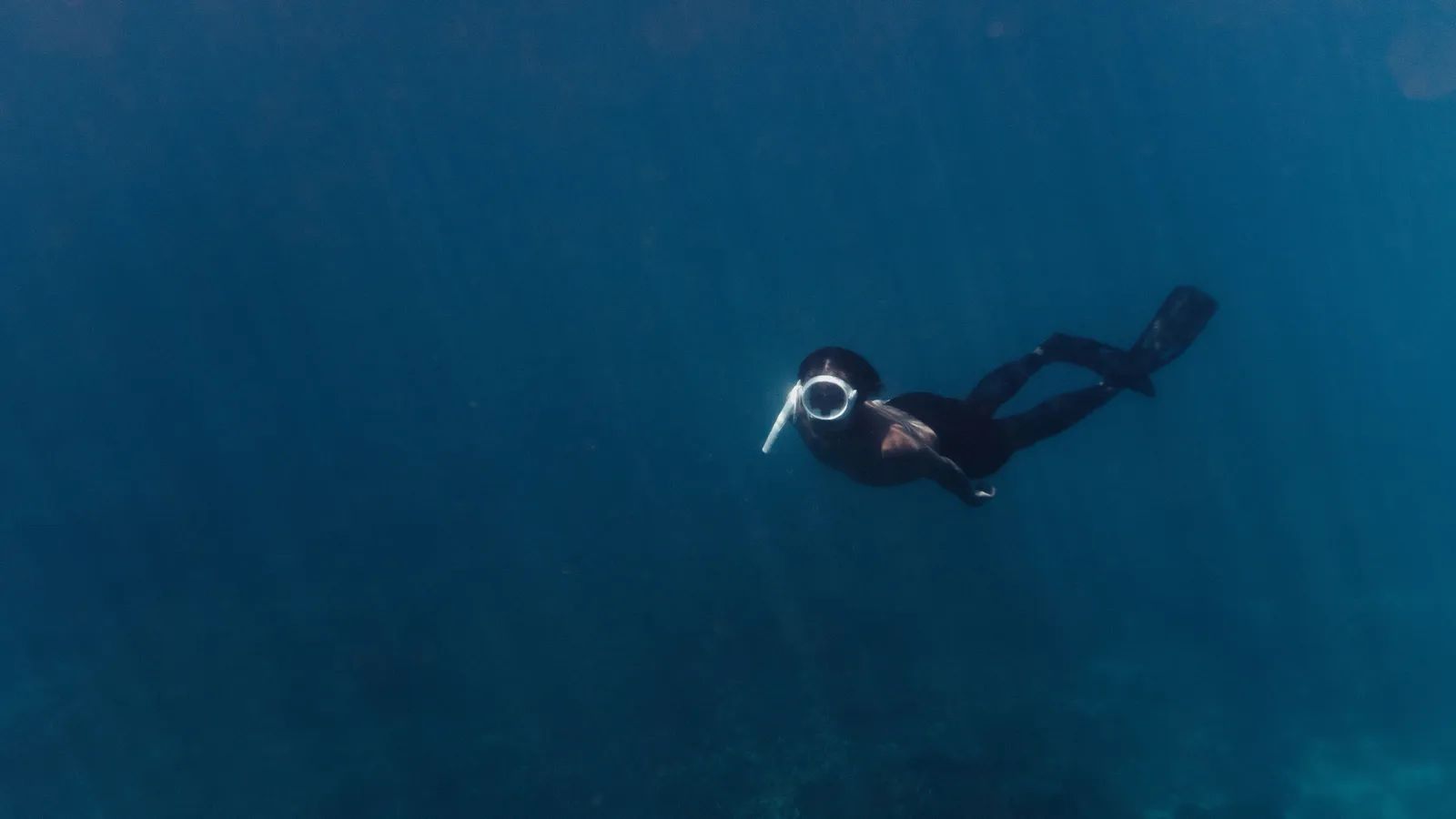
Poto Tano, Indonesia – A recent prohibition on compressor-assisted dives has pushed Bajau octopus fishers in this Sumbawa community to rely once more on breath-hold techniques passed down through generations. The change affects daily routines for groups led by figures such as Mahari, who must now weigh sea conditions before selecting equipment. Local NGOs have stepped in to support training efforts, linking the revival of these methods to both cultural continuity and reduced pressure on marine habitats.
The Human Cost of the Policy Shift
The ban on air-compressor diving, introduced to curb dangerous practices, has altered how Bajau crews operate off the coast of Sumbawa. Fishers who once depended on continuous air supply now face shorter bottom times and must read currents and visibility with greater precision. Mahari, serving as ketua for one such group, sits at the bow of the boat each morning, cigarette in hand, assessing the water before signaling the day’s approach. This decision directly shapes the catch and the safety of everyone aboard. The practical result is a return to skills that demand physical endurance and intimate knowledge of the sea. Crew members wait quietly while Mahari observes, a routine that underscores the leader’s role in balancing tradition with new restrictions. Stakeholders in the community, including younger fishers, now see these older methods as essential rather than optional.
Daily Routines Shaped by Sea Conditions
Bajau fishers in the area typically choose between two approaches depending on the water. In low visibility or strong currents, they deploy a shell tool fitted with hooks that trails behind the boat. Clearer conditions allow a different technique focused on direct pursuit of the target species, the day octopus. These choices reflect long-standing adaptations to the local environment rather than reliance on mechanical aids. The methods limit the volume of catch per dive and reduce disturbance to the seabed compared with more intensive gear. Crews coordinate closely, with each person contributing to the shared effort of locating and securing octopus without excess equipment.
Knowledge Transfer and Community Ties
Expeditions organized with local NGOs bring experienced fishers together with newer participants to demonstrate freediving techniques. Sessions emphasize controlled breathing, safe ascent practices, and respect for octopus habitats. The goal is to embed these practices in daily life so they survive beyond the current generation. Participants learn to interpret subtle changes in water movement and light, skills that compressor use had begun to overshadow. The collaboration also highlights how traditional harvesting can align with broader efforts to maintain octopus populations. Families in Poto Tano view the training as a way to keep both livelihood and identity intact.
Broader Effects on Marine Resources
Traditional freediving tends to produce smaller, more selective harvests that leave breeding stock in place. By avoiding continuous air supply, divers spend less time on the bottom and create less physical impact on reefs and seagrass beds. The policy change has therefore created an opening for these lower-impact practices to regain prominence. Community members note that the shift supports long-term access to the resource they depend upon. NGOs involved in the work report steady interest from younger Bajau in learning the older ways. The outcome is a tighter connection between daily fishing decisions and the health of the surrounding waters. The compressor restriction continues to shape choices for crews like Mahari’s, leaving open the question of how fully the next generation will carry the freediving tradition forward.