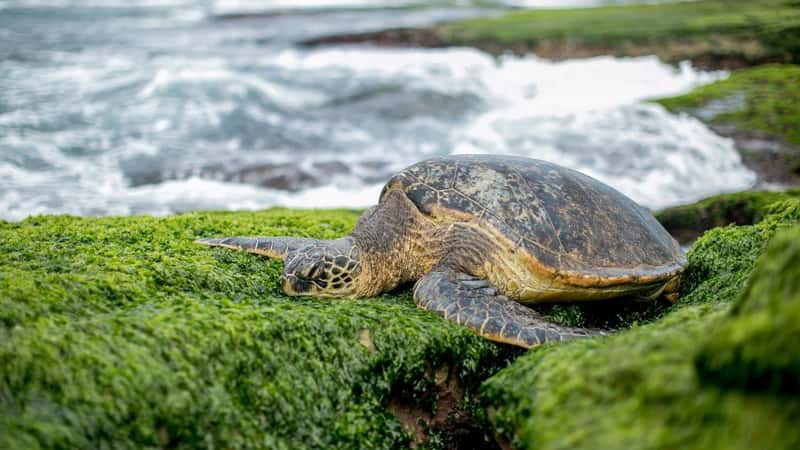
Mona Khalil, who left safety in Europe to protect sea turtles in Lebanon, was killed by an Israeli airstrike – Image for illustrative purposes only (Image credits: Unsplash)
Mansouri Beach, Lebanon – Mona Khalil spent more than 25 years on this narrow stretch of sand south of Tyre, watching for the telltale tracks that signaled another sea turtle had come ashore to nest. The 76-year-old conservationist had returned from a comfortable life in the Netherlands to protect loggerhead and green turtles in a region long shaped by checkpoints, shelling, and displacement. On June 19 she died from injuries sustained when an Israeli airstrike hit her home earlier that month. Her assistant suffered severe burns in the same attack.
From Porcelain Restorer to Beach Guardian
Khalil was born in Lagos to Lebanese parents and left the country during the civil war. In the Netherlands she worked restoring porcelain, a precise craft that demanded patience and attention to detail. Those same qualities later defined her approach to conservation on Mansouri Beach, one of Lebanon’s key nesting sites. She did not plan a career in wildlife protection. Yet the pull of her homeland and the visible threats to the turtles drew her back. Over the decades she turned a modest house into a base for monitoring nests, guiding hatchlings to the water, and educating visitors about the fragile cycle that plays out after dark each summer.
Protecting Nests Amid Constant Hazards
At night the first sign of activity was often a single track across the sand. Female turtles would emerge, dig their nests, lay eggs, and return to the sea. The hatchlings faced a short but perilous journey of just a few yards. Predators such as dogs, foxes, crabs, and birds waited. Artificial lights from roads and resorts could send them inland instead of toward the water. Plastic waste and fishing nets posed further risks to adults that had already survived for decades. Khalil’s Orange House became a hub for volunteers who patrolled the beach, marked nests, and worked to reduce human disturbance. Even a single footprint could trap a tiny hatchling. Her efforts focused on giving the young turtles the best possible chance in an environment already under pressure from multiple directions.
The Strike That Ended Decades of Work
The Orange House stood as both home and headquarters for her conservation program. When the airstrike struck earlier in June, it destroyed that base and left Khalil with fatal wounds. She died on June 19. The attack also injured her assistant, underscoring the immediate human cost in a conflict zone where daily life and conservation work had long overlapped. Local residents and volunteers had continued nest protection efforts despite evacuation orders and security concerns. Khalil’s decision to remain reflected a deep commitment to the turtles and the beach she had come to know so well.
Enduring Risks to Lebanon’s Marine Life
Mansouri Beach remains an important nesting ground, yet the same pressures Khalil worked to counter persist. Development, pollution, and incidental capture in fishing gear continue to threaten both loggerhead and green turtle populations. Her absence leaves a gap in hands-on monitoring at a site already navigating complex regional conditions. Those who knew her work describe a quiet determination that turned a personal return into sustained protection for a vulnerable species. The narrow strip of sand she guarded now stands as a reminder of both the fragility of sea turtle nesting and the human stakes involved in preserving it.