Ask someone to picture a national flag and they’ll almost always imagine a rectangle. Stripes, stars, crosses, crescents, it doesn’t matter what’s on it, the shape is basically universal. Yet there is one country whose flag breaks that pattern entirely, and most people walk past it their whole lives without ever noticing.
The one flag that breaks the mold
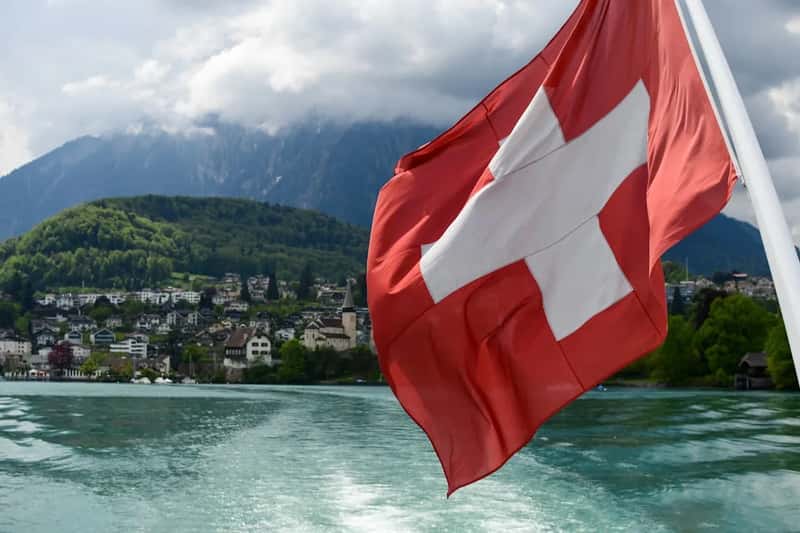
Out of roughly two hundred national flags flown around the world, only a tiny handful ignore the standard rectangular shape. Out of more than 190 national flags in the world, only three break the rectangular convention: Nepal, Switzerland, and the Vatican City.[1] That’s already a short list, but it gets narrower once you look closer at what actually counts as a sovereign state.
Nepal’s flag isn’t even a proper quadrilateral, it’s made of two stacked triangles, so it sits in its own category entirely. That leaves the square shape as the real oddity to sort out. And when it comes to squares specifically, the story points almost entirely to one country in the Alps.
Switzerland’s flag by the numbers

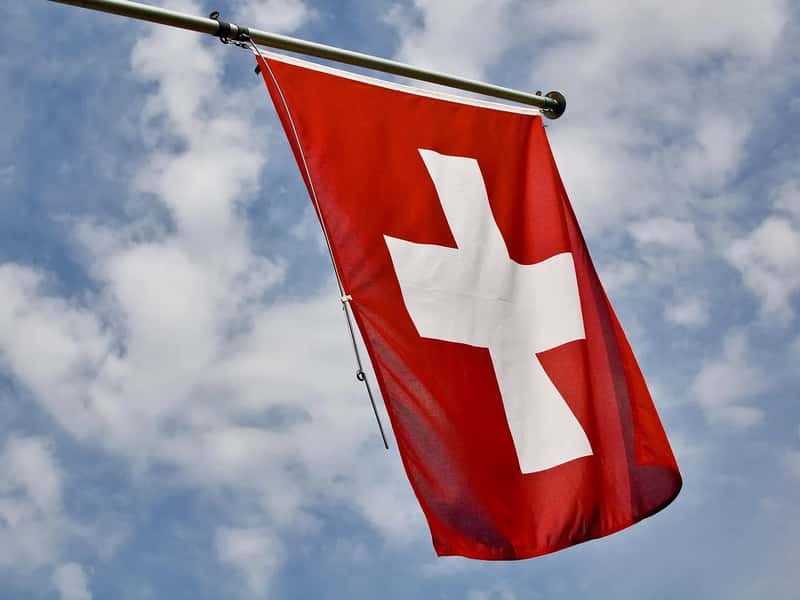
Switzerland is the only sovereign state in the world with a square flag.[2] The design itself is simple: a white cross centered on a red background, with both sides of the flag equal in length. The proportion is officially 1:1, and it was adopted in its current form in 1840.[3]
That 1:1 ratio is not a design accident or a modern rebrand. It’s a detail written into how the Swiss government describes its own national symbol, and it’s part of what makes the flag instantly recognizable even to people who couldn’t point to Switzerland on a map. Switzerland’s flag, a white cross on a red background, is one of the most recognisable in the world, and it is a perfect square, in a 1:1 ratio.[1]
Roots that go back to medieval battlefields
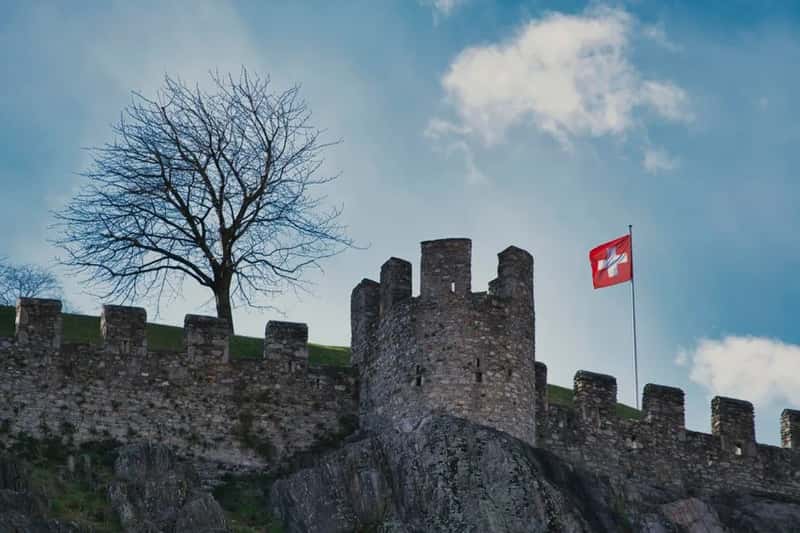
The square shape isn’t a recent styling choice, it traces back centuries before Switzerland existed as a modern country. The square shape is older than the modern Swiss state, as the Swiss Confederacy’s military standards in the 14th and 15th centuries were square or near-square.[1] Soldiers carried these banners into battle long before anyone thought of them as a national emblem.
One popular account ties the white cross directly to a specific conflict. According to one Swiss legend, Swiss soldiers fighting in the Battle of Laupen in 1339 affixed a white cross to their clothing to distinguish themselves from their Austrian opponents.[4] Whether or not every detail of that story holds up under historical scrutiny, the symbol stuck around for centuries afterward.
From military banner to national symbol
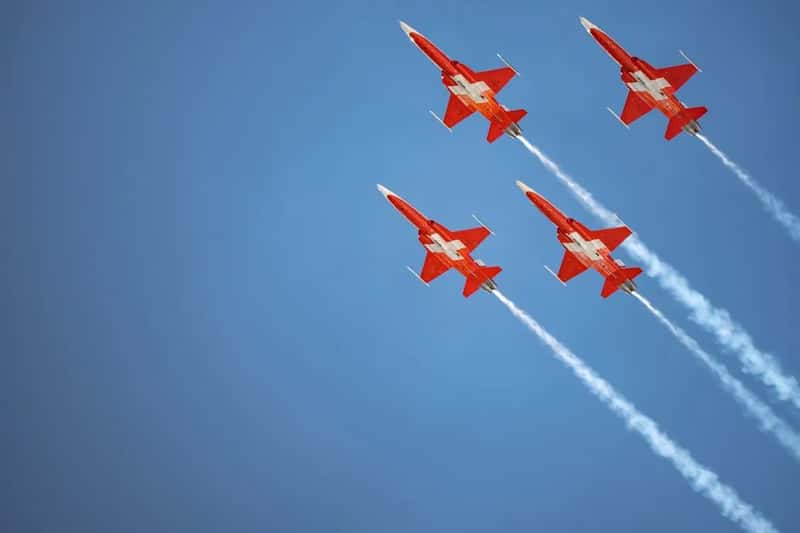
The white cross didn’t become an official state flag overnight, it took hundreds of years of informal use before any government made it official. According to the Swiss government, since the 14th century a white cross on a red background has been the insignia of Swiss soldiers, and when Switzerland’s federal constitution was adopted in 1848, the white cross in a red square became the country’s official national flag.[2] That’s a long gap between battlefield tradition and formal recognition.
Some sources point to a slightly different adoption date for the square proportion, noting a formal shift around 1889. When Switzerland adopted its modern flag in 1889, the square ratio was kept as a deliberate connection to that older military tradition.[1] Either way, the intent behind the shape was clearly historical rather than purely decorative.
The Vatican’s square flag and why it’s different
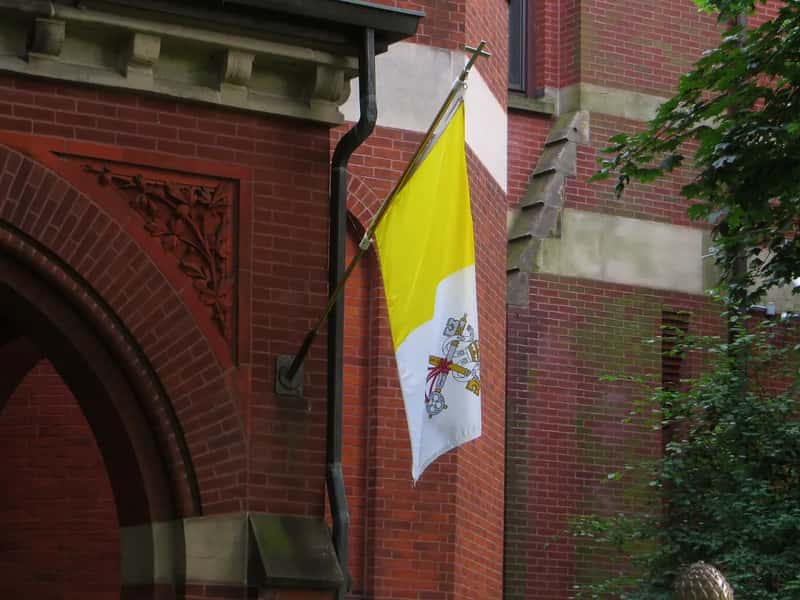
Switzerland isn’t technically the only place flying a square flag, there’s a second one, and it belongs to Vatican City. The only other square state flag belongs to Vatican City, which is independent but not technically sovereign as sovereignty is held by the Holy See.[2] That distinction matters more than it might seem at first glance.
Because sovereignty legally rests with the Holy See rather than with Vatican City itself, most flag references treat Switzerland as the sole sovereign state with this design. The Swiss flag is also the only square flag flying outside United Nations headquarters in New York, since Vatican City is not a member of the international organisation.[2] So depending on how strictly you define “country,” Switzerland stands alone, or shares the honor with one very small neighbor across the Alps.
The Red Cross was born from this same design
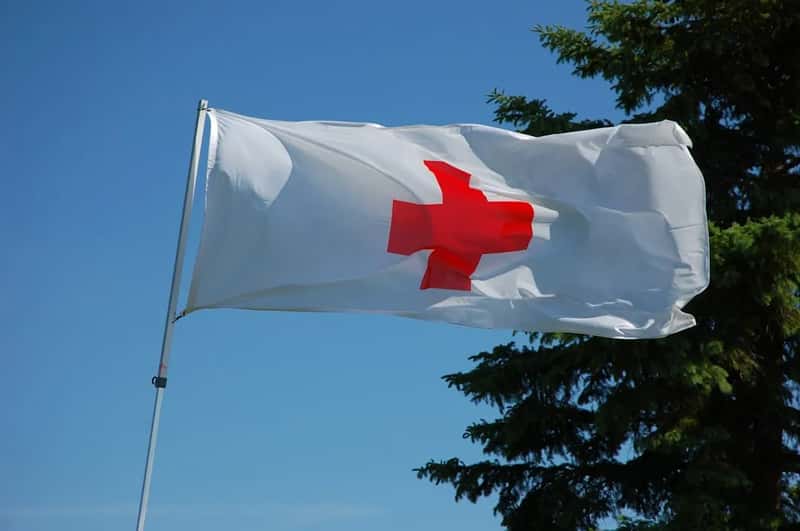
The Swiss flag’s influence reaches far beyond national pride, it directly shaped one of the most recognized humanitarian symbols on the planet. Switzerland is one of only two sovereign states with a square flag, and the only one whose flag is also famous globally as a humanitarian symbol, since the Red Cross flag is simply the Swiss flag with the colours reversed.[1] Swap red for white and white for red, and you get the emblem seen on ambulances and aid missions worldwide.
That connection isn’t a coincidence or a marketing choice, it’s rooted in the fact that the Red Cross movement itself was founded in Switzerland in the nineteenth century. The organization chose to honor its home country’s flag by inverting its colors, creating a symbol that’s now arguably even more widely recognized than the Swiss flag itself. Few national symbols can claim to have inspired an internationally protected emblem used in conflict zones around the world.
Even Switzerland’s cantons follow the square rule
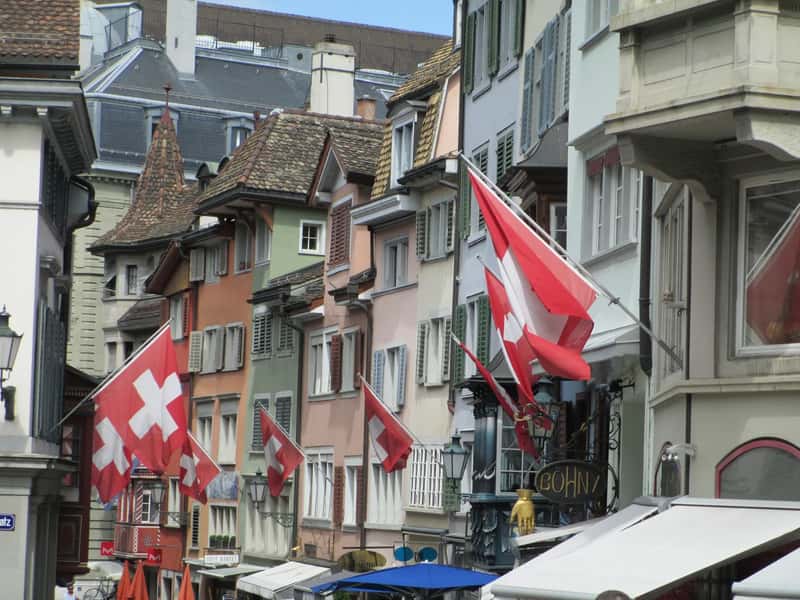
The square habit doesn’t stop at the national level in Switzerland, it extends all the way down to regional government. The flags of Switzerland’s 26 cantons are also square.[2] That’s a level of consistency you don’t see in most federal systems, where regional flags often follow completely different proportions than the national one.
This uniformity says something about how deeply the square shape is woven into Swiss visual identity, rather than being a one-off national quirk. It’s less a rule imposed from above and more a shared design tradition that every canton simply adopted over time. Walk through any Swiss town during a national holiday and you’ll likely spot square flags everywhere, not just the red and white national one.
Not every Swiss flag is square
Here’s where the story gets a little more complicated. Switzerland actually uses a rectangular version of its flag in certain official contexts, which surprises people who assume the square shape is absolute. The civil and state ensign of Switzerland has a proportion of 2:3 and was adopted in 1882.[3]
This rectangular ensign shows up specifically at sea, where international maritime convention typically expects rectangular flags. The Swiss civil ensign is rectangular when flown by Switzerland’s sea-going merchant ships and maritime yachts, though ships on the country’s lakes and rivers usually fly the more recognisable square flag.[2] So the square rule holds firm almost everywhere on land, but bends slightly once Swiss vessels head out to open ocean.
Nepal: the flag that isn’t even a rectangle

While Switzerland claims the square title, it’s worth mentioning the other flag that breaks convention just as dramatically, even if it’s a different kind of exception. Nepal is the only country whose flag is not even a quadrilateral at all, the only national flag in the world that is not, technically speaking, four-sided.[1] Instead of a square or a standard rectangle, it’s built from two stacked pennant shapes.
These two flags, Switzerland’s square and Nepal’s double pennant, represent the full extent of shape rebellion among the world’s roughly two hundred national flags. Flags can feel like cosmetic things, coloured cloth on a pole mostly noticed at sporting events, but every national flag is also a tiny piece of compressed history.[1] Both countries kept their unconventional shapes even as nearly every other nation on earth settled into the same rectangular format.
A small detail with a long memory

It’s easy to walk past a flag a thousand times without ever registering its actual proportions. Yet the Swiss flag’s square shape isn’t decorative trivia, it’s a direct echo of medieval military banners that predate the country’s modern constitution by centuries. Few symbols manage to carry that much history in something as simple as the ratio between two sides of a piece of cloth.