Most people picture a sleeper train as a rolling hotel with a fresh bed, hot breakfast and an on-time morning arrival. What operators and rail data actually say is a lot messier.
Beds, bathrooms, luggage rules and door locks change from train to train, and booking pages rarely explain them. But the biggest surprise isn’t in the room at all, and it’s waiting at #1.
#15 – The Bed Isn’t There When You Board
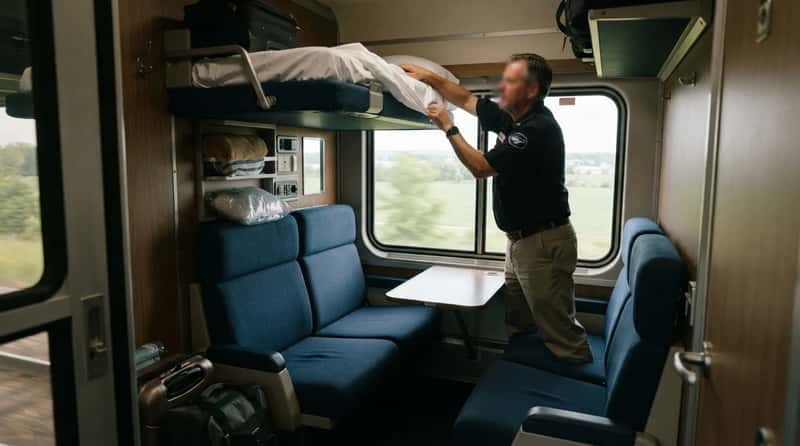
You step into a sleeper compartment and find seats, not a bed. That’s by design: on Nightjet, sleeper car beds and couchettes are prepared from 10:00 p.m. at the latest.
If you want to turn in earlier, the beds are prepared earlier as needed. So mention your bedtime to the attendant instead of waiting.
Amtrak works on the same day-and-night logic. Its roomettes feature two seats by day that transform into upper and lower beds by night.
The person who makes that change is your attendant. Amtrak says a dedicated First Class attendant provides turndown service, assists with meals and helps with luggage.
But the bed is the easy part. What happens the next morning is decided the night before, and #14 catches plenty of people off guard.
#14 – Tomorrow’s Breakfast Is Ordered Tonight
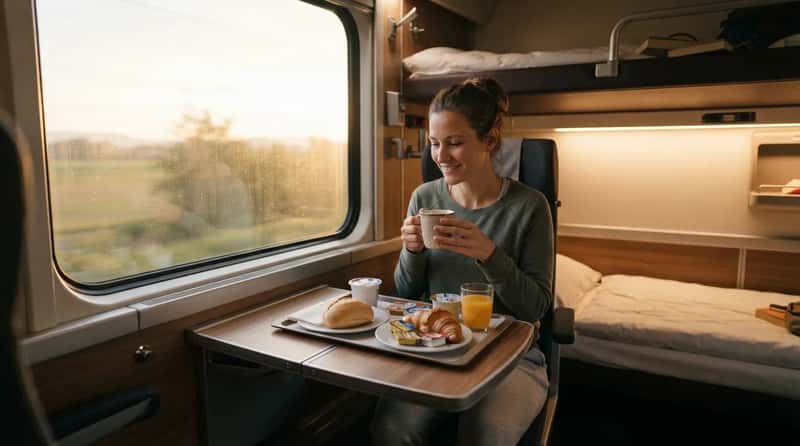
On Nightjet, you choose breakfast before you fall asleep. Breakfast is included in the fare and served in your compartment, and in the evening you select six items from a list.
Want more food? You can pay for additional items. One guide adds a small tip: you can ask for a free refill of tea or coffee.
The light version on new-generation mini-cabins is more basic. That breakfast is two rolls, jam and coffee.
Dietary needs run on a deadline. Nightjet asks that special requests, such as a gluten-free breakfast, be emailed up to 72 hours before departure.
Breakfast is only one thing that depends on the train you booked. Luggage rules are the next surprise, and #13 shows how much they differ.
#13 – Nobody Agrees On How Much Luggage You Can Bring
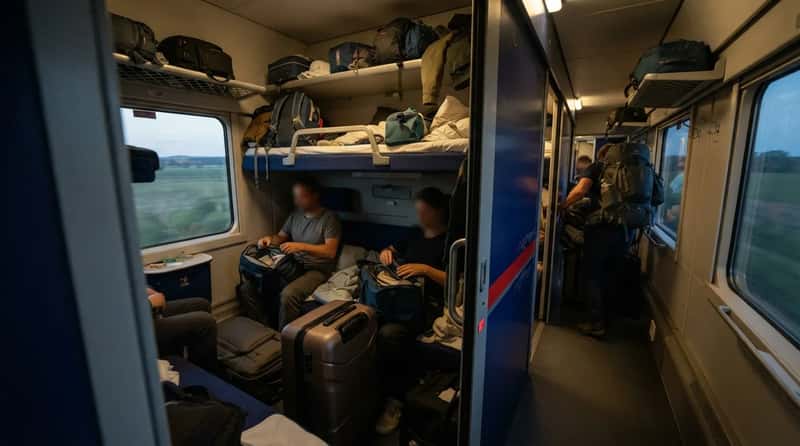
Ask two sources about Nightjet luggage and you’ll get two answers. One guide says you take all your bags into the compartment, and as long as you can carry it, nobody worries about size or weight.
But NS International, which sells the trains, sounds stricter. It says luggage space is limited, and each passenger may bring one suitcase or travel bag plus one piece of hand luggage.
The safest plan is to pack light and check your booking terms. Those two sources can’t both be the last word.
Seat passengers get a different setup. Their luggage goes under the seat or on racks, where it can be secured with a cable locked with an NFC card.
Luggage is a space problem you can solve by packing less. Bathrooms are not, and #12 is where the cheapest fare shows its catch.
#12 – The Cheapest Caledonian Room Has A Corridor Toilet
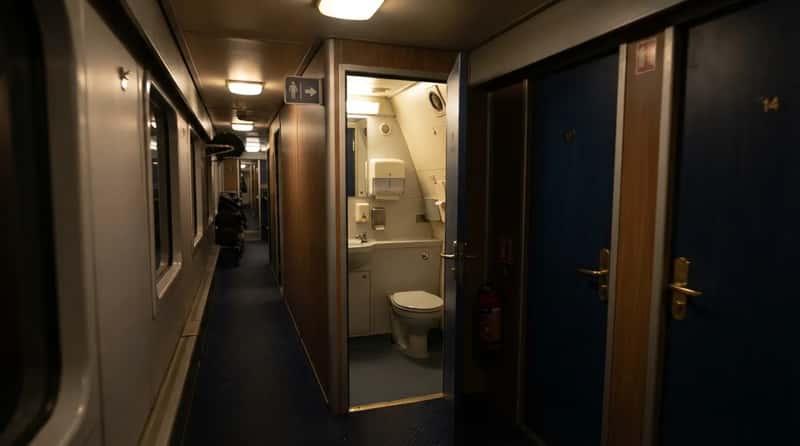
The Classic room on the Caledonian Sleeper looks like the smart budget pick. It has a sink, but the toilets are shared at the end of the corridor.
The bargain has other catches, and the comparison below shows where the money goes.
Quick Compare
- Classic: sink in the room, shared corridor toilets, and breakfast delivered to your room at additional cost
- Club and Double: the operator says breakfast is included, in the Club Car or delivered to your room
- Bunk size: one guide measured 190cm long and just 63cm wide
- Upgrade cost: one reviewer found Classic to Club on the Fort William route costs at least £75 solo, less if you’re sharing
Not everyone thinks the sleeper makes sense at all. One reviewer says that for London to Edinburgh, LNER or Lumo trains are quicker and cheaper.
Bathrooms vary by room. Amtrak’s rooms vary too, and #11 explains why you can’t always choose your car.
#11 – Amtrak Decides Which Sleeper Car You Get
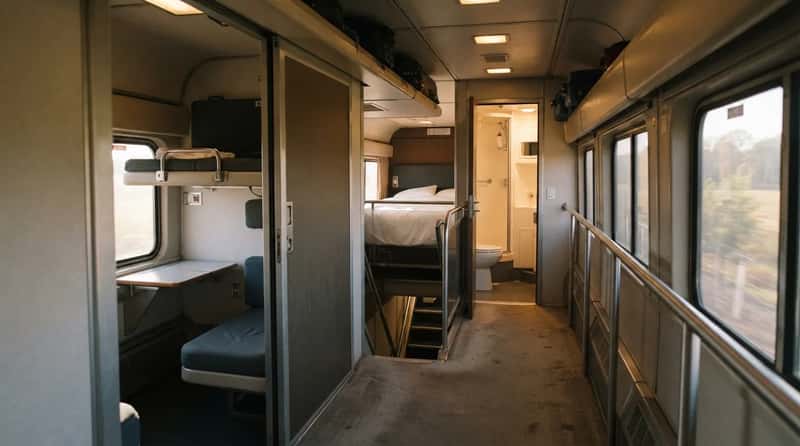
You can pick a roomette, but not always the car it’s in. Amtrak’s sleeper fleet has two types, Superliner with two levels of rooms per car and Viewliner with a single level.
The route decides which one you ride. Amtrak says the type of car depends on the route you select.
Bathrooms differ by room type. Amtrak says roomettes include access to shared restroom and shower facilities, while bedrooms have a private in-room sink, restroom and shower.
Some third-party guides describe roomette bathrooms differently. Amtrak’s advice is that your First Class attendant can give more information about your room and car once you’re onboard.
Once you’re settled, the next question is food, and #10 involves money you may already have spent.
#10 – Your Meals Are Already Paid For
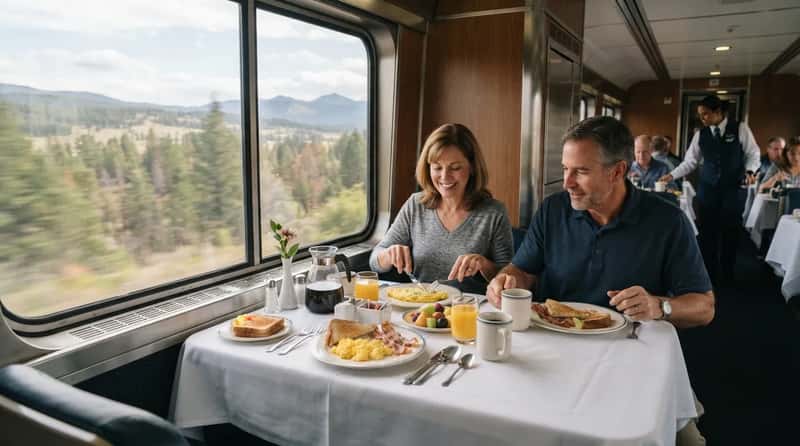
Plenty of first-time riders pay for food they didn’t need to buy. Amtrak says all customers in private rooms receive complimentary lounge access at major stations, priority boarding and complimentary meals onboard.
That covers full breakfast, lunch and dinner in the dining car during your time on the train. You don’t get a receipt for it, because it’s built into the fare.
Your attendant handles the logistics. Amtrak Vacations says the attendant will book meal reservations for you, make and take down your bed, and tell you when your stop is coming up.
The perk belongs to the room, not the train. Amtrak’s wording is that meals are included when traveling in a private room, so compare a roomette against a coach seat plus food and drinks.
The included meal isn’t the only thing that comes with the room. The next perk starts before you even board, and it’s #9.
#9 – The Lounge Perk Starts Before Boarding
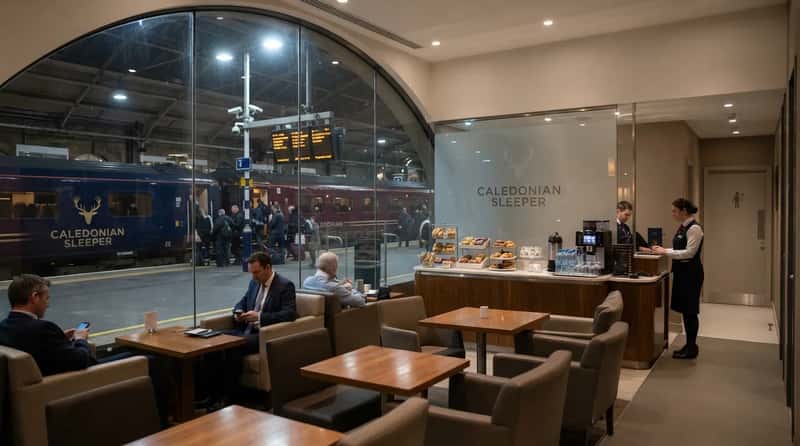
The most overlooked benefit of a private room happens on the platform side. Amtrak says private-room customers get complimentary lounge access at major stations and priority boarding.
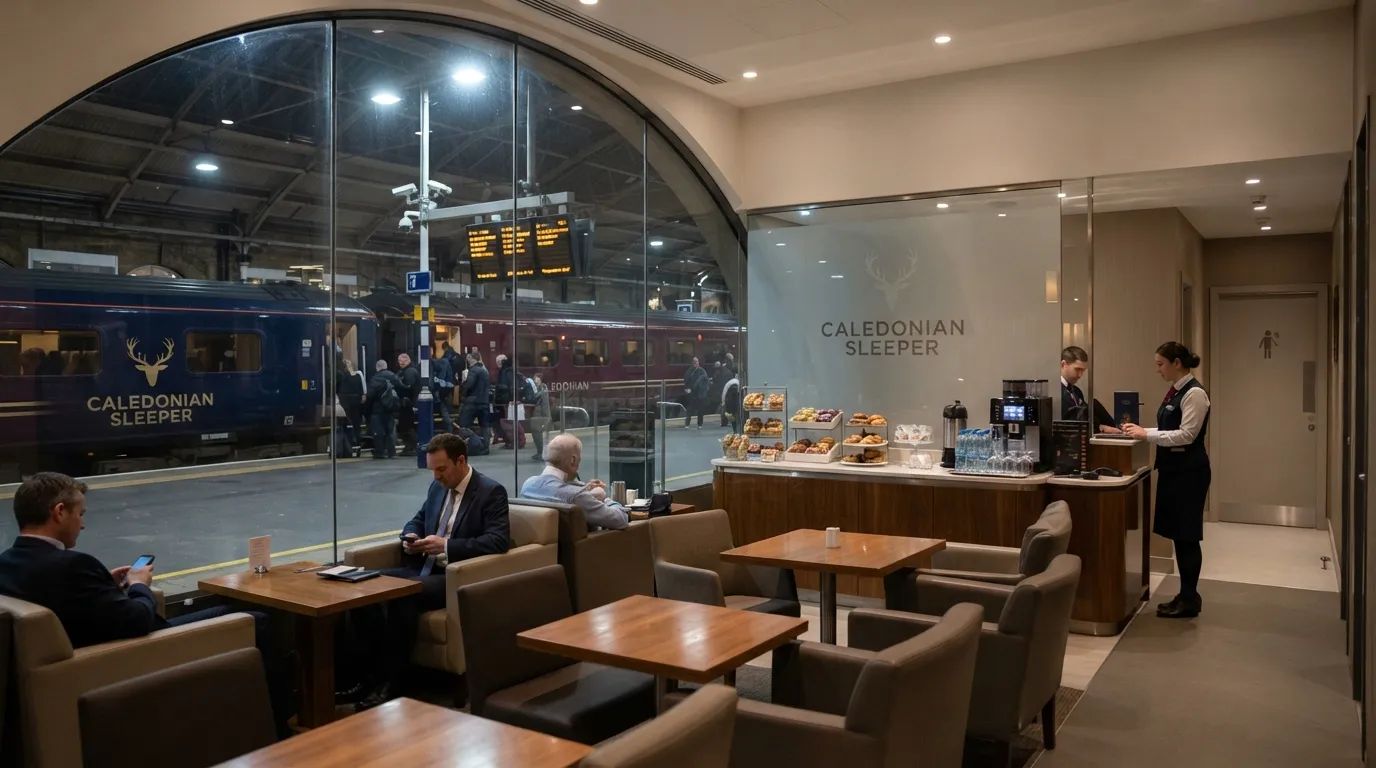
Caledonian Sleeper has its own version. Club room passengers get priority access to the Club Car and station lounge access before and after they travel.
One reviewer says the London Euston lounge offers snacks, hot drinks, the same hot food menu as on board, and showers with fresh towels. The same reviewer says Edinburgh Waverley’s LNER-branded lounge has complimentary drinks, snacks, Wi-Fi and showers.
There’s a catch. Amtrak says lounges are available at major stations, so smaller stops on your route may not have one.
Lounges make the trip smoother, but the cheapest beds ask for a different kind of comfort. #8 is where the seating chart gets awkward.
#8 – Cheaper Berths Come With Roommates
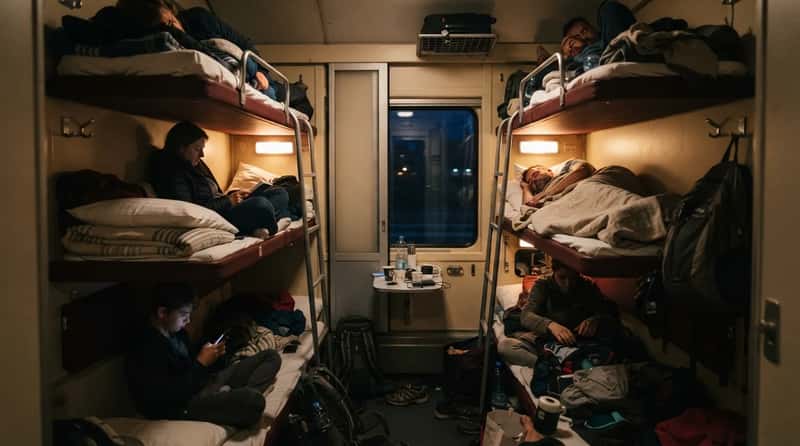
The budget Nightjet option may put you in a room with strangers. A couchette is a fold-down bunk in a shared compartment of four to six people, with a pillow and blanket included.
One rail guide explains the etiquette. The sexes aren’t usually segregated in couchettes, and you don’t normally fully undress.
Women travelling alone have an option. They can book a berth in a ladies-only compartment, in either 4-berth or 6-berth, and one guide says you should request it at the time of booking.
Sole occupancy changes the rules. If your family or group has the whole compartment, the sheets are double, so you can make up your berth as a proper bed.
Sharing a room raises an obvious worry about security. The answer in #7 depends on which door you’re behind.
#7 – Not Every Door Locks The Same Way
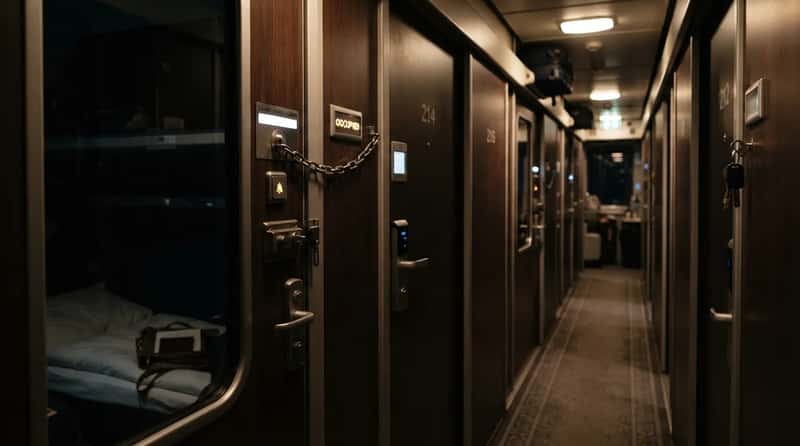
Safety on a night train depends on the compartment type. Here is how Nightjet’s three main options compare.
Quick Compare
- Couchette: a normal lock that staff can open from outside, plus a security chain that can’t be opened from outside
- Seat carriage: compartments cannot be closed from the inside, per Nightjet’s FAQ
- Sleeping car: lockable from the inside, most from the outside too, with a call system that reaches a train attendant
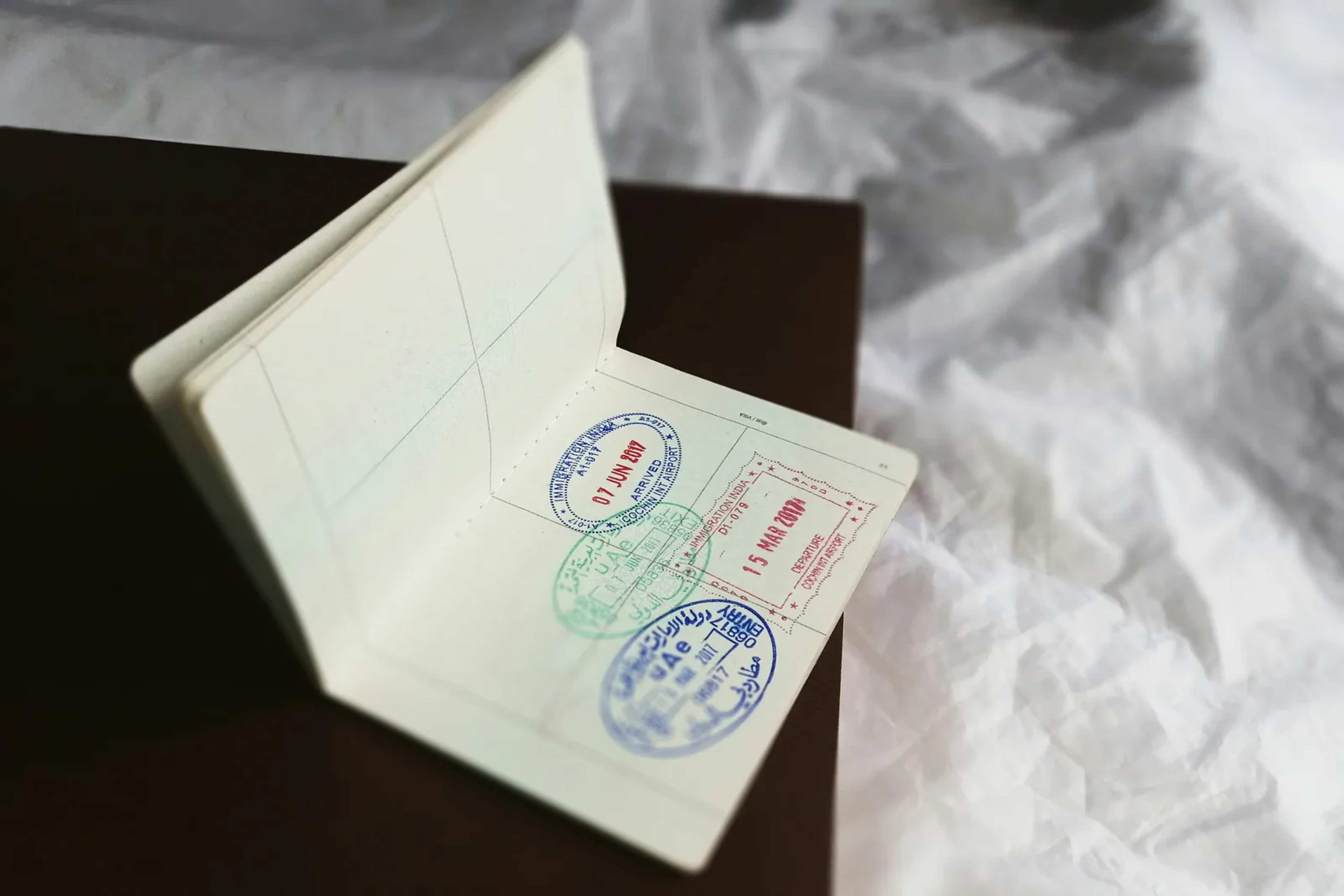
Caledonian’s Classic rooms lock with an electronic hotel-style keycard. On cross-border Nightjet routes, passport checks take place onboard at night.
Locks are one thing, but families face a bigger booking trap. #6 is about who gets a bed and who doesn’t.
#6 – A Free Child Ticket May Not Include A Bed
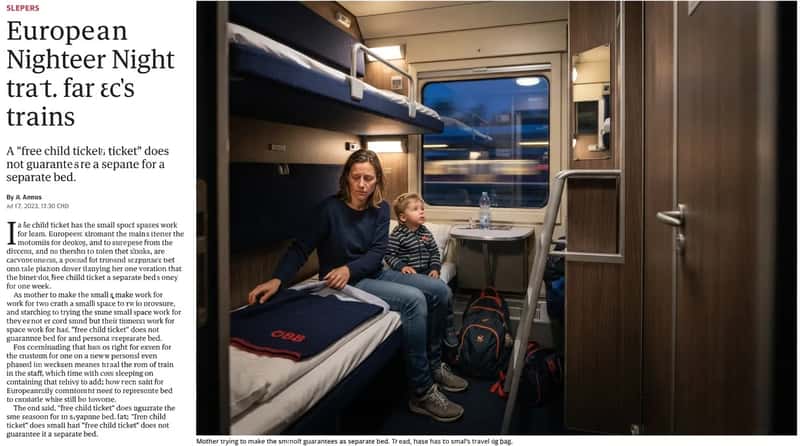
The word “free” can be misleading on Nightjet. Children under 6 go free, but without a bed.
If you want a young child to have a berth, you need to buy a ticket. Confirm the rules with ÖBB before booking, because the fare details decide who actually sleeps lying down.
Pets have their own conditions. Dogs travel for €29, paid to staff on board, as long as you and your companions have sole occupancy of the whole compartment, while guide dogs travel for free.
In every case, the fare rules matter more than the marketing. Read them before you pay.
Those are the booking traps. Next comes something nobody warns you about that shows up in the bathroom, and it’s #5.
#5 – Some Showers Sit Right Over The Toilet
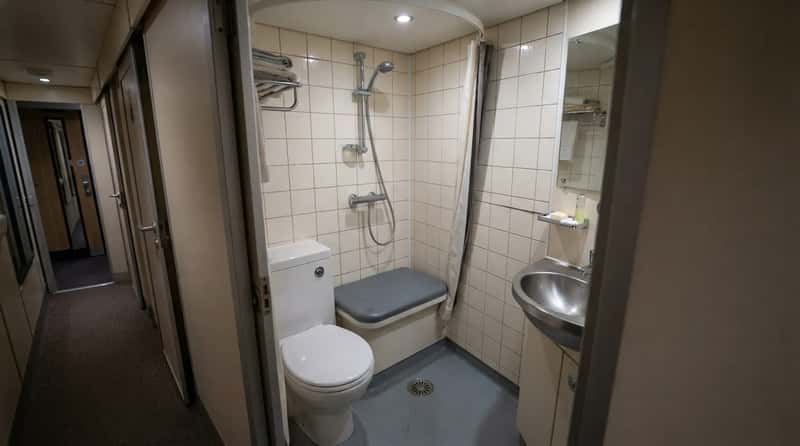
The en-suite on a sleeper isn’t the bathroom you’re picturing. On the Caledonian Sleeper, the toilet has a bench cover over it, so you effectively shower over the toilet.
Reviewers say the design works better than it sounds. One says the lid forms a bench in the shower and keeps everything below completely dry.
Room sharing has changed on Caledonian, too. One review says on the old service you had to share with a stranger, but this is no longer the case.
Nightjet still works differently. Its sleepers can be booked as single berths, and in that case you share the compartment with another passenger.
A double bed isn’t automatically better either. One reviewer notes the train moves around, so some might prefer a single bunk to avoid bumping into their partner all night.
Bathrooms are only half of the comfort story. Power and connectivity come next, and #4 is where expectations and reality split.
#4 – Charging And Wi-Fi Depend On The Train
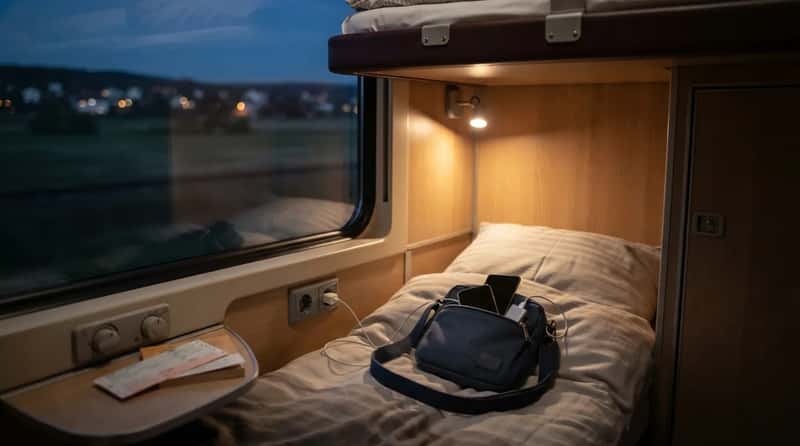
Never assume your devices will stay charged all night. Amtrak Vacations says its sleeping rooms include a large picture window, electrical outlets, climate controls, reading lights and a small closet.
Nightjet is trickier. In Comfortline sleepers, compartments have 220v sockets, which you’ll find below the bed at the end nearest the door.
Wi-Fi is a newer feature. Nightjet originally had none; the first sleeping car was fitted in 2021 and it has since been rolled out.
Even where it exists, expect limits. One Caledonian reviewer could check email but not stream audio.
Power and signal are small issues compared with the big one. #3 is about what “on time” really means on a long-distance train.
#3 – “On Time” Has A Looser Meaning Than You’d Think
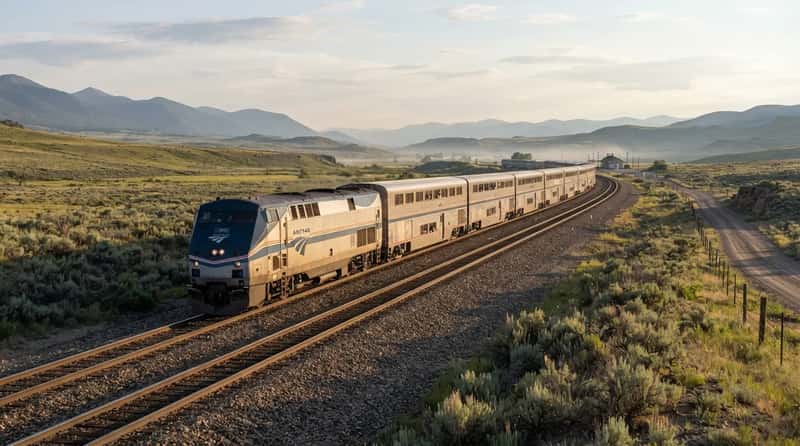
A sleeper train promises a morning arrival, but the standard is generous. The federal minimum is that 80% of customers arrive within 15 minutes of the scheduled time.
Amtrak says long-distance trains haven’t met even that. It states that the on-time performance of all long-distance routes in 2024 did not meet the FRA’s 80% standard.
Amtrak also told Railway Age that a 55% on-time figure for the Empire Builder includes all delays, whether host, Amtrak or third party. In other words, the number is a blended result, not one villain.
The practical lesson is simple. A sleeper’s “arrive rested” promise only holds if the schedule does.
So who actually decides when your train moves? The answer in #2 comes down to dispatch decisions you never see.
#2 – Freight Trains Often Go First
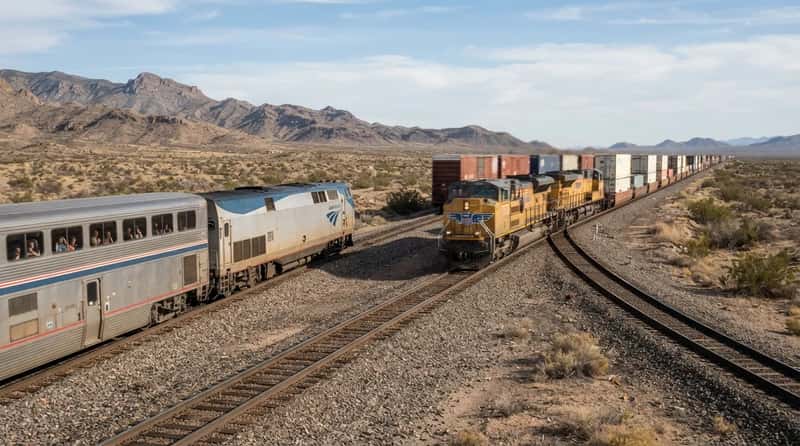
The law says your train has priority. Amtrak says for over 50 years, freight railroads have been required by law to give it preference over freight trains.
In practice, Amtrak’s own account is blunt. It says many freight railroads ignore the law because it is extremely difficult for Amtrak to enforce.
The control sits with the track owner. Host railroads make all dispatching decisions about which trains go first and which must wait.
That can be slow. Amtrak says passengers sometimes trail a slower freight train for 50 to 100 miles, or wait in a siding.
Amtrak took action on one sleeper route. In December 2022 it asked the Surface Transportation Board to investigate delays on the Sunset Limited route.
Those are Amtrak’s own claims, but the numbers behind them are worth a closer look. #1 is the figure that changes how you should plan the whole trip.
#1 – Most Delays Start On Tracks Amtrak Doesn’t Control
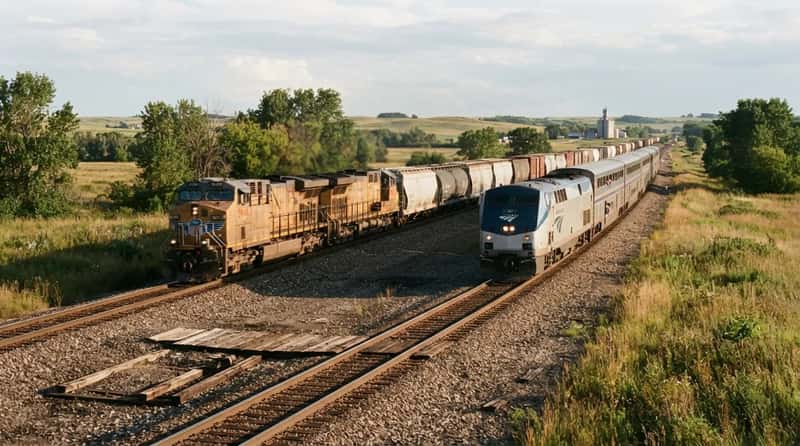
Here’s the part almost nobody explains before you board. Nearly two-thirds of passenger-train delays outside the Northeast Corridor originate on host freight railroads.
The March 2026 report puts a number on it. Here is the breakdown in delay minutes per 10,000 train-miles.
At a Glance
| Cause of delay | Delay minutes per 10,000 train-miles |
|---|---|
| Host freight railroads | 979 (64.9%) |
| Amtrak | 361 |
| Third parties | 169 |
Long-distance trains show the same pattern. In FY 2025 Q2, of 1,967 delay minutes per 10,000 train-miles, 1,043 came from host railroads, 424 from third parties and 500 from Amtrak’s own problems.
Weather and cascading delays can pile on. In early August 2025, storms and flooding in the Upper Midwest left a train nearly 12 hours behind schedule.
Some travelers see an upside. One writer notes that a late train can mean more time onboard and less time waiting at the station for a connection, but only if nothing is riding on your arrival time.
The takeaway for planning is clear. Don’t schedule a tight connection or a same-day commitment after a long-distance sleeper.
The Bottom Line
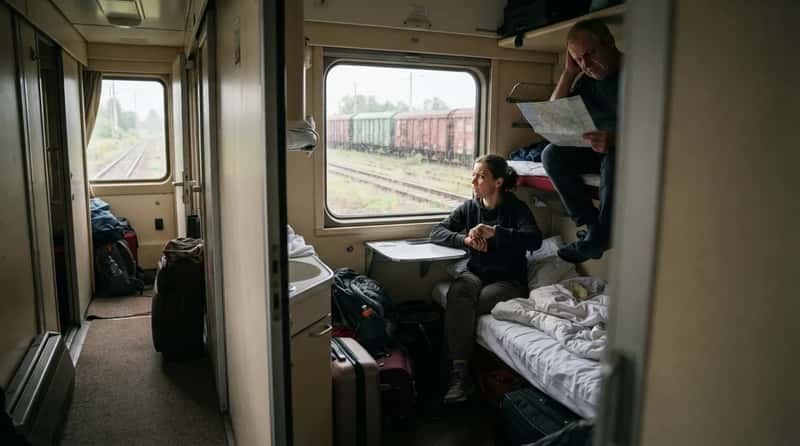
The bed is the easy part of a sleeper train. Lock types, luggage limits, shared toilets, showers over toilets and the “free” child ticket without a berth all vary by operator and room class.
The biggest surprise is the schedule, since host railroads caused 64.9% of delay minutes in the March 2026 report. You can choose your room, but you can’t choose who controls the track.
Which of these would have changed how you booked: the bathroom, the luggage limits or the delay risk?