
When I arrived at the top of Mount John, I couldn’t help but observe the nature in front of me: It was simple… but every little detail seemed carefully thought out. Looking at this unbelievable landscape, I realised I was looking at the beauty of nature in its truest form.
From the top, the crystal clear waters of Lake Tekapo seemed far away but enlightened the rest of the scene. And as astonishing as it may seem, I didn’t walk for too long before being captured by this breathtaking scenery.
And how satisfying is witnessing a landscape without getting too sweaty and tired? Who would not want to enjoy a beautiful landscape just after ahour’sur walk?
Where Is Mount John?
Mount John is located on New Zealand’s South Island, rising just above the village of Lake Tekapo. You don’t need to travel far to reach it; the mountain rises quietly on the western side of the lake, almost as if it has always been watching over it.
What makes the location special is not just the mountain itself, but everything that surrounds it. As you walk up, the scenery shifts in a way that feels almost cinematic. Behind you, the open Mackenzie Basin stretches out like an endless patchwork of golden plains.
The open plains stretch endlessly behind you, while the Southern Alps appear on the horizon like a distant frame. Even before reaching the top, you realise that Mount John doesn’t dominate the landscape — it simply sits in the perfect place to reveal it.
How to Get to the Summit Track
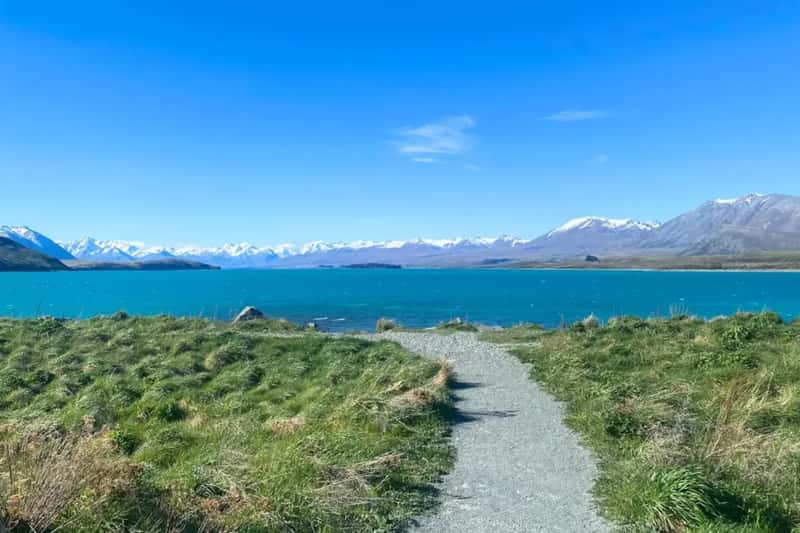
I started my walk from the Mount John summit track close to Lake Tekapo. This track is very accessible and not very long, just about 3 kilometres (1 hour).
To reach the starting point, you need to follow the lake, and the summit track is only a short distance away, which makes the whole experience feel surprisingly accessible. After passing the lakefront, the path begins almost unnoticed, following a gentle slope that quickly takes you away from the village.
What surprised me most was how quickly the view starts to appear, making each step feel rewarding rather than tiring. Even when the path begins to rise, you can still see the lake and the town below you, which makes the ascent feel much lighter.
Trail Overview and Level of Difficulty
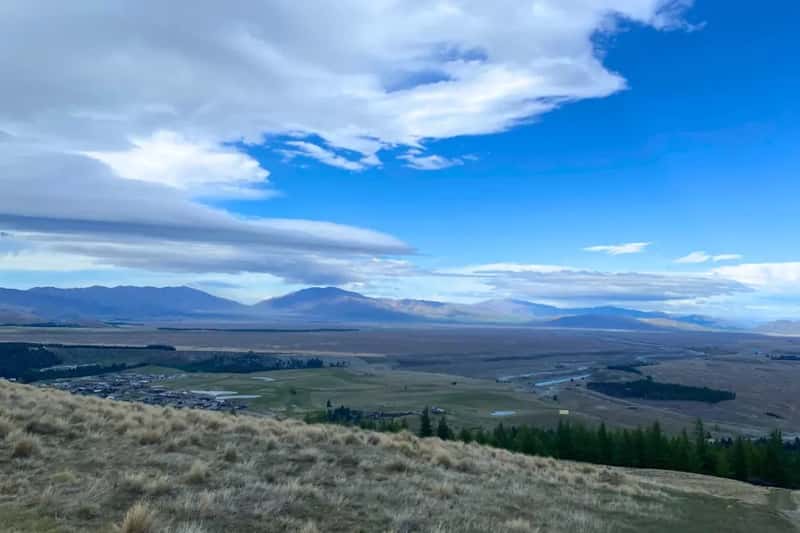
It starts with the forest, and as you climb, you can gradually see the open grassland. There are a few short uphill sections where the slope suddenly increases, but they’re over almost as soon as they begin, giving you just enough effort to feel you’re gaining height without ever needing to stop and recover.
The track is clear and well-maintained, with no rocky obstacles or narrow edges, so I never felt unsure about where to place my feet. Overall, I wouldn’t describe it as difficult—just a gentle climb with brief moments that remind you you’re walking towards a summit.
Even during the challenging parts, I could always stop and enjoy the view. While walking, there are some must-stop places to take pictures and observe the view. But it’s right at the end that you see the 360° surroundings: the Southern Alps and Lake Tekapo opening in front of your eyes.
Other Tekapo Activities
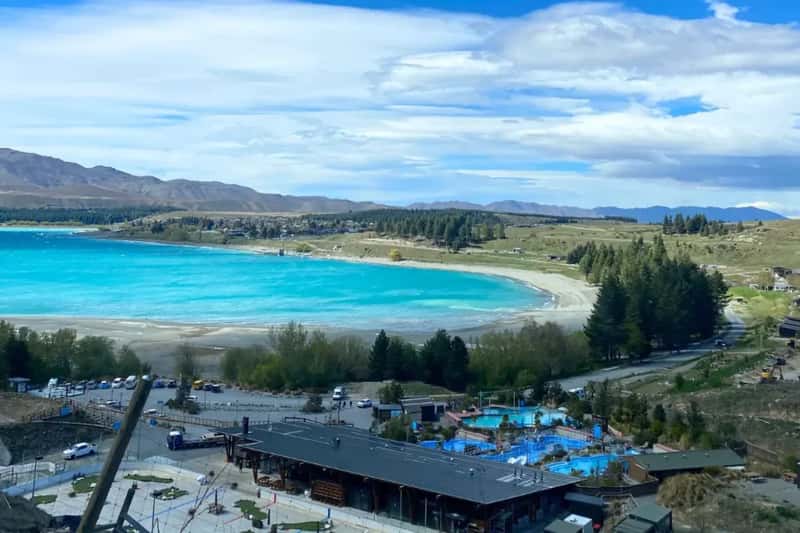
After spending the morning hiking up Mount John, my legs were definitely asking for a break. Luckily, one of the best ways to unwind in Tekapo is just a short walk from the lake: the Tekapo Springs hot pools. I headed there right after the hike, and it turned out to be the perfect way to end the day.
Sinking into a 40-degree pool with a full view of Lake Tekapo felt like a reward in itself. The water was warm enough to relax every muscle, but what made the experience even more special was the scenery. The lake’s bright turquoise colour, the surrounding mountains, and the peaceful atmosphere made it easy to stay there longer than I planned.
If you’re planning a visit to Mount John, I’d definitely recommend pairing the walk with a session at the hot pools. It’s the ideal combination: a morning of breathtaking views from above, followed by a long soak with one of the best lake views in New Zealand!
The Mount John Observatory
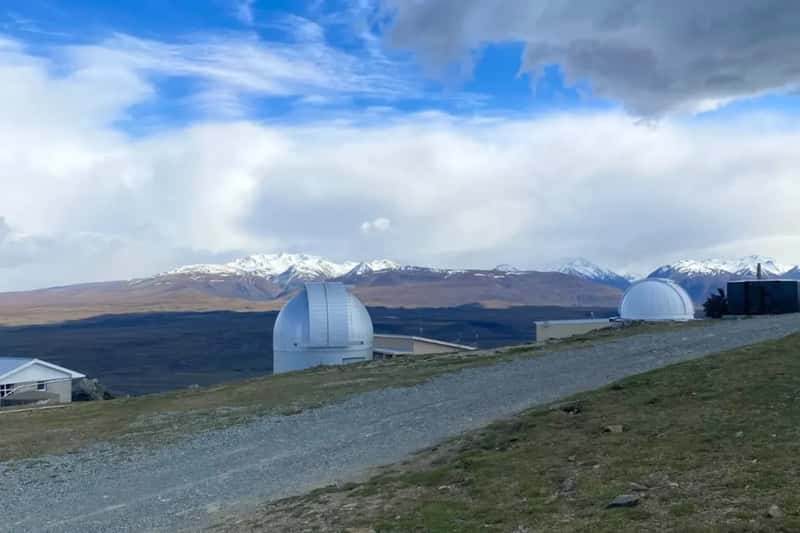
At the top, the first thing that caught my eye was the Mount John Observatory, sitting quietly above the ridge as if it were part of the landscape. I had imagined ending the day with a stargazing tour, especially knowing that this area is famous for its clear skies..s
Unfortunately, the weather had other plans. Clouds rolled in during the afternoon and, by evening, the tour got cancelled! I hoped and waited until midnight, but the stars decided not to show up that night!
I was disappointed, of course, but standing there made me realise why this place is so sought after at night—the sense of openness, the silence, and the feeling that the sky is so much closer than anywhere else. Even without the stars, the observatory added a certain atmosphere to the summit, as if reminding me that some experiences depend entirely on nature, not timing.
Why Mount John Is One of the Best Stargazing Spots in the World
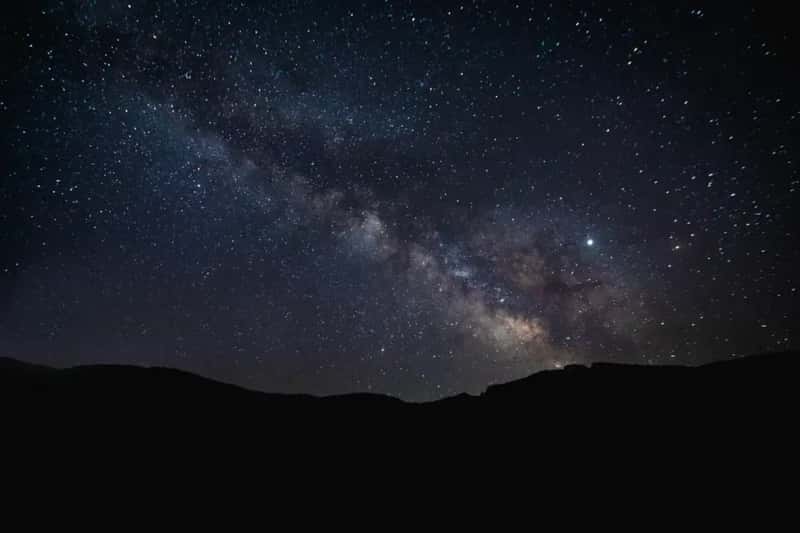
When I planned my trip to Mount John, stargazing was the activity I was most excited about. The area is part of the Aoraki Mackenzie International Dark Sky Reserve, which is known for having some of the clearest skies in the world. On a good night, visitors can see thousands of stars, the Milky Way stretching overhead, and even distant galaxies with the naked eye.
It’s the kind of place where we realise how enormous and quiet the universe actually is. The altitude of Mount John (1,031 m) also plays a key role. Being above the surrounding plains means thinner, drier air and incredibly stable atmospheric conditions. This creates exceptionally sharp visibility, ideal for both professional astronomers and curious travellers.
In my case, the weather conditions weren’t favourable… sometimes it’s not up to us! However, looking at the observatory on top of the hill made me imagine how incredible it must be on a clear night. I left Mount John thinking that next time I’m in New Zealand, I’ll plan an extra night in Tekapo just for another chance. Even without the stars, the place already felt magical.
The Best Period to Visit Mount John
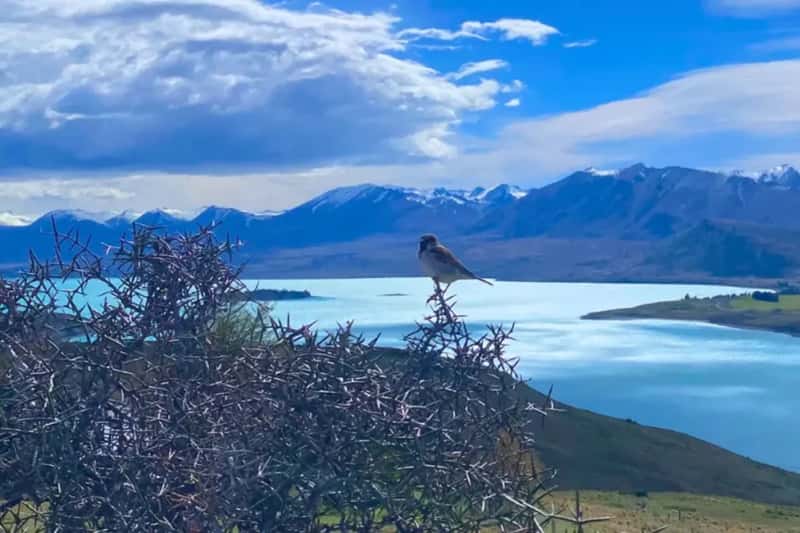
After my experience, I can say that the best period is not the one I chose. This area, in fact, during winter and spring, can be affected by strong winds and cold weather, which makes outdoor activities more tricky. However, this spring has been quite exceptional, with more extreme conditions than usual.
If you want to enjoy Mount John without constantly checking the sky or worrying about the wind picking up, I’d suggest planning your visit during the summer months — December, January, and February. This is when the days are longer, the temperatures are milder, and the chances of having a clear, calm day are much higher. Stargazing tours also tend to run more consistently in summer, which increases your chances of seeing the famous Tekapo night sky in all its clarity.
That said, New Zealand has a reputation for giving you “four seasons in a day,” and it’s not just a poetic phrase — it’s true. Even in summer, the weather can shift quickly. To avoid any inconvenience, it’s best to be prepared: bring warmer layers, pack a raincoat, and don’t rely too much on the forecast. Being ready for sudden changes makes the whole experience much more enjoyable, no matter which season you choose.
ŌTehīWai: The MāOri Story Behind the Name
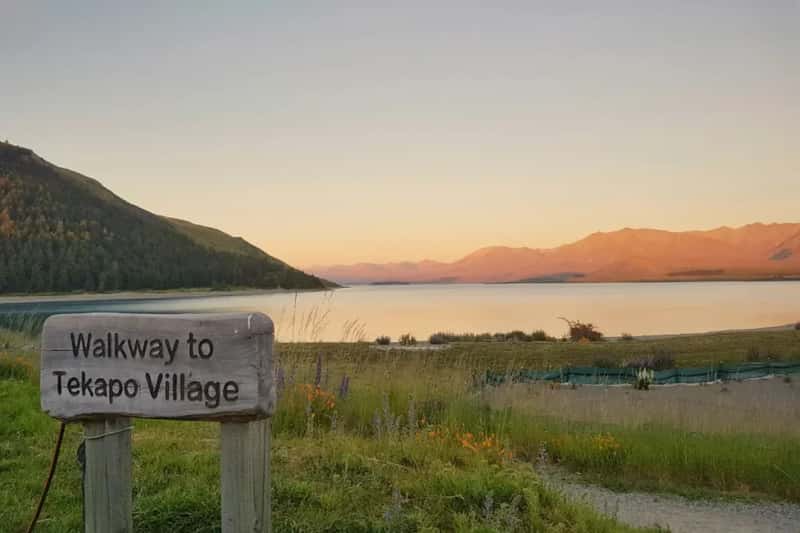
Every place in New Zealand carries a Māori name, and each one comes with its own story. According to Wikipedia, Mount John is known as Ōtehīwai, “the place of Hīwai,” a local ancestor tied to this landscape. Even Lake Tekapo has its own meaning, often translated as “a resting place at night.”
Learning these names pulled me into a history I didn’t know much about, but one that felt unexpectedly magical and deeply connected to the land. New Zealand is slowly reclaiming and honouring this heritage, and you can see it in the bilingual signs that appear everywhere.
So if you suddenly come across words you’ve never read before, don’t worry—you’re just seeing the country through both of its voices! It also reminded me that travelling here isn’t just about the views—it’s also an invitation to listen, learn, and appreciate the stories that shaped this land long before we arrived.