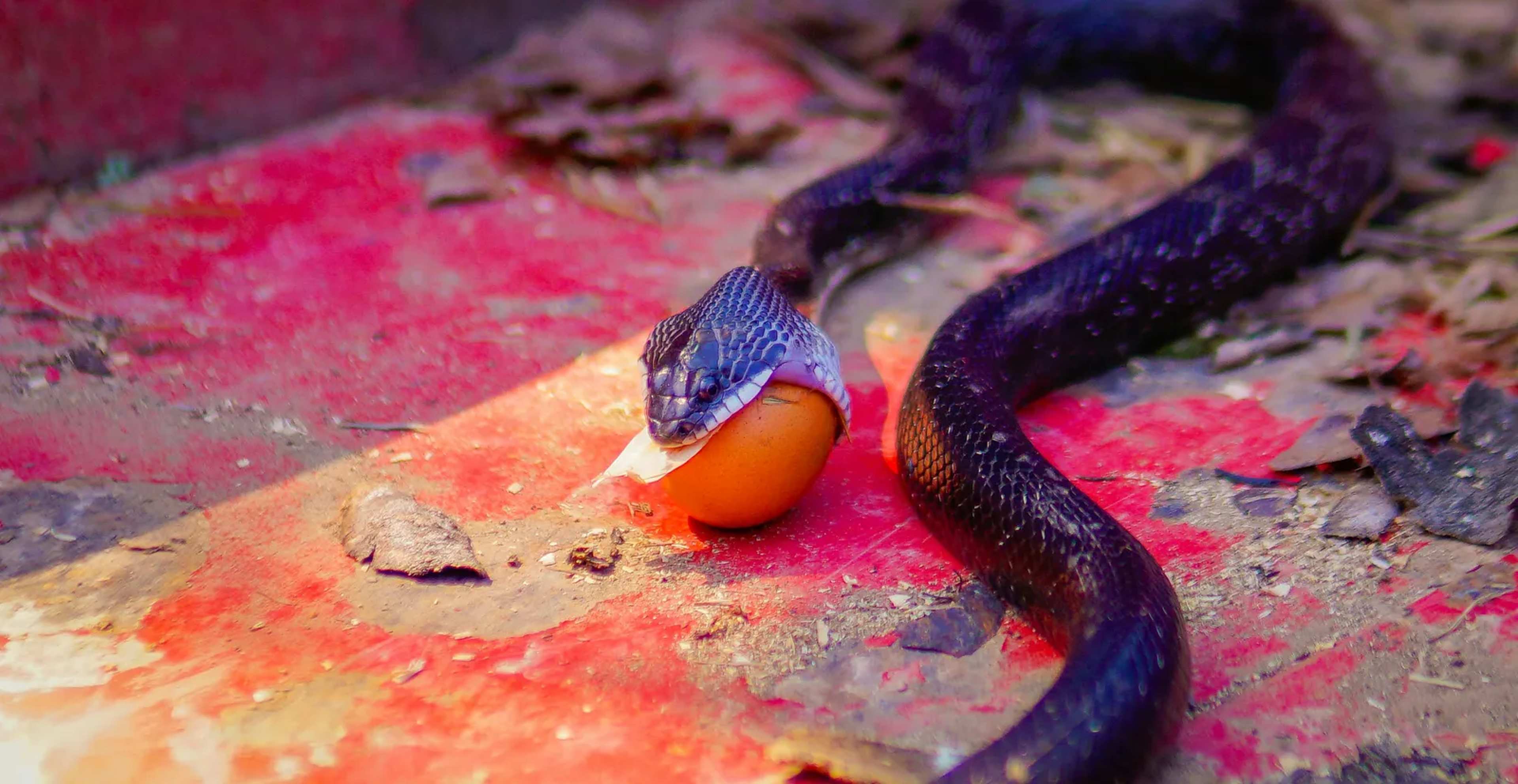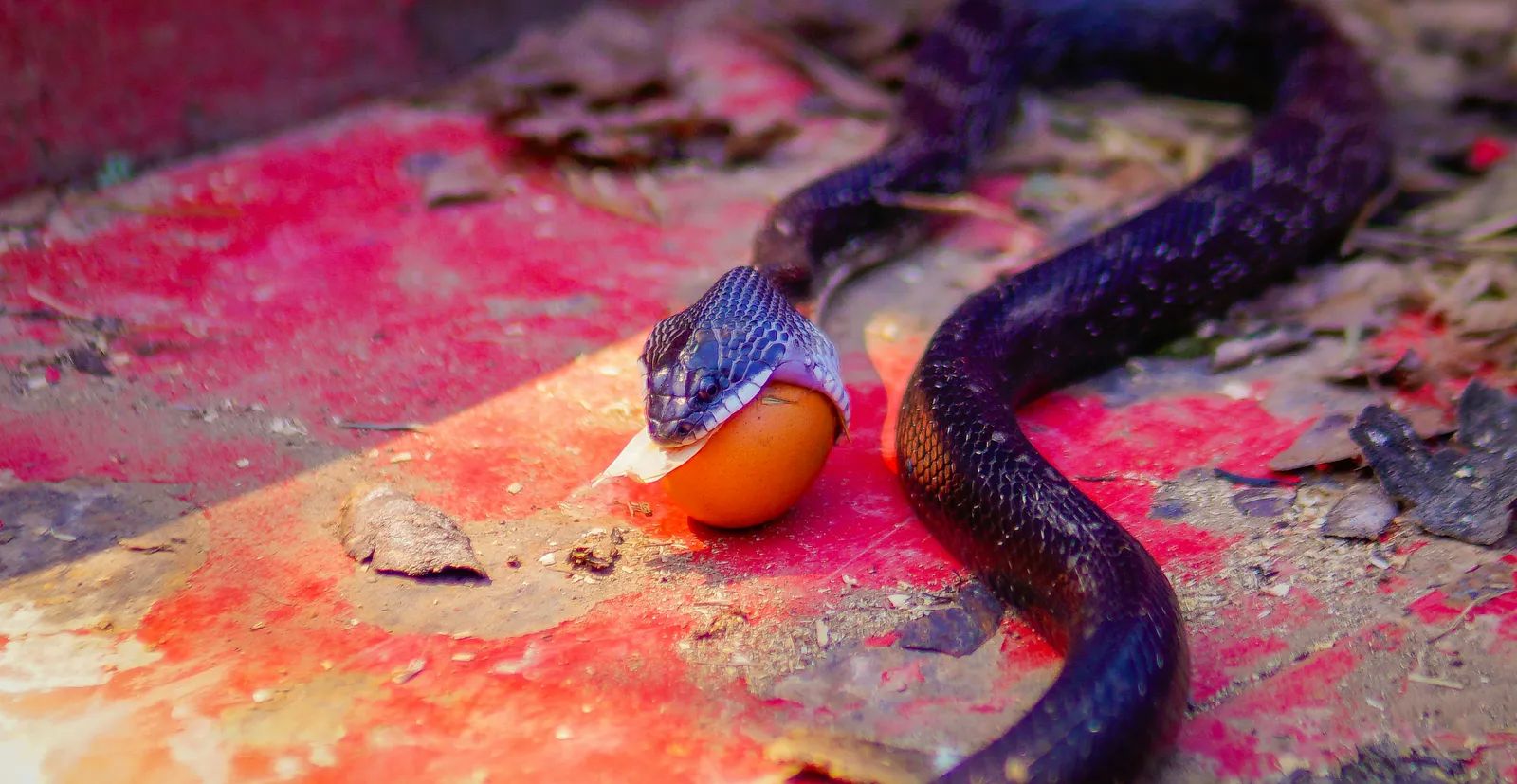
Researchers working in the remote Harenna Forest of southern Ethiopia have identified a previously unknown species of snake that stands out for its ink-black body and bright white throat and belly. The find adds to the growing list of species documented in the Bale Mountains region, where dense forests and high elevations create isolated habitats. Genetic tests and breeding experiments helped confirm the animal as distinct from similar egg-eating snakes already known in Africa. ([1])
Initial Encounter and Early Clues
A team led by Arthur Tiutenko first spotted the snakes during fieldwork in 2019. They collected a young female that appeared similar at first glance to the African egg-eating snake, Dasypeltis atra. Closer inspection revealed differences in scale patterns and coloration that did not match existing descriptions. These small but consistent traits prompted further investigation rather than immediate classification. The researchers later returned to the same area and observed additional individuals. Captive breeding trials paired the collected female with a male of the known species. Offspring displayed mixed traits, suggesting the Harenna population represented something separate. Genetic analysis of tissue samples provided the final confirmation that the snakes belonged to a new species.
Physical Traits That Set It Apart
The newly described white-throated egg-eater, Dasypeltis albigularis, shows a deep black dorsal surface with bluish tones visible between the scales. Its underside remains stark white from throat to tail tip, creating a sharp contrast that distinguishes it in the field. Adult size and proportions align closely with other members of the genus, yet the throat coloration remains consistent across examined specimens. Juveniles collected early in the study already displayed the same color pattern, ruling out age-related variation. Researchers noted that the white throat stands out against the dark body even in low light conditions typical of the forest floor. These visual markers proved reliable for field identification once the team knew what to look for.
Specialized Diet and Behavior
Like other egg-eating snakes in the genus, this species consumes only bird eggs. It uses enlarged vertebrae in the throat to crack the shell before swallowing the contents and expelling the fragments. The adaptation allows the snake to exploit a food source that many other predators cannot access efficiently. Field observations indicate the snakes are active primarily at night or during twilight hours. They move slowly through low vegetation and leaf litter where ground-nesting birds are common. No evidence of venom or defensive biting toward humans has been recorded, consistent with the nonvenomous nature of the entire genus.
Broader Context of the Find
The discovery highlights how targeted fieldwork in understudied highland forests can still yield new species even in the 21st century. Tiutenko described the process as a classic example of recognizing novelty in a previously little-visited location. Continued surveys in the Bale Mountains and surrounding areas may reveal additional undescribed reptiles and amphibians. Questions remain about the full geographic range of the white-throated egg-eater and its population size. Habitat changes from agriculture or climate shifts could affect the species, though current data are too limited for detailed assessments. Further studies will help clarify these points while building on the initial description.