Travelbinger
TravelbingerTravel deals, guides and hacks
Travel News
Trip Planner
Sign In
Travel News

Not Vampires: Fruit Bats Help Regrow Brazil's Atlantic Forest

Share:
Expert reviewed
Matthias BinderKatherine Woodward Ramer

By Written by Matthias Binder

·

Edited by Katherine Woodward Ramer

Cited 4 sourcesUpdated Nov 13, 2026· 4 min read
DetailsFull details

Cited Sources (4)

  1. news.mongabay.com — Fruit bats emerge as unlikely allies in the atlantic forest restoration(news.mongabay.com)
  2. news.mongabay.com — Lures that attract seed dispersing bats could aid tropical reforestation(news.mongabay.com)
  3. Only three(backend.travelbinger.com)
  4. sciencedirect.com — S0378112712006895(sciencedirect.com)
Author:Matthias Binder

Travel Expert & VP of Operations

Matthias a curious globetrotter who collects moments from night markets, coastlines, and tiny mountain villages. Plans trips around local food, scenic trains, and the best views at golden hour.

Editor:Katherine Woodward Ramer

Editorial Specialist

Checks destination facts and source links before a story is published.

Published November 13, 2026 · Updated November 13, 2026 · 4 min readRead our editorial policy.
Not Vampires: Fruit Bats Help Regrow Brazil's Atlantic Forest
Add as a preferredsource on Google

Bats have carried a sinister image for more than a century, largely because of fiction. Bram Stoker’s Dracula, published in 1897, tied these animals to blood-drinking monsters in the popular imagination. In Brazil’s Atlantic Forest, a quieter story is unfolding, one in which fruit-eating bats may help heal land that was cleared for farming and other uses ([1]). Scientists are testing whether these animals can speed up natural regrowth, possibly at a lower cost than large tree-planting efforts ([2]).

Three blood feeders out of roughly 1,500

Of the roughly 1,500 bat species known to science, only three feed on blood. Just one of those targets mammals such as cattle and other livestock, and people are rarely on its menu. Bats are the second most diverse group of mammals, trailing only rodents, so the vampire image describes a very small corner of a large and varied group.

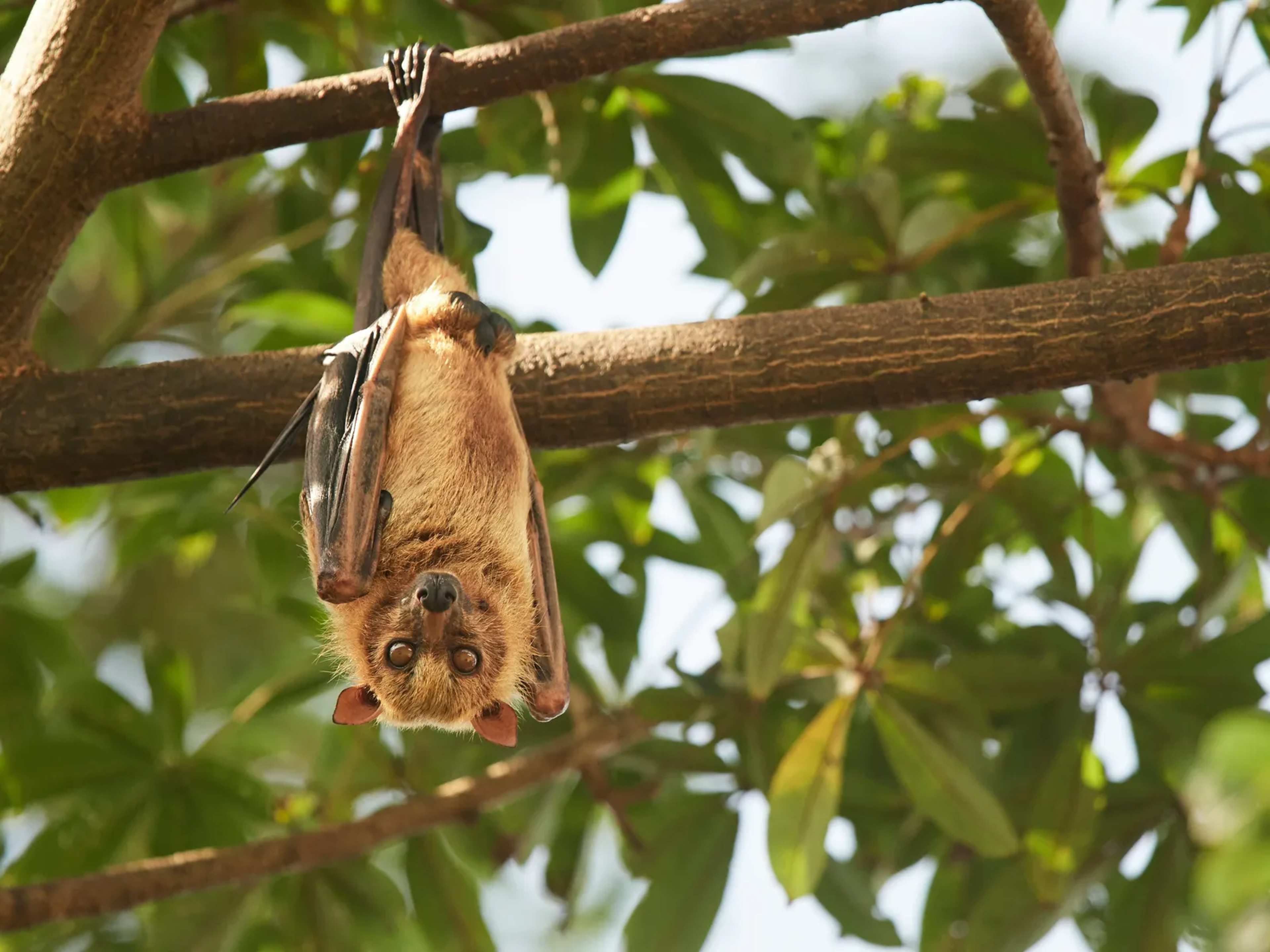
Their ecological value is far more practical. Bats help control insect populations, support pollination and move seeds from one place to another. Around a third of bat species depend mainly on fruit or nectar, and it is this seed-carrying role that has drawn the attention of restoration scientists.

A scent-based idea from a bat researcher

Lays Cherobim Parolin, now a professor at the Pontifical Catholic University of Paraná, did not set out to study bats. She had hoped to work with larger mammals after finishing her biology degree, but a bat project changed her plans. Her first hands-on encounter, freeing a bat from a mist net, convinced her to stay with the work. She later had a tattoo of a great fruit-eating bat, a species recognizable by two pale stripes across its head.

Her point about public awareness is direct. “People have no idea that bats are seed dispersers and have the potential to restore [natural] areas,” she said. Her team’s approach relies on smell. Researchers have used synthetic compounds derived from the fruit of Piper plants to draw wild fruit-eating bats, and bats of the genus Carollia were drawn to the scent, with a slight increase in the number of seeds dispersed ([2]).

Key points

  • Only three of the roughly 1,500 known bat species feed on blood.
  • Bats are the second most diverse mammal group, after rodents.
  • Fruit-eating bats in the Atlantic Forest disperse seeds from more than 140 plant species.
  • Scent lures are still at an early, experimental stage.

Promising figures, with open questions

The estimates for the Atlantic Forest are notable. Fruit-eating bats there disperse seeds from more than 140 plant species, and they have the potential to deposit more than 25,000 seeds per hectare per day in degraded areas ([1]). Those figures describe what bats could contribute, not what has already grown back across the landscape.

Pedro Brancalion, a forest restoration specialist at the University of São Paulo, has stressed that bats take part in several basic ecological processes. Specialists also point to a drawback. Seed dispersal by bats can spread plants that are not wanted in a restored area, so the approach needs careful management. Earlier work at a restored site in southeastern Brazil found that bat droppings contained seeds from colonist plants that had not been planted there, which suggests bats are bringing new species into the area ([3]).

The main gaps are summarized below.

Related Stories From Travelbinger

  • Bats That Fold Amazon Leaves Into Tents Carry Seeds That Could Restore Forests
  • 25 new destinations just earned UNESCO World Heritage status
  • Wind Turbines Have Killed an Estimated 18 Million Bats Since 1981
Stage What is known What remains unclear
Seed dispersal Bats carry seeds from many plant species into degraded land How many of those seeds grow into established trees
Scent lures Certain compounds draw wild fruit-eating bats How large the effect is across different landscapes
Next step Parolin’s team is tracking seedling recruitment in Brazil Whether lures also attract other seed dispersers, such as marsupials

What comes next

Bat-based restoration is not a replacement for protecting existing forest or planting trees. Experts see it as a possible complement to conventional methods. The next phase will test whether the seeds that bats deliver develop into healthy young trees, and whether the approach can be adapted to other places where fruit-eating species live.

For now, the animal long linked to Dracula is gaining a more accurate reputation. Its role in a threatened rainforest is still being measured, but the early evidence points to a species that may be more useful than frightening.

🔥 Would you like to save this?

We’ll email this post to you, so you can come back to it later.

Matthias Binder

Matthias Binder

Matthias a curious globetrotter who collects moments from night markets, coastlines, and tiny mountain villages. Plans trips around local food, scenic trains, and the best views at golden hour.

View Profile & Articles
Katherine Woodward Ramer

Edited & reviewed by Katherine Woodward Ramer — Editorial Specialist

Expert reviewed

More from Matthias Binder

Not Vampires: Fruit Bats Help Regrow Brazil's Atlantic Forest

Not Vampires: Fruit Bats Help Regrow Brazil's Atlantic Forest

1 min read

Tauck Opens 2028 River Cruise Bookings With New ms Harmonie on France's Rhône

Tauck Opens 2028 River Cruise Bookings With New ms Harmonie on France's Rhône

1 min read

19 Things Travelers Pack for a Two-Week Coach Tour That Everybody Else Wishes They Had

19 Things Travelers Pack for a Two-Week Coach Tour That Everybody Else Wishes They Had

1 min read

13 Single Supplements Tour Operators Will Waive for Older Travelers Who Simply Raise It Politely

13 Single Supplements Tour Operators Will Waive for Older Travelers Who Simply Raise It Politely

1 min read

Latest News

Fresh travel updates

Not Vampires: Fruit Bats Help Regrow Brazil's Atlantic Forest

Not Vampires: Fruit Bats Help Regrow Brazil's Atlantic Forest

Matthias Binder·Nov 13
Tauck Opens 2028 River Cruise Bookings With New ms Harmonie on France's Rhône

Tauck Opens 2028 River Cruise Bookings With New ms Harmonie on France's Rhône

Matthias Binder·Nov 13
19 Things Travelers Pack for a Two-Week Coach Tour That Everybody Else Wishes They Had

19 Things Travelers Pack for a Two-Week Coach Tour That Everybody Else Wishes They Had

Matthias Binder·Nov 13
13 Single Supplements Tour Operators Will Waive for Older Travelers Who Simply Raise It Politely

13 Single Supplements Tour Operators Will Waive for Older Travelers Who Simply Raise It Politely

Matthias Binder·Nov 13
View All News

Stay Updated

Get the latest travel news delivered to your inbox

Stay Inspired

Get travel inspiration, guides, and exclusive deals delivered to your inbox.

Travelbinger
TravelbingerTRAVEL DEALS, GUIDES AND HACKS

Discover the world through the eyes of seasoned travel experts. From breaking news to hand-picked destination guides, we bring you the stories that matter. Join our community for exclusive member deals and authentic inspiration for your next journey.

Deals

  • All Deals
  • Beach Holidays
  • City Breaks
  • Luxury Hotels
  • Last Minute

Popular Destinations

  • Europe
  • Asia
  • North America
  • South America
  • Africa

Company

  • About Us
  • Travel News
  • Editorial Policy
  • Contact

Legal

  • Privacy Policy
  • Terms & Conditions

This website contains affiliate links to trusted partners.

© 2026 Travelbinger. All rights reserved.

Secure payment with:
Visa
MC
PayPal
Klarna