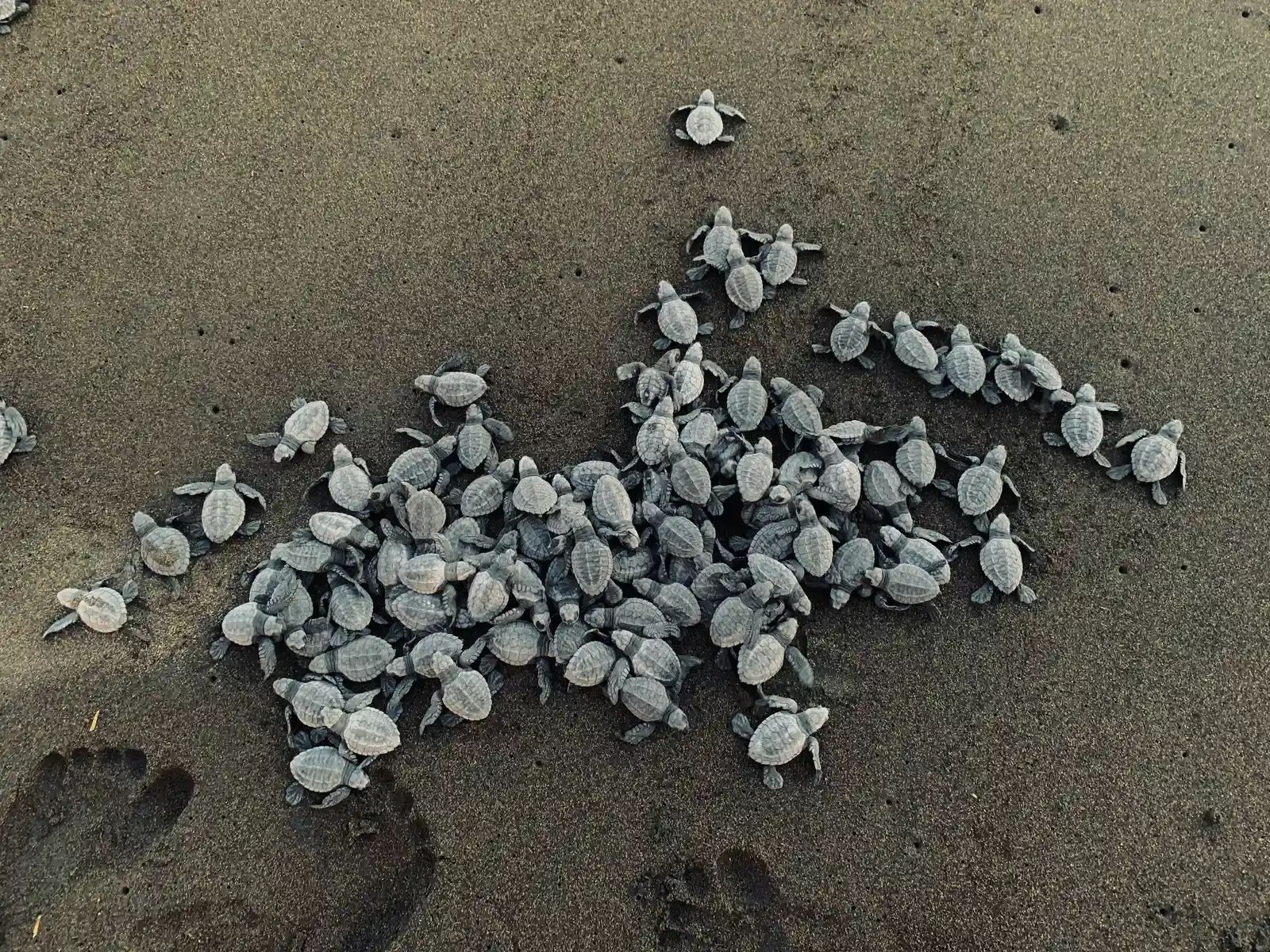
Huntington Beach, Calif. – Lifeguards on night patrol along the Southern California shoreline spotted what looked like a struggling animal in the sand. Instead, they witnessed an olive ridley sea turtle depositing eggs, an event that has now been confirmed as the first natural nesting by any sea turtle species on the U.S. West Coast. Three days later, another nest appeared a short distance away near the Huntington Beach Pier. Both locations were quickly protected with fencing while officials monitor the sites through the incubation period.
A Surprise Discovery on Familiar Shores
The first nest was found near Seal Beach on Sept. 16, followed by the second on Sept. 19 in Orange County. Authorities with the National Oceanic and Atmospheric Administration’s West Coast Fisheries division described the sightings as unprecedented for the region. Olive ridley turtles typically nest in tropical waters across the Pacific, Indian, and Atlantic oceans, and adults rarely exceed 100 pounds. Their appearance so far north caught even experienced beach staff off guard. Lifeguards initially worried the animal might be injured or ill because such activity is so uncommon in these waters. Only after closer observation did they realize the turtle was nesting. The two sites remain under watch as the eggs develop over the coming weeks.
Why This Matters for Local Beaches
Huntington Beach draws millions of visitors each year for its surf, pier, and boardwalk. The sudden presence of protected nests adds an unexpected layer of wildlife activity to a stretch of sand better known for volleyball and sunset crowds. Officials have kept the exact nest locations discreet while still allowing public awareness of the historic event. The timing in mid-September aligns with typical olive ridley nesting seasons farther south, yet no prior records exist this far north along the continental U.S. Pacific coast. Experts continue to review ocean temperature patterns and current shifts that may have influenced the turtles’ movement.
Community Interest Builds Quickly
Word of the nests spread rapidly among residents and visitors. One mother brought her young son to the Huntington Beach area specifically to view the protected site, describing the moment as magical. Marine safety officials noted steady inquiries from people curious about the turtles and the fate of the eggs. Incubation is expected to last between 45 and 60 days, after which any hatchlings would make their way to the ocean under natural conditions. Local agencies are coordinating monitoring efforts to give the nests the best chance of success without unnecessary disturbance.
Looking Ahead Along the Coast
The fenced areas will stay in place through the hatching window, and updates from wildlife officials are anticipated as the season progresses. For a coastline that rarely sees this kind of nesting activity, the event has already shifted how some locals view their familiar beaches. The focus now rests on letting the natural process unfold while keeping the sites secure.