Phnom Penh doesn’t reveal itself all at once. It doesn’t overwhelm you, it doesn’t show off, it doesn’t try to impress with special effects. You have to enter it gently, follow its rhythm, accept the heat, the sudden silences, the traffic that stops and starts again with no apparent logic.
Visiting Phnom Penh in one day by tuk tuk, the city’s top player in urban transportation, is, in my opinion, one of the best ways to get a well-rounded sense of Cambodia’s capital: a fluid, unhurried itinerary that alternates city landmarks with lesser-known places that feel almost suspended in time.
Starting point: the Royal Palace
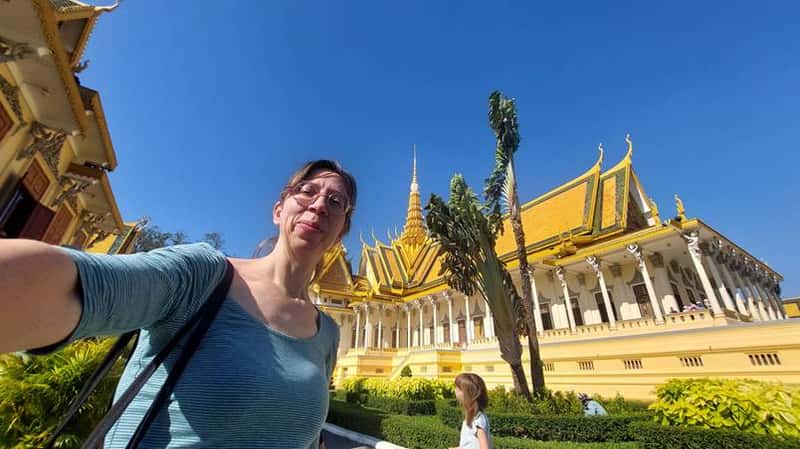
You can begin the day independently, as I did, at the Royal Palace, which is easy to reach from most accommodations on foot, by tuk tuk, or with Grab. It’s the city’s most iconic landmark and deserves a proper visit, lasting at least 2 hours: the golden roofs, manicured gardens, and the Silver Pagoda—with its floor made of precious tiles—tell the story of an elegant, regal Cambodia deeply connected to Buddhist spirituality. It’s a visit that requires focus and respect, and it works beautifully as a first stop before diving into the city itself. As a side-note that adds to the overall atmosphere, it’s not uncommon here—as everywhere else in Phnom Penh—to encounter Theravāda Buddhist monks, the tradition practiced in Cambodia, recognizable by their bright orange robes. Theravāda monks live in close contact with everyday urban life, offering a tangible reminder of how deeply spirituality is woven into daily Cambodian culture.
Once the visit to the Royal Palace is over, it’s time to find the tuk tuk that will take you through both the major and lesser-known sights of the city. Head to Royal Palace Park, the square in front of the palace that separates it from the Mekong River. Lively and busy with traffic, this area is a major gathering point for tuk tuk drivers. You’ll almost certainly be approached by someone offering to show you around. Agree on an itinerary that interests you (they’ll suggest several) and negotiate the price for the stroll, which usually covers 3 to 4 hours. Plan for a small tip at the end, plus the modest cost of the ferry ticket to Koh Dach/Koh Okhna Tei – if your trip includes it – and a few bottles of water — you’ll need them. Together with my travel companions, I chose an itinerary that combined both tangible and intangible heritage and included a short but fascinating ferry crossing on the Mekong. But the options are many.
Wat Phnom Daun Penh: mysticism and Khmer music
With our plan set, we headed north: the Mekong alive and busy on the right, and on the left a vibrant city of major roads, street food stalls everywhere, and constant reminders of Buddhist spirituality, almost as if protecting the urban traveler. Our first tuk tuk stop was Wat Phnom Daun Penh, the temple that gave Phnom Penh its name. Just a few steps into the greenery surrounding the temple, the atmosphere changed abruptly: silence, calm, a hint of cool air, tucans in the trees, the distant sound of bells. As we climbed the steps leading to the gleaming Buddha hall, the spiritual intensity of the place became increasingly palpable. Inside the main hall, where worshippers were deep in prayer, three musicians were performing live traditional Khmer music: combined with the sound of rustling trees and whispered prayers, it created a powerful sense of timelessness. Outside, the elevated position of the temple offered unexpected views over the surrounding streets and the city as a whole.
Most temples you will encounter in Phnom Penh today have medieval origins, often linked to even older sacred sites, and were later reconstructed or renovated during the French colonial period (late 19th–early 20th century), with further interventions after World War II and following the dark years of the Khmer Rouge. But in Cambodia, the value of a temple isn’t tied to architectural originality—it’s about continuity of worship. A temple can be rebuilt many times without losing its sacredness; in fact, each reconstruction becomes part of its story and only adds to its enduring appeal.
Mongkol Serey Temple (Golden Temple): urban spirituality
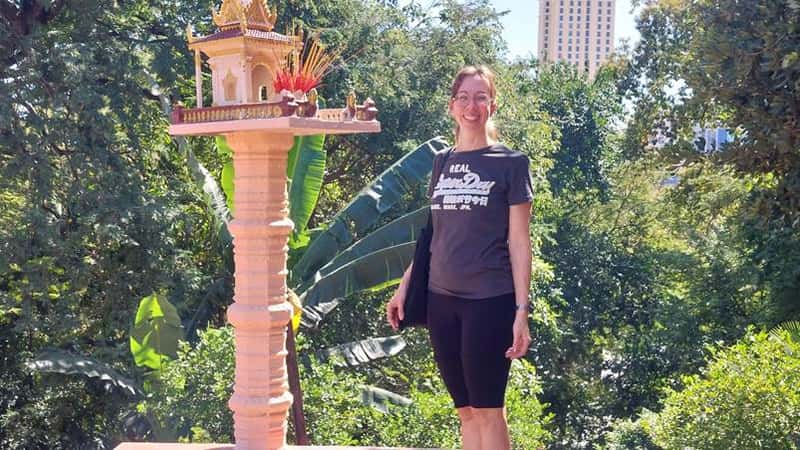
From the hill of Wat Phnom, we got back into our tuk tuk and headed to Mongkol Serey Temple, often called the Golden Temple. Less touristy, more everyday, and embedded in the city’s urban fabric, it’s an intimate and deeply peaceful place. From the outside, the architecture is rich—gold is both the theme and the dominant color—but also refined, with decorations designed to capture and reflect light, layered roofs with soft lines, and ornamental details typical of Khmer aesthetics. Inside, Buddha statues, floral motifs, and finely decorated golden walls create an atmosphere that feels both precious and quietly intimate.
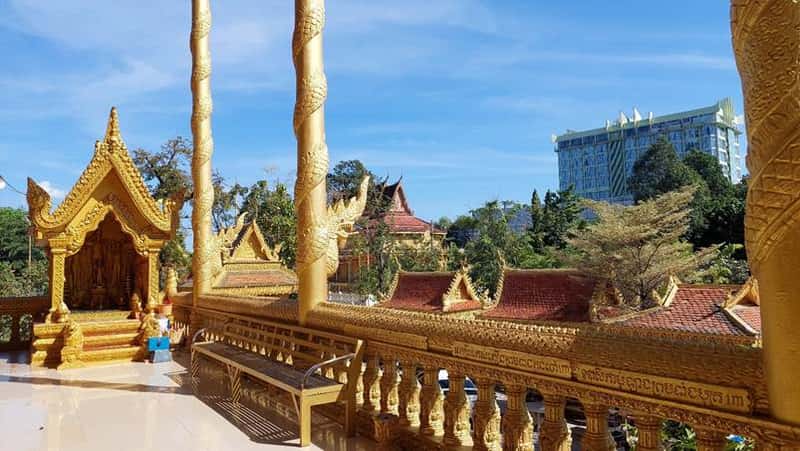
Mongkol Serey Temple (Golden Temple): urban spirituality (Photo Credits: Roberta Bianchi)
Urban ferry to Koh Dach and Koh Okhna Tei
At this point, we left the city behind. From one of the smaller piers in a fairly peripheral area of the city – the peninsula -, we boarded a small urban ferry that continuously crosses the Mekong to the twin islands of Koh Dach and Koh Okhna Tei. The crossing was short—maybe five minutes—but evocative, clearly marking the transition from an urban environment to the deeply rural character of the islands.
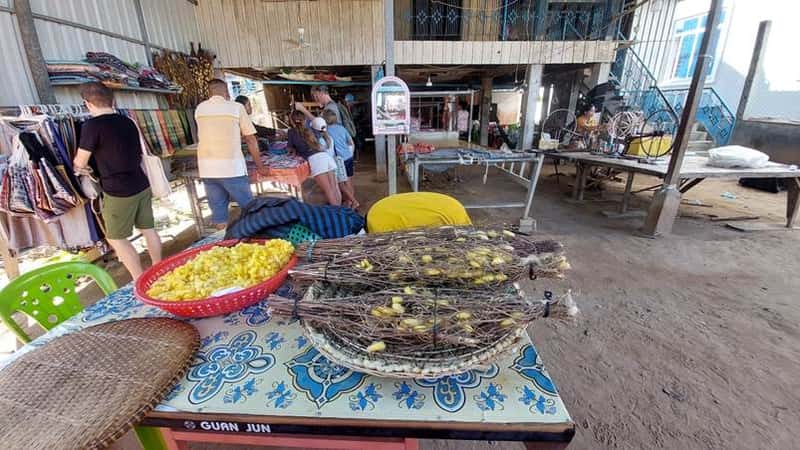
Koh Dach silk: educational charm
On Koh Dach, the tuk tuk wove its way through small houses in the island’s interior, where traditional silk workshops are concentrated. Our driver took us to one of these centers, where we watched silk being produced before our eyes using simple yet perfectly effective tools. We also had the chance to purchase scarves in every color and texture, directly supporting the local community. Among all workshops, the Silk Island Community Center on Koh Okhna Tei is the most established reference point in the area, hosting organized visits and workshops throughout the year.
Monkey Temple: sacred, wild, real
After returning to the Phnom Penh peninsula via the same ferry, we reached our final stop: Monkey Temple. Here, the stars are the monkeys, of course, namely long-tailed macaques. They are everywhere: they jump, watch, and approach without fear. It’s essential to keep your distance and not feed them: they can be aggressive and are unfortunately often overfed.
The temple is fascinating, suspended between spirituality and urban nature, perfectly aligned with the city’s character. Extremely colorful, adorned with stupas, statues, and vibrant decorations, it’s still an active sacred space frequented by local worshippers.

Drop-off
The day can end with a drop-off of your choice: a riverside restaurant, the night market, or simply your hotel, as was our case. If you’re unsure, ask your tuk tuk driver—they know the city better than anyone and often suggest authentic spots far from the most predictable tourist routes.
Why choose a tuk tuk
Getting around Phnom Penh by tuk tuk isn’t just practical. Beyond the convenience of stopping anywhere—especially when something unexpected catches your eye—it’s an open, sensory, deeply human way of traveling. You see, hear, smell, exchange glances, and absorb the city at full intensity. In a place like Phnom Penh, it’s the perfect way to turn half a day into an experience that’s efficient, layered, and truly memorable.