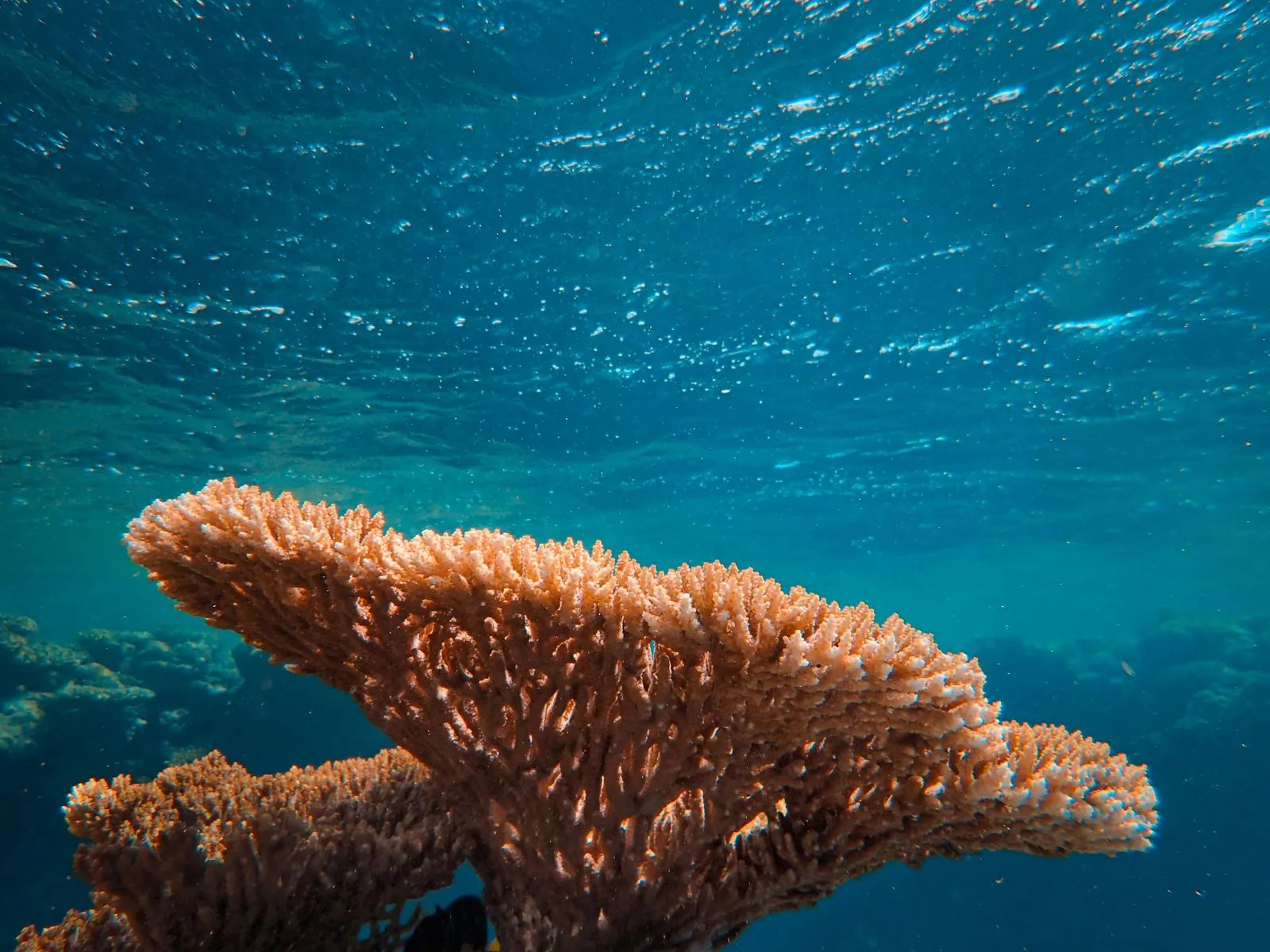
During a marine heat wave that struck the Red Sea in 2022, a small patch of corals behaved differently from the rest of the reef. The corals had received a treatment of beneficial bacteria drawn from healthy colonies, and they avoided the bleaching that affected nearby untreated corals. The outcome, detailed in research published in Cell Reports, marks the first reported success of such an approach under natural conditions rather than in laboratory tanks. ([1])
A Heat Wave Tests the Reef
The treated corals sat on a reef roughly 15 kilometers off the Saudi Arabian coast. While surrounding colonies lost their symbiotic algae and turned pale, the probiotic-treated group retained its color and appeared to maintain normal function. Bleaching occurs when rising water temperatures disrupt the partnership between corals and the algae that supply much of their energy. Prolonged stress can lead to coral death and the loss of habitat for the many marine species that depend on reefs.
Global monitoring data already show widespread coral decline. Scientists have warned that even a 1.5°C rise above pre-industrial temperatures could place 70 to 90 percent of the world’s corals at risk of severe degradation by 2100. The 2022 Red Sea event offered a real-world test of whether targeted bacterial treatments could help individual colonies endure such conditions.
Beneficial Bacteria Isolated From Healthy Corals
The probiotics consisted of bacterial strains previously collected from thriving corals. Researchers applied these microbes to the experimental patch before the heat wave intensified. Earlier tank experiments had suggested the approach could reduce bleaching stress, yet confirmation in open water had remained elusive until this trial.
Raquel Peixoto, the principal investigator from King Abdullah University of Science and Technology, noted that corals possess some capacity to adjust to changing conditions. She emphasized that this capacity only matters if the corals remain alive in the first place. The new results indicate that the added bacteria may have supported that survival during the acute stress of the heat wave.
What the Findings Suggest and What Remains Unknown
The study demonstrates that probiotic treatment can protect corals in the field during at least one documented heat event. It does not establish the method as a universal solution or prove long-term benefits across different reef systems. Questions remain about optimal bacterial strains, application methods at larger scales, and performance under repeated or more severe heat stress.
Coral researchers continue to explore multiple strategies, including selective breeding and habitat restoration. The Red Sea trial adds one more tool to that set, though further field tests will be needed before any broader application can be considered. The work underscores both the vulnerability of reefs and the potential for microbial interventions to buy time while global temperature pressures are addressed.