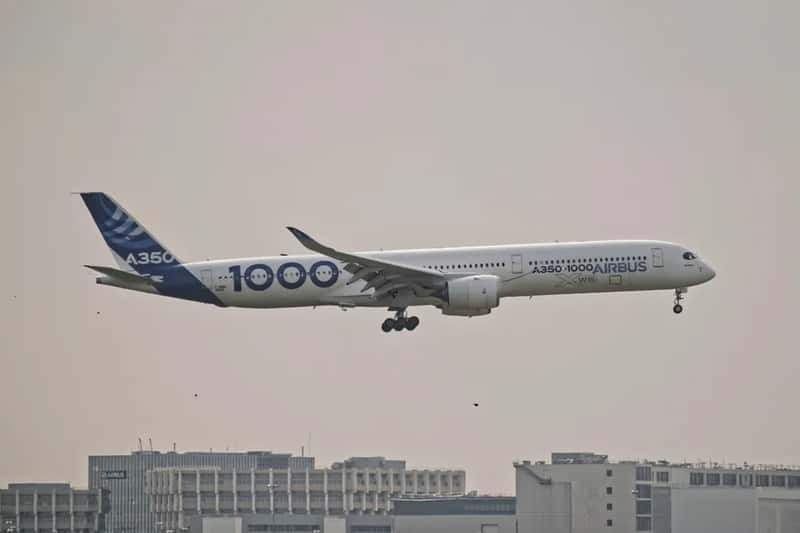
Qantas has pulled back the curtain on the aircraft that will finally deliver one of aviation’s oldest dreams: flying nonstop from Australia’s east coast to the other side of the planet. The airline unveiled its first specially modified Airbus A350-1000ULR at the manufacturer’s Toulouse facility, confirming that the jet built for these marathon journeys is no longer a concept on a drawing board but a real, flying machine undergoing final testing.
Known as Project Sunrise, the initiative has been nearly a decade in the making and promises flights of up to 22 hours connecting Sydney with London and, soon after, New York. It’s a genuinely different kind of flying, one built around a custom aircraft, a purpose-designed cabin, and years of medical research into what happens to the human body when it stays airborne for the better part of a full day.
A Decade in the Making: The Origins of Project Sunrise
The idea traces back to 2017, when Qantas issued something like a public dare to the world’s two biggest planemakers. In 2017, the airline announced plans to take on the final frontier of aviation, direct flights from the East Coast of Australia to London and New York, codenamed ‘Project Sunrise.’ Both Airbus and Boeing were invited to pitch an aircraft capable of making the trip with a full load of passengers, something no existing jetliner could manage.
Boeing offered a version of its yet-to-be-built 777-8, while Airbus proposed pushing its A350-1000 even further. Boeing suggested a version of the 777-8, which at the time looked like it could be developed along Qantas’ schedule expectations, while Airbus proposed an even longer-range version of the A350-1000, the A350-1000ULR. In the end, Airbus won the campaign when the airline placed an order in 2022 for 12 of the aircraft. The name itself carries real history, honouring the airline’s own past rather than just marketing spin.
Why “Sunrise”? A Nod to Wartime Flying Boats
The Project Sunrise name isn’t just a catchy label dreamed up by a branding team. It pays homage to Qantas’s historic ‘Double Sunrise’ WWII flights, which were operated by Consolidated Catalina flying boats between Perth in Western Australia and Sri Lanka, then known as Ceylon, and lasted long enough to see two sunrises. Those wartime routes were extraordinary feats of endurance for their era.
The endurance record set by those old flying boats still puts modern engineering in perspective. The longest nonstop leg, across the Indian Ocean, kept the Catalina flying boats aloft for 33 hours, during which the sun rose twice, hence the name Project Sunrise. Qantas has also said it plans to name its new A350s after stars and constellations as a further tribute to that era, with the first jet christened Vega.
The Aircraft: What Makes the A350-1000ULR Different
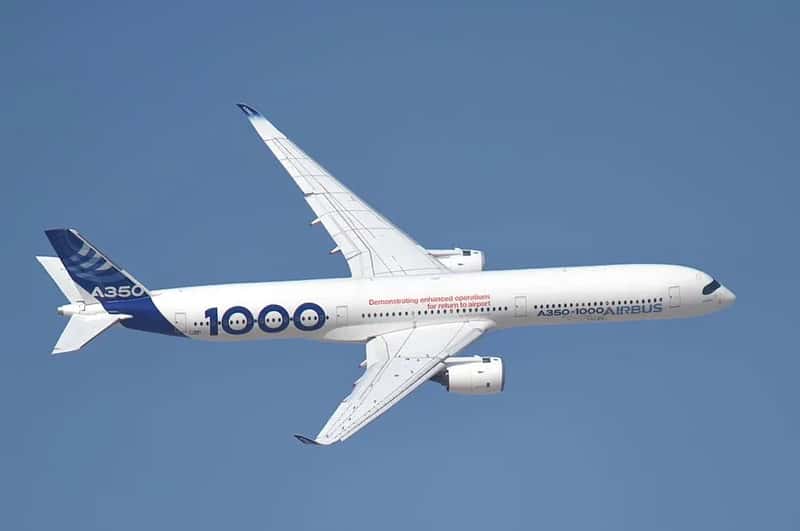
At the heart of Project Sunrise sits a heavily modified version of an already impressive jet. The A350-1000 is the largest variant of the A350 family, with incredible economics and range, and Qantas is taking advantage of incremental improvements made to the aircraft over the years, including a higher maximum takeoff weight that allows it to carry more fuel. The “ULR” designation stands for ultra long range, and it isn’t just a label, it reflects genuine structural changes to the airframe.
The single biggest modification is an extra fuel tank tucked into the belly of the aircraft. The A350-1000ULR has been specifically manufactured by Airbus for Project Sunrise, fitted with an additional 20,000-litre fuel tank that enables the aircraft to fly more than 16,000 kilometres, for up to 22 hours non-stop. That extra range comes from more than just fuel capacity, though. The ULR aircraft for Project Sunrise are designed specifically for ultra-long-haul operations that extend their range 1,000 nautical miles further than a conventional Airbus A350-1000.
Record-Breaking Distance and Flight Time

Once these flights start, they will immediately rewrite the record books for commercial aviation. At a distance of 10,573 miles (17,015 km), the flight time is expected to take up to 22 hours and will leapfrog Singapore Airlines’ Singapore Changi Airport to Newark Liberty International nonstop service, which is blocked at almost 19 hours. That’s a meaningful jump over the current record holder, not just a marginal improvement.
For travellers used to breaking up the trip to Europe, the change is significant. The new service will cut up to four hours from current one-stop itineraries and will operate alongside Qantas’ existing Perth-London and Sydney-Singapore-London flights. The airline isn’t retiring its other long-haul routes, it’s simply adding a nonstop option that didn’t exist before for anyone flying from the east coast.
Inside the Cabin: Four Classes Built for Endurance
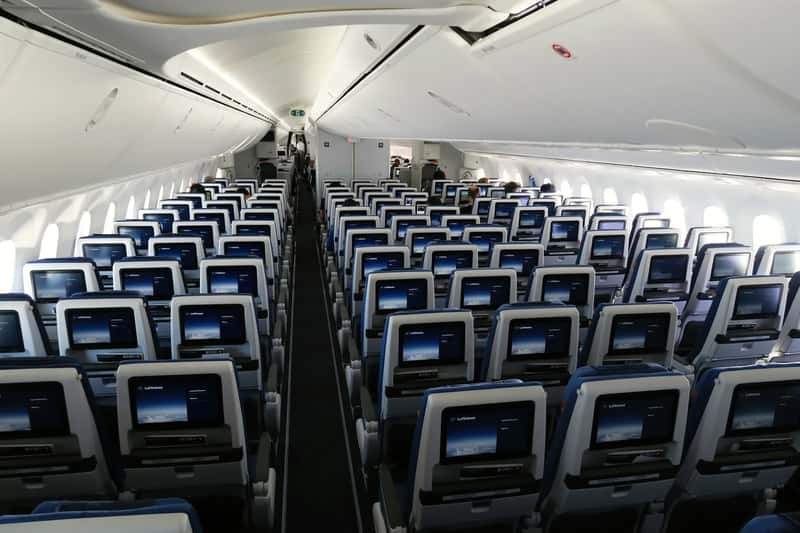
Qantas has deliberately kept passenger numbers low on these aircraft, prioritising space over seat count. The aircraft will accommodate just 238 passengers, far fewer than the average A350 in service currently, with four classes of service including six first-class suites, 52 lie-flat business class seats, 40 premium economy seats, and 140 economy seats. That’s a notably roomier layout than most airlines squeeze into the same airframe.
The premium cabins in particular have been designed with real attention to detail. First class will see suites arranged in a 1-1-1 configuration across the cabin, each featuring an 80-inch flat bed and separate armchair, plus a full-length wardrobe, while business class offers 52 suites in a 1-2-1 format with sliding doors on each, premium economy includes 40 seats in a 2-4-2 configuration, and economy accommodates 140 passengers in 3-3-3. Even economy passengers get a noticeably different experience than on a typical long-haul jet, with a dedicated Economy Plus zone up front.
Fighting Jet Lag: The Science Behind the Cabin

Spending nearly a full day in the air raises obvious questions about passenger wellbeing, and Qantas has leaned heavily on outside researchers to answer them. The airline has worked with the Charles Perkins Centre at the University of Sydney to develop techniques that make ultra-long-haul flying more enjoyable, with Professor Peter Cistulli noting that sleep deprivation and dehydration combined with long periods of immobility are the main challenges. That research directly shaped the cabin design rather than being an afterthought.
Light exposure turned out to be the single most powerful tool available to airlines managing jet lag. The university’s research shows that the biggest factor is light exposure, so Qantas and Airbus jointly developed light schemes in the cabin that resemble sunrise, daylight, sunset and night with subtle variations. There’s also a dedicated physical space built into the aircraft for movement. During the flight passengers can access a Wellbeing Zone, a dedicated space located between the Premium Economy and Economy cabins, featuring sculpted wall panels and integrated stretch handles, a guided on-screen movement program, a hydration station, and a range of premium refreshments.
A Bumpy Road: Delays That Pushed Back the Timeline
Project Sunrise has not arrived on schedule, and it’s worth being upfront about that. With 12 ultra-long-haul Airbus A350-1000s on order, services were originally supposed to start in 2025, but due to delays in the construction of the aircraft and the manufacture of the bespoke interiors, that date was pushed back to 2026. Even that revised timeline proved optimistic.
Supply chain troubles at Airbus have been the main culprit behind the most recent slip. Deliveries are now expected in early 2027, specifically April 2027, a slip from the original late 2026 schedule, due to supply chain issues, as Project Sunrise aims to enable direct, 22-hour flights connecting Australia’s east coast with distant destinations like New York and London. Part of the earlier delay also stemmed from an engineering problem. Airbus was required to redesign the aircraft’s additional center fuel tank after regulatory concerns emerged during certification, and executives later confirmed that redesign was one of the principal reasons deliveries slipped from the original timeline.
Sydney to London: The First Flight, October 2027
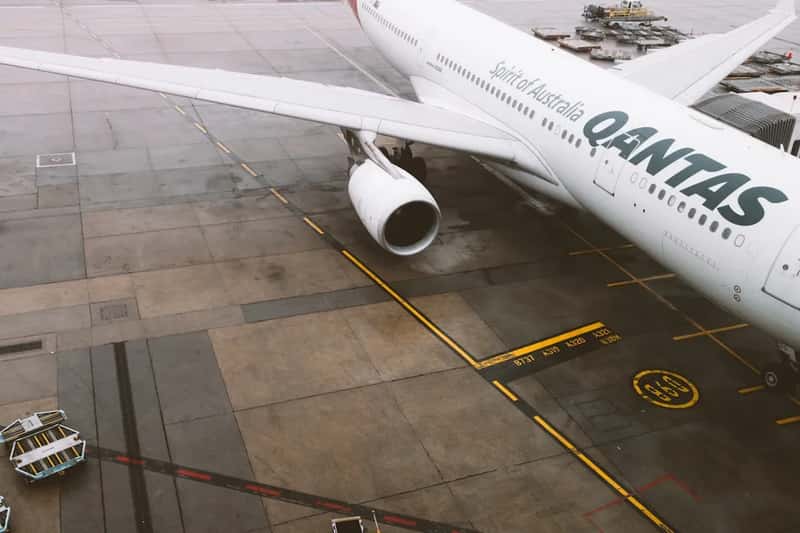
Despite the delays, Qantas has now locked in a firm launch window for its headline route. The airline unveiled its first Airbus A350-1000ULR at Airbus’ manufacturing facility in Toulouse, announcing that the inaugural Sydney-to-London service will launch in October 2027. That timing lines up with the Northern Hemisphere’s winter travel season, when demand for long-haul travel typically peaks.
Tickets won’t be far behind the announcement either. The first Project Sunrise Sydney to London services will go on sale in February 2027. The route carries real historical weight for the airline. Qantas has been flying between Sydney and London since 1947, when the original Kangaroo Route took four days with seven stops in Darwin, Singapore, Calcutta, Karachi, Cairo, Castel Benito and Rome, on its way to the UK. Eight decades later, that same city pair will be covered in a single hop.
New York Next: What Comes After London

London is only the opening chapter of Project Sunrise, not the whole story. Project Sunrise will eventually connect Australia’s east coast with other international destinations, with Sydney-New York confirmed as the next service to follow Sydney-London. Exact timing for that second route is still being finalised.
Qantas has indicated the New York service will follow reasonably quickly once London is up and running. Flights from Sydney to New York City will begin a “short time after,” Qantas CEO Vanessa Hudson said during a ceremony at Airbus’ delivery center in Toulouse. A precise launch date is expected to be confirmed once the London route has bedded in and more of the ULR fleet has entered service.
Preparing an Airline: Pilots, Crew and Engineers
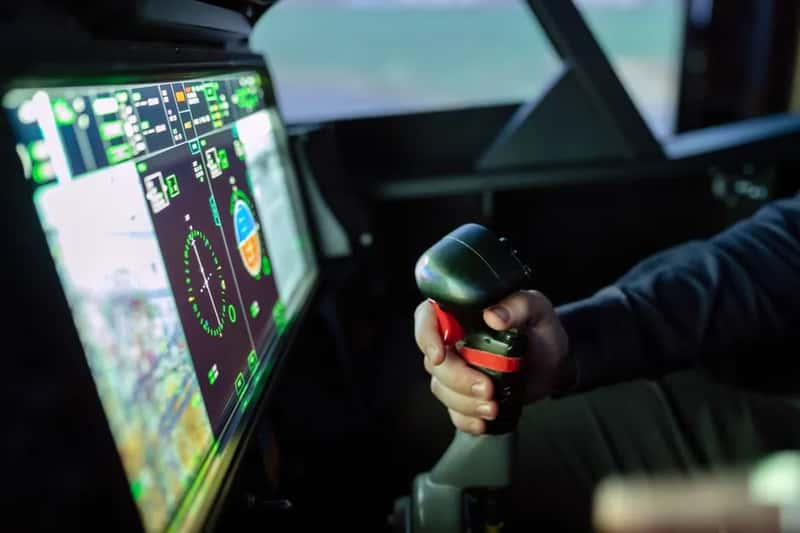
Rolling out an entirely new long-haul operation takes more than delivering aircraft, it requires retraining a huge slice of the workforce. Qantas pilots have commenced training on Australia’s first A350 simulator in Sydney and with British Airways in the UK, with some pilots also set to fly with Cathay Pacific in Hong Kong, while current A330 pilots make up the initial intake of Project Sunrise pilots. That kind of cross-airline training arrangement is unusual and reflects just how specialised ultra-long-haul flying has become.
The scale of the training effort is considerable once you look at the numbers involved. By the time all 12 aircraft have entered service, Qantas expects to have trained more than 360 pilots and 1,200 cabin crew members, with engineering staff also having started classroom training. It’s a reminder that launching a genuinely new category of flight isn’t just an engineering challenge, it’s an organisational one too.
Looking Ahead: A New Era for Long-Haul Travel
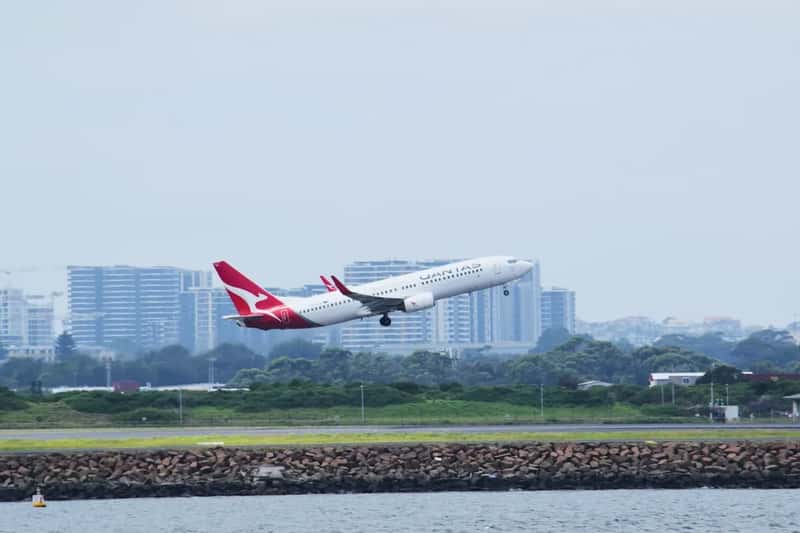
Assuming the current timeline holds, Qantas is on track to hold bragging rights as operator of the world’s longest scheduled passenger flight sometime in late 2027. The airline has already built a track record on long routes that supports its confidence here. Since 2018, more than 1.7 million passengers have flown on Qantas’ existing nonstop services from Perth to London, Rome and Paris, as well as Melbourne-Dallas and Auckland-New York routes, with these routes achieving the airline’s highest customer satisfaction scores on its international network.
Whether Project Sunrise becomes a genuine turning point for aviation or simply a very expensive, very impressive niche product will only become clear once the flights are actually running with paying passengers. What’s certain right now is that the aircraft exist, the testing is underway, and a route that once took four days and seven stopovers is finally set to become a single, uninterrupted journey through the night and back into daylight again.