


At 2 p.m. on a coach tour, your suitcase is somewhere under the floor, and it is not coming out. The underfloor hold is generally only accessible at hotels or the final stop of the day, so a pain reliever or a sweater has to be in the bag at your feet or you go without.
Over two weeks that gap comes up again and again, and each time it costs you comfort, a pharmacy detour or something worse. One item on this list weighs almost nothing yet is tied to the biggest bill of all, and it waits at the very end. First comes the suitcase, and the limit it has to stay under.
#19 – A Pocket Scale for the One-Suitcase Limit
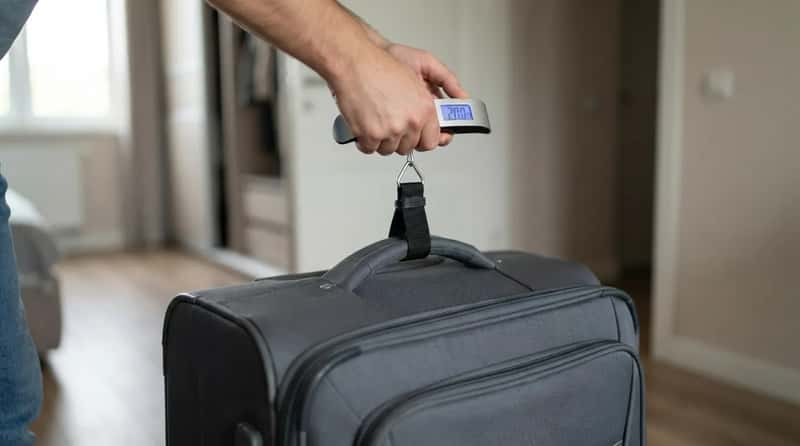
Tour operators typically allow one suitcase per person, and 23 kg (50 lbs) is a common ceiling because space in the hold is limited. Some set the limit lower than the airline does, with one company asking for no more than 20 kg even when the flight allows more.1
A hand scale costs little and tells you at home whether you are under the limit. Soft-sided luggage often works better than hard-shell cases in tight compartments.
Staying under the weight gets the bag onto the coach, but 40 people’s bags have to fit in the same hold, and many of them will look alike.
#18 – A Bright Strap and a Card Inside the Case
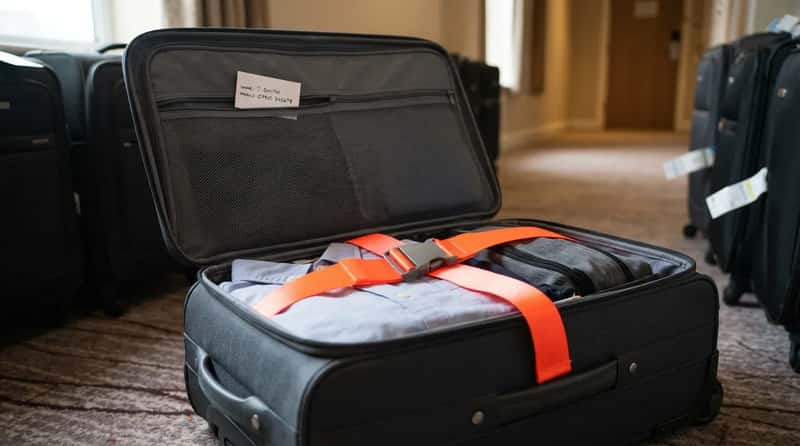
Tours often run on a schedule where your tagged suitcase has to be in the hallway by a set time, and the driver or porters load it. Miss that window and you will be dragging it yourself while the coach waits.
A bright strap or ribbon makes your case easy to pick out of a row of black ones. A card inside with your name and mobile number helps if the outside tag tears off, and it keeps your home address off the outside of the bag.
#17 – A Soft Daypack That Fits Under Your Seat
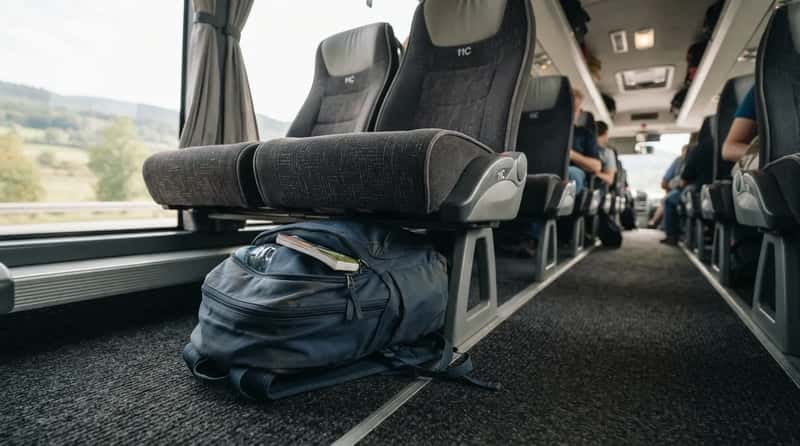
Since the hold stays shut all day, this small bag is where your day lives. Operators cap its size: one major tour line limits it to 7 kg (15.4 lbs) and requires it to fit under the coach seat or in the small overhead compartment.2
Another motorcoach operator describes its overhead opening as approximately 9 inches high and 17 inches deep, so a soft, compact bag is a safer choice than a rigid one. Check your own operator’s limit before buying anything.
A bag this small has room for only a few things, and the first two claims on that space are something to drink and something to eat.
#16 – Water and Dry Snacks for Long Driving Days
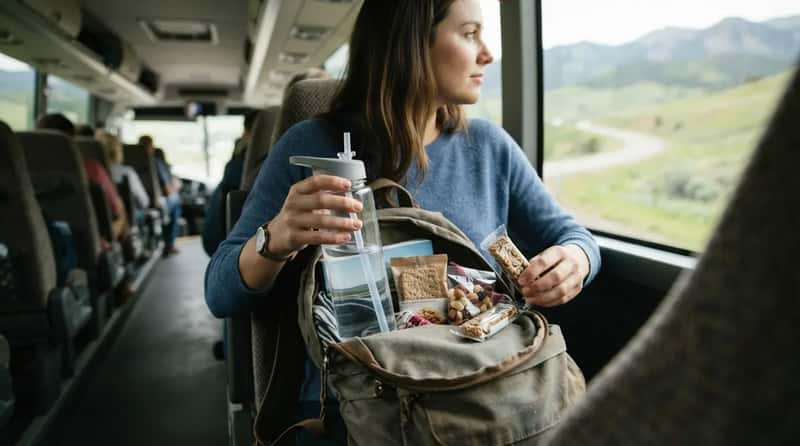
Coach days can mean early departures, long stretches on the road, late hotel check-ins and full sightseeing schedules. A refillable bottle and a few dry snacks in your daypack cover the gaps, and one operator lists them as its own comfort tip.
Choose snacks that survive a warm bag, such as crackers, nuts or granola bars. Fruit that bruises or anything that melts will leave you with a mess you cannot clean until the hotel.
Quick Compare
- Safe bets: crackers, nuts and granola bars
- Risky: fruit that bruises
- Skip: anything that melts
#15 – A Light Layer Kept With You, Not in the Hold
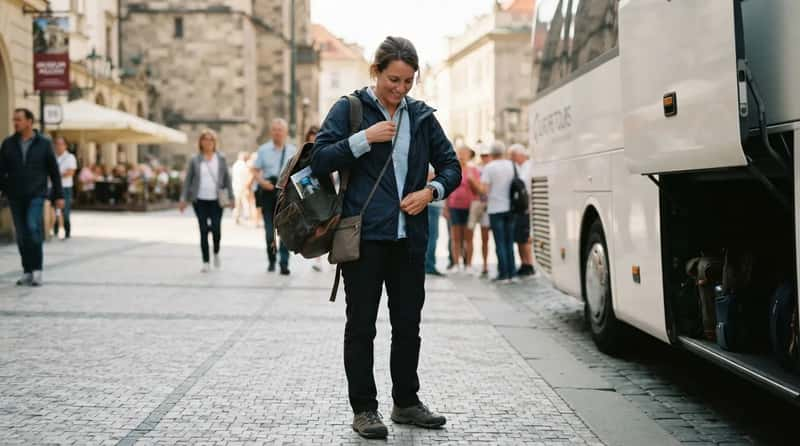
A sweater or light jacket does you no good under the bus. It belongs in the daypack with your medications and documents.
Temperatures change as you go from coach to street to museum, and a single packable layer handles most of that. It also costs far less weight than a bulky coat, which would eat into the limit you checked with the scale.
The layer deals with temperature, but the stop itself brings a different demand: hours on your feet.
#14 – Broken-In Shoes and a Second Pair
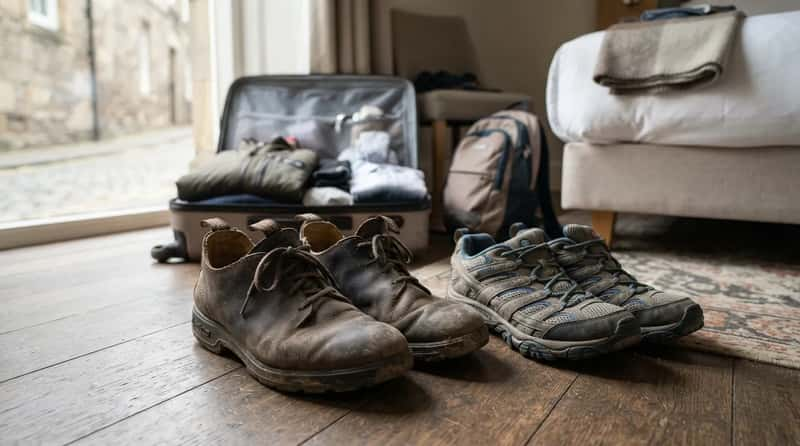
Comfortable walking shoes appear on one motorcoach operator’s packing list, and the reason is the schedule. Sightseeing days are long, and some hotels may not have lifts, so stairs are part of the trip too.
New shoes do not belong on a tour. Break them in at home, and wear your bulkiest pair on travel day to save suitcase room.
A second pair lets the first one dry out overnight.
Two weeks of walking also means two weeks of sweat and spills, and only one suitcase to hold the clothes.
#13 – Quick-Dry Clothes and a Little Detergent

Packing fourteen outfits is the surest way to blow through the weight limit you checked with the scale. A week’s worth of clothes plus a way to wash them is lighter and works just as well.
A small packet of travel detergent and a hotel sink will do for socks and shirts. Pick fabrics that will be dry by morning, because on a touring schedule you cannot count on staying a second night.
#12 – A Plug Adapter With Built-In USB Ports
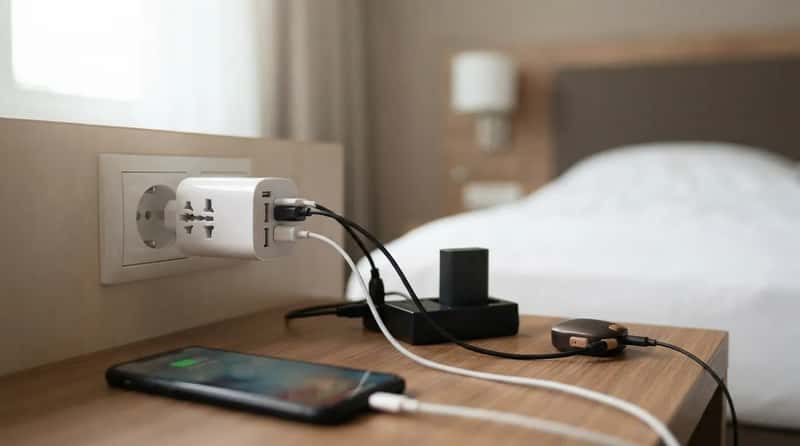
If your tour leaves the United States, the wall sockets will not match your plugs. An adapter changes the shape of the plug and does nothing about voltage.
A single adapter with USB ports charges the phone, the camera and a hearing-aid case from one outlet, which means one fewer piece to lose. Hotel rooms often have few outlets near the bed.
The adapter helps only when you are in a hotel room, and the long driving hours are when a phone runs down.
#11 – A Charged Power Bank for Road Days
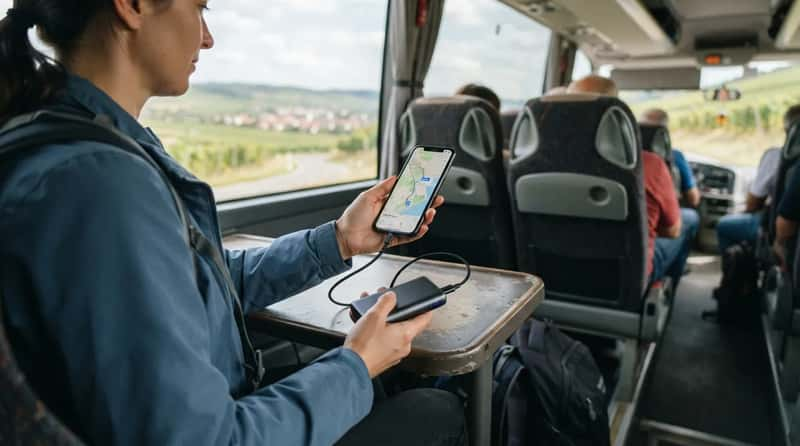
A phone is often the map, the camera and the way to reach your tour manager, so a drained battery on a long driving day is a real problem. A power bank in the daypack lets you top it up at a rest stop or at your seat.
Airlines generally require spare lithium batteries and power banks to travel in carry-on bags, not checked ones. Since the daypack is where it belongs on the coach anyway, the rule costs you nothing.
#10 – A Neck Pouch for Passport and Spare Card
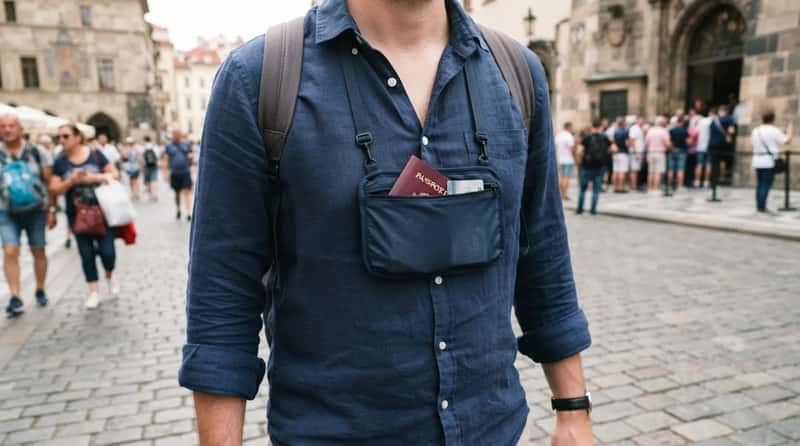
Pickpockets are common in popular tourist areas all over the world. One coach-tour operator’s advice is to use a neck or money belt that goes under your clothes.
Keep it for the things you cannot replace quickly, such as the passport and one spare card, not for daily spending money. Reaching under your shirt at a ticket counter defeats the purpose.
At a Glance: Where Each Item Rides
- Neck pouch: passport and one spare card, worn under your clothes
- Daypack: medicines, spare glasses, power bank and insurance card
- Suitcase: clothes, detergent and the second pair of shoes, out of reach until the hotel
Traveling as a couple? Each of you should carry your own credit or ATM card, so one lost wallet does not leave you without spending power.
Cards can be replaced, but a lost passport goes far smoother when you can show an embassy exactly what it looked like.
#9 – Paper Copies of Passport and Itinerary Kept Apart
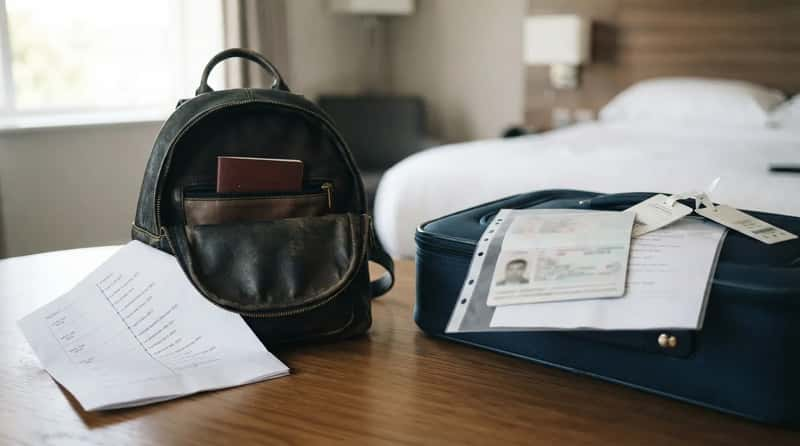
Make a photocopy of the passport photo page and your itinerary, and keep them away from the original. A copy of the photo page helps the process of replacing a lost passport at an embassy or consulate.
Take a phone photo of the same pages as well. Keep the originals in the daypack, since documents belong in your carry-on, not your suitcase.
Copies protect you from a lost bag, but they do nothing for a stomach that objects to winding mountain roads.
#8 – A Motion-Sickness Remedy Chosen Before You Leave
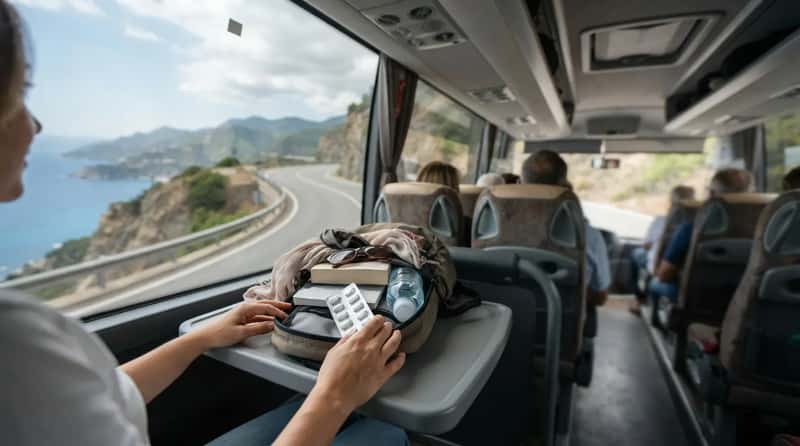
One motorcoach operator’s packing list includes motion sickness remedies, just in case. Coach tours often cross hills and coastal roads, and a bad morning can cost you a day of sightseeing.
Decide on the remedy before you leave and try it at home first, so you are not testing it on the morning of a mountain pass. Keep it in the daypack, because the hold is closed once the coach is moving.
#7 – Hand Sanitizer and Wipes in Reach
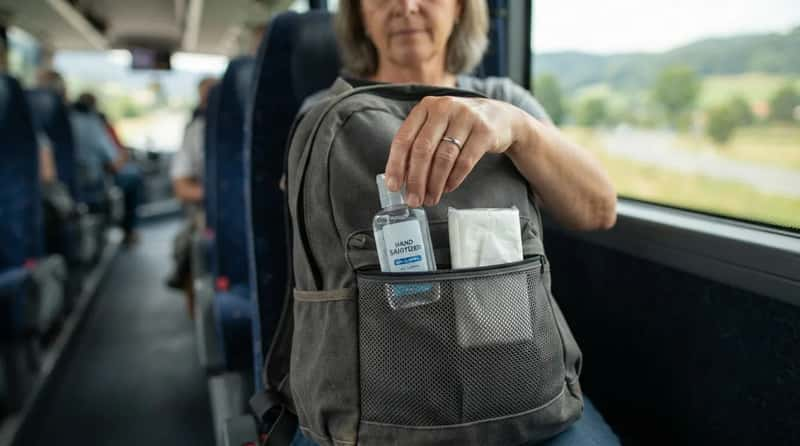
A coach tour means shared handrails, shared rest-stop restrooms and meals with the same group for two weeks. A small bottle of hand sanitizer in the daypack covers the moments when there is no sink nearby.
Choose one with at least 60 percent alcohol, which is the CDC’s guidance. Soap and water still do the better job when you can reach a sink.
Tuck a few tissues into the same pocket, since rest stops do not always stock them.
#6 – A Small First-Aid Kit With Blister Care
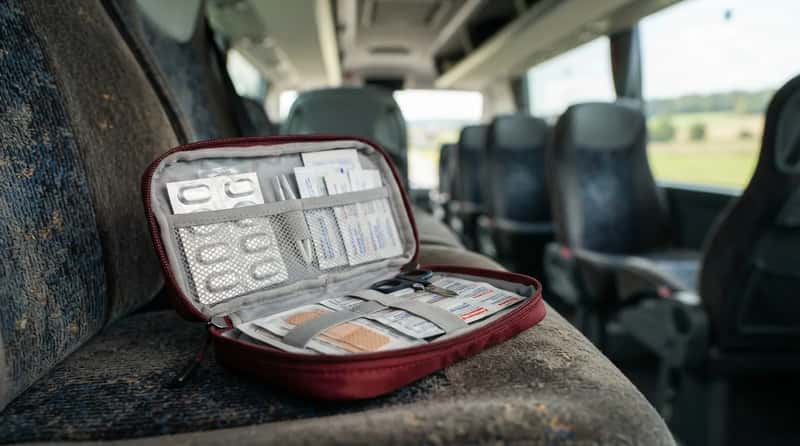
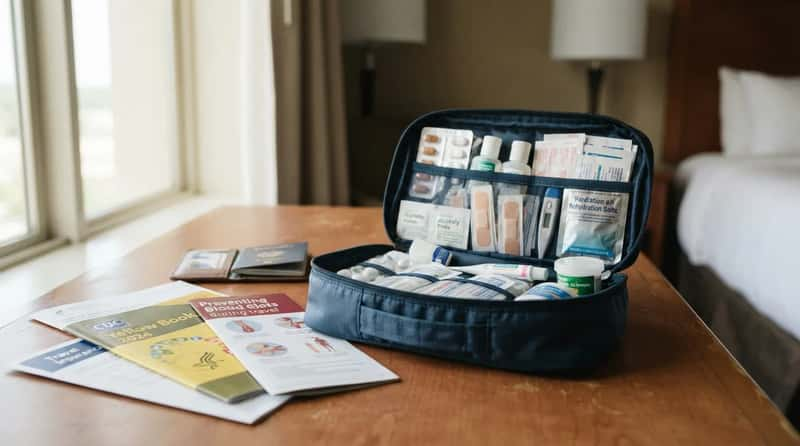
The American College of Emergency Physicians and the CDC encourage travelers to pack a first aid kit for common medical emergencies.3 Pain relievers such as acetaminophen, ibuprofen or aspirin are on Johns Hopkins’s suggested list.
Keep the daypack kit small and built for a day on the coach:
- A pain reliever you already know you tolerate
- Adhesive bandages and blister cushions
- Antiseptic wipes
A kit handles scrapes and headaches, but it has nothing for what fourteen days of sitting does to the legs.
#5 – Compression Socks, If Your Doctor Agrees
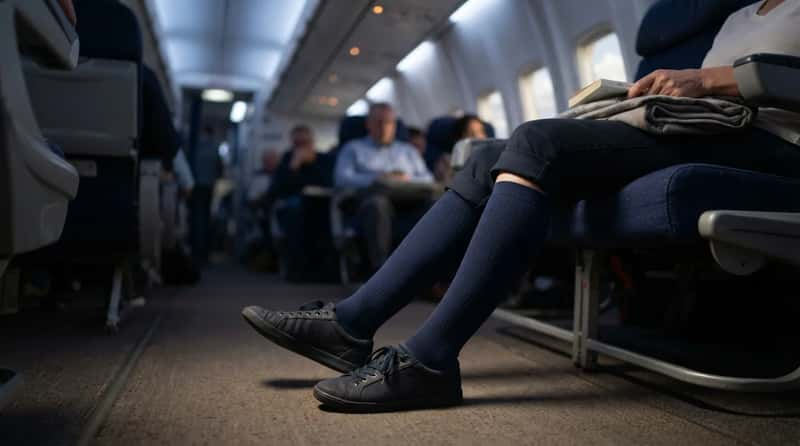
The CDC says anyone traveling more than 4 hours by air, by car or by bus can be at risk for blood clots. It advises you to move your legs frequently and walk around every 1 to 2 hours, and a tour’s rest stops give you the chance.4
Stockings are another matter. The CDC says some people at risk may benefit from graduated compression stockings, and one summary of guidelines says they are not recommended for travelers without risk factors.
If no doctor has flagged you as at risk, walking at every stop is the first step. A properly fitted pair is worth a conversation with your doctor.
Sore legs can be handled at the next stop, but a broken pair of glasses cannot wait at all.
#4 – Spare Glasses and Extra Hearing-Aid Batteries
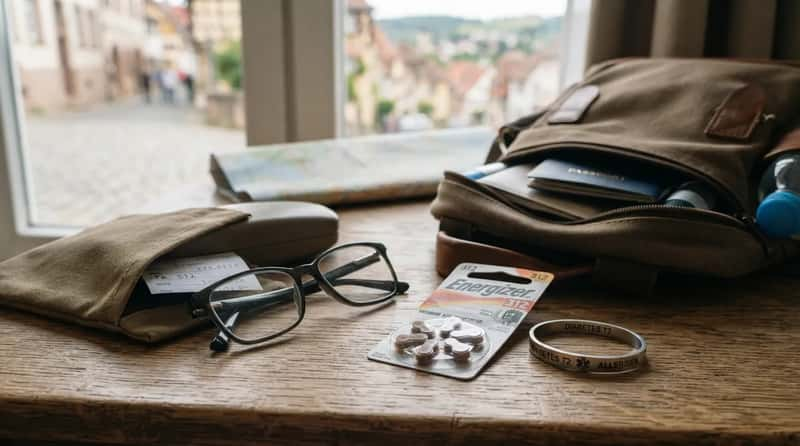
Glasses break and hearing aids run out of power, and neither can be fixed from the closed hold of a coach. A spare pair of glasses, with a copy of the prescription, goes in the daypack.
If you use hearing aids, pack more batteries than the trip should need and keep them dry. If you have a chronic condition such as diabetes, seizures or allergies, Johns Hopkins suggests considering a medical alert bracelet.5
Replacing glasses takes a few days and a shop, but a missing prescription medicine can send you to a doctor in a foreign city.
#3 – Every Dose of Your Medicine, in the Daypack
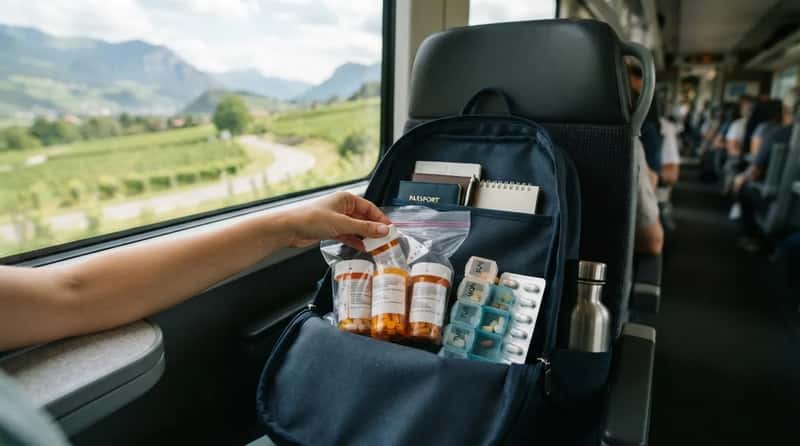
The CDC’s Yellow Book says to pack all prescription medicines in a carry-on bag and keep them in their original containers with labels that identify contents, patient name and dosing information.5 On a coach tour, the daypack serves as your carry-on every day, since the hold is closed.
Johns Hopkins adds to take enough medicine for the planned trip plus extra in case your return home is delayed.3 6 Treat that extra supply as non-negotiable, because a delayed trip home is the one scenario a pharmacy cannot fix.
The bottles show what is inside, yet brand names change from country to country.
#2 – A Written Medication List With Generic Names
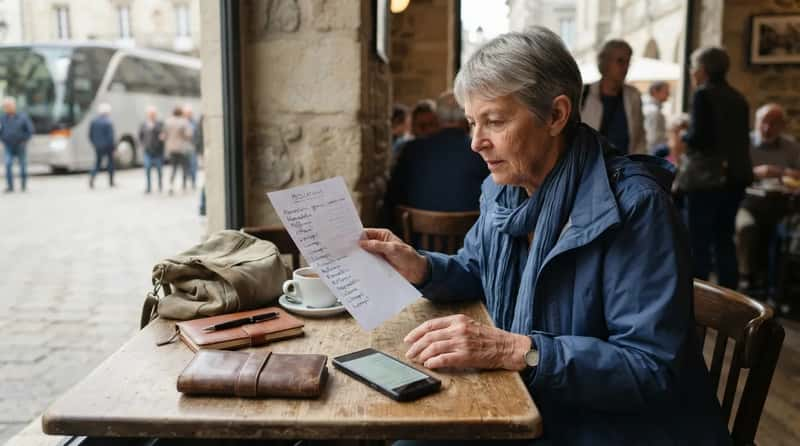
The CDC advises carrying copies of all prescriptions, including generic names, preferably translated into the local language of the destination. For controlled substances and injectable medications, it recommends a note on letterhead from the prescribing clinician or travel clinic.5
Rules differ by country, and the State Department has a section on verifying prescription medication rules for travel. Do that check weeks ahead, because a clinic letter can take time.
Photograph the list as well and keep the photo on your phone.
Fast Facts
- List every prescription by its generic name, not just the brand
- Translate the list into the local language if you can
- Controlled substances and injectables call for a letter from your clinician
- Start the country-by-country rules check weeks before departure
Prescriptions and letters settle what you may carry, but say nothing about who pays if you end up in a hospital.
#1 – Your Insurance Card and Evacuation Coverage Papers
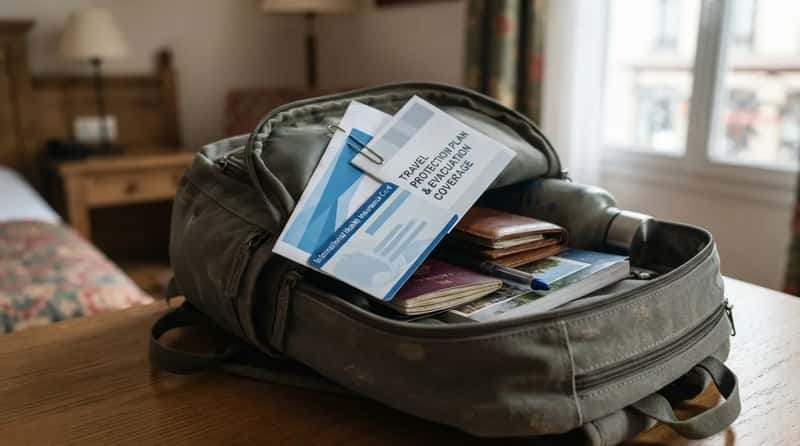
If your tour leaves the country, the State Department says Medicare does not cover medical costs outside the United States.7 It also says air-ambulance evacuation back to the U.S. can cost from $20,000 to $200,000, and that most plans do not pay for it.
A card and a policy number weigh nothing, yet they are tied to the largest bill on this list. Some Medigap plans include limited foreign travel emergency coverage, while Medicare Advantage plans typically don’t cover emergency medical evacuation.7
Call your plan and ask what it covers outside the U.S., then consider a separate travel policy that includes evacuation. Carry your insurance card and claim forms in the daypack, and leave a copy with someone at home.
If your tour stays inside the United States, Medicare generally helps pay for care anywhere in the country. Check with your plan or a licensed insurance agent to be sure.
Pack for the Afternoon, Not the Whole Trip
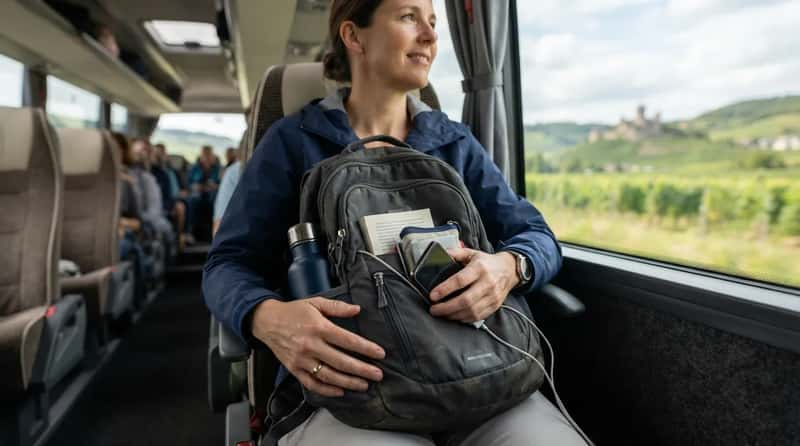
The suitcase carries the comfort of your trip, and the daypack carries its safety. Because the hold stays closed from morning to night, the useful question for each item is whether you could do without it for a full day of driving.
Weight in your lap should go to things that are hard to replace on the road, such as medicines, papers and phone power, not to things you could buy at the next stop. That is why the lightest items on this list matter most.
What is the one thing you keep within arm’s reach on a long driving day, and what made you start carrying it?
Sources
- CDC Yellow Book 2024: Travel Health Kits
- CDC: Understanding Your Risk for Blood Clots with Travel
- U.S. Department of State: Medicine and Health Abroad
- Johns Hopkins Medicine: Traveler’s First-Aid Kit
- Scripps Health: How To Prevent Blood Clots During Long Travel
- U.S. News: Medicare and Travel
- Aetna: Does Medicare Cover You When You Travel?
- WellCare: Does Medicare Cover Travel Abroad?
- Star Tours: Coach, Luggage, Pick-Up Points
- Insight Vacations: Luggage Questions
- Inspiring Vacations: Luggage on Tour
- Dream Vacation Tours: Ultimate Packing Guide
- Global Coach Tours: Packing Tips
- OMC Global: Coach Luggage Allowances
- Viscura: Blood Clots on Long-Haul Flights (summarizing a Cochrane review)
- The Blood Project: Air Travel and Venous Thromboembolism
Bonus: The Free Five-Minute Step Nobody Tells You About

If your tour crosses a border, enroll in the State Department’s Smart Traveler Enrollment Program (STEP) before you go. It is free for U.S. citizens, and it lets the nearest U.S. embassy or consulate send you alerts and reach you if something happens where you are.
Do it in this order:
- Sign up online at the STEP website a few weeks before departure, and list every country on your itinerary.
- Add an emergency contact at home who also has your tour operator‘s 24-hour number.
- Ask your tour manager on day one for the day-by-day hotel list with phone numbers, and photograph it.
- Save the local emergency number and your nearest U.S. embassy’s number in your phone before the first border.
It costs nothing, weighs nothing and fits in the daypack on your phone. Update your STEP entry if your plans change.
- Insight Vacations Before Your Tour: https://www.insightvacations.com/en-gb/frequently-asked-questions/before-your-tour
- Insight Vacations Luggage Questions: https://www.insightvacations.com/blog/insight-vacations-luggage-questions/
- Johns Hopkins Traveler’s First-Aid Kit: https://www.hopkinsmedicine.org/health/wellness-and-prevention/travelers-firstaid-kit
- CDC Blood Clots and Travel: https://www.cdc.gov/blood-clots/risk-factors/travel.html
- CDC Yellow Book Travel Health Kits: https://wwwnc.cdc.gov/travel/yellowbook/2024/preparing/travel-health-kits
- Johns Hopkins Traveler’s Checklist: https://www.hopkinsmedicine.org/health/wellness-and-prevention/travelers-checklist
- CDC Yellow Book Travel Insurance: https://www.cdc.gov/yellow-book/hcp/health-care-abroad/travel-insurance.html
