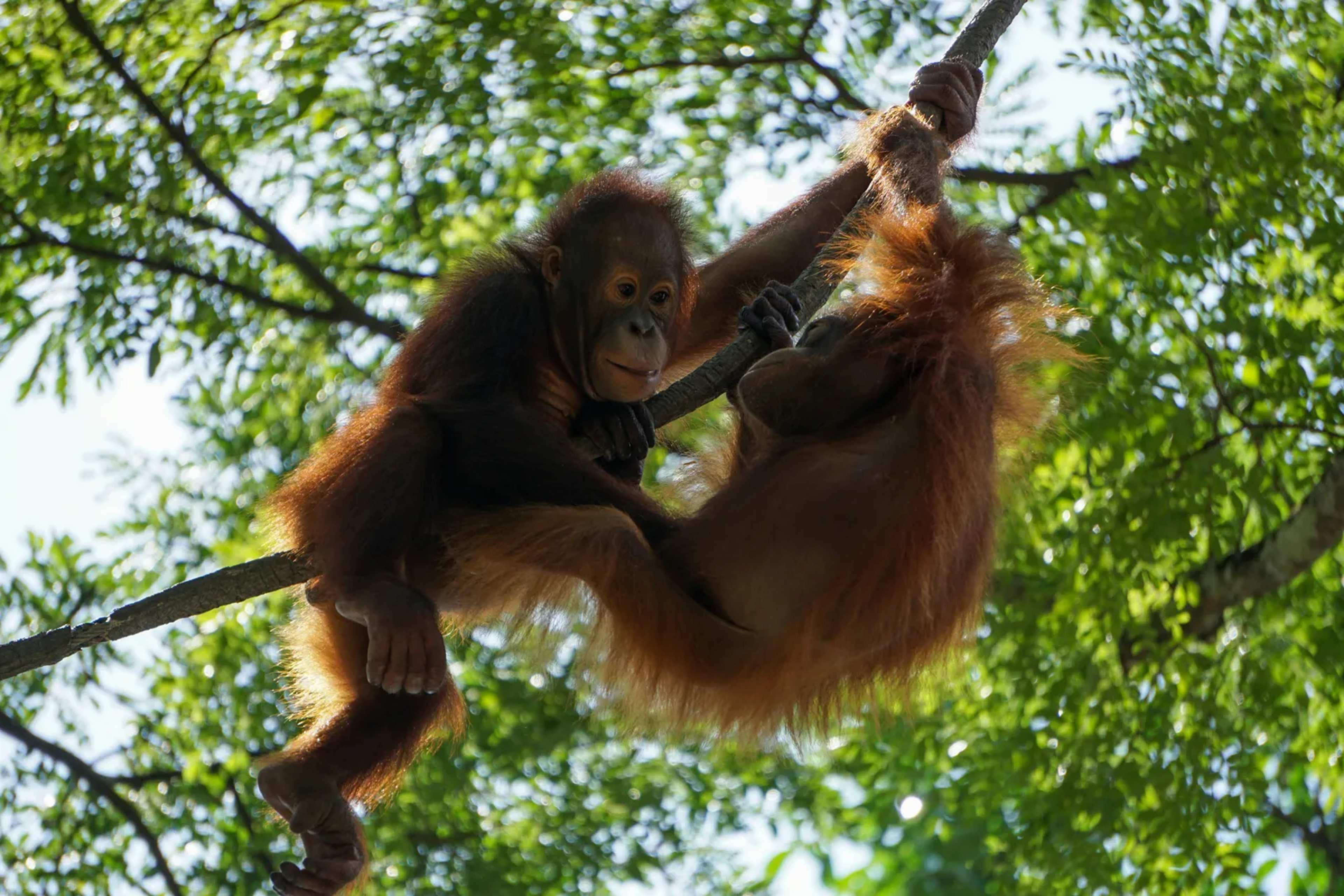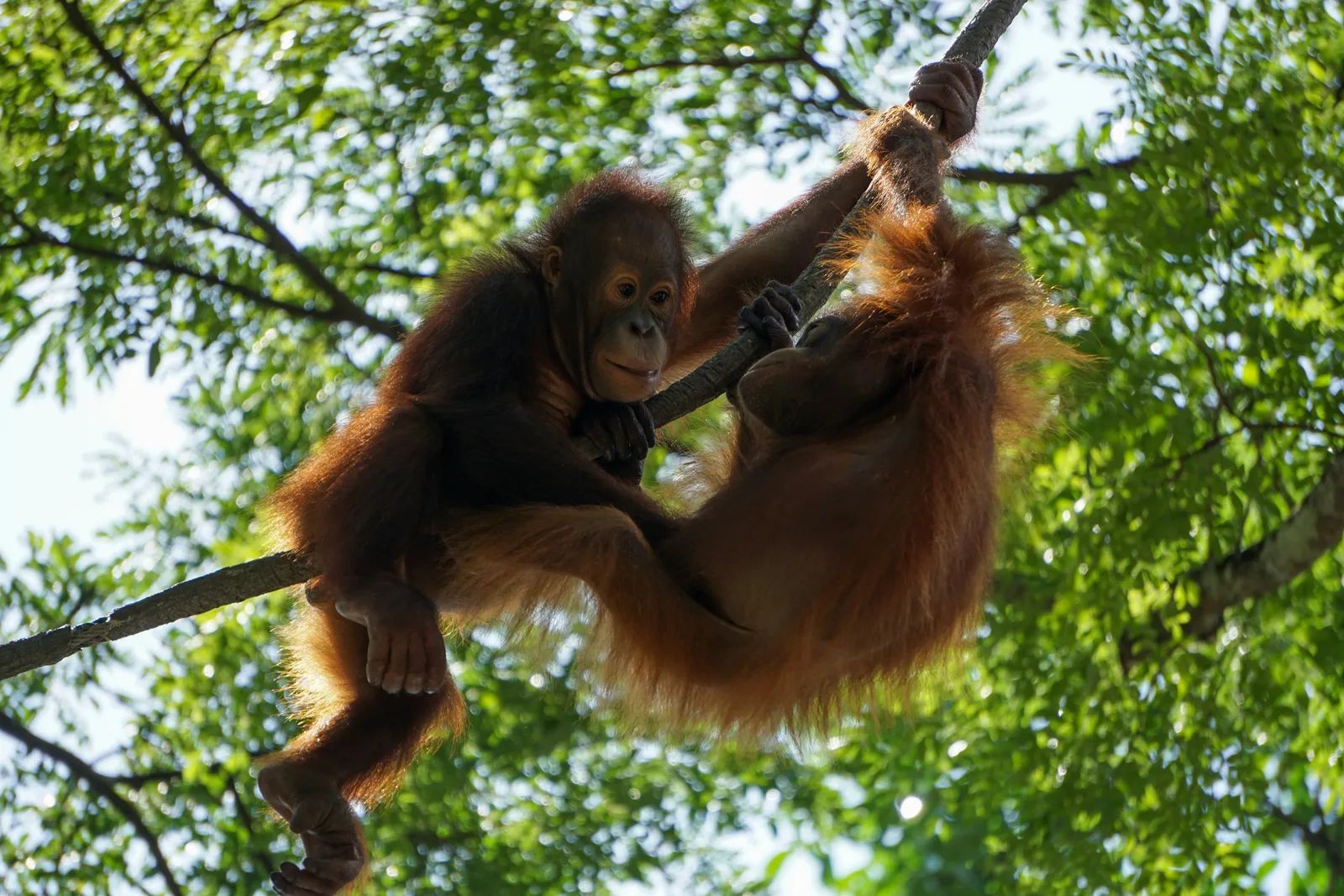
JAKARTA, Indonesia – Wildfires fueled by a strengthening El Niño have scorched forests across Borneo and parts of Sumatra, leaving endangered orangutans injured and trapped amid thick smoke. Rescuers have stepped in to move dozens of the apes to safety in recent months, with one young female drawing particular attention after she was found clinging to a scorched tree. The situation underscores the immediate pressure on wildlife already listed as critically endangered. ([1])
A Young Ape’s Narrow Escape
Novita, estimated at three or four years old, was discovered in the Katune forest of Central Kalimantan province. She clung to a nearly leafless tree while dense haze drifted across the burned ground below. Workers from the Borneo Orangutan Survival Foundation reached her before the flames advanced further. The palms of her hands and the soles of her feet showed burns, likely from crossing scorched earth in search of safer ground. Foundation chairman Jamartin Sihite described how the team tranquilized the orangutan, supplied oxygen and intravenous fluids on site, then transported her to the Nyaru Menteng rehabilitation center. Staff there are monitoring her recovery before assessing whether she can return to the wild.
Scale of the Rescue Operation
Novita is one of dozens of orangutans pulled from fire-affected areas on both Borneo and Sumatra in recent months. Teams have located animals that were stranded on small patches of remaining forest or weakened by smoke inhalation. The rescues reflect a coordinated response involving local foundations and government partners working under difficult field conditions. Water shortages in the affected regions have complicated efforts to contain the fires and to reach animals quickly. Crews often travel long distances over damaged terrain while wearing protective gear against the haze. Each successful extraction adds to a growing caseload at rehabilitation facilities already caring for orangutans displaced by earlier habitat loss.
El Niño Intensifies the Dry Season
This year’s fires have spread more readily because of prolonged dry weather linked to El Niño. The climate pattern has extended the typical dry season across Indonesia’s main islands, drying out peatlands and forest floors that normally retain moisture. Once ignited, these areas burn longer and produce heavier smoke than in average years. Central Kalimantan and neighboring provinces have recorded repeated flare-ups since mid-year. The combination of drought and human-started land clearing has created conditions that allow fires to jump between remaining forest fragments. Orangutans, which rely on continuous canopy cover, have fewer routes to escape the advancing flames.
Rehabilitation and Release Prospects
At the rehabilitation center, veterinarians focus first on healing burns and restoring strength. Once physical recovery is complete, staff evaluate climbing ability and foraging skills. Previous cases have shown that orangutans missing several fingers can still navigate the forest and find food, offering cautious optimism for animals like Novita. The foundation continues to track released individuals to refine future release criteria. Long-term success depends on both the animals’ health and the availability of protected habitat free from further fire risk. Ongoing monitoring helps identify which individuals can thrive independently and which may need continued support. What matters now is protecting remaining forest corridors while fires remain active. Continued rescues and rehabilitation work buy time for individual orangutans, yet lasting solutions require addressing the drought-driven fire risk and land-use pressures that repeatedly place these apes in danger.