Most cruisers picture the ship’s medical center as a little hospital tucked down the hall. The reality is closer to an urgent care clinic with some serious emergency gear. Shipboard centers typically have defibrillators, cardiac monitors, a ventilator, oxygen tanks, x-ray machines and lab equipment. What they don’t have is a surgical operating room.
That gap shapes everything ship medical teams and cruise-health guidance keep recommending. The list isn’t high-tech. It’s mostly cheap, boring stuff that decides whether a bad night takes ten minutes or wrecks the whole trip. A few of these will surprise you, and the last one can carry a six-figure price tag.
#16 – The One-Page Medical Summary That Speaks When You Can’t

When a passenger shows up at the medical center in pain or confused, the first problem is missing information. A written summary from a home doctor, listing conditions, allergies and current prescriptions, lets the ship’s team act right away instead of guessing. Most people assume their phone holds all this. Then the battery dies, and cabin Wi-Fi turns out not to be a medical record system.
Keep it simple: full name, date of birth, each medication and dose, allergies, and an emergency contact at home. Carry it separately from your medications. Tuck a copy in the cabin safe too, because the next item only helps if the ship’s doctor can read what it’s for.
#15 – Prescriptions in Their Original Bottles, Plus Extra Days
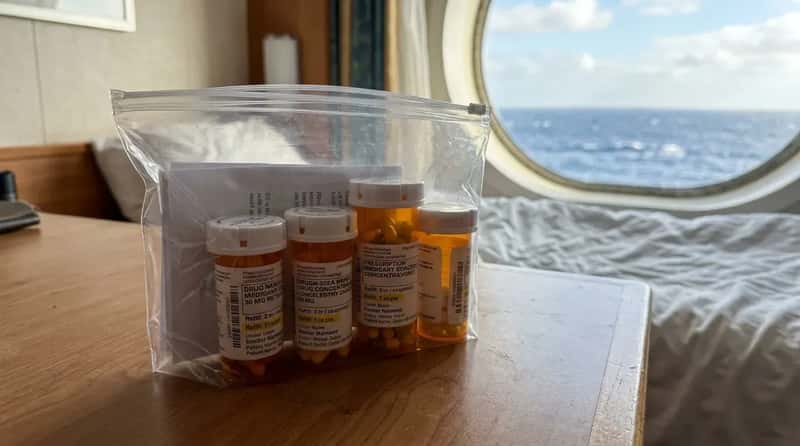
The classic mistake is a few loose pills in a sandwich bag. Baggies can trigger customs questions, especially in international ports. Original labeled containers also show a ship doctor exactly what you take. Cruise Critic advises keeping prescriptions in original packaging and carrying a doctor’s note for controlled substances.
Then there’s the quantity. The standard advice from major cruise lines is to bring enough for the entire trip, plus an extra 10 days’ supply. Forget a prescription and you’ll be seeing the medical staff, and since a ship can’t stock every drug, you may be handed an alternative. That’s a bad swap to make in the middle of the ocean.
#14 – The Backup Seasickness Remedy Nobody Thinks to Pack
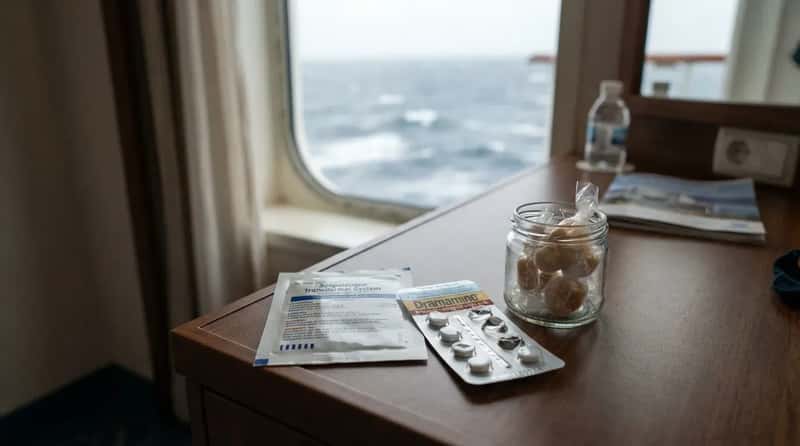
The front desk often has free motion-sickness pills, which makes people feel covered. But a rough overnight crossing can empty that bowl fast. For anyone prone to seasickness, it helps to carry a personal supply of over-the-counter options such as dimenhydrinate or diphenhydramine, or a scopolamine patch.
Quick Compare
- Dimenhydrinate: sold over the counter, but drowsiness is a common side effect.
- Scopolamine patch: worn behind the ear and usually needs a prescription in the U.S., so ask your doctor before you sail.
- Ginger candy: non-drowsy and cheap, but a comfort add-on rather than a stand-alone fix.
Many of these cause drowsiness, so test one at home first. Nobody wants to discover that mid-voyage, groggy, with a shore excursion booked for 8 a.m. A remedy you’ve already tried beats a mystery pill from a bowl every time. And when pills fall short, there’s a humbler helper that sometimes takes over.
#13 – Ginger Chews for the Nausea Pills Can’t Reach

Not every wave of queasiness responds to medication. Ginger has long been used to settle stomachs, and ginger candy is a common non-drowsy suggestion between doses. It’s cheap, it fits in a pocket, and it won’t leave you asleep at the buffet.
Here’s the part that may annoy some fans: ginger is a helper, not a hero. It works best next to proper medication, not instead of it. Plenty of travelers swear by wristbands and candy alone, and some of them still end up at the clinic. The next item is the one where waiting can’t be an option.
#12 – An Antihistamine and an Epinephrine Auto-Injector Within Arm’s Reach
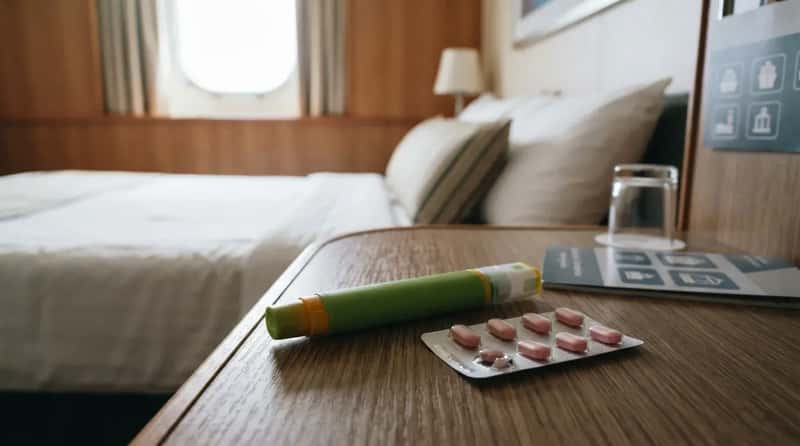
Allergic reactions don’t wait for clinic hours. Shipboard centers can stabilize anaphylaxis, but the first critical minutes often happen far from the infirmary. That’s why anyone with severe allergies should keep an auto-injector close, not buried in a suitcase.
It also helps to tell staff about allergies, chronic conditions and emergency medications, including epinephrine, right away.
A standard antihistamine is worth packing too. Benadryl can work well but may make you drowsy, and non-drowsy options exist. Ask your own doctor which one fits you. And once your body starts sending signals, the next item turns them into facts.
#11 – A Plain Thermometer That Settles the “Is This Serious?” Argument
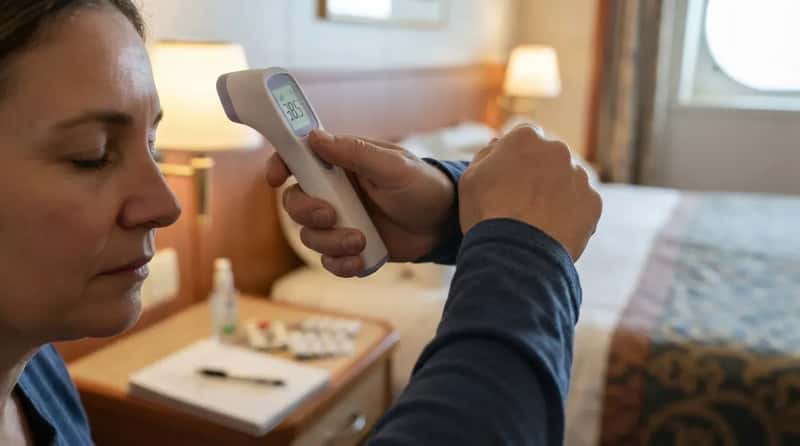
A fever is one of the clearest warning signs on a crowded ship. Without a thermometer, passengers guess, and guessing leads to two bad outcomes. Either someone wanders the buffet while contagious, or someone panics and waits in line at the clinic. Medical-kit checklists for cruisers routinely list a thermometer alongside oral rehydration salts and basic wound care.
A reading also gives the medical team something concrete. “I felt warm around dinner” is vague. A number with a time stamp is useful. Staff ask for a clear timeline and whether symptoms are getting worse, and a few written readings answer that quickly.
Worth Knowing
- Jot down each reading with the time you took it.
- Note when the first symptom started, not just when it got bad.
- Write down any fever reducer you took, since it can mask a reading.
- Keep the notes on paper, so a stranger in scrubs can read them in seconds.
The next item is something people assume the ship already handles, and only half the job is done for you.
#10 – Real Soap, Because Hand Sanitizer Isn’t the Shield You Think It Is

Here’s the myth: a squirt of sanitizer at the buffet makes you safe. In fact, the CDC notes that hand sanitizer alone doesn’t work well against norovirus. Washing with soap and water for at least 20 seconds is far more effective. Your bathroom sink is a better defense than the pump bottle at the dining room door.
The stakes are real. The CDC logged a notable run of gastrointestinal outbreaks on cruise ships in 2024, among the most in over a decade. When one hits, the only thing that matters is what’s already in your suitcase, starting with the next item.
#9 – Oral Rehydration Salts for the Day Everything Goes Wrong
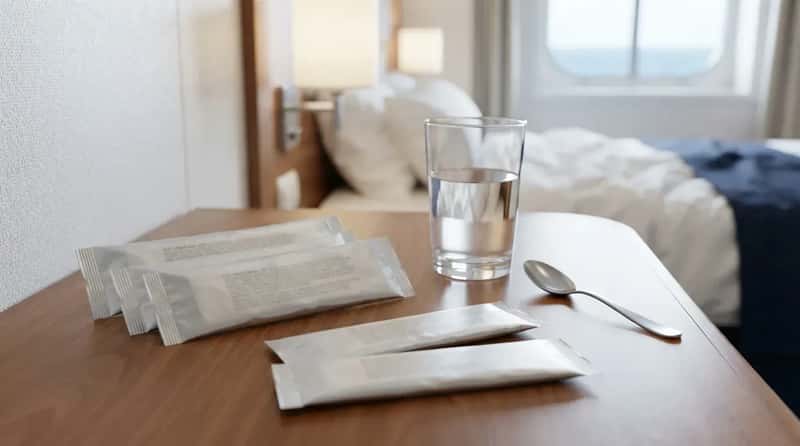
Vomiting and diarrhea don’t just feel awful. They drain fluids and electrolytes quickly, and water alone doesn’t always fix it. Cruise medical-kit checklists include oral rehydration salts for exactly this reason. A few packets weigh almost nothing in a suitcase.
Cost is the other angle. Even a short visit for dehydration or stomach illness can create a large bill. Rehydrating early may keep a rough day from becoming a clinic visit, though anyone who can’t keep fluids down should get checked. Think of it as a tiny pouch that protects your vacation days and your wallet. Now for the item that looks trivial and rarely is.
#8 – A Blister and Wound Kit, Because Ports Mean Miles of Walking
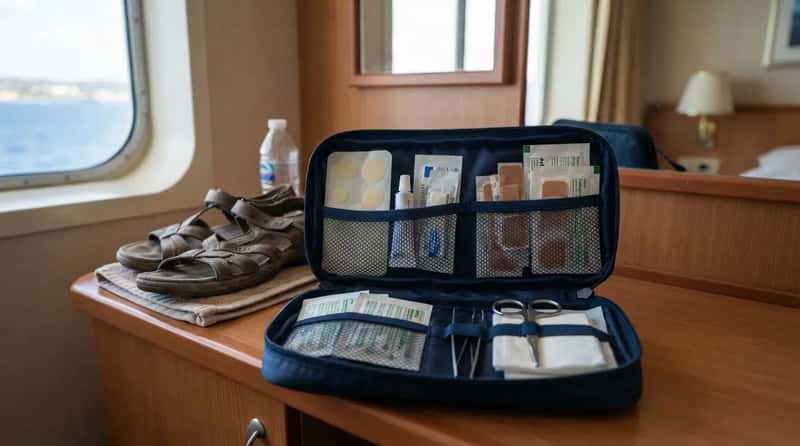
Cruisers often underestimate how much walking a port day involves. New sandals, cobblestones and heat are a reliable recipe for blisters. A basic kit of bandages, antiseptic wipes and tweezers can save a trip to the medical center for minor issues. Add blister pads and a small tube of antibiotic ointment.
It’s an unglamorous item, but a small wound can still become a big problem on a trip. Open skin, heat, seawater and shared pool decks don’t mix well. Even minor care keeps a walking vacation walkable. Travelers who rely on devices face a different kind of problem, as the next entry shows.
#7 – Spare Batteries, Cords and Adapters for Medical Devices
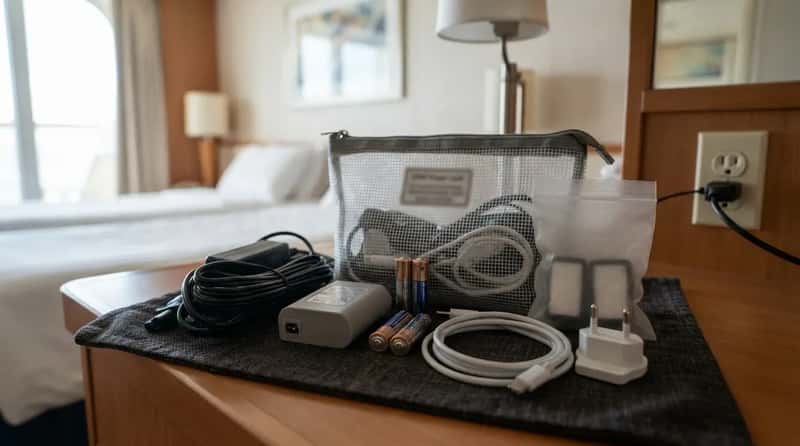
This is the quiet disaster nobody plans for. Small missing parts can become large problems, whether it’s CPAP supplies, glucose supplies, hearing aid batteries or chargers. A ship’s pharmacy won’t necessarily carry your brand of anything. A CPAP machine belongs in your carry-on, and while ships have the right outlets, international itineraries may call for adapters.
Pack the cord, the backup battery and the spare filter together in one labeled pouch. Replacing a lost charger in a foreign port on a one-day stop is a gamble. Few travelers rank this as a medical item at all, but it ends up being one. The next entry deals with a fussier problem: medicine that needs to stay cold.
#6 – A Cold-Storage Plan for Medications That Can’t Sit in a Hot Cabin
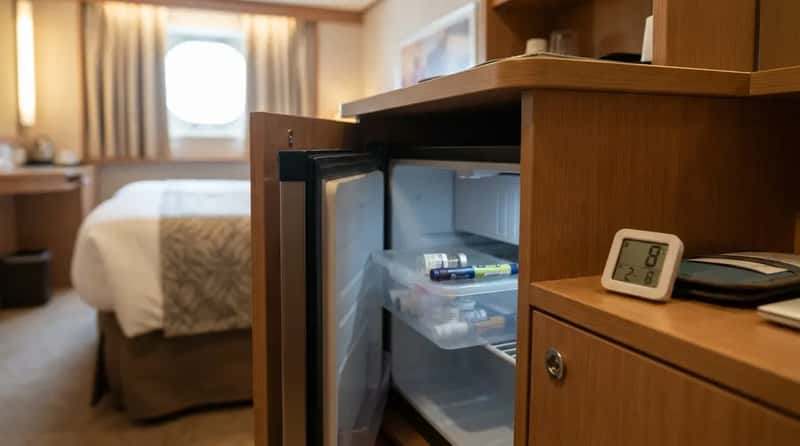
Some insulins and biologics are temperature sensitive, and a warm suitcase isn’t a plan. Refrigerated medications can often be kept in the cabin mini-fridge or, on request, in the medical center’s refrigerator. Don’t assume, though. Not every cabin fridge is a true refrigerator.
If a medication needs refrigeration, call the cruise line before final payment if possible, and ask what the medical center can support. A 10-minute call now beats discovering a warm mini-bar at 9 p.m. on embarkation day. The next item lives in the dark, and nobody thinks about it until the ship tilts.
#5 – A Small Night Light for the 3 a.m. Bathroom Walk

Ship cabins can be pitch black, with a floor that moves and a bathroom threshold you can’t see. That combination is how many bruises and wrist injuries happen. A plug-in or battery night light costs a few dollars and takes seconds to set up. It’s one of the simplest fall precautions you can bring.
Why It Stands Out
- It needs no prescription, no planning and no instructions.
- A soft, low glow lights the path without waking a cabin-mate.
- Battery or motion-sensor versions work even if outlets are limited.
- It’s tiny enough to slip into a toiletry bag.
Pair it with slip-resistant footwear for wet decks and bathroom floors. The goal is simple: you shouldn’t have to hunt for a light switch in a moving room. Nobody dreams of ending up in the infirmary because of a dark hallway. The same “cheap now, costly later” logic runs through the next item.
#4 – Over-the-Counter Basics at Home Prices, Not Ship Prices
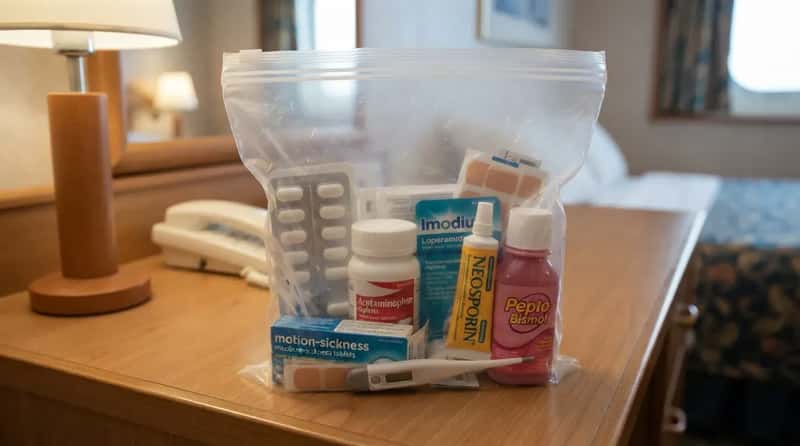
Pain relievers, stomach remedies and antacids are easy to forget and easy to regret. They’re typically sold in ship shops or the medical center, and you can also find them in port pharmacies. But convenience costs. One cruise-health site reports that the medical center stocks common medications at a significant markup.
Cruise Critic lists motion-sickness medicine, pain relievers, Imodium, Neosporin and Pepto Bismol among the essentials. A zip bag of these costs less than one clinic visit. And if you’d rather skip the clinic entirely, the next item is about knowing before you walk in.
#3 – Self-Test Kits, So You Can Find Out Without Spreading It
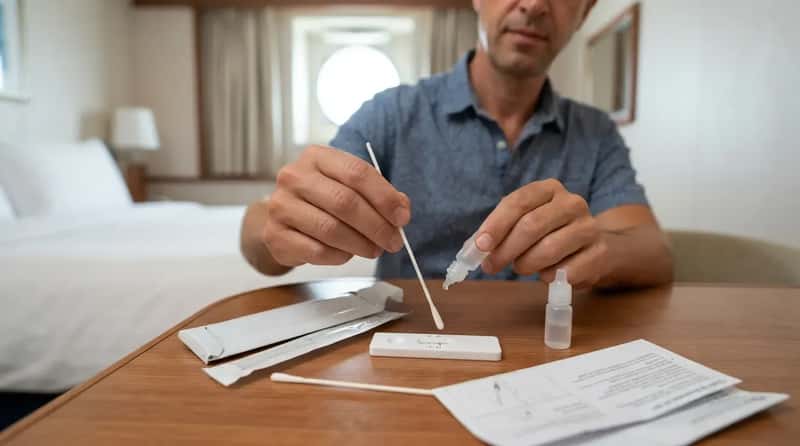
If you wake up feeling off, a test tells you whether to stay in the cabin. Cruise lines have said they encourage guests to buy self-tests before traveling and bring them aboard. That way a guest can test, protect family, fellow guests and crew, and notify the medical staff if the result is positive.
There’s a money angle too. Cruise Critic notes that antivirals like Paxlovid, if available onboard, may be significantly more expensive, so high-risk travelers should ask their doctor about packing a prescription. A test kit barely takes up room. It can spare a whole deck of strangers a rough couple of days. The next entry is the one that really prevents chaos.
#2 – An Emergency Card With Your Passport Details and Insurance Info
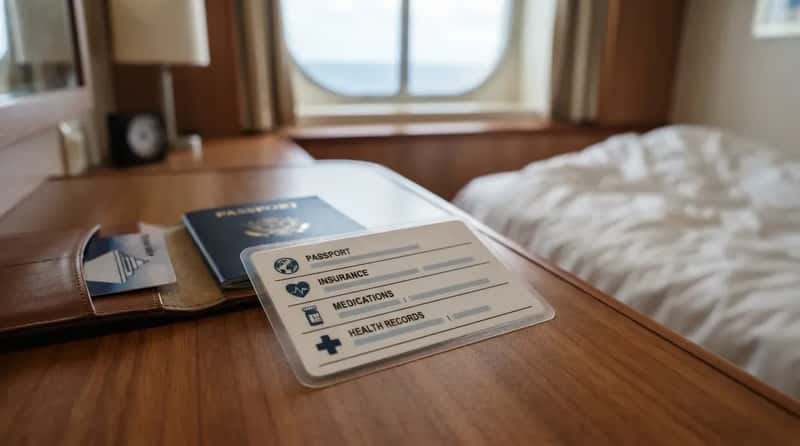
When something goes wrong, you may not be thinking clearly. Keep your passport details, insurance information, medication list and any health records you already have where a companion can grab them fast. If a port hospital gets involved, those are the documents everyone will ask for first.
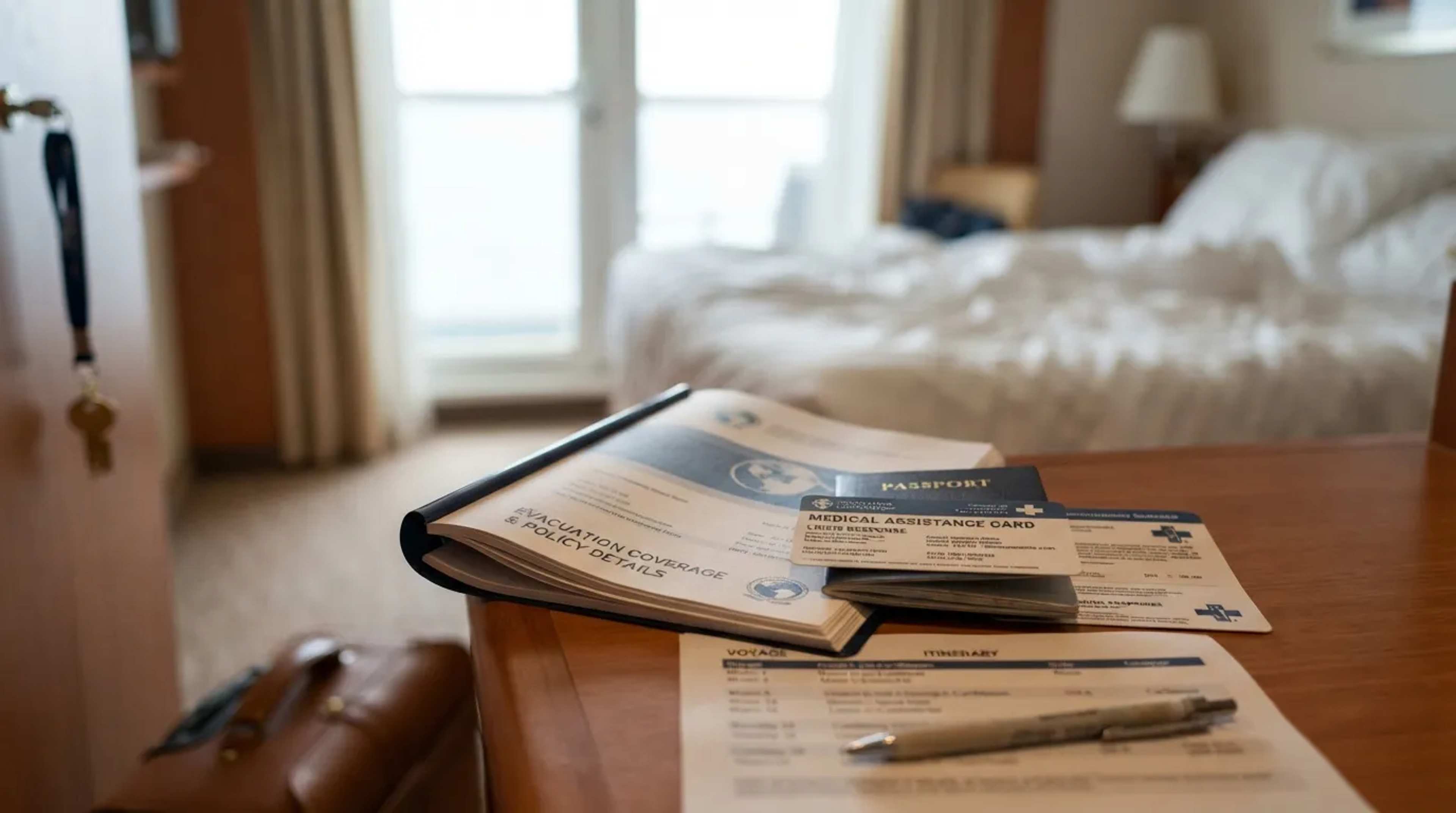
Also know how billing works. Shipboard medical centers usually charge your room account right away, so a $5,000 bill can max out a credit card. The physicians are independent contractors who set customary fees. That brings us to the item that sounds boring and is actually the most expensive one on this list.
#1 – Evacuation-Level Travel Insurance Paperwork, the Real Cabin Essential
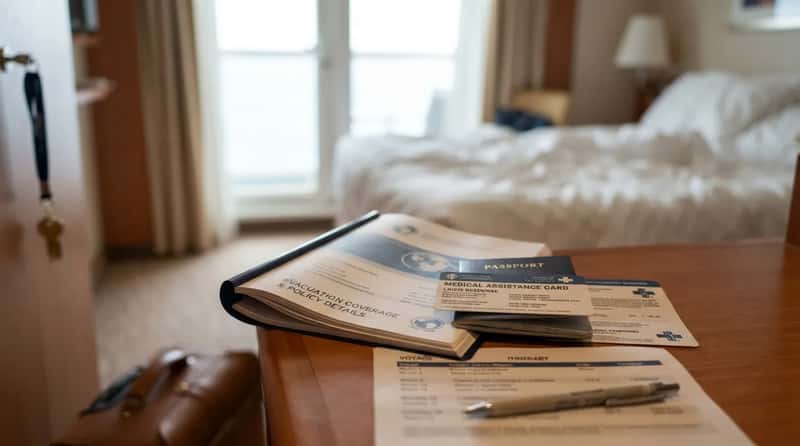
Nobody stuffs this in a suitcase, yet it decides who pays when a situation turns truly serious. A medical evacuation happens because the ship’s own medical center has reached the edge of what it can safely do. Medevac costs can run from $25,000 to well over $100,000. Figures vary a lot by distance and method, but they’re never small.
The catch: cruise ship medical centers generally don’t accept land-based health insurance or Medicare, and most land-based plans offer little to no coverage outside U.S. ports. Print your policy number and the insurer’s 24-hour phone line, and keep both in the cabin where anyone can find them.
The items on this list are mostly small, cheap and a little dull. That’s the point. When a ship is days from a hospital, the best medical tool is the one already waiting in your cabin.
Which one are you most likely to forget on your next sailing?