The Middle East has been no stranger to turbulence, but what unfolded in late February and early March 2026 marks a genuinely different moment for global travelers. Following the United States and Israel launching an airstrike campaign targeting Iran, and subsequent retaliatory strikes, airspaces were closed and flight suspensions rippled across the region. The question facing millions of travelers right now is not just whether to visit the Middle East – it is whether any trip, anywhere in the world, can be planned with confidence.
The Scale of Flight Cancellations Is Unlike Anything in Recent Memory
More than 12,000 flights had been canceled throughout the Middle East since the start of major combat operations in Iran over the last weekend of February, and though limited flights resumed shortly after, hundreds of thousands of travelers around the world were left stranded. That number only kept climbing. Cancellations across seven major Middle East airports, including Dubai International, Hamad International Airport in Doha, and Zayed International Airport in Abu Dhabi, exceeded 12,300 flights, according to data posted by Flightradar24.
The disruptions were described as being “felt across all six populated continents,” according to Henry Harteveldt, an airline industry analyst and president of Atmosphere Research Group, who noted that “Etihad, Emirates, and Qatar Airways connect their home hub airports with hundreds of destinations around the world.” The suspension of airline service at Abu Dhabi, Doha, and Dubai does not only disrupt travel to and from those cities, but makes it difficult for people in North America to travel to and from the Indian subcontinent, Africa, and the Asia-Pacific region. Put simply, this is not a regional problem – it is a global one.
Which Airlines Have Suspended Routes, and Where
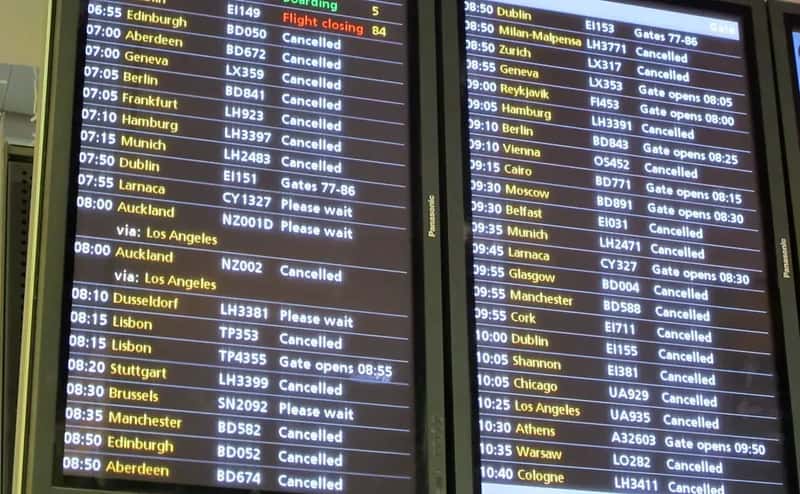
The European Union Aviation Safety Agency issued an aviation advisory prohibiting all flights serving the EU from operating across parts of the Middle East, with several airlines canceling flights in the region, including Aegean Airlines suspending all flights to and from Tel Aviv, Beirut, and Erbil; Air Canada suspending Dubai flights and all Israel flights; Air France grounding all flights to Tel Aviv and Beirut; and KLM halting all flights to and from Tel Aviv, Dubai, Dammam, and Riyadh. The list of affected carriers goes further. Lufthansa suspended flights to Tel Aviv, Beirut, Amman, Erbil, Dammam, and Tehran; Norwegian Air suspended all Dubai flights; Wizz Air halted flights to Israel, Dubai, Abu Dhabi, and Amman; and Turkish Airlines grounded service to Qatar, Jordan, Kuwait, Bahrain, the UAE, Lebanon, Syria, Iraq, Iran, and Oman.
Due to the ongoing geopolitical unrest in the Middle East, KLM decided to cancel all flights to Riyadh and Dammam through March 28. Some carriers began partial recoveries, though the picture remained fragile. Several major Gulf carriers began gradually restoring operations following days of widespread airspace closures, with Emirates, Etihad Airways, and Qatar Airways operating limited schedules or preparing to resume selected routes, though authorities warned disruptions would continue. Travelers with existing bookings should not assume their flights are automatically restored.
Airspace Closures Are Reshaping Global Flight Routes
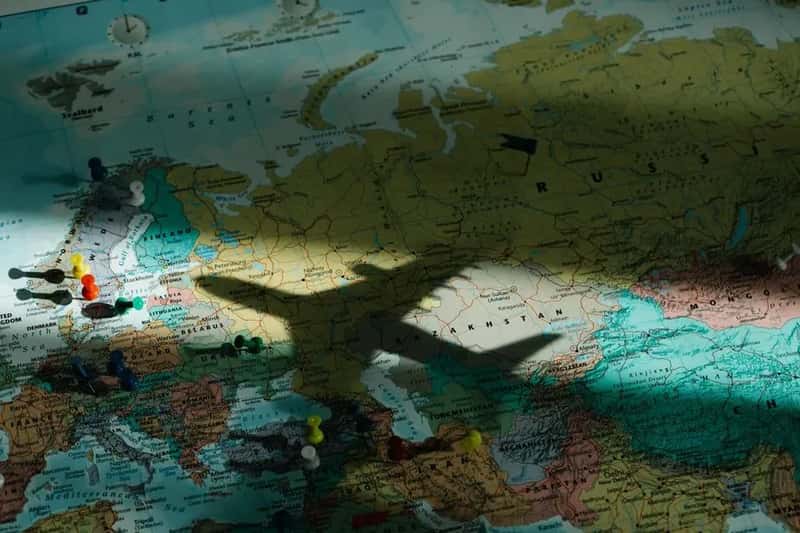
EASA extended its conflict-zone bulletin, which applies at all altitudes across the airspace of Iran, Iraq, Israel, Jordan, Lebanon, Bahrain, Kuwait, Qatar, the UAE, Oman, and Saudi Arabia, advising operators not to operate there due to the risk from missiles, air defense systems, and military activity. The knock-on effect for flights that would normally cross the Gulf corridor is severe. There is no sign of a quick de-escalation, and the central block between Israel and Iran is effectively closed, removing the normal Gulf corridor entirely – leaving in practical terms only two ways around it: north via the Caucasus and Afghanistan, or south via Egypt, Saudi Arabia, and Oman.
The current geopolitical crisis has directly impacted air travel, leading to a significant rise in airfares, and with oil prices climbing due to rising tensions, airlines are being forced to implement fuel surcharges on long-haul flights. Flights that previously flew directly over the Gulf are now being rerouted, with new routes passing through the Caucasus, Afghanistan, Egypt, Saudi Arabia, and Oman, resulting in considerably longer flight times and additional technical stops for refueling. Even passengers flying between Europe and Asia – with no intention of visiting the Middle East – are experiencing real consequences.
Government Travel Advisories Span the Globe
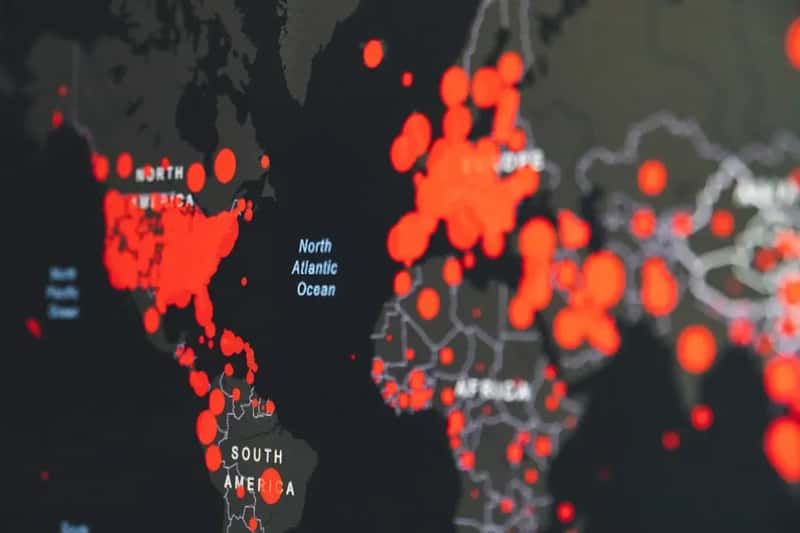
On February 28, 2026, the U.S. Department of State issued a worldwide caution security alert following the launch of U.S. combat operations in Iran, advising U.S. citizens worldwide – and especially those in the Middle East – to follow the guidance of the latest security alerts issued by the nearest embassy or consulate, as departing individuals may experience travel disruptions due to periodic airspace closures. The warning is not limited to one country. The State Department called on U.S. citizens to depart using available commercial travel from Bahrain, Egypt, Iran, Iraq, Israel, the West Bank and Gaza, Jordan, Kuwait, Lebanon, Oman, Qatar, Saudi Arabia, Syria, the United Arab Emirates, and Yemen.
Canada’s government advised travelers to “leave the United Arab Emirates as soon as you can secure a flight option,” while also advising Canadians to avoid all travel to Bahrain, Iraq, Israel, Palestinian territories, Kuwait, Lebanon, Qatar, and the UAE, and to avoid nonessential travel to Jordan, Oman, and Saudi Arabia. Australia’s Smartraveller confirmed that military conflict in the Middle East has caused widespread airspace closures, flight cancellations, and other travel disruptions globally – noting that travel plans may be affected even if a traveler’s destination is not in the Middle East, and that “do not travel” advice applies to transit and layovers in affected locations, even if a traveler does not plan to leave the airport.
Travel Insurance May Not Protect You the Way You Think

Travelers are unlikely to be able to claim on travel insurance if they cancel a trip due to fear of war or instability, or choose not to go because of disruption concerns – however, the domino effect from military action, such as delayed flights or missed connections, may still be covered under standard travel delay benefits, including airline rerouting due to hub disruptions or crew rescheduling. The distinction matters enormously when it comes to filing a claim. Cancel For Any Reason and Interruption For Any Reason coverage are the only types of travel insurance that can still protect travelers for situations excluded by standard cancellation and interruption coverage.
Foreign offices warn that travel insurance could be invalidated if a traveler goes to areas where the government has issued a “no-go” warning or advises against all but essential travel – currently Iran, Iraq, Israel, the UAE, Qatar, and Kuwait – which would likely leave travelers without coverage for incidents including medical emergencies and evacuations. The UK’s Foreign, Commonwealth and Development Office uses “advise against all travel” as its strongest warning, applying where there is active conflict, extreme instability, or serious risks such as terrorism, kidnapping, or arbitrary detention, and travel insurance policies typically become invalid if a traveler ignores this designation. Reviewing the fine print of any policy before booking is no longer optional – it is essential.
What Travelers Should Actually Do Right Now

For travelers facing uncertainty, proactive planning is crucial, with travel experts recommending registering travel plans with the national embassy, checking flight statuses regularly, and ensuring that insurance coverage includes coverage for unexpected cancellations – while understanding which flights are available and which routes are experiencing the most disruptions to minimize delays and mitigate financial losses. Flexibility is no longer a bonus feature in booking – it is a necessity. Many travelers are now opting for flexible booking options to ensure they can easily change travel dates or destinations without steep penalties, while travel alerts and mobile notifications can help travelers stay informed about any sudden changes to flight schedules, safety protocols, or border restrictions.
Even if a traveler’s destination is outside the Middle East, airspace closures in the region may impact their journey – with travelers flying from Europe or North America to Asia and Africa expected to experience extended travel times and possible delays in connecting flights. Oil prices shot up past $100 a barrel for the first time since 2022 as strikes across the Middle East entered their tenth day, a development that will inevitably translate into higher ticket prices and fuel surcharges across many routes worldwide. While rerouted flights and longer travel times are expected to continue for the foreseeable future, staying updated on government advisories, securing appropriate travel insurance, and being flexible with travel plans can help mitigate the disruptions – and for those with imminent travel plans, checking with airlines and government travel advisories regularly is crucial to ensure the most current information and alternative options are available.