A paycheck that arrives with nothing taken out sounds like a rumor. Yet a small group of places really do skip personal income tax, and they’ve done it for years. Most are oil-rich Gulf states or Caribbean island economies, plus one tiny principality on the Mediterranean.
The details matter more than the headline. Some of these places welcome almost anyone with a job offer, while others ask for a property purchase or a large bank deposit. Here’s how the main ones work in 2026.
United Arab Emirates: The Easiest Door to Open

The UAE does not levy personal income tax on salaries.[1] Businesses are a different story, though. Companies pay nine percent corporate tax above AED 375,000 of profit, and a five percent VAT applies to most goods and services.[2]
Tax residency has clear day counts. Under the rules in force since March 2023, you qualify by spending 183 or more days in the UAE over twelve months, or 90 or more days if you’re a UAE or GCC national or resident with a permanent home or business there.[3] Residency can also come through a property purchase starting from AED 750,000, roughly USD 204,000, or through an employment visa.[4]
Monaco: Europe’s Only Zero Income Tax Address

Monaco has no personal income tax, wealth tax, land tax, or housing tax for most residents.[1] There’s one notable carve out. French nationals are taxed under the 1963 Franco-Monegasque convention.[5]
Getting in takes preparation. You must prove you have accommodation, show financial self sufficiency, pass a background check, and be present for at least six months a year to keep fiscal residency.[4] Commercial advisers report a floor of about €500,000 in demonstrable assets.[6] Spending isn’t free either, since VAT sits at twenty percent.[4]
The Bahamas: Island Living With a Property Ticket
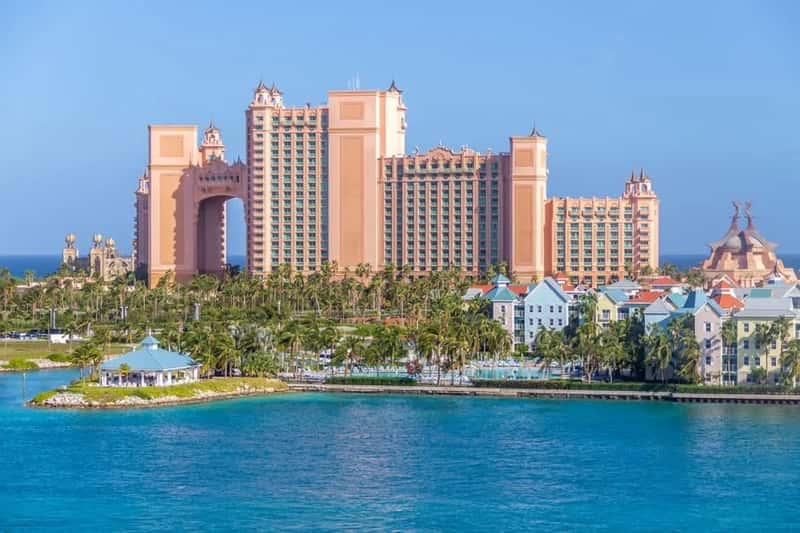
The Bahamas has no personal income tax or capital gains tax.[1] The government still has to raise money somewhere. It applies a standard ten percent VAT across most goods and services.[3]
For a long stay, property is the usual route. Residency through property runs from roughly $750,000 for accelerated processing.[5] The same source lists a high cost of living, VAT and import duties, and a thin treaty network[5] as the main catches.
Cayman Islands: No Taxes, Very High Prices

The Cayman Islands have no personal income tax, corporate income tax, capital gains tax, inheritance tax, or VAT.[1] No tax return is required at all, according to PwC.[3] That’s about as light as the paperwork gets.
The money still comes from somewhere. The government leans on import duties, work permit fees, and tourism levies.[3] Residency by investment comes with high property thresholds, and the cost of living is very high.[5] Published investment figures differ from one source to the next, so confirm the current number with the Cayman government.
The Gulf Neighbors: Qatar, Kuwait, Bahrain and Saudi Arabia

Five Gulf countries charge no income tax on salaries, though their rules aren’t identical.[7] Bahrain has no personal income tax regime, and employees pay only social insurance contributions.[7]
Access here is mostly through work. Kuwait and Qatar levy no personal income tax, but residency typically depends on employment.[3] Companies are taxed, though. Qatar charges ten percent on local profits, and Kuwait charges fifteen percent on foreign entities only.[8]
Oman: A Zero Rate With an Expiry Date

Oman shows that a zero rate isn’t always permanent. It charges nothing until 2028, then five percent above OMR 42,000.[5] That makes it a Gulf destination with a clock attached.
Some sources have already flagged the shift. One comparison lists Oman at zero percent in 2026, with VAT and a future personal income tax noted alongside it.[9] Anyone planning a multi year stay should look at the rate schedule, not just today’s number.
Caribbean Citizenship Routes: St Kitts, Nevis and Antigua

Some islands skip the residency visa altogether. St Kitts and Nevis and Antigua and Barbuda both charge no personal income tax and offer a citizenship by investment route.[5] That’s a bigger commitment than a standard residence permit.
A few other names show up on many lists. Brunei and Vanuatu are often grouped with the better known zero tax countries.[2] Brunei is a small, oil rich sultanate on the island of Borneo.[4]
How These Governments Pay the Bills

No government runs on nothing, and the zero income tax countries simply tax different things.[3] Consumption is a common target. Monaco relies on VAT, corporate profits tax, and real estate fees, while the UAE uses a nine percent corporate tax and five percent VAT.[3]
Oil and gas do much of the work in the Gulf. Qatar, for instance, funds itself through oil and gas plus corporate tax on foreign business.[3] In the Caribbean, tourism, financial services, and customs duties fill the gap.
Day Counts, Home Country Rules and Exit Taxes

Moving legally takes more than buying a ticket. Relocating to a zero tax country is legal when you genuinely establish residency there, sever tax ties with your home country under its rules, and meet any exit tax or reporting requirements.[4] One advisory firm notes that you also need to spend fewer than 183 days in your previous country of tax residence.[10]
Citizenship can complicate things further. Your old country may still claim you, even where the new one requires no return.[3] The United States, for example, taxes its citizens on worldwide income wherever they live.
Where the Published Lists Disagree

Counts vary a lot depending on the source. One analysis citing PwC’s 2026 chart names ten jurisdictions.[5] Another says at least eighteen sovereign nations and territories impose no personal income tax.[8] A third counts nineteen.[11]
Part of the gap comes from whether territories such as Bermuda or the Cayman Islands are counted next to sovereign states. Rates and residency thresholds also change, as Oman’s schedule shows. Check each government’s current rules before making any move.