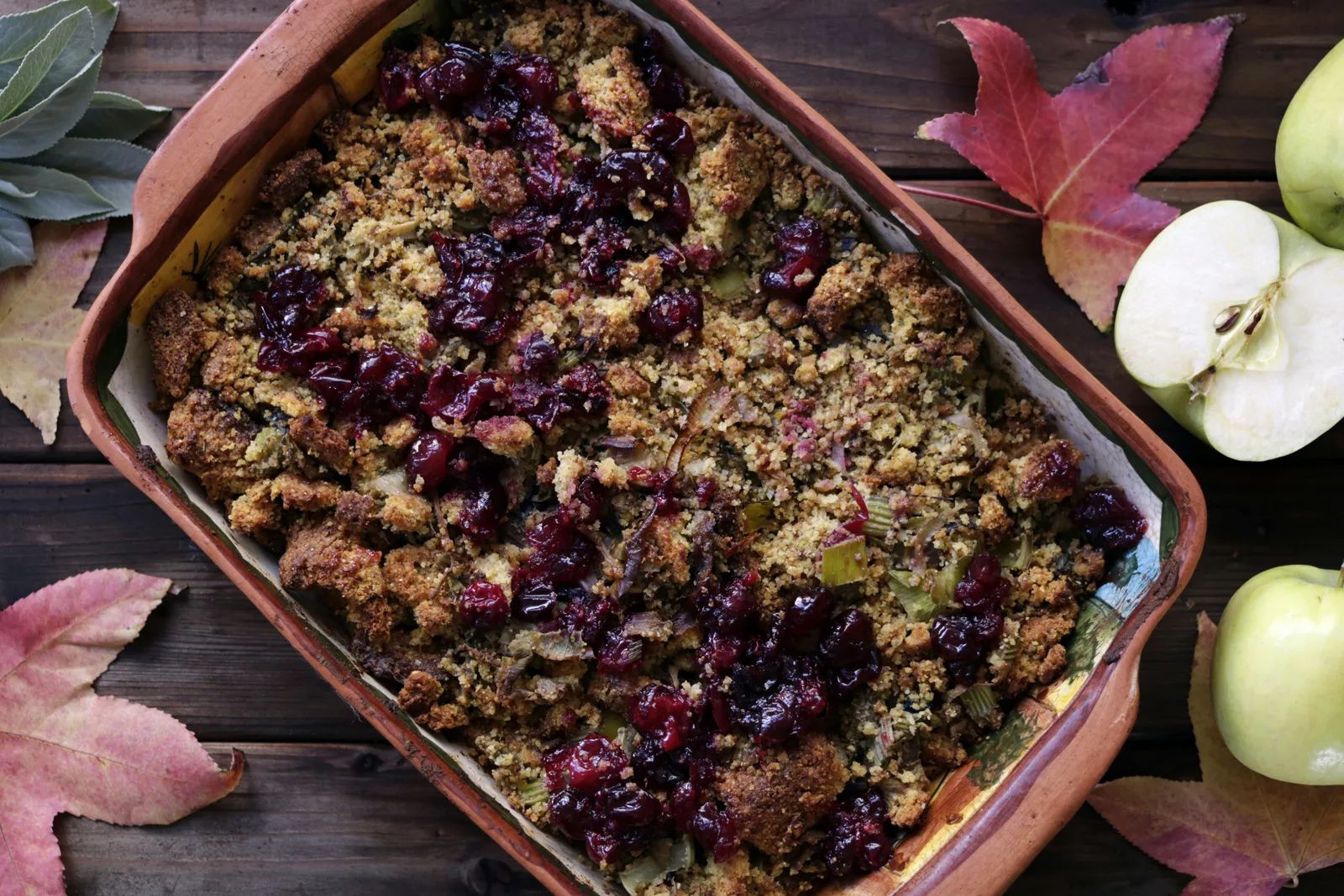
Every November, the bread-based side dish lands on American tables beside the turkey, and someone inevitably asks what to call it. Some families say stuffing, others say dressing, and the difference often comes down to geography rather than the recipe. As ([1])notes, citing University of Arkansas Extension, the two versions are made from the same basic ingredients. Thanksgiving falls later this month, so the question is about to come up again.
Same bread, same seasonings, different hometown
Most versions start with seasoned bread, usually with onion, celery, and herbs such as sage and thyme. The main variable is the name. University of Arkansas Extension says the term people use generally tracks where they grew up, with Southern households more likely to say dressing and families in the northern states more likely to say stuffing.
The naming habit also reflects a practical split in how the dish is cooked. Many cooks reserve stuffing for the mixture baked inside the bird and call the separately baked version dressing. That convention is a kitchen habit, not an official rule, and plenty of households use the two words interchangeably.
What regional cooks change
The base ingredient is where the regional character shows most clearly. Extension researchers point to cornbread as the most common Southern choice for dressing, but the family of recipes stretches well beyond it. Cooks adapt the dish to local pantries and coastlines, and the results can look quite different on the plate.
- Coastal communities often add oysters.
- Louisiana cooks may bring in andouille sausage.
- California versions can use sourdough bread and mushrooms.
Those variations also explain why no single recipe defines the category. The USDA adds that stuffing can include grains, pasta, fruit, vegetables, sausage, giblets, or nuts, which gives home cooks plenty of room. A Southern cornbread dressing and a northern bread stuffing may share a name in the same kitchen without sharing a single ingredient.
Cooking inside the bird takes extra care
Stuffing cooked inside a turkey is possible, but it demands more attention than a casserole dish. The USDA says both the turkey and the stuffing must independently reach a safe minimum internal temperature of 165 degrees F, which means a fully cooked bird does not guarantee safe stuffing. For that reason, the agency recommends baking stuffing separately for the most even doneness and the lowest risk.
For cooks who still prefer the bird, the steps are specific. Spoon the stuffing in loosely, using about 3/4 cup per pound of turkey, and keep it moist, since heat destroys bacteria more quickly in a moist environment, according to Arkansas Extension. Put the bird into an oven set no lower than 325 degrees F right away. Then check the center of the stuffing along with the thigh, wing, and thickest part of the breast. If you are making oyster stuffing, cook the oysters first, as USDA Food Safety and Inspection Service recommends. Once everything reads 165 degrees F, let the turkey stand 20 minutes before removing the stuffing.
Making it ahead and handling leftovers
Ahead-of-time cooking is manageable if you plan the timing. The USDA advises against refrigerating fully assembled, uncooked stuffing. Instead, cooks can prepare the wet and dry ingredients separately and combine them shortly before baking, or freeze the mixture immediately after combining it without thawing it before cooking. Cooked stuffing can also be divided into shallow containers, refrigerated promptly, and reheated to 165 degrees F when needed.
Key food safety points for leftovers:
- Refrigerate cooked stuffing within 2 hours of cooking, or within 1 hour if the room is above 90 degrees F.
- Cool large batches in shallow containers to 40 degrees F or below.
- Eat refrigerated leftovers within 3 to 4 days, reheating them to 165 degrees F.
A name worth keeping
Whether the dish lands on the table as stuffing or dressing, the name says more about a family’s roots than the ingredients inside. The safety standards stay the same in either case, from the 165-degree center temperature to the clock that starts ticking once the pan leaves the oven. This Thanksgiving, the more useful debate may be less about the word and more about whether the center of the dish is fully cooked.