


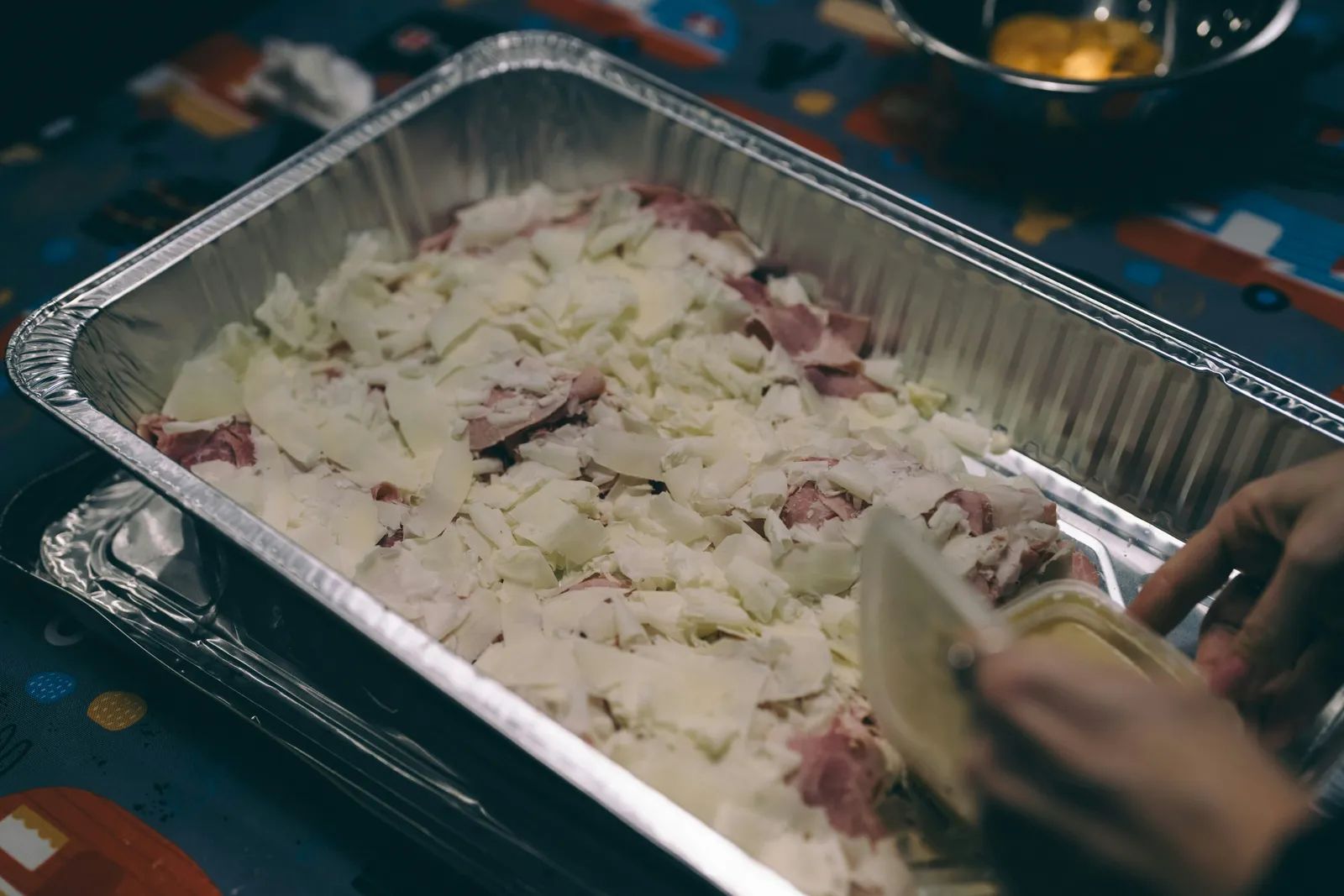
Thanksgiving dinner often leaves a full pan of stuffing and a tight fridge shelf. Many cooks reach for the refrigerator by default, but the USDA guidance on uncooked stuffing points the other way. A consumer guide from Better Living, which pulls together USDA, university extension and Academy of Nutrition and Dietetics advice ([1]), makes the case clearly enough that holiday hosts should know it before the turkey comes out of the oven.
Why uncooked stuffing skips the fridge
USDA’s stuffing guidance says uncooked stuffing is safe to freeze as soon as it is assembled. The steps are simple: combine the ingredients, spread them in a shallow container, and freeze right away. The agency advises against refrigerating the mixture first, and it also advises against thawing it before cooking.
The same logic appears in other sources. Michigan State Extension says the mixture should go into a shallow dish and into the freezer immediately, and that it should be cooked from the frozen state. The Academy of Nutrition and Dietetics makes a similar recommendation for anyone who wants to prepare stuffing in advance.
Illinois Extension explains the caution. Broth, eggs and meat are ingredients that can cause illness if they are not handled properly, so the safest path is either to freeze the mixture or to cook it straight away.
Cooked leftovers follow a different clock
Once stuffing has been baked, the rules shift. USDA says cooked stuffing should be cooled in shallow containers and refrigerated within 2 hours. From there, it can be eaten within 3 to 4 days or moved to the freezer. Speed matters because a deep pan holds heat for a long time, which slows cooling.
Stuffing cooked inside the bird needs one extra step. Penn State Extension advises removing it from the turkey before refrigerating or freezing it, noting that the moisture and density of stuffing make it a good medium for bacteria. USDA also says not to stuff whole poultry with leftover cooked stuffing.
Portioning helps as well. Flat freezer bags or small shallow containers let a serving thaw and reheat quickly, and they reduce the number of times a large batch needs to be opened.
Reheating frozen stuffing without guesswork
The target temperature is the same for every type of stuffing. USDA says reheated stuffing should reach 165°F as measured with a food thermometer, and that cooked stuffing can be reheated in an oven set no lower than 325°F or in a microwave. Frozen uncooked stuffing should be cooked until the center reaches 165°F, and the source notes that frozen leftovers can be reheated without thawing.
Quick reference for frozen stuffing
- Uncooked: freeze right away, do not refrigerate, do not thaw before cooking.
- Cooked: cool in shallow containers within 2 hours, then freeze or use within 3 to 4 days.
- Reheat: 165°F in the center, in an oven at 325°F or higher, or in a microwave.
- Avoid: slow cookers for reheating leftovers or frozen stuffing, according to USDA.
Baking times are harder to pin down. The source notes that no government or university guidance it reviewed gives minutes for a frozen pan of stuffing. Depth, batch size and oven type all change the result, so a food thermometer is the most reliable tool. Checking more than one spot is sensible in a deep dish.
Related Stories From Travelbinger

How long frozen stuffing stays good
The freezer times published for stuffing vary, and that can cause confusion. USDA’s Keep Food Safe chart lists 1 month for cooked stuffing, while its Turkey Basics guidance gives 4 to 6 months for cooked poultry dishes, stuffing and gravy. Penn State Extension uses the same 4 to 6 month range. USDA describes these windows as quality guidance, and it says food kept at 0°F stays safe indefinitely.
The source’s own advice is to aim for about a month if texture matters most, and to treat the longer ranges as an outer limit. Frozen leftovers can lose moisture and flavor over time, so a pan that has been in the freezer for several months may still be safe but less appealing. Once thawed, the safety clock starts again. USDA says refrigerator-thawed leftovers should be used within 3 to 4 days or refrozen.
For a holiday host, the simplest plan is to decide early which stuffing will be frozen raw and which will be cooked and cooled. Raw batches go straight into the freezer after mixing. Cooked leftovers get divided, chilled promptly and frozen once they are cold. Either route keeps stuffing ready for the next family dinner, provided the freezer stays at 0°F and the pan reaches 165°F before anyone eats it.




