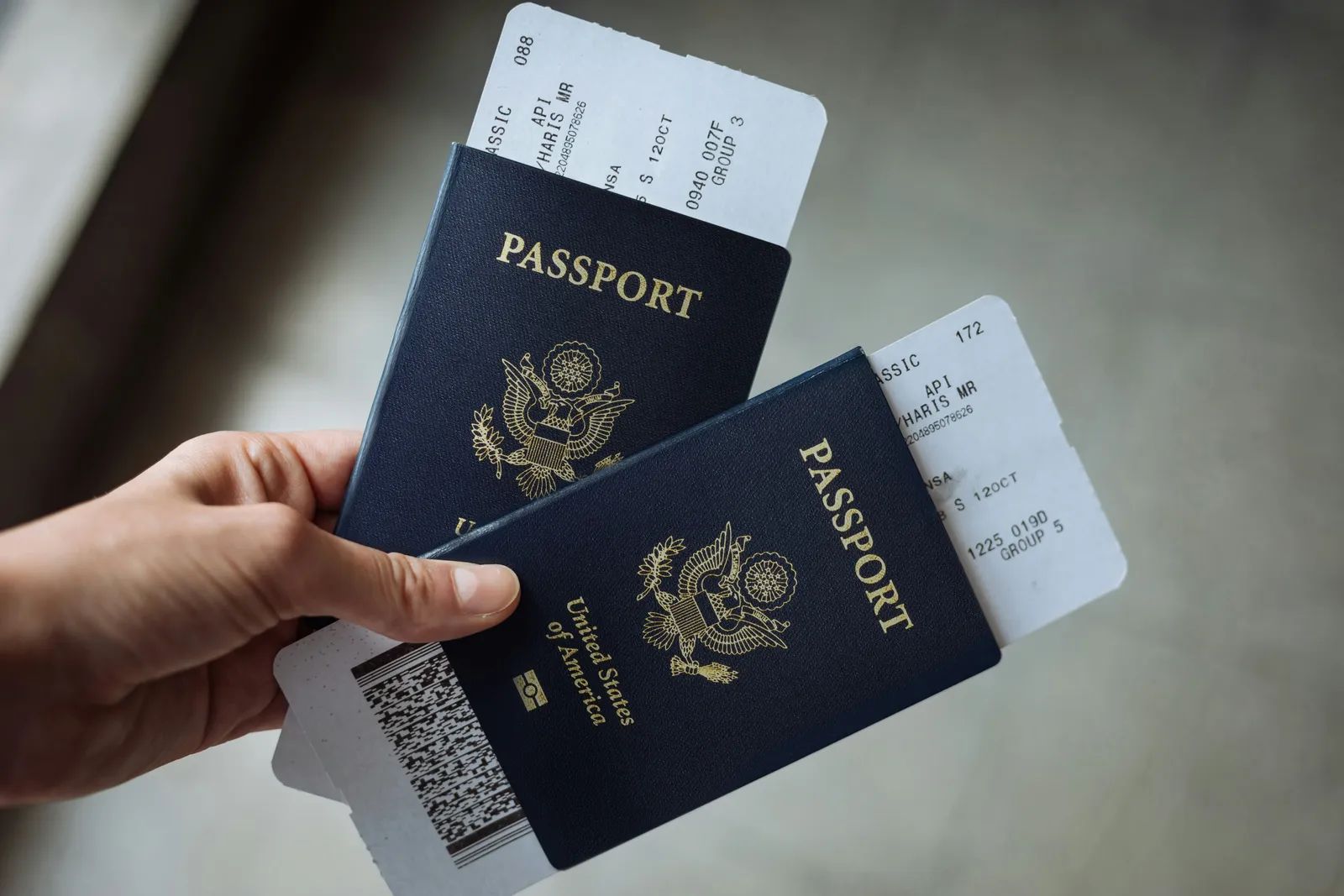
Most people treat an expired passport the way they treat an old boarding pass. It gets tossed in a drawer, forgotten, and eventually thrown out with the rest of the paperwork nobody wants to deal with. Yet a small but dedicated community of collectors has spent decades proving that these little booklets can carry real historical and financial weight, sometimes worth far more than the price of the plane ticket that got stamped inside them.
Before you toss that faded booklet from your grandparents’ attic, it is worth understanding what actually separates a forgettable travel document from something a collector would pay serious money for. The difference rarely comes down to age alone. It comes down to a handful of specific details that anyone can learn to spot.
The issuing country no longer exists

One of the strongest value signals in passport collecting has nothing to do with how old a document is and everything to do with what happened to the government that issued it. Rarity in passport collecting is a function of survival rates, political context, and specificity of content, not age alone.[1] A passport from a country that simply kept operating for the next century is common by comparison.
What collectors really chase are documents tied to short lived or vanished states. A passport issued by the Free City of Danzig between 1920 and 1939, or by the short-lived Weimar Republic to a Jewish emigrant in 1933, or by any number of colonial protectorate administrations that collapsed in the 1960s are rare precisely because the issuing authority disappeared, the records were destroyed, and the documents themselves were rarely preserved.[1] East German passports fall into a similar category, since one of the last passports of the GDR was issued two days before reunification on October 1, 1990[2], making that narrow window of paperwork genuinely scarce.
It once belonged to someone famous

A passport tied to a recognizable name tends to leap in value almost regardless of its condition or contents. This unique aspect is reflected in the strong values of passports from some of history’s most iconic figures, many of whom left few signatures behind.[3] That scarcity of an authentic signature is often the real driver of the price.
The numbers back this up in dramatic fashion. Currently the most valuable passport in the world is that of Norma Jeane DiMaggio, better known as Marilyn Monroe, issued in 1954 and featuring four signatures along with stamps from Japan and Korea, which sold for $115,000 at Hunt Auctions in 2006.[3] Other examples include the modernist writer James Joyce’s British wartime passport, issued in 1915 by the British consulate in Zurich, which achieved an impressive £61,250, or roughly $98,000, at Sotheby’s London in 2011[3], and a passport issued to Steve McQueen in 1970, used while filming the 1971 film Le Mans in France, which made $37,500 at Profiles in History in 2012[3]. Even scientific icons carry weight in this market, since a collector once noted that Albert Einstein’s own travel document sold for around ninety three thousand dollars at auction.
Rare or historically loaded stamps and visas

A passport is only half the story on its own. What was actually done with it, meaning the visas, entry stamps, and border markings inside, often tells collectors more than the cover page ever could. Some documents contain stamps and visas from countries that are difficult to obtain or no longer exist, making them particularly valuable, and others may have unique features such as watermarks, holograms, or other security features that were used at the time of issuance.[4]
This is why a heavily traveled passport, one filled with stamps from destinations that later closed borders or dissolved entirely, tends to outperform a pristine but empty one. As one longtime collector put it, stamps and visas also tell stories, since a traveled passport shows things about geography at the time, how long someone traveled and why, and how many days a trip took, all information that can be pulled directly from the pages.[2] A visa from a nation that no longer exists under that name, or an entry stamp from a border crossing that has since closed, adds a layer of documentary evidence that a blank passport simply cannot match.
It’s an emergency or stateless travel document

Not every valuable passport was issued by a functioning national government in the ordinary way. A smaller and often overlooked category involves documents created for people who had no country willing to claim them. Emergency passports and travel documents include a category that gets very little attention but deserves much more, since documents issued to stateless persons, refugees, and nationals of collapsed or unrecognized states fall into a complex legal and documentary territory.[1]
The clearest example of this category is one of the most historically significant travel documents ever created. The Nansen passport, created under the League of Nations after World War One to provide travel documentation for displaced Russians and Armenians, is perhaps the most historically resonant example.[1] Because these documents were issued to people fleeing collapsed empires and were rarely kept intact through subsequent decades of upheaval, surviving examples are genuinely difficult to find, and specialists in this niche say the category requires specialized knowledge but yields genuinely extraordinary material.[1]
The photograph or handwriting is unusual

Long before passport photo rules were standardized, people showed up to get their picture taken however they pleased, and that quirk of history has become a genuine collecting category. One passport historian keeps a document belonging to a woman photographed with a guitar in her hand[2], alongside another showing a man posed with a hunting dog and gun[2].
These oddities exist because early photo regulations were loose or nonexistent. As one expert explained it, passport photos became mandatory in Germany in 1915, but at that time there were no binding regulations on what such a photo should look like.[2] That gap in the rules is exactly why a passport with an unexpectedly personal or offbeat photograph can catch a collector’s eye faster than a plain, formal one ever will, since as the same historian noted with a bit of dry humor, today you’re not even allowed to laugh in the photos.[2]
It represents an unusual type of document, not just a standard passport

Standard national passports are not the only category collectors chase. There is a whole subset of historical travel documents that predate the modern passport as most people picture it, and these can carry outsized value precisely because so few examples survive. Naval sea passports were issued to entire ships and crew members carrying merchandise through enemy seas unhindered, and these documents are extremely rare and among the most valuable collector items.[7]
The most notable version of this category involves American maritime history directly. Treaties made by the United States between 1786 and 1836 with the Barbary Coast nations of Tunis, Tripoli, Algeria, and Morocco included a provision that American ships carrying this passport would be allowed to pass unmolested.[7] Diplomatic passports fall into a related niche, since collectors note that everyone has their own specialty, with some collecting only diplomatic passports and others only specimens that once belonged to famous people.[2]
What to do before you consider selling

Recognizing one of these details in an old passport is only the first step. The next question, and often the harder one, is figuring out whether it is even legal to sell. According to collectors in the field, the simple answer is yes, as long as the passports are obsolete, and even when most passports carry a statement that the document remains the property of the issuing country, passport collecting for historical and educational purposes is generally tolerated.[8]
Before assuming a family heirloom is worthless, it helps to remember how often these documents get discarded without a second thought. One longtime collector described his own entry into the hobby by noting simply that old passports are thrown away by most people, even though they were once valuable and historically significant.[2] A quick look through an old passport, checking the issuing country, the stamps inside, the photograph, and the physical condition, costs nothing and might reveal a piece of history worth far more than its owner ever assumed.