Phra Samut Chedi, Thailand – In the Chao Phraya River Delta near Bangkok, coastal erosion removes between 20 and 60 meters of land each year, turning farmland into open water and displacing families. A recent study examined whether structures modeled on mangrove roots could slow that loss by trapping sediment. The approach is presented as a temporary measure rather than a permanent fix. ([1])
Rapid Land Loss Threatens Local Livelihoods
The district sits in the muddy outflow of the Chao Phraya, where river sediment once built new land but now fails to keep pace with wave action and human activity. Aquaculture operations and small farms sit directly in the path of advancing tides. Residents have watched dikes fail overnight, leaving no time for repairs or relocation planning. The pace of change creates immediate pressure. One day a protective barrier stands; the next, it is gone. Such sudden losses make conventional concrete walls or large-scale dredging impractical for many households.
Designing Structures That Mimic Nature
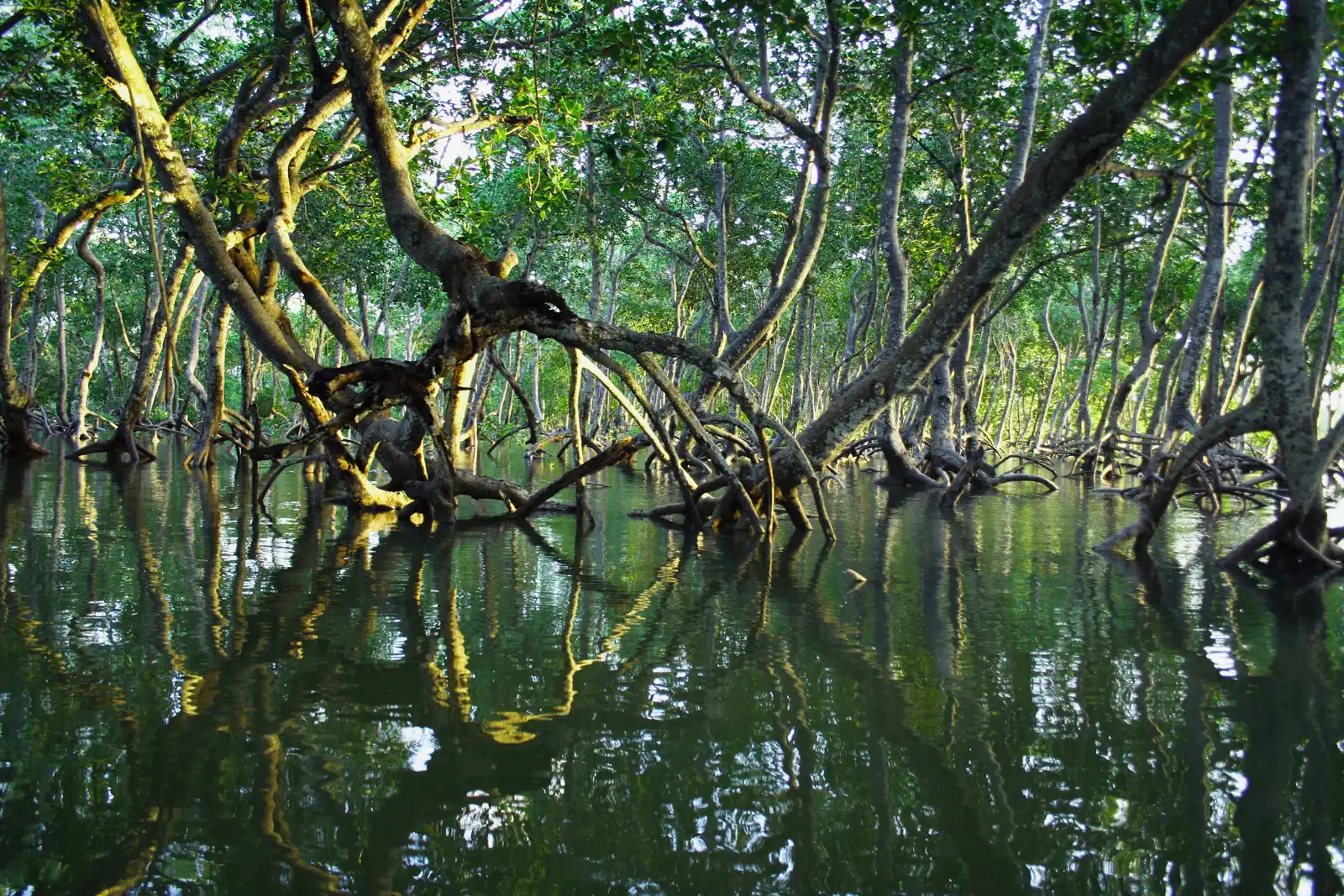
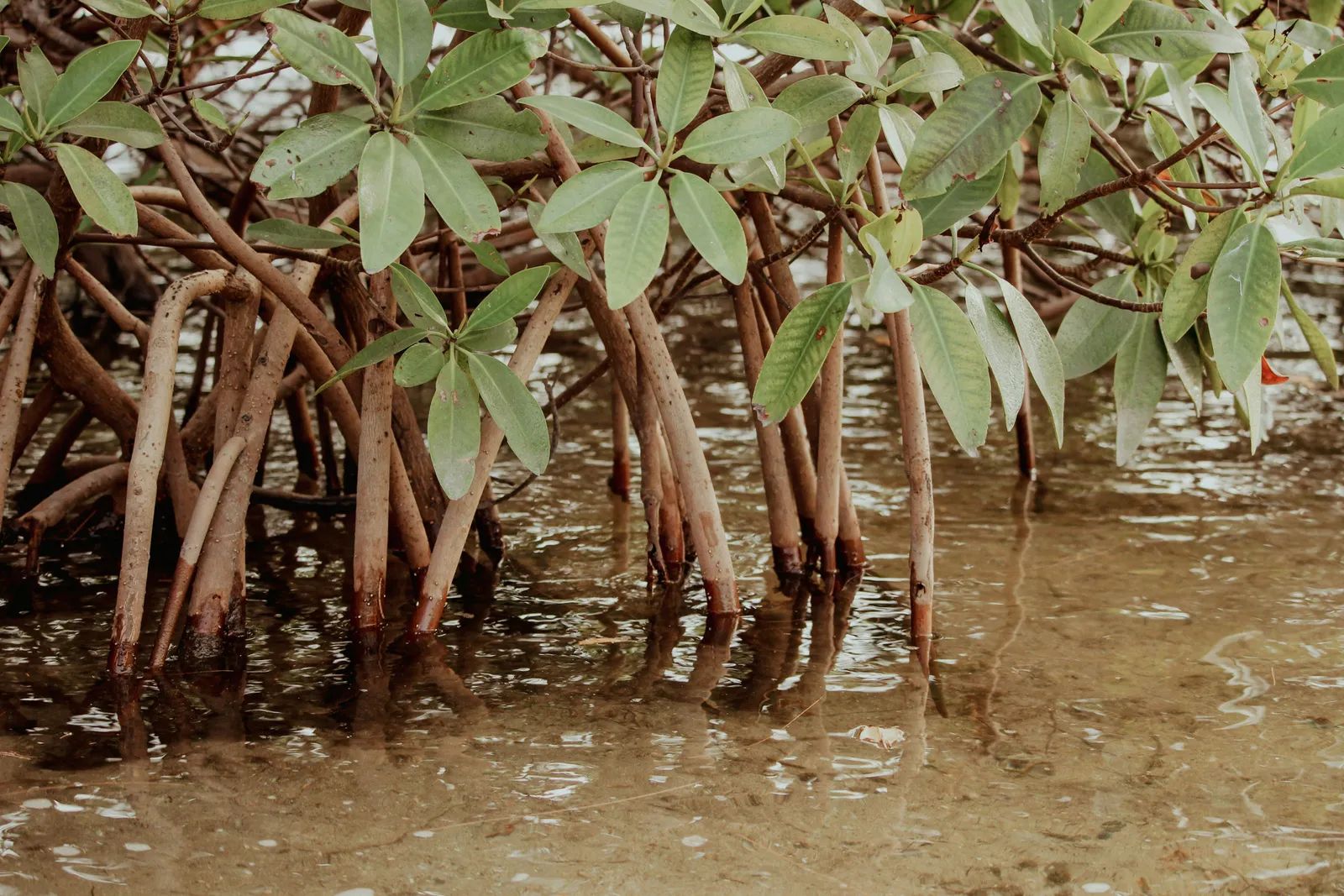
Researchers developed modular units shaped like mangrove root networks. These bio-inspired frames are placed in shallow water to reduce wave energy and encourage fine sediment to settle. The goal is to create conditions where natural mangrove seedlings can later take hold, forming a hybrid defense. The design draws on the way real mangrove roots slow currents and bind soil. By copying that geometry with durable materials, the system aims to work with local ecology instead of replacing it. Early modeling suggested the structures could function across varying tidal ranges common in the delta.
Fifteen-Month Field Trials Show Mixed but Promising Results
The team installed the units at 11 locations across Phra Samut Chedi and nearby areas of Samut Prakan province. Over 15 months, ten of the sites recorded measurable sediment buildup. Gains ranged from 16 to 88 centimeters, with performance tied to local wave exposure, water depth, and existing vegetation. Higher retention occurred where currents already favored deposition. Sites with stronger wave attack showed smaller gains. The variation underscores that the method is sensitive to micro-conditions rather than offering uniform protection.
Practical Limits and Next Steps
Senior author Butsawan Bidorn noted that communities need solutions they can deploy quickly. The study frames the artificial roots as one element in a broader strategy that still requires ongoing monitoring and complementary measures such as mangrove planting. Long-term durability under monsoon conditions remains under review. Further trials are expected to test different materials and spacing. Success will depend on whether the structures continue to support sediment accumulation without creating unintended erosion elsewhere along the shoreline.