Figuring out which country deserves the title of “oldest” turns out to be a surprisingly slippery exercise. There’s no single agreed upon rulebook for what counts as a country’s birthday: some measures track the first appearance of organized government, others track modern sovereignty, and the two rarely line up. Using the most widely cited approach, tracking the earliest known organized government tied to a nation’s present day territory, a fairly consistent top ten emerges from historians and researchers who study ancient statehood.
That list stretches back more than five thousand years, long before most of the borders we recognize today existed in any form. Below is a rundown of the ten nations most often named as the oldest, based on when the first organized governing structures took shape on their soil.
1. Iran

Iran typically tops these rankings, and for good reason. Iran, ancient Persia, is arguably the world’s oldest continuous national identity, with organised governance on its territory dating to the Elamite civilisation around 3200 BCE.[1] That’s roughly five thousand two hundred years of some form of organized rule on the same stretch of land.
The more famous chapter came later. The Achaemenid Empire established by Cyrus the Great in 550 BCE is considered the formal beginning of the Persian state, a continuous political tradition maintained through Parthian, Sassanid, and Islamic Persian empires to the present-day Islamic Republic.[1] Few nations can point to a language and cultural thread running that far back without a major break.
2. Egypt

Egypt usually lands in second place, and its founding moment is unusually well documented for something so ancient. Ancient Egypt boasts a rich and well-documented history dating back millennia, with the unification of Upper and Lower Egypt under King Menes around 3100 BC often considered the foundation of the Egyptian state.[2] That unification event is preserved on one of the most studied artifacts in archaeology.
The Narmer Palette, dated to roughly 3200 to 3000 BCE, suggests Narmer unified Upper and Lower Egypt, depicted wearing the White Crown on one side and the Red Crown on the other.[3] Modern political Egypt is a much newer creation, but the civilizational thread, hieroglyphs, monuments, and religious traditions, has never fully disappeared from the region.
3. Vietnam

Vietnam rarely gets mentioned in casual conversations about ancient civilizations, yet it shows up firmly in third place on most serious rankings. Vietnam ranks as the 4th-oldest country in some lists, and although the modern Socialist Republic of Vietnam was only established in 1976 following the Vietnam War, the country’s roots date back to 2879 BC.[4] That’s a gap of nearly four thousand seven hundred years between the earliest organized rule and the current state.
Vietnam’s history stretches back to 2879 BCE with the rule of the Hung Kings and the Hong Bang dynasty, with the Red River civilization laying the foundation for its society, enriched through exchanges with China and Southeast Asia.[5] The Hung Kings are still honored today in national holidays and cultural memory, a rare case of a founding myth staying genuinely relevant.
4. Armenia
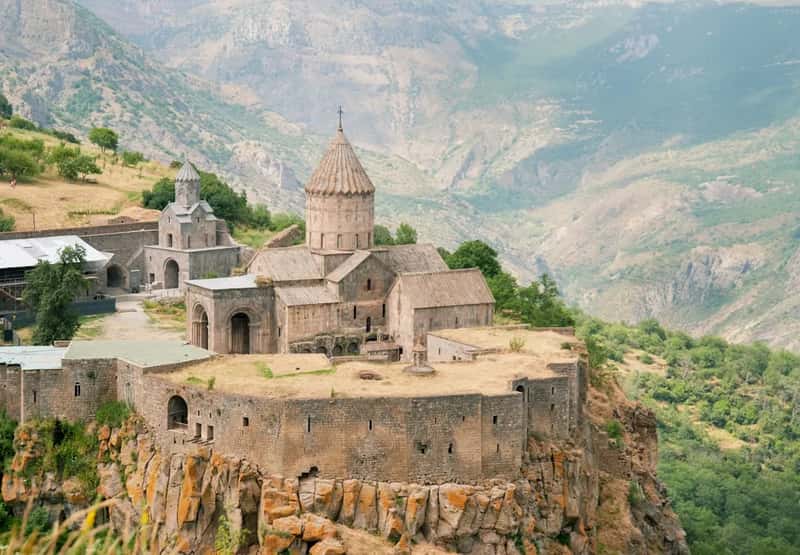
Armenia’s claim rests on one of the more turbulent histories on this list. The first organized government in Armenia dates back to around 2500 BCE, and Armenia is recognized as one of the world’s first Christian countries, with its rich history and nationalist struggles recorded across the Caucasus region.[6] Few nations have survived so many waves of conquest while keeping a distinct identity intact.
Some sources push the founding narrative slightly later, tying it to specific kingdoms rather than the broader civilizational timeline. The history of Armenia dates back to the Kingdom of Urartu around 860 BCE and later the Kingdom of Armenia in 331 BCE, and it was the first country in the world to adopt Christianity as its state religion in 301 CE.[7] That religious milestone still shapes Armenian identity centuries later.
5. North Korea

North Korea’s inclusion often surprises readers, since the state itself only dates to 1948. North Korea, officially the Democratic People’s Republic of Korea, has origins dating back to the 7th century BC, which is an intriguing statistic in and of itself.[8] The founding tradition points to something far older than the political system currently in place.
While North Korea as a political state is younger, its past revolves around Gojoseon, which was established way back in 2333 BCE.[7] Gojoseon is considered the first Korean kingdom, and its legacy is claimed by both Koreas as a shared ancestral root, even though the peninsula has been politically divided since the mid twentieth century.
6. China

China’s case is built on one of the longest unbroken written and cultural traditions anywhere. China’s earliest organized government is tied to the Xia Dynasty, recognized as the first in a long and complex imperial lineage, around 2070 BC.[9] Some scholars treat the Xia as semi legendary, but the dynastic record that follows it is extensively documented.
China’s documentary record adds another layer to the claim beyond just dynastic dates. China’s unbroken written historical record from approximately 1250 BCE represents the world’s longest continuous documentary tradition.[1] Whether you measure from the Xia dynasty or from the earliest surviving written characters, China’s governmental continuity spans well over three thousand years.
7. India
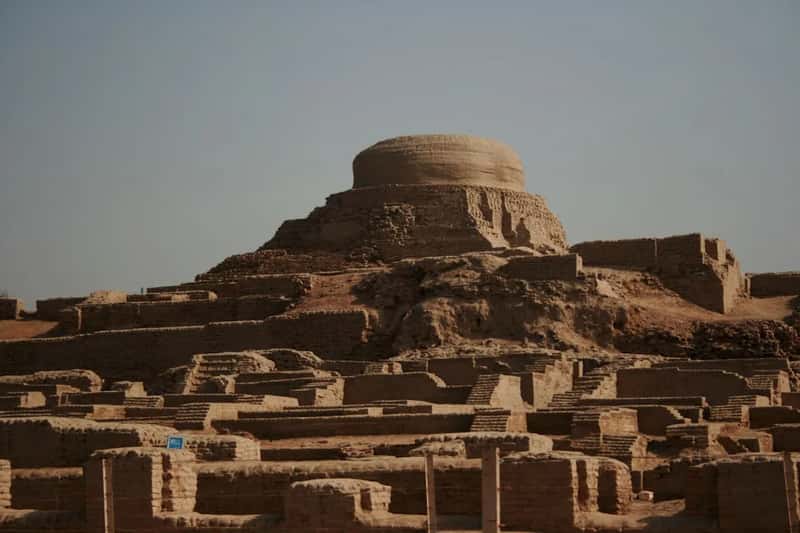
India’s ancient credentials come from one of the earliest urban civilizations in human history. India’s claim is anchored in the Indus Valley Civilization and Vedic traditions, dating to around 2000 BC.[9] That civilization produced planned cities with drainage systems that were remarkably advanced for their era.
The Indus Valley civilisation, which flourished around 2500 BCE, was part of ancient India and of Pakistan, and many historians argue it is as old as the Mesopotamian civilisation.[10] The archaeological sites at Harappa and Mohenjo daro remain some of the most studied ruins from the ancient world, and their influence on the region’s cultural continuity is still debated among historians.
8. Georgia

Tucked between Europe and Asia, Georgia rarely gets the attention its ancient roots deserve. Georgia, dating to around 1300 BC, sits at a crossroads of Europe and Asia, rich in ancient kingdoms and mythologies.[9] Its position along historic trade routes exposed it to influences from Persia, Rome, and later the Byzantine world.
Georgia also holds a claim that has nothing to do with governance at all, but everything to do with cultural longevity. Modern day Georgia is regarded as the birthplace of winemaking, where some of the oldest wine jars in the world have been found, at least eight thousand years old.[11] That kind of continuity, a practice still central to Georgian identity today, is part of why researchers keep Georgia on this list despite its founding date being contested.
9. Israel
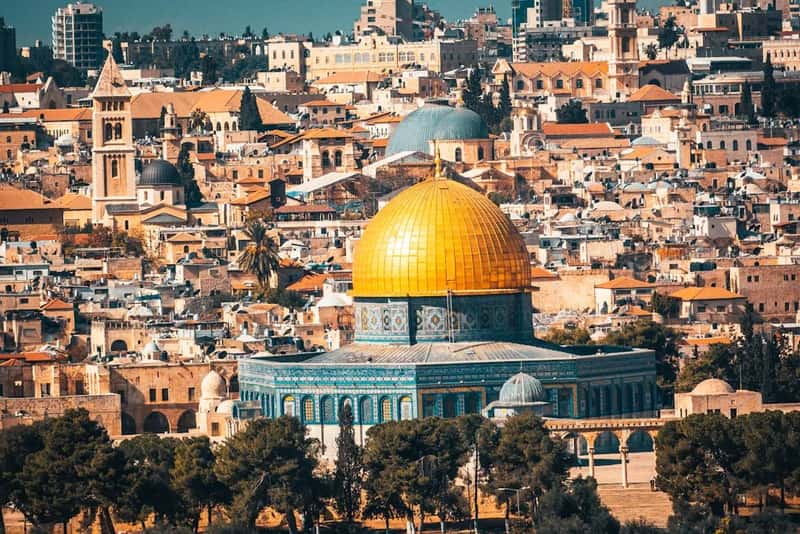
Israel’s placement on this list depends heavily on how you define continuity between ancient and modern statehood. Israel’s history is deeply tied to ancient kingdoms such as Israel and Judah, emerging around 1300 BCE, and as a cradle of monotheistic religions, Israel has a profound global spiritual and cultural legacy.[5] The modern state, though, is a distinctly twentieth century creation.
The contemporary state, established in 1948, is treated by many as a resumption of a classical and sacred homeland, with archaeological remains, the Hebrew language, and Jewish traditions powerfully attesting to Israel’s connection with ancient history.[7] That combination of ancient roots and a very recent political founding makes Israel one of the more debated entries on any oldest countries list.
10. Sudan
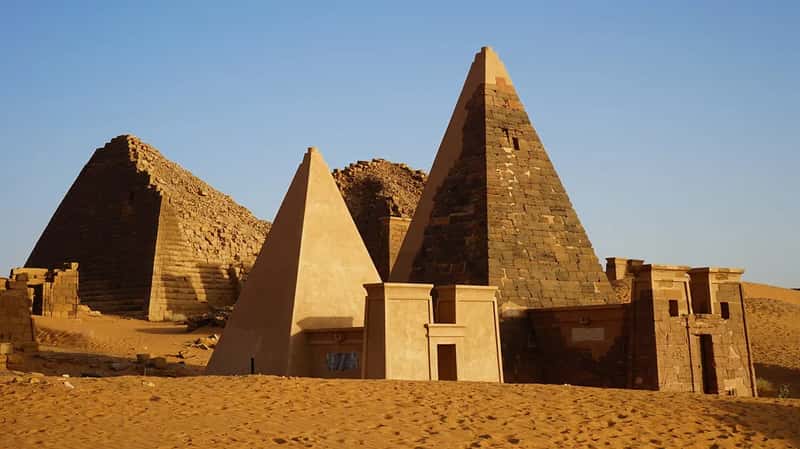
Sudan closes out the list, anchored by a civilization that predates most people’s assumptions about African history. Sudan’s historical roots trace back to 1070 BCE with the rise of the Kingdom of Kush in ancient Nubia, situated along the Nile Valley in what is now northern Sudan and southern Egypt, with the Kushites building pyramids and burial mounds and worshiping deities such as Ammon and Isis.[4] Nubian pyramids, in fact, outnumber Egypt’s, even if they’re less famous.
Some researchers push Sudan’s timeline back even further, depending on which early kingdom is used as the starting point. Sudan is amongst the oldest countries in the world with a civilisation dating back to the Kingdom of Ta Seti around 3500 BCE.[7] Either date puts Sudan’s governmental roots firmly in the ancient world, long before most nations existed in any recognizable form.
Why these rankings shift depending on the source
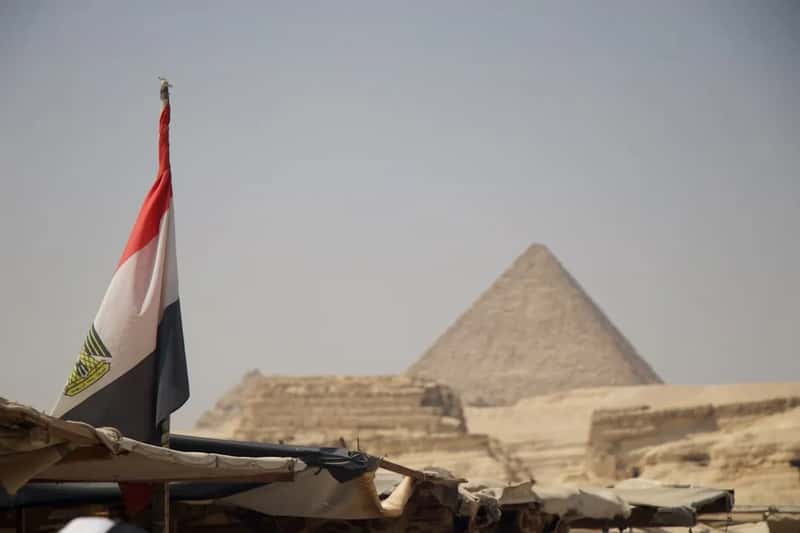
It’s worth being upfront about something: no two lists of the oldest countries look exactly alike. There is often a vast difference between the date when an organized government first appeared in a country and the date when the earliest modern iteration of that country first established its sovereignty.[12] Egypt is a perfect example of that gap in action.
Egypt’s civilization dates back to 3,100 BCE, but modern Egypt was founded in 1922, when the country went from being a UK protectorate to a sovereign state.[12] That’s the tension running through this entire topic: civilizational age and legal statehood are two very different clocks, and reasonable historians will keep landing on different answers depending on which one they’re measuring.