A decade ago, buying a modest apartment in Lisbon or Malaga was enough to open the door to European residency. That era is quietly closing. Spain shut its doors in April 2025, Cyprus walked away years earlier, and the countries still standing have raised their prices, tightened their rules, or swapped real estate for funds and bonds entirely.
What’s left is a smaller, pickier field, but it’s not an empty one. Four programs still make sense in 2026, each for a different kind of applicant, and each with its own trade offs worth understanding before signing a check.
Portugal’s Golden Visa: the fund route that replaced real estate

Portugal’s ARI program used to be the poster child for golden visas, largely because of its low property thresholds and relaxed lifestyle requirements. That changed in October 2023, when the More Housing reform eliminated the real estate route entirely. The real estate route ended in October 2023 under the More Housing reform (Law 56/2023).
What survives is arguably more interesting for a certain kind of investor. What survived is €500,000 in qualifying investment fund subscriptions, the dominant route today, and €250,000 for cultural or artistic investments. The physical presence requirement remains light, with Portugal requiring seven days per year, though applicants should brace for delays, since Portugal currently has the longest processing backlog at around 39.6 months.
Greece’s Golden Visa: still Europe’s most accessible entry point

Greece remains the program most people mean when they say “golden visa,” and for good reason. It still offers the lowest headline minimum in the EU, though the pricing has grown more complicated. The threshold now depends on area and property category, with €250,000, €400,000, and €800,000 tiers.
The catch is that the cheapest tier isn’t available everywhere. Greece’s €250,000 property threshold is limited to special conversion or historic-building cases. Regular buyers in Athens or the islands face steeper numbers, since Greece has zoned its programme so that anything in Athens or the islands now costs at least €800,000. Even so, the program has real credibility behind it. According to industry reporting, the Global RCBI Report 2025 ranks Greece as the world’s best residency-by-investment program, and applicants benefit from no physical presence requirement to keep the permit valid, as noted among the programs where zero physical presence is required, including Greece, Hungary, Bulgaria, Latvia, Malta, and Italy.
Italy’s Investor Visa: flexibility without a property requirement
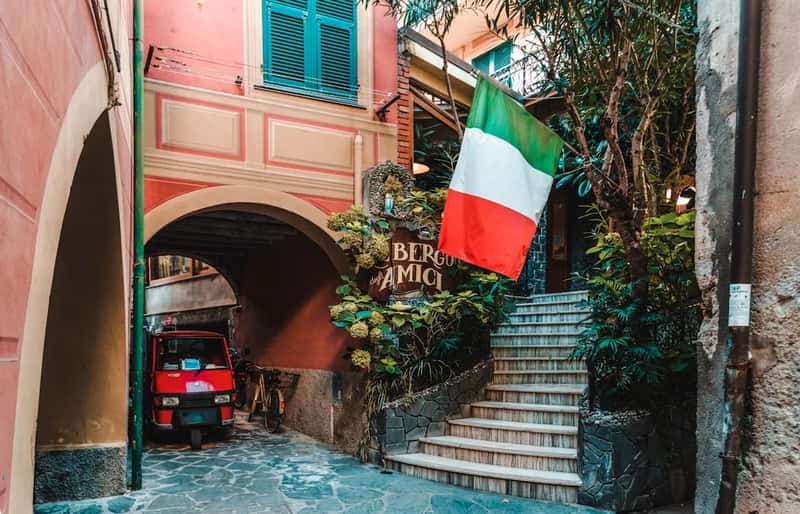
Italy never built its program around real estate, which insulated it from the housing backlash that hit Spain and Portugal. Instead, applicants choose from four distinct paths. The minimum investment amounts are €250,000 for an innovative startup, €500,000 for an Italian limited company, €2 million in government bonds, or €1 million in a philanthropic donation.
The process is notably investor friendly, built on an approval-first structure. Italy’s process follows an approval first, investment second model, where the applicant receives a formal Nulla Osta before transferring any investment funds. Processing is also relatively fast, with most applicants securing a permit in roughly three to six months in 2026, and there’s a long runway ahead, since the program offers a path to permanent residency after five years and potential citizenship after ten years.
Malta’s Permanent Residence Programme: a slower but sturdier path

Malta’s route to European residency isn’t marketed under the golden visa label, but it functions the same way. The Malta Permanent Residence Programme, or MPRP, bundles together property, government fees, and a charitable donation. Applicants must make a government contribution of €37,000, an administration fee of €60,000, and a charitable donation of €2,000.
On top of the fees, there’s a property commitment and an asset test. The minimum investment is €14,000 per year for rental or €375,000 for property purchase, and applicants must also show meaningful net worth, since applicants must demonstrate ownership of assets worth at least €500,000, including €150,000 in liquid financial assets, or at least €650,000, including €75,000 in liquid financial assets. The payoff is permanence rather than a renewable temporary permit, and Maltese permanent residence is indefinite, with investors only needing to renew the residence card every five years.
Why so many other European programs have disappeared

It’s worth understanding why the field narrowed so sharply, because the same pressures could reach the four programs above eventually. Spain’s closure was the clearest signal. On 3 April 2025, the programme was abolished under Organic Law 1/2025, and no new applications have been accepted since that date.
The reasoning behind Spain’s move has become a template other governments cite. Officials pointed to concerns that investment-driven property purchases by wealthy non-EU nationals were contributing to price inflation in key cities, aligning with a broader EU push to phase out real-estate-linked residency programs over money laundering and housing distortion concerns. Latvia may be next to fall in line, since lawmakers voted in June 2026 to abolish the property, government-securities and bank-deposit routes from January 2027, a reminder that even the programs still standing operate under constant political scrutiny.
What to weigh before choosing a program

Cost is the obvious variable, but it’s rarely the deciding one for serious applicants. Timelines to citizenship differ enormously, and the fine print matters more than the sticker price. As one comparison of the remaining routes put it, the differences between programs are significant enough to determine whether EU citizenship is a realistic goal within your planning horizon, or a theoretical endpoint that never quite arrives.
Physical presence rules are another dividing line worth checking closely, since requirements range from nothing at all to regular visits, and tax residency is a separate question entirely from having a residence permit. As one analysis of the sector bluntly notes, a residence permit and a favourable tax residency are two very different things. Anyone comparing Portugal, Greece, Italy, and Malta should treat that distinction as a starting point for due diligence, not an afterthought.