Food habits say more about a culture than almost anything else. Some nations built entire cuisines around vegetables, legumes, and grains long before “plant-based” became a marketing term, while others have made meat, particularly beef and lamb, part of their national identity. The gap between these two worlds is wide, and looking at where countries actually land on this spectrum reveals some genuinely surprising patterns, including a few nations that seem to belong on both lists at once.
India: the world’s vegetarian capital
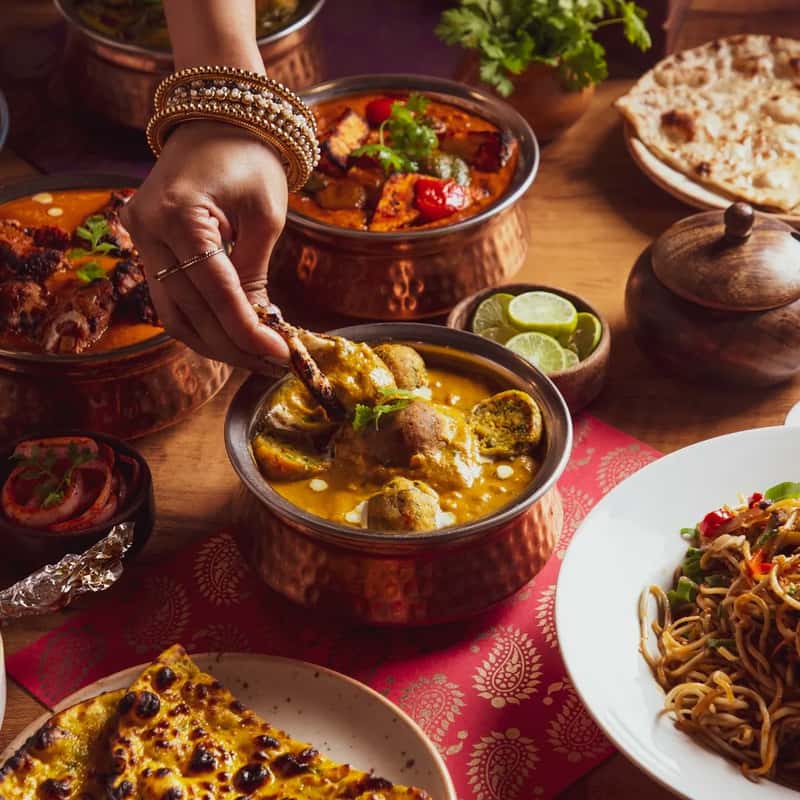
India has the highest percentage of vegetarians in the world, with about 38% of the population identifying as vegetarian, according to the Food and Agriculture Organization of the United Nations. This isn’t a recent health trend either. Deep cultural and religious traditions tied to Hinduism and Jainism, along with centuries-old vegetarian culinary practices, keep India at the top of global lists.
What makes India stand out is how normal vegetarianism feels there rather than how niche it is elsewhere. Even as urban Indians eat more meat in some demographics, a large base of committed vegetarians keeps India’s percentage far above most countries. Street food stalls, home kitchens, and fine dining all treat plant-based cooking as the default rather than an afterthought.
Israel: a small country punching above its weight
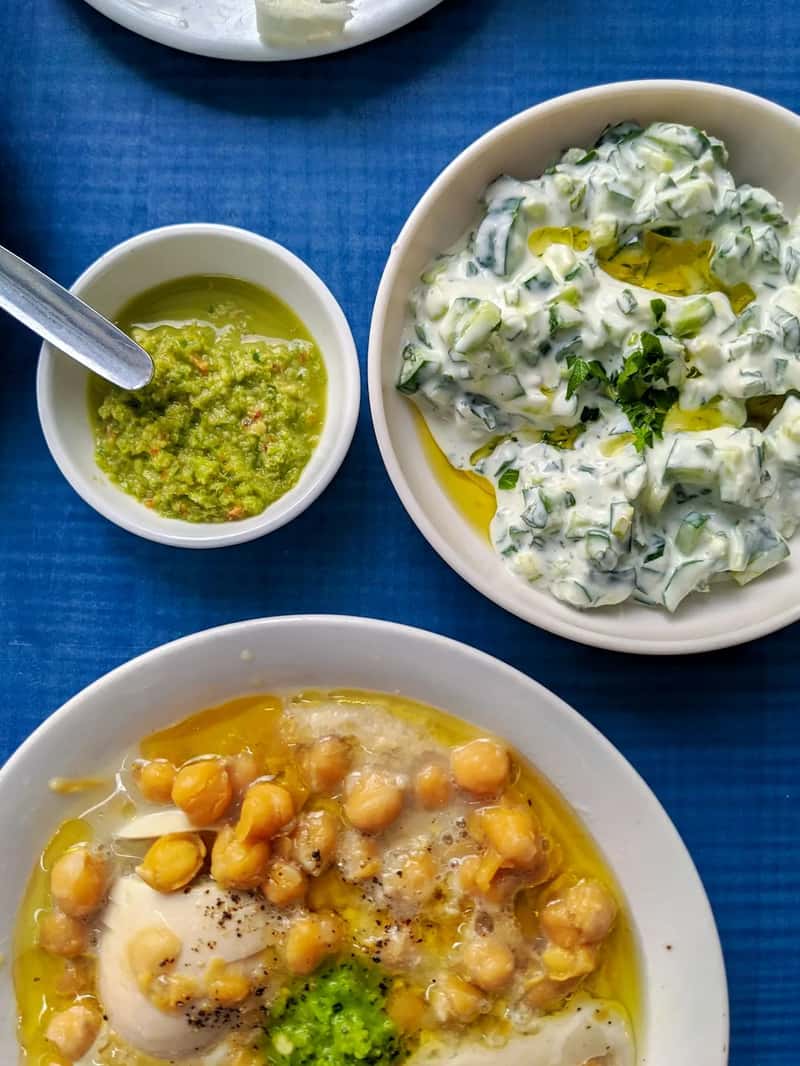
Israel’s vegetarian and vegan scene has grown into something disproportionate to its size. World Atlas found that Israel has the second highest population of vegetarians among all countries, at around 13%. Tel Aviv in particular has built a reputation as one of the most plant-based-friendly cities anywhere.
The country is home to hundreds of restaurants offering vegan meals, and in 2014 Tel Aviv hosted the biggest vegan festival in the world where 15,000 people attended, a city that continues to rank as a favorite destination for vegan travelers. Curiously though, this reputation exists alongside a national fondness for poultry, which shows a country can champion plant-based dining while still keeping meat firmly on the menu in other forms.
Taiwan: Buddhist roots, modern vegan boom

Taiwan rarely gets credit internationally for its food culture, yet it has quietly become one of the most accommodating places on earth for vegetarians. Taiwan rarely tops global headlines for its food culture, yet it consistently ranks among the most vegetarian-friendly places on earth. Much of this traces back to Buddhist dietary customs that have shaped local cooking for generations.
World Atlas found that Taiwan ranks third globally for vegetarian population share, at around 12%. Vegetarian buffet restaurants, often marked with a swastika-like Buddhist symbol, are common enough in Taiwanese cities that finding a meat-free meal rarely requires any planning at all.
United Kingdom: Europe’s quiet leader

The UK doesn’t get the same attention as India or Israel in these conversations, but the numbers tell a real story. The UK does not get the same attention as India or Israel, but it consistently ranks near the top of European vegetarian statistics. Roughly six percent of people in the UK followed a vegetarian diet in 2025, a figure that keeps climbing.
The growth trend is what really stands out here. Finder’s research found that about 6.3% of UK adults plan to follow a vegan diet in 2026, which amounts to roughly 3.5 million people, including those already vegan and those who weren’t vegan at the end of 2025 but plan to start. Small villages and big cities alike now tend to have at least one vegetarian-friendly option, a shift that would have seemed unlikely just fifteen years ago.
Mexico: an unexpected plant-based hub

Mexico surprises a lot of people on this list, given its reputation for tacos al pastor and carne asada. Yet Mexico ranks second globally for vegetarian population share, with about 19% of its population identifying as vegetarian, according to Food and Agriculture Organization data. Beans, corn, and a huge variety of chilies and vegetables have always been the backbone of Mexican cooking, meat or no meat.
Urban centers like Mexico City and Guadalajara have seen a genuine wave of vegetarian and vegan restaurants opening over the past few years. Latin America has shown surprising growth in vegetarian share, with Mexico and Brazil driven by health narratives and expanded plant-based options. It’s a reminder that a country’s stereotypical dishes don’t always reflect what most of its population actually eats day to day.
Argentina: beef as national identity
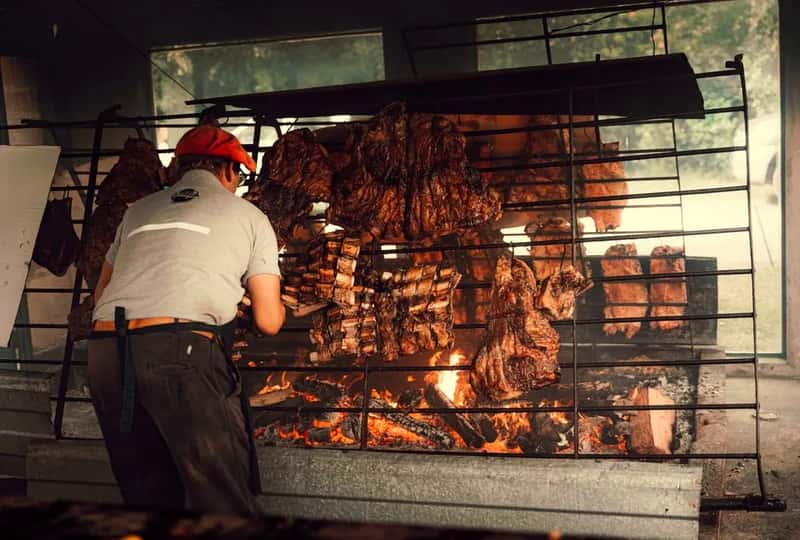
Few countries wear their meat obsession as openly as Argentina. Argentina eats around 110 kilograms of meat per capita annually, placing it among the top nations in the world for overall meat consumption, and the country consumes more beef than any other. Steak here isn’t just food, it’s practically a cultural institution tied to family gatherings and Sunday asados.
Economic pressure has started chipping away at this tradition, though. Triple-digit inflation, a recession and rising poverty have forced Argentinians to rein in their love of beef, with 2024 beef consumption projected to drop to its lowest level since records began in 1914. Even so, Argentina’s grasslands remain some of the best cattle-raising terrain on the planet, and beef isn’t disappearing from the table anytime soon.
United States: the world’s biggest overall meat consumer
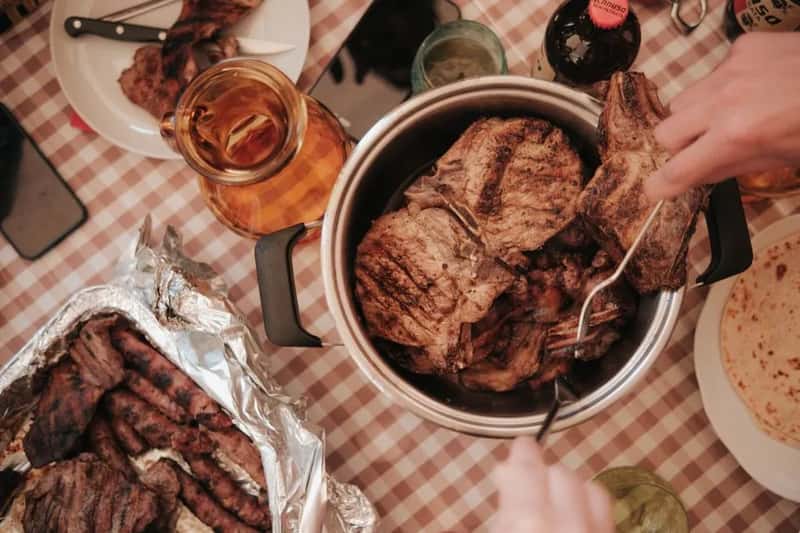
The United States doesn’t always lead in per capita meat consumption, but it dominates in sheer volume. When looking at total consumption volume, the United States ranks at the top, with residents eating around 21% of the world’s beef, nearly 27.6 billion pounds in a single year. Add pork and poultry to that beef figure, and the scale becomes even more striking.
American per capita numbers are also consistently high. In 2022, US per capita beef consumption amounted to just over 38 kilograms, showing that Americans are highly consistent in their beef eating habits. Combined with heavy poultry and pork consumption, the US sits comfortably among the countries where meat is treated as a daily staple rather than an occasional indulgence.
Mongolia: meat as survival, not just preference
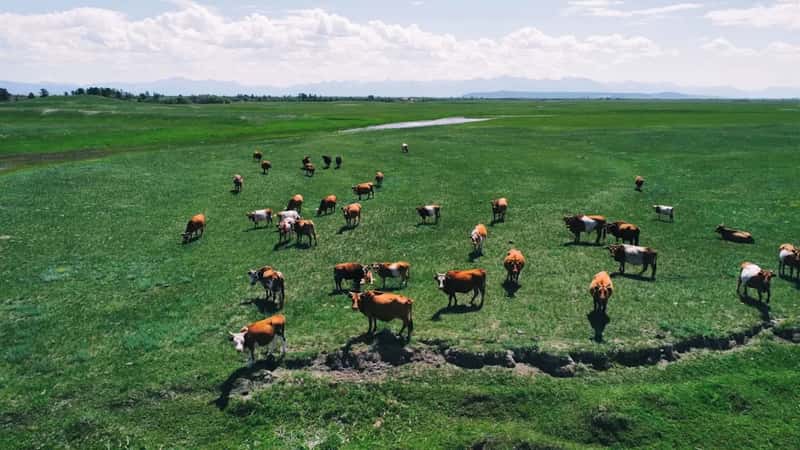
Mongolia’s relationship with meat is shaped as much by geography as by taste. Mongolia consumes around 123 kilograms of meat per capita annually, placing it among the highest meat-consuming countries in the world. In a country with a harsh climate and limited arable land, herding livestock has historically been one of the few reliable ways to produce food.
Mutton and beef dominate Mongolian diets in a way that reflects the nomadic herding traditions still practiced across much of the country. There’s little cultural push toward vegetarianism here, mostly because the landscape itself has never made plant farming especially practical at scale. Meat isn’t a lifestyle choice in Mongolia so much as a practical necessity passed down through generations.
Hong Kong: pork and poultry at the center of the plate
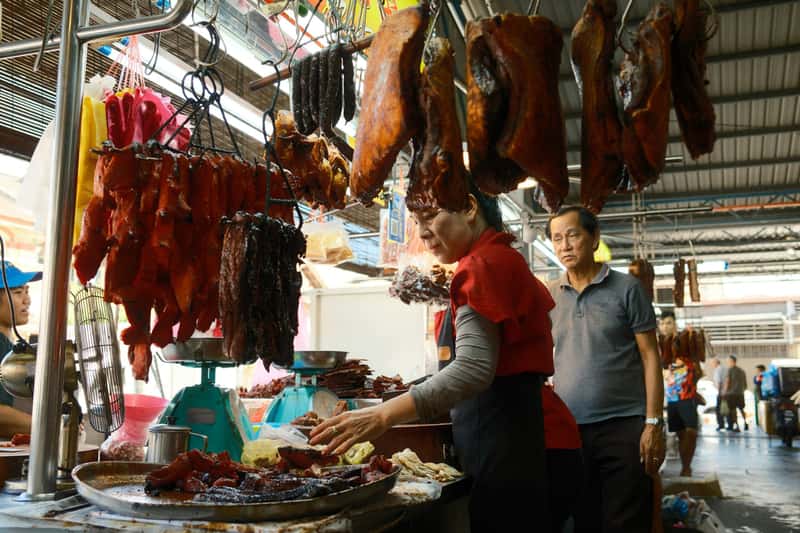
Hong Kong stands out for a very specific reason: its love of pork. Hong Kong consumes more pork than any other country in the world, at 55.24 kilograms per capita annually. Roast pork, char siu, and pork buns aren’t just popular dishes, they’re everyday staples found in nearly every neighborhood eatery.
Beyond pork, Hong Kong’s overall meat consumption ranks near the very top of global charts, reflecting a food culture where meat dishes anchor nearly every meal, from breakfast dim sum to late-night street food. Vegetarian options do exist, but they tend to be the exception in a city built around cha chaan tengs and dim sum houses that revolve heavily around pork and poultry.
Australia: a nation of steak and barbecue

Australia’s meat consumption habits put it firmly in the same league as the United States and Argentina. According to UN Food and Agriculture Organization data, the United States, Argentina and Australia are at the top of the global meat-eating league, with more than 110 kilograms consumed per capita. Barbecuing isn’t just a weekend activity there, it’s practically woven into the national identity.
Australia’s vast grazing lands make cattle and sheep farming economically central, which keeps meat prices relatively accessible compared to many other developed nations. Lamb in particular carries a strong cultural association with Australian cuisine, alongside beef, which remains a staple across households regardless of region or income level.
Spain: pork, jamón, and a deep culinary tradition
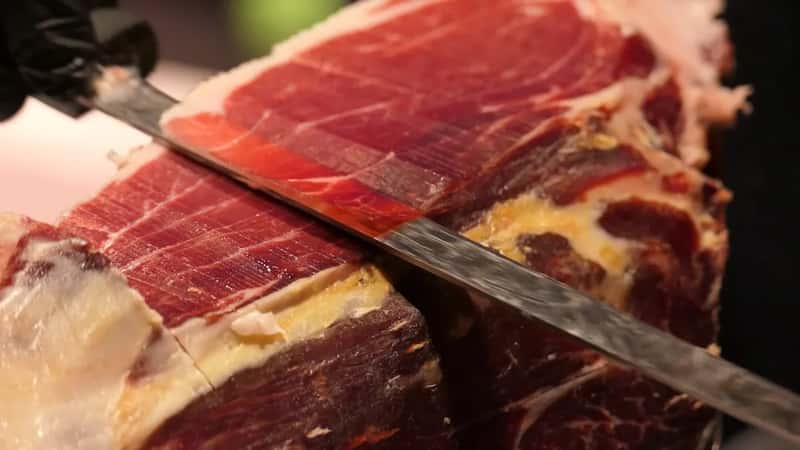
Spain’s connection to meat runs through its most famous export: jamón. Spain ranks among the top countries for pork consumption, at 56.5 kilograms per capita annually, trailing only Croatia in this specific category. Cured ham, chorizo, and various pork-based tapas form the backbone of Spanish gastronomy in a way that few other cuisines can match.
Meat consumption in Spain sits comfortably among the highest in Europe overall, driven partly by the country’s strong pig farming industry and centuries-old curing traditions passed down through regional producers. While Spanish cities have seen a modest rise in vegetarian dining options in recent years, the country’s core identity remains tightly bound to its pork products, especially jamón ibérico, which continues to be treated almost as a point of national pride.