Somewhere between a stacked meeting schedule and a lunch eaten at your desk, it’s easy to assume that long hours are simply the price of a modern economy. Yet a handful of countries keep proving otherwise, year after year, in the labor statistics that international bodies like the OECD and Eurostat quietly publish.
These are not fringe cases or small island economies skewing the data. They are wealthy, productive nations where people genuinely work fewer hours on average than almost anywhere else, and the numbers behind that gap are worth a closer look.
Germany

Germany sits at the very bottom of the OECD’s hours-worked table, and it isn’t close. The average worker in Germany puts in about 1,330 hours a year, fewer than in any country the OECD tracks. Other tallies land in a similar range, with Germany reporting around 1,340 hours compared with roughly 2,220 hours in Mexico, the OECD’s highest.
The reasons are structural rather than accidental. Germany and Denmark work the fewest hours among OECD countries, reflecting strong labor laws in these countries as well as their emphasis on work-life balance. A large share of the German workforce also works part time, which pulls the national average down even though full-time employees still put in a standard workday.
Denmark
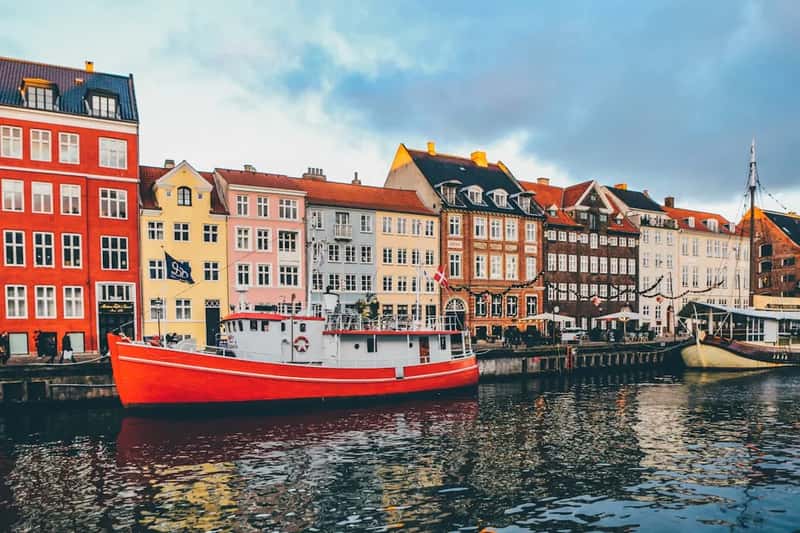
Denmark is almost always mentioned in the same breath as Germany when this topic comes up, and the data backs that pairing. Denmark averages about 1,380 hours per year with a standard 37-hour workweek, and Danish workers receive 5 weeks of paid vacation plus public holidays. That combination of a shorter standard week and generous time off adds up quickly over twelve months.
What makes Denmark’s case interesting is that fewer hours haven’t come at the cost of economic performance. The country consistently ranks among the highest in both productivity per hour and quality of life. Recent European survey data confirms the pattern too, with Eurostat placing Denmark among the handful of EU countries recording the shortest actual working weeks in 2024.
Netherlands
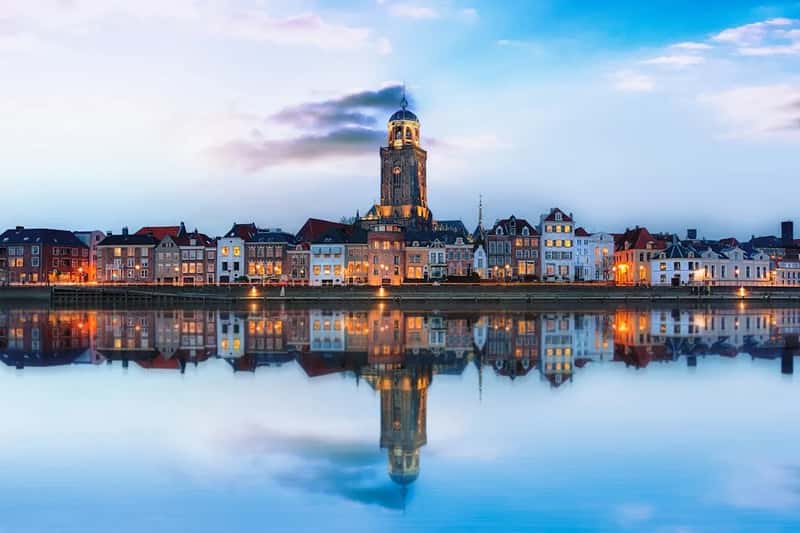
If any country has become the poster child for shorter working hours, it’s the Netherlands. According to Eurostat’s most recent figures, the Netherlands had the shortest working week in the EU at 32.1 hours, followed by Denmark, Germany and Austria at 33.9 hours each. Broader global comparisons push the Dutch figure even lower, with one 2025 analysis putting the average closer to 26.8 hours once part-time work is fully accounted for.
Part-time employment explains much of this. The Netherlands has one of the lowest annual averages, partly because part-time work is extremely common, particularly among women, and the Dutch “1.5 earner model” means many households have one full-time and one part-time worker. Full-time contracts still typically run between 36 and 40 hours, so the national average reflects a workforce structure as much as a shorter workday.
Norway
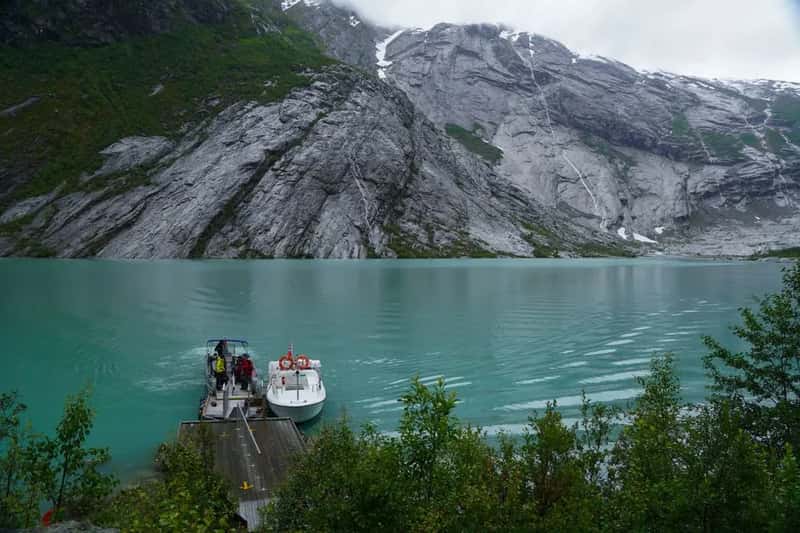
Norway rounds out the Nordic trio that regularly appears near the top of these rankings. Recent global data placed the country’s average workweek at 27.1 hours, putting it just behind the Netherlands as one of the shortest measured anywhere. Along with the Netherlands and Denmark, Norway falls below 30 hours weekly, and Western and Northern Europe as a whole maintain some of the shortest working weeks on record.
Norway’s oil-funded welfare state and strong union representation give workers considerable leverage over scheduling and leave. Shorter average hours in countries like Norway are often paired with higher living standards and better work-life balance. Norway is also included alongside Iceland and Switzerland in Eurostat’s EFTA comparisons, reinforcing how consistently it lands near the bottom of Europe’s hours-worked tables.
Austria

Austria doesn’t get as much attention as its Nordic and Dutch counterparts, but the numbers place it firmly in the same category. Eurostat’s 2024 data ties Austria with Denmark and Germany at 33.9 actual weekly hours, making it one of the four shortest working weeks recorded across the entire European Union that year. Separate research has put the Austrian figure slightly higher, closer to 35.5 hours, a reminder that estimates shift depending on the survey year and methodology used.
What stays consistent across sources is Austria’s position well below the OECD average. Workers in Austria, alongside the Netherlands, Sweden, and Iceland, work fewer than 1,500 hours per year on average, roughly 5.5 weeks fewer than the OECD average. Strong collective bargaining agreements and a cultural preference for protected leisure time are frequently cited as the underlying drivers.
Iceland

Iceland is a smaller economy than the others on this list, but it earns its place through consistently low annual hours. Iceland is grouped with the Netherlands, Sweden, and Austria as countries where workers put in fewer than 1,500 hours per year, well under the OECD norm. Given the country’s small population, this figure carries real weight in shaping how Icelandic work culture is perceived internationally.
Iceland also has a notable history here. The country ran some of the most closely watched shorter workweek trials in Europe during the 2010s, and the results fed directly into later collective agreements that shortened the standard week for large parts of the public sector. That legacy, combined with a small, tightly connected labor market, helps explain why Iceland keeps showing up near the bottom of these international rankings.