Africa’s cities rarely get the same spotlight as its safaris and deserts, yet some of the most visually stunning urban landscapes on the planet sit right on this continent. From mountain-backed harbours to sunken rock churches and medieval medinas painted the colour of the sky, these places earn their reputation the hard way, through centuries of trade, faith, and geography colliding in one spot. This list draws on recent traveller surveys, UNESCO documentation, and firsthand accounts to rank the six cities that consistently leave visitors reaching for their cameras and their words at the same time.
1. Cape Town, South Africa
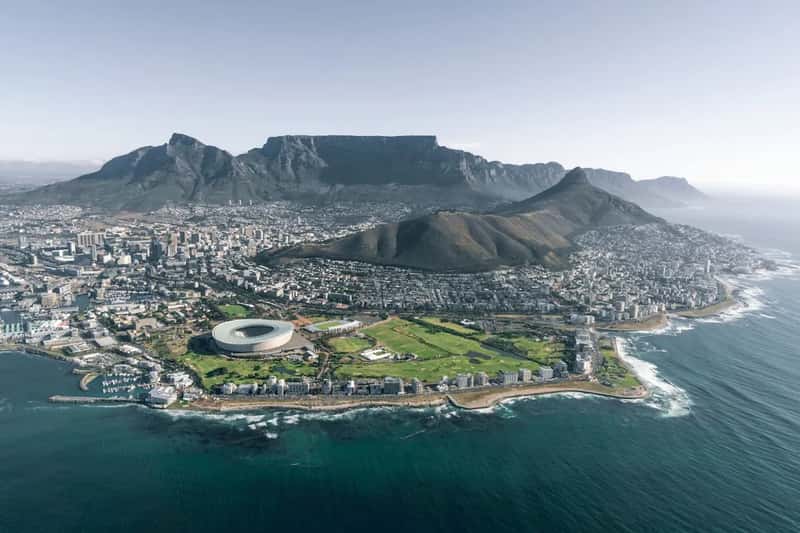
No African city shows up on more “most beautiful” lists than Cape Town, and the data backs up the reputation. Time Out’s 2026 survey of 24,000 city-dwellers ranked it the 6th most beautiful city on earth, with 86 percent of Cape Town residents describing their city as beautiful, the highest proportion of any city in the survey. The city had already claimed an even bigger prize the year before. Cape Town was named the world’s best city for 2025, with 95 percent of residents rating the local food scene highly and an even higher 97 percent saying the city made them feel happy.
The physical setting explains a lot of that affection. Table Mountain’s top section includes a plateau over 1,000 metres above sea level and roughly three kilometres long. Around it stretches something even rarer: the Cape Floristic Region, a UNESCO-listed biodiversity hotspot rich in endemic fynbos and proteas. Cape Town’s coastline offers penguins, whales, beaches, and iconic drives along rugged oceanfront scenery, making it one of the few cities where nature and skyline compete for attention in equal measure.
2. Marrakech, Morocco
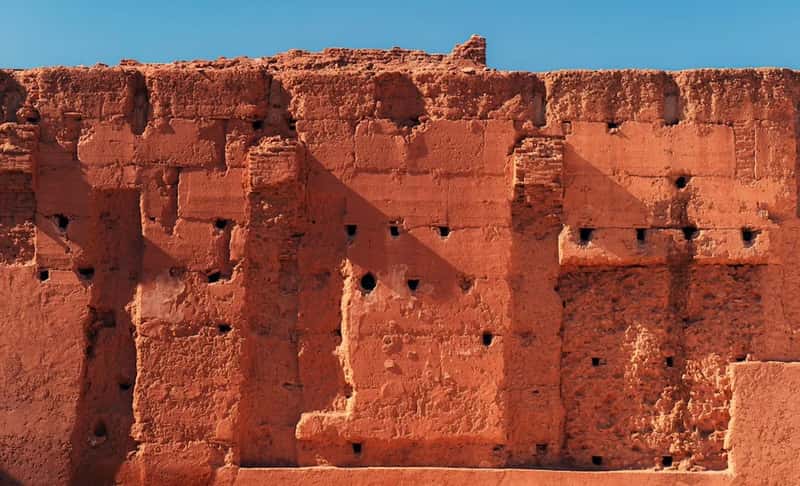
Marrakech earns its nickname honestly. Old clay buildings and fortifications with red walls are the most important landmarks of the old town, which is why many travellers know it as the ‘Red City’. The Medina of Marrakesh is an old Islamic capital originating from the 11th century, enclosed by 16km of ramparts and gates, and owes its original splendour to the Almoravid and Almohad dynasties who made Marrakesh their capital. That history has been formally recognised for decades, since the Medina of Marrakesh was declared a UNESCO World Heritage Site in 1985.
Wandering the old city today still means bumping into architectural showstoppers at nearly every turn. The medina holds hidden heritage sites including Ben Youssef Madrasa, a beautiful 16th-century Islamic school with more than 130 rooms. The central plaza adds theatre to the architecture: Djemaa el Fna square is the central square of the Medina, and it’s the largest square of its kind in Africa. Marrakech’s global standing has only grown recently too, having ranked 37th globally in Time Out’s 2025 list, earning praise for its developing food scene and community warmth.
3. Stone Town, Zanzibar, Tanzania
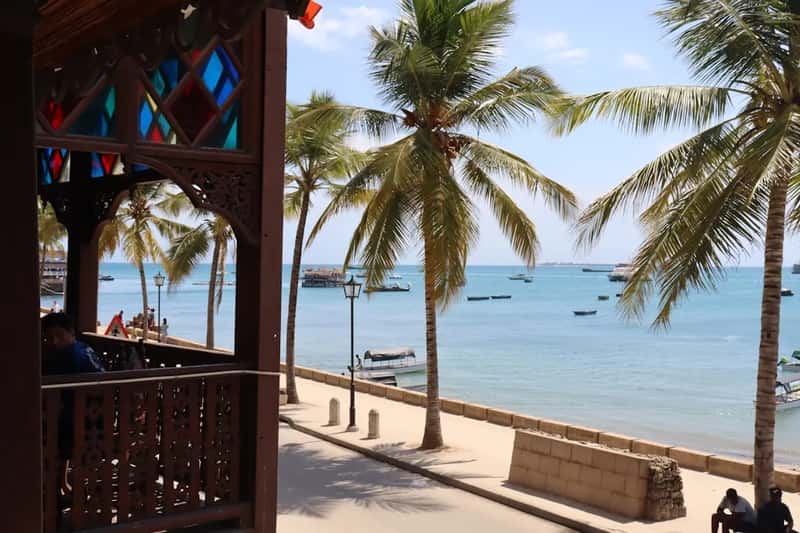
Stone Town looks unlike anywhere else on the continent because it was never built by one culture alone. The Stone Town of Zanzibar is a fine example of the Swahili coastal trading towns of East Africa, and it retains its urban fabric and townscape virtually intact, containing many fine buildings that reflect a culture homogenising elements of Africa, the Arab region, India, and Europe over more than a millennium. That fusion is written into the streets themselves, where Swahili architecture incorporates elements of Arab, Persian, Indian, European and African styles, and the houses are particularly noticeable because they have large and ornately carved wooden doors.
Beyond the doors, individual landmarks carry serious historical weight. The House of Wonders was the first building in East Africa to have electricity, a small detail that says a lot about how connected this island once was to global trade networks. Travellers who spend time getting lost in the alleys often describe a similar sensation, one visitor noting how it was easy to get lost in the narrow, winding alleyways, with each turn offering another surprise of colours and buildings. It is precisely that density of texture and history packed into a small footprint that keeps Stone Town on nearly every serious list of Africa’s most beautiful places.
4. Chefchaouen, Morocco
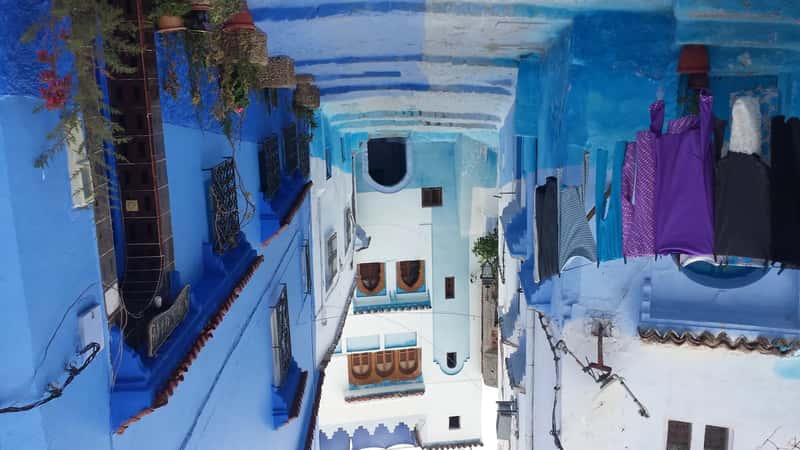
Tucked into the Rif Mountains of northern Morocco, Chefchaouen is famous for one simple but striking choice: painting the town blue. The tradition began in the 15th century when Jewish refugees fleeing the Spanish Inquisition settled in the mountainous town, bringing with them the custom of painting buildings blue to represent the sky and heaven. Even the town’s name reflects the surrounding landscape, since in the local Berber language it references the horn-like shape of the peaks that ring the settlement.
What makes Chefchaouen genuinely photogenic rather than just novel is how the colour interacts with the terrain and light throughout the day. The entire town is painted in various shades of blue, creating a unique and picturesque atmosphere that shifts from pale morning tones to deep indigo shadows by evening. Visitors consistently point to the same combination of elements, describing enchanting blue-washed streets, warm locals, stunning mountain views, and vibrant markets that create an unforgettable experience. It remains one of the few places in Africa where the built environment itself, rather than a single monument, is the main attraction.
5. Lalibela, Ethiopia
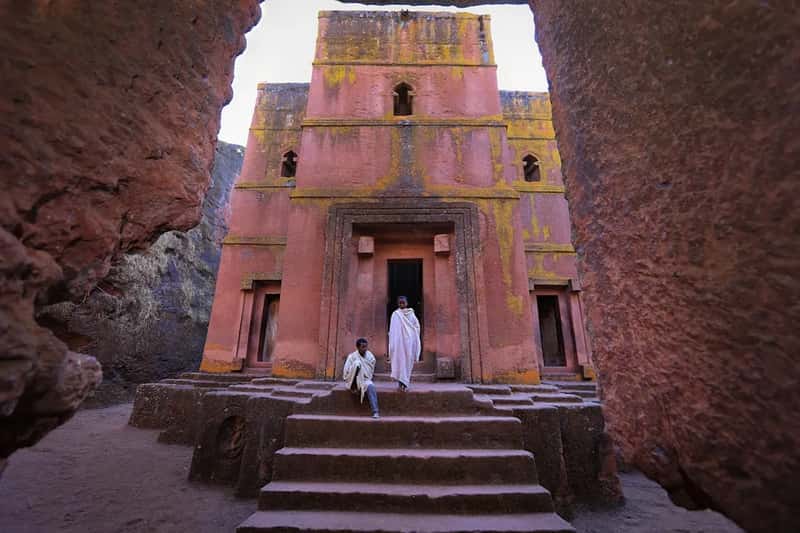
Lalibela belongs on any beauty ranking almost by default, since nowhere else on the continent has architecture quite like it. The 11 medieval monolithic cave churches of this 13th-century ‘New Jerusalem’ are situated in a mountainous region in the heart of Ethiopia near a traditional village with circular-shaped dwellings, and Lalibela remains a high place of Ethiopian Christianity, still today a place of pilgrimage and devotion. The site is known for its 11 rock-hewn churches, designated a UNESCO World Heritage site in 1978.
The scale of the achievement becomes clearer once you understand how the churches were made. These masterpieces were carved from single blocks of volcanic rock, connected by narrow tunnels, sunken courtyards, and symbolic passages representing ancient Jerusalem. The most photographed of them all, House of Giyorgis, is cruciform in shape and carved from a sloping rock terrace. The site is far from a static museum piece either, drawing over 100,000 pilgrims visiting this sacred center each year, which gives Lalibela a living, breathing atmosphere that few ancient sites anywhere in the world manage to keep.
6. Algiers, Algeria
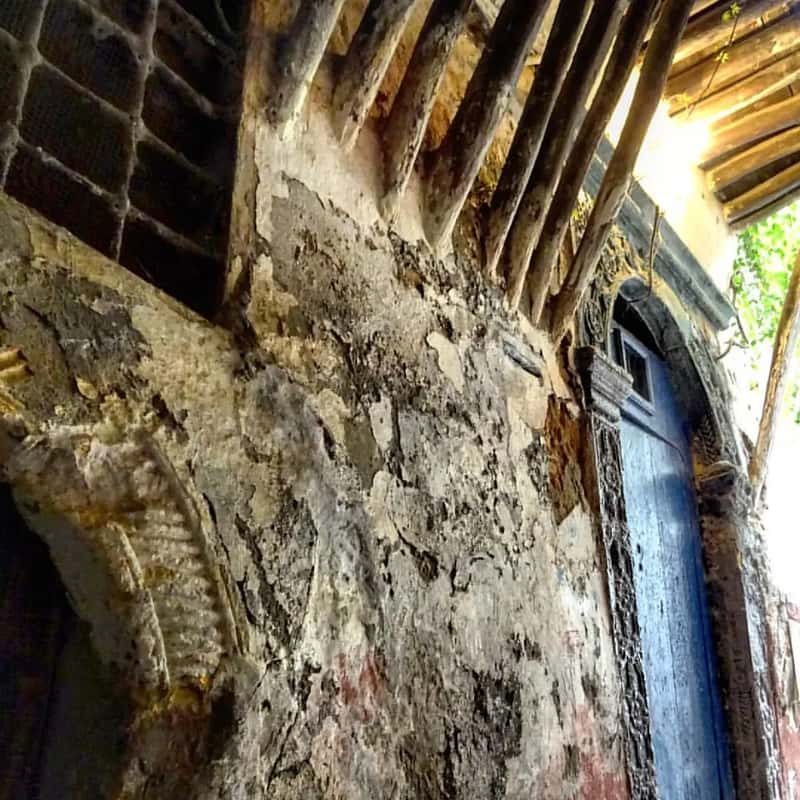
Algiers rarely makes mainstream travel lists, which is exactly why the travellers who do go tend to rave about it. Algiers rewards the patient traveler, and between the steep, thousand-year-old alleys of the Casbah and the Haussmann-style boulevards downtown, the Algerian capital displays a mix of Ottoman, French, and Berber influences. That layered history is visible everywhere you look, with forgotten palaces, centuries-old mosques, a basilica overlooking the bay, and a botanical garden cooled by sea spray scattered across the hillside city.
Part of Algiers’ appeal, oddly enough, comes from how few outsiders have discovered it yet. This is a major African city nearly devoid of international tourists, and that is precisely what makes it worth the trip. The Casbah’s tangled stairways and sea views give it a texture that feels closer to a living archive than a polished tourist attraction, and that rawness is a big part of what makes Algiers stand out on a continent full of increasingly curated destinations. For travellers chasing beauty without crowds, it may be the most rewarding entry on this whole list.