Giving up a car doesn’t have to mean giving up freedom. For a growing number of retirees, the dream retirement isn’t about a driveway and a garage, it’s about stepping outside the front door and catching a tram, train, or bus that actually shows up on time. Reliable transit means fewer worries about failing eyesight behind the wheel, lower monthly costs, and the simple joy of watching the countryside roll by from a train window instead of gripping a steering wheel.
The countries on this list have spent decades building transportation networks that work for everyone, including older residents who want to stay mobile and independent well into their eighties and beyond. Some offer eye-popping senior discounts, while others simply run trains and buses so frequently and reliably that owning a car starts to feel unnecessary. Either way, these seven destinations make life without a driver’s license feel less like a limitation and more like a lifestyle upgrade.
1. Japan

Japan consistently earns top marks for retirees seeking excellent transportation, and the numbers back it up. Crowned the best place for retirees to travel to, thanks to its museum discounts, public transport discounts, and a walkability score of five, Japan ranks as number one, with the highest instance of people aged 65 or over at 29.5%. That kind of demographic reality has shaped infrastructure decisions for generations, resulting in a rail network built with older passengers firmly in mind.
What really sets Japan apart isn’t a blanket senior discount on the famous bullet trains, since there are no JR Pass discounts for adults, and the price of a single Japan Rail Pass is fixed by the JR Group. Instead, it’s the everyday experience that wins retirees over. Local municipalities offer their own senior transit cards, such as Osaka’s option where if you charge cash on the Senior Pass IC card, you can use eligible trains and buses for 50 yen per ride. Combine that with famously punctual trains, spotless stations, and a culture that treats older passengers with genuine courtesy, and it’s easy to see why so many retirees consider Japan a transit paradise.
2. Switzerland
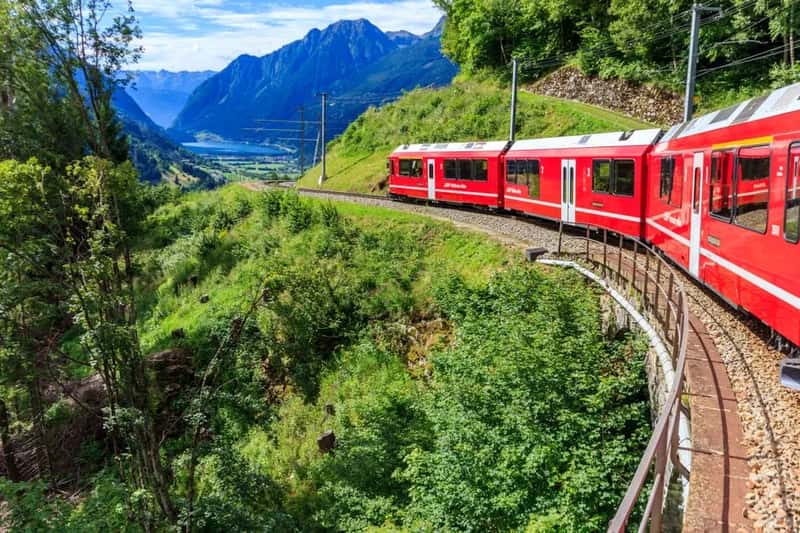
Switzerland rarely tops lists for affordability, but when it comes to moving around the country, few places compare. It’s expensive, but value and price aren’t the same thing, and for retirees who prioritize safety and cultural depth, Switzerland consistently comes out on top. The Swiss rail network links even remote alpine villages to major cities with a precision that has become something of a national trademark.
The Swiss Travel Pass sums up why this country works so well for older residents and visitors alike. It offers unlimited access by public train, bus, and boat to visit more than 41 cities, reach peaks of many mountains, and sail through beautiful lakes. While there is currently no discount for Swiss Travel Passes for seniors, with seniors falling under the standard adult category, the appeal lies in coverage and reliability rather than price cuts. For retirees who want to explore mountains, lakes, and cities without ever needing a car, Switzerland’s integrated network of trains, trams, buses, and boats is hard to beat.
3. Germany

Germany blends an aging population with a transit system built to serve it. Germany leads Europe with 23.7% of its population aged 65 or over. That demographic weight has translated into real policy, with generous discounts that make regular travel genuinely affordable for older residents.
The standout benefit is the BahnCard scheme, which offers up to 70% senior discount on public transport, a benefit that visitors can also take advantage of. Germany’s dense network of regional trains, U-Bahns, and trams means retirees can live comfortably in smaller cities without feeling cut off from larger hubs. Add in the country’s cultural riches, including 54 UNESCO World Heritage Sites, and Germany becomes a place where getting around is both cheap and genuinely enjoyable for retirees who like to explore.
4. The Netherlands

Few countries have refined urban and regional transit quite like the Netherlands. Recent performance data shows just how consistent the system has become, with the 2025 Monitor comparing GVB, RET, and HTM finding that the three municipal public-transport companies continue to focus on their sustainability transitions, with consistently high on-time performance across the board.
Riders themselves confirm the experience matches the statistics. A national satisfaction survey found Dutch travelers proud of a 7.8 rating overall, with regional buses and trams scoring even higher at 7.9. Amsterdam in particular has earned international recognition, with Time Out ranking Amsterdam as having one of the top 10 public transport systems in the world, beating the likes of London, Paris, New York and Zurich. For retirees who also enjoy cycling, the flat terrain and cycling culture add another layer of easy, healthy mobility that pairs perfectly with trains and trams.
5. Portugal

Portugal has become something of a magnet for retirees from across the globe, and the country’s transit network is a big part of the appeal. Portugal’s clean and efficient public transportation system spans the country, including trains, trams, ferries, metros, buses and funiculars. Lisbon’s charming yellow trams have become a symbol of the city, but the practical benefits go far beyond nostalgia.
Retirees also benefit from real cost savings baked into daily life. Expats frequently point to Portugal’s transit as a major draw, and it’s easy to understand why given that the country’s efficient public transport, mild weather, and walkable neighbourhoods consistently rank among the top reasons people choose to settle there. Whether it’s hopping a train from Lisbon to Porto or riding a funicular up one of Lisbon’s famous hills, Portugal makes car-free living feel effortless rather than restrictive.
6. Spain

Spain rounds out southern Europe’s strong showing on this list, offering retirees both affordability and quality when it comes to getting around. Public transit here is genuinely inexpensive, with reports noting that day-to-day transport is modest, with public transit excellent and cheap, including a bus or metro pass costing around 40 euros. That combination of low cost and high reliability is rare, and it’s a major reason Spain continues to attract retirees from across Europe and North America.
Smaller Spanish cities often deliver the best experience for retirees who want walkability paired with dependable transit. Places like Valencia and Granada offer metro and bus systems that are easy to navigate without a car, while larger hubs like Madrid and Barcelona provide extensive metro networks connecting neighborhoods across the city. Combined with Spain’s mild climate and relaxed pace of life, the transportation system becomes one more reason retirees find it easy to settle in for the long haul.
7. Austria

Austria may not always top retirement lists the way Portugal or Spain does, but its transit system deserves serious recognition. The country offers accessible discounts that benefit both residents and visitors, since public transport discounts of 50% are available to all visitors, not just seniors, through the Vorteilscard. That kind of universal accessibility means retirees don’t need to navigate complicated residency requirements just to save money on daily travel.
Vienna’s public transit network is often cited as one of Europe’s best, combining trams, buses, and an efficient U-Bahn system that makes the entire city easily reachable without a car. Beyond the capital, Austria’s rail lines connect smaller towns and alpine regions with the kind of reliability that lets retirees explore the country’s mountains and lakes on a whim. It’s a quieter contender than some of its neighbors, but for retirees who value both culture and convenience, Austria delivers on both fronts.