Get behind the wheel in Oslo and the odds of dying in a crash are almost vanishingly small. Do the same in Port-au-Prince or Manila’s outer provinces, and the math looks completely different. Road safety has never been evenly distributed around the globe, and the gap between the best and worst performers has actually widened in recent years as wealthy nations keep refining their systems while others struggle just to enforce basic traffic rules.
What separates a country with near-empty morgues from one where roads claim dozens of lives per 100,000 residents isn’t luck. It comes down to infrastructure design, enforcement culture, vehicle standards, and how quickly emergency crews can reach a crash site. Here’s a look at the nations currently setting the gold standard for road safety, followed by five where getting behind the wheel still carries serious risk.
1. Norway: The World’s Reigning Champion of Road Safety

Norway has held the top spot in global safe-driving rankings for years running, and the data backs up the reputation. For the fourth year in a row, Norway has been ranked the safest country in the world for driving. That consistency matters more than a single good year, since it points to a system that keeps working rather than one that got lucky.
The numbers are genuinely striking given the country’s terrain. Norway has the least amount of road traffic related deaths per 100,000 people, with an estimated 1.5 road traffic deaths per 100,000, a figure that has decreased by roughly 1.35 percent since the previous year’s data. Icy winters and mountainous stretches would seem to work against the country, yet strict licensing standards and heavy speeding fines have kept fatalities remarkably low.
2. Iceland: Rugged Landscape, Remarkably Low Death Toll

Iceland shares Norway’s harsh winter conditions but has managed similarly impressive results. International road safety comparisons consistently place the country among the top three performers worldwide, with fatality rates hovering close to two deaths per 100,000 people in recent annual reports. Among nations tracked in these comparisons, the lowest rates were found in Norway, Iceland, and Sweden.
What makes Iceland’s numbers notable is the trend line rather than any single year’s tally. Iceland’s fatality count fell from 9 deaths to 8 in one recent reporting period, a small absolute change that nonetheless reflects the kind of steady progress rarely seen in countries with larger populations. With a small population spread across a rugged landscape, the country still manages to keep its roads among the safest anywhere.
3. Sweden: Where “Vision Zero” Actually Delivers Results

Sweden pioneered the Vision Zero approach to road safety decades ago, built on the idea that no death or serious injury on the roads should be considered acceptable. The results speak for themselves in continental comparisons. Roads are safest in Sweden at 20 deaths per one million inhabitants, well below the EU average of 45 road deaths per million.
Seatbelt compliance and rigorous licensing have played a major role in the country’s success. Sweden recorded very few road deaths alongside a high seatbelt-wearing percentage, a combination that has kept the country near the very top of global rankings for years. Swedish authorities have also invested heavily in separating pedestrian and cyclist traffic from vehicle lanes, which reduces the kind of collisions that prove fatal in less carefully designed cities.
4. Switzerland: Strict Enforcement Meets Alpine Terrain

Switzerland manages to combine dramatic mountain roads with some of the lowest fatality rates in Europe, which isn’t an easy trick. Switzerland has the third-fewest road deaths per 100,000 people among countries tracked in recent safety comparisons. That’s a notable achievement for a country whose road network winds through some of the steepest terrain in Western Europe.
Enforcement culture appears to be the deciding factor here. Swiss driving laws are strictly enforced, with little tolerance for speeding and reckless driving, even as the country’s Alpine roads are known for winding mountain passes and spectacular views. The combination of tough penalties and a driving population that generally respects the rules keeps crash rates well below what the terrain alone might predict.
5. Denmark: Consistency Across a Small, Dense Nation
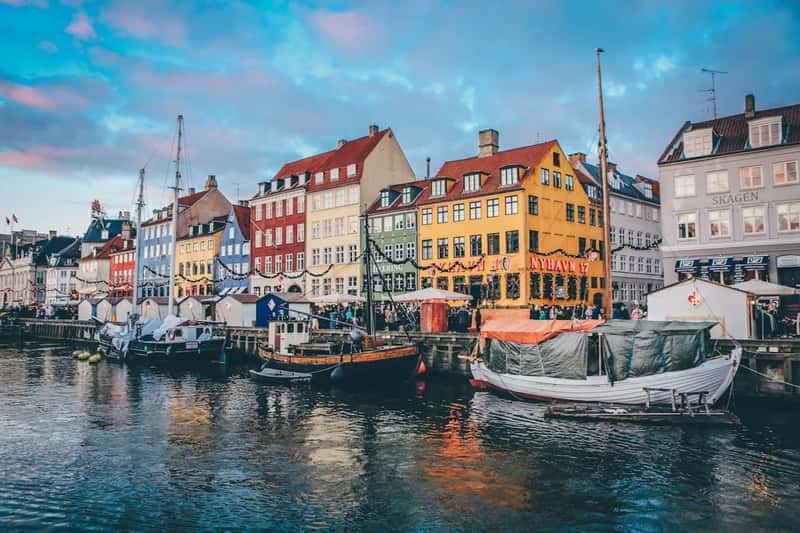
Denmark rarely makes headlines for road safety, mostly because its numbers have stayed quietly excellent for so long. Denmark reported 24 deaths per one million inhabitants in the most recent EU data, placing it just behind Sweden as one of the bloc’s safest countries to drive in. That translates to roughly 2.4 deaths per 100,000 residents, a figure most larger nations can only aspire to.
Denmark’s flat geography helps somewhat, but so does a driving culture built around cycling infrastructure and low urban speed limits. Dense bike lanes throughout Copenhagen and other cities have reduced the friction between cars, cyclists, and pedestrians that causes so many fatalities elsewhere. The country’s approach shows that safety gains often come from rethinking how street space gets allocated, not just from stricter car regulations alone.
6. Japan: A Steady Climb Toward the Top Tier

Japan has quietly improved its road safety standing over the past several years, moving up the rankings as fatality numbers continue to fall. Japan rose into the top five countries with the safest roads, climbing to third place compared to the previous year’s rankings. That kind of upward movement is rare among countries that already had relatively low fatality rates to begin with.
International comparisons of vehicle-kilometer death rates back up the trend. Countries with a lower fatality rate than the OECD median include the United Kingdom, Japan, and Germany. Japan’s dense but highly organized urban road networks, combined with strict licensing exams and widespread public transit use, have all contributed to keeping the country’s roads among the safest in Asia.
7. Singapore: Small Footprint, Tight Regulation

Singapore’s road safety record benefits from its compact size, but regulation deserves just as much credit. Some of the safest roads in the world can be found in Norway, Switzerland, Singapore, Sweden, and the UK, according to multiple international comparisons. For a densely populated city-state with heavy traffic volume, that’s a genuinely impressive outcome.
Vehicle ownership costs in Singapore are famously steep, which keeps overall car numbers in check and traffic more manageable than in comparably dense cities elsewhere. Strict enforcement of speed limits and an expansive public transportation network reduce the total exposure drivers face. The result is a road system that manages to stay orderly even during peak congestion hours.
8. Thailand: Motorcycles and a Persistent Fatality Crisis

Thailand sits at the opposite end of the spectrum, and the numbers there are sobering. Thailand holds the distinction of having one of the highest rates for road-related deaths globally, with figures around 36.2 deaths per 100,000 population in some recent estimates, making it one of the most dangerous countries for road traffic deaths despite not ranking near the top for total population. Earlier WHO figures placed the rate somewhat lower but still alarmingly high. According to the fifth Global Status Report on Road Safety, Thailand had a road traffic death rate of 25.4 per 100,000 population in 2021, remaining one of the highest in Asia and among upper-middle-income countries.
Motorcycles are at the heart of the problem. Motorcycles account for more than 70 percent of all deadly road accidents in Thailand, with Chiang Mai recording the highest number of road accidents, followed by Bangkok. Helmet non-compliance, weak enforcement outside major cities, and heavy mixing of motorcycles with car and truck traffic all compound the risk, particularly for younger riders who make up a disproportionate share of the victims.
9. Dominican Republic: The Deadliest Roads by the Numbers

By raw fatality rate, few places compare to the Dominican Republic. The Dominican Republic has the highest rate of any country tracked in recent comparisons, with nearly 67 road deaths per 100,000 people annually. That figure dwarfs even Thailand’s troubling numbers and places the country in a category of its own among nations with reasonably developed economies.
The causes appear to be structural rather than incidental. The combination of widespread disregard for traffic rules and severe congestion has contributed to almost 67 deaths per 100,000 people as a result of road accidents. The country’s grim statistic reflects deeper issues, including poor enforcement, chaotic traffic patterns, and a lack of emergency response infrastructure that can mean the difference between a survivable crash and a fatal one.
10. Libya: Instability Spills Onto the Roads

Libya’s road safety numbers reflect a country still dealing with the aftershocks of years of political instability. Libya has one of the highest road fatality rates in the world, at 34.0 deaths per 100,000 population. That places it consistently among the ten most dangerous countries in global comparisons.
Behavior behind the wheel appears to be a major driver of the toll. Rash driving, speeding, and a general lack of adherence to traffic regulations are cited as major contributing factors. In the second quarter of 2025 alone, 619 traffic deaths were recorded across the country, alongside nearly 1,800 injuries, underscoring just how persistent the crisis remains.
11. South Africa: A Festive Season That Turns Deadly Every Year

South Africa’s road safety problem has become almost cyclical, with fatalities spiking predictably during the December holiday period. South Africa consistently emerges as one of the world’s most dangerous places to drive, with 25.2 deaths per 100,000 people, placing it among the top three globally in some rankings. Seatbelt compliance remains a glaring weak spot. Only 31 percent of front seat occupants buckle up in South Africa, compared to Norway’s 97.8 percent compliance rate.
Recent holiday data illustrates how entrenched the problem is. The 2024/2025 festive season recorded 1,502 fatalities from 1,234 crashes between December 1, 2024, and January 20, 2025, marking a 5.3 percent increase in year-on-year fatalities. Alcohol plays an outsized role too. South Africa ranks sixth globally in alcohol consumption per drinker, with at least 27 percent of driver-error fatal crashes attributed to alcohol intoxication.
12. Haiti: Pedestrians and Motorcyclists Bear the Brunt

Haiti’s road fatality figures place it among the more dangerous countries in the Western Hemisphere, driven largely by a lack of enforcement infrastructure. With an estimated 31.3 deaths per 100,000 population as of 2021 data, Haiti has some of the third most dangerous streets tracked in recent comparisons. That rate sits well above the global average and reflects a road environment where basic traffic control is often inconsistent.
The victims tell their own story about where the danger concentrates. The majority of victims are pedestrians, cyclists, and motorcyclists, with many motorcyclists showing a disregard for traffic regulations, speeding and rarely wearing helmets. Combined with limited trauma care infrastructure in many parts of the country, even survivable crashes elsewhere often prove fatal in Haiti.
The gap between these two groups of countries isn’t just about wealth, though income levels certainly play a role in funding better roads, safer vehicles, and faster emergency response. It comes down to whether enforcement is consistent, whether infrastructure separates vulnerable road users from heavy traffic, and whether a culture of compliance actually takes hold rather than existing only on paper. Countries like Norway and Sweden didn’t get safe by accident. They built systems designed around the assumption that human error is inevitable, and then engineered the roads to survive it. Places still struggling with high fatality rates tend to share the opposite problem: rules exist, but enforcement and infrastructure haven’t caught up to match them.