Walk through an airport in Singapore and then one in Jakarta, and you’ll notice something odd: the signage looks almost identical, yet the lived reality couldn’t be more different. One country treats a lit cigarette almost like contraband. The other treats it as background noise, something so woven into daily life that half the men you pass on the street are likely smokers.
That gap has only widened over the past two years. Some governments have pushed through generational bans, outdoor smoking restrictions, and plain packaging mandates that would have seemed unthinkable a decade ago. Others still sell cigarettes on street corners with barely a warning label in sight. Here’s a tour of both extremes, based on the latest tobacco control data and legislation moving through parliaments right now.
Bhutan: the country that tried to ban tobacco outright

Bhutan remains the only nation on earth that has attempted to prohibit the sale, cultivation, and production of tobacco entirely. The sale of tobacco products is prohibited in Bhutan, and the law prohibits smoking in most indoor and outdoor public places and on public transport. The rule extends well beyond city streets, too, since the law specifically includes vegetable markets, playing fields, festivals and traditional celebrations in its list of smoke-free public places.
The policy hasn’t been perfectly airtight, though. The sales ban was lifted during the pandemic to curb black-market smuggling, and since then licensed outlets have sold tobacco under government oversight. Even so, importing tobacco still comes with steep penalties, since a 100 percent sales tax applies on tobacco imported from India, while both 100 percent sales tax and 100 percent customs duty apply on tobacco imported from anywhere else. Few countries anywhere have tried to legislate cigarettes out of existence this aggressively, and Bhutan’s experience is still cited as the reference case for what an outright ban actually looks like in practice.
Singapore: fines, jail time, and packaging stripped of all branding
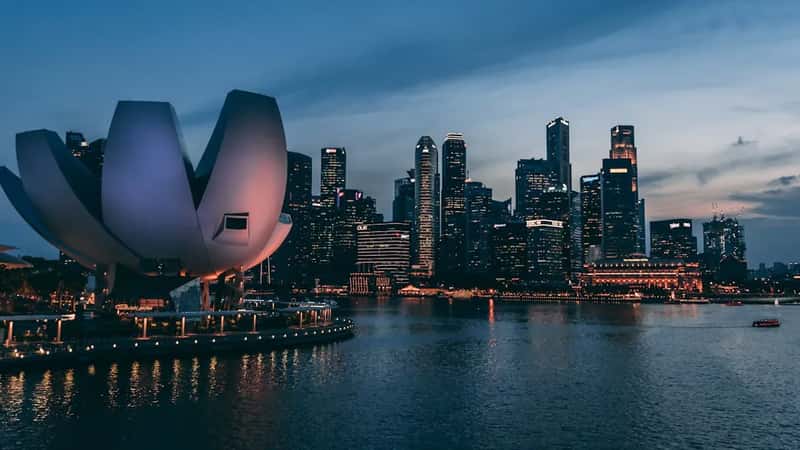
Singapore doesn’t just discourage smoking, it engineers the entire retail experience to make cigarettes as unappealing as possible. Plain packaging has been required for all tobacco products since July 1, 2020, with combined picture and textual health warnings covering 75 percent of the front and back of every pack. The legal purchasing age sits at 21, part of a wider push that also reshaped how tobacco products can even be labeled or marketed.
The city-state applies the same intensity to vaping, where enforcement has become genuinely severe rather than symbolic. Thailand and Singapore both impose fines and imprisonment for the mere possession of e-cigarettes. That single fact tends to surprise visitors more than anything else, since in most Western countries a vape pen barely registers as contraband. In Singapore, it can mean a criminal record.
Australia: the country that started the plain packaging movement

Australia didn’t just adopt tough smoking laws, it wrote the playbook that dozens of other governments later copied. Australia’s Tobacco Plain Packaging Act 2011 took effect in December 2012, requiring standardized packaging with no brand colours, logos, or imagery, combined with graphic health warnings covering 75 percent of the front and 90 percent of the back of every pack. No cigarette maker anywhere had faced a mandate quite that stripped-down before.
The results are visible in the numbers more than a decade later. Australia’s smoking rate now sits at just 12 percent, a benchmark the country reached through sustained media campaigns, high cigarette taxes, and plain packaging laws. That combination of pricing pressure and visual deterrence is now treated almost as a template by health ministries drafting new legislation elsewhere in the world.
Mexico: from café ashtrays to one of the world’s strictest regimes

Mexico’s transformation over the past few years has been dramatic. The country now has some of the strictest anti-smoking laws anywhere, including an outright ban in all public spaces such as beaches, parks and hotels. That reform extended what had previously been a workplace and hospitality-only ban into something covering nearly every corner of public life, indoors and outdoors alike.
Lawmakers didn’t stop at cigarettes, either. In December 2025, Mexico’s Senate approved reforms proposing prison sentences of up to eight years for offenses related to manufacturing, distributing, or selling vaping products, representing one of the strictest penalties targeting the vape supply chain anywhere. Personal use of vapes stays legal under the proposal, but anyone caught supplying the market faces consequences that few countries have matched.
New Zealand: plain packaging pioneer with an unfinished story

New Zealand built its reputation on genuinely aggressive tobacco control, and much of that infrastructure is still standing. Standardized packaging has been law for years, and the country layered on additional restrictions meant to push smoking rates toward negligible levels. Recent data shows the strategy has largely worked on paper, with the national smoking rate now under eleven percent.
Where the story gets complicated is the generational sales ban that once made global headlines. New Zealand had introduced legislation for a generational ban on tobacco sales, though the policy was later repealed when the government changed. Public health groups have pushed back hard, and the absence of a clear plan to reach the original Smokefree 2025 goal has created deep disquiet among advocates urging the government to demonstrate how it intends to realize that ambition. The plain packaging and advertising rules remain firmly in place even as the flagship generational policy sits in limbo.
United Kingdom: the newest member of the smoke-free generation club

Britain has just joined a very small group of countries attempting a generational tobacco ban, and it did so with unusually broad political support. The Tobacco and Vapes Bill received Royal Assent on April 29, 2026, creating a smoke-free generation by banning tobacco sales to anyone born on or after January 1, 2009, with the ban taking legal effect from January 1, 2027. The legislation cleared the Commons by an overwhelming margin back in late 2024, and its final passage through the House of Lords stretched well into 2026.
The law reaches beyond cigarette sales into how tobacco and vape products can be advertised, packaged, and used in public. It is now illegal to sell tobacco to anyone born on or after January 1, 2009, delivering what officials describe as a historic step toward a smoke-free UK. Not everyone is on board, and some politicians have publicly promised to unwind the policy if they gain power, but for now the UK stands alongside Bhutan as one of the only places attempting to phase out legal tobacco sales for an entire future generation rather than just restricting where people can light up.
France: the café culture nation tightens the leash

Few countries carry a smoking stereotype as strong as France, which makes its recent shift genuinely notable. Effective July 1, 2025, French regulation now prohibits smoking in open public spaces including parks, beaches, forests, and areas near schools, building on the earlier ban covering restaurants, bars, and public transportation. For a country long associated with cigarettes at sidewalk cafés, that’s a genuine cultural pivot.
The rollout hasn’t been absolute, though. Cafe terraces and some adult outdoor spaces remain exempt for now, even as public health advocates continue calling for further restrictions. Regulators are also targeting the vaping side of the market, with a crackdown on single-use electronic cigarettes and an aim to create tobacco-free zones nationwide. Whether the outdoor ban survives pressure to loosen it is one of the more interesting tobacco policy questions in Europe right now.
Indonesia: where cigarette advertising still lines the streets
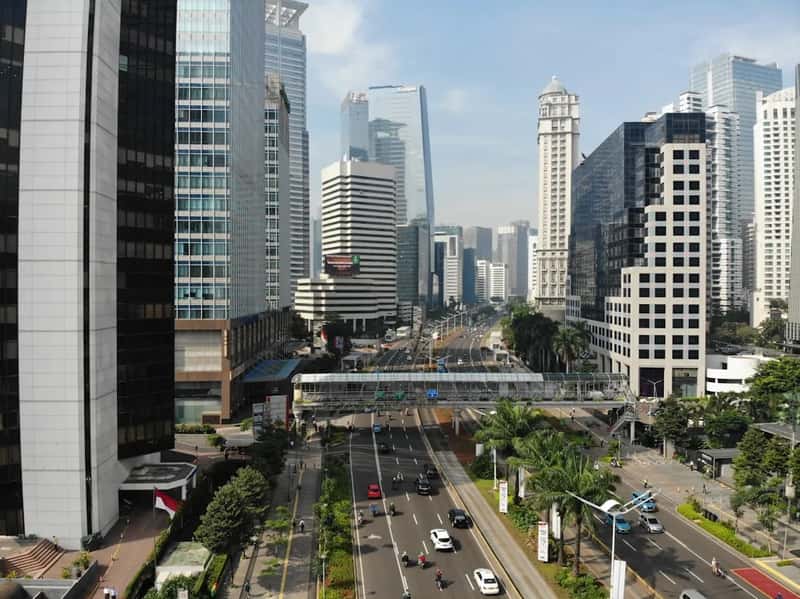
Indonesia sits at the opposite end of the spectrum from Bhutan or Singapore, and the numbers make that obvious. WHO projections put the share of Indonesians aged 15 and over who smoke or use tobacco at 38.7 percent in 2025, making it the fifth-highest country in the world by that measure. Among men specifically, the rate climbs even higher, with roughly three out of every four adult males smoking regularly.
What keeps cigarettes so visible isn’t a lack of rules exactly, it’s how loosely those rules get enforced. Cigarettes can be purchased online, importation for trade is permitted with a license, and while advertising is regulated, not all forms of it are banned. Combine that with Indonesia’s position as the world’s fourth-largest tobacco consumer, driven by a population of over 270 million people, and you get a market where quitting campaigns compete against a genuinely enormous and well-entrenched industry.
China: the biggest smoking market on the planet by sheer numbers

China’s smoking rate looks moderate on paper compared to Indonesia or Myanmar, but its sheer population size changes the math entirely. With over 1.4 billion people, China’s smoking population exceeds 300 million individuals, making it the world’s largest tobacco consumer in absolute numbers despite moderate percentage rates. No other country comes close to that raw total, and much of the industry remains state-linked, which complicates efforts to push through the kind of aggressive pricing and packaging reforms seen in Australia or the UK.
The gender split tells its own story about who’s actually lighting up. The gap between male and female smoking rates is stark in China, at 44.4 percent versus 1.4 percent, reflecting long-standing cultural norms and targeted marketing practices. Cigarettes still function as a social currency in many business and family settings across the country, which is part of why cutting consumption has proven so much harder than simply passing a law.
Serbia: one of Europe’s highest smoking rates despite EU pressure

Serbia consistently ranks among the highest-smoking nations in Europe, and recent WHO figures confirm the pattern hasn’t shifted much. Serbia’s adult tobacco-use prevalence stands at 39.0 percent, placing it third globally behind only Nauru and Myanmar. For a country surrounded by European Union member states pushing stricter tobacco control, that figure stands out.
Part of the explanation lies in enforcement gaps rather than a lack of legislation on paper. Serbia continues to struggle with reducing tobacco use despite EU-level campaigns, reflecting a strong smoking culture and difficulty implementing consistent bans and taxation policies. Cafés and bars across Belgrade still carry a smoky atmosphere that’s become rare in Western Europe, a reminder that regional proximity to reform-minded neighbors doesn’t automatically translate into the same outcomes.
Bulgaria: cheap cigarettes and a stubborn smoking culture

Bulgaria sits right behind Serbia on the global prevalence list, and the two countries share more than just geography. Bulgaria’s adult tobacco-use prevalence reached 38.8 percent according to the most recent WHO estimates, placing it fourth worldwide. That’s a remarkably high figure for an EU member state, especially one bound by the bloc’s tobacco advertising and packaging directives.
Affordability plays a major role here, since Bulgarian cigarette prices remain among the lowest in the European Union, keeping the habit accessible even during periods of economic strain. Cultural acceptance also runs deep, with smoking still common in cafés, workplaces, and social gatherings in ways that have largely faded elsewhere on the continent. Public health campaigns exist, but they’ve struggled to compete with decades of normalized habit and a retail environment where cigarettes remain genuinely cheap.
Myanmar: aggressive marketing meets low enforcement

Myanmar’s smoking rate ranks second globally, trailing only the small Pacific nation of Nauru. Myanmar’s adult tobacco-use prevalence sits at 42.3 percent, according to the WHO’s 2025 modeled estimates. That figure includes both smoked and smokeless tobacco, which matters in a country where betel quid and other chewed tobacco products remain widely used alongside cigarettes.
Analysts point to a familiar combination of factors driving the number so high. Myanmar and Indonesia both report very high figures driven by low tobacco prices, aggressive marketing, and widespread social acceptance of smoking. With limited government capacity to enforce existing tobacco control rules and ongoing political instability complicating public health priorities, meaningful reform has struggled to gain traction compared to neighboring countries in the region.
The contrast between these two groups says something bigger than tobacco policy alone. Countries like Bhutan, Singapore, and now the UK are betting that aggressive, sometimes uncomfortable restrictions actually save lives over the long run, and early data from Australia and New Zealand suggests that bet has largely paid off. Places like Indonesia, Serbia, and Myanmar show what happens when affordability, marketing, and cultural habit outpace regulation, even when the underlying health risks are identical everywhere. The gap between these two worlds isn’t closing quickly, but it isn’t static either, and the next few years of legislation will likely decide which direction the balance tips.