There’s a strange kind of economic silence that happens when paychecks stop moving. Prices climb, rent goes up, groceries cost more every month, yet the number on the salary slip stays put year after year. It’s not a dramatic collapse, just a slow, quiet freeze that people eventually stop noticing because it becomes the new normal.
Across a handful of countries, this pattern has held for ten years or longer, sometimes for a generation. The reasons differ from place to place, tangled up in currency policy, labor law, demographics, and plain economic bad luck, but the outcome looks remarkably similar wherever it happens.
United States: A federal minimum wage stuck since 2009

The federal minimum wage in the United States has remained unchanged since July 2009, and by 2026 that means roughly seventeen years without a single adjustment at the national level. The federal minimum wage has not changed in the past 16 years.[1] Inflation hasn’t paused during that time, so the real purchasing power of that wage floor has quietly eroded even though the number on paper looks identical.
What makes the American case unusual is the patchwork that’s grown up around this stagnation. In 2010, 15 states (including Washington, D.C.) had minimum wage rates that exceeded the federal minimum. In 2021, 30 states do.[2] Some states have pushed well past the federal floor, yet a large share of the workforce, particularly in the South, still lives under a wage that hasn’t budged since the Obama administration’s early years.
Greece: Wages still below pre crisis levels

Greece offers one of the starkest examples of long-term wage stagnation in Europe. According to research from the Greek labor institute INE-GSEE, in 2025, the average annual nominal wage stood at €18,134, a 3.9% rise from 2024 and a 19.7% increase since 2019, yet it remains 12% below the 2009 benchmark, remarkably still slightly lower than the average wage recorded in 2012, the year Greece hit the deepest point of its recession.[3]
The picture gets worse once inflation enters the equation. In 2025, the average real annual wage reached €14,998, up just 1.3% from 2024, but it remains 31% below 2009 levels and virtually unchanged from 2019.[4] A separate OECD analysis found that Greek real wages in PPP terms have fallen 21.2 percent since 2010, when the country’s debt crisis erupted[5], meaning workers there have effectively lost more than a decade and a half of income growth.
Italy: The only EU country with falling real wages since 1990

Italy holds a distinction no other European Union member wants. According to OECD data, Italy is the only EU country where real wages have fallen since 1990.[6] That’s not a ten year story, it’s closer to thirty five years of wages moving sideways or backward while most of the continent moved forward.
The more recent numbers confirm the pattern hasn’t broken. Italian real wages remain 6.1% below their level in the first quarter of 2021, the widest such gap among major OECD economies.[7] An OECD economist summed up the mechanism plainly, noting that inflation in Italy is running at levels similar to other countries, but nominal wages are lower, so as soon as inflation rises, wages end up underwater.[7] Italy also has no statutory minimum wage, leaving pay floors to sector level bargaining that has struggled to keep pace.
Japan: Three decades of flat pay despite steady prices
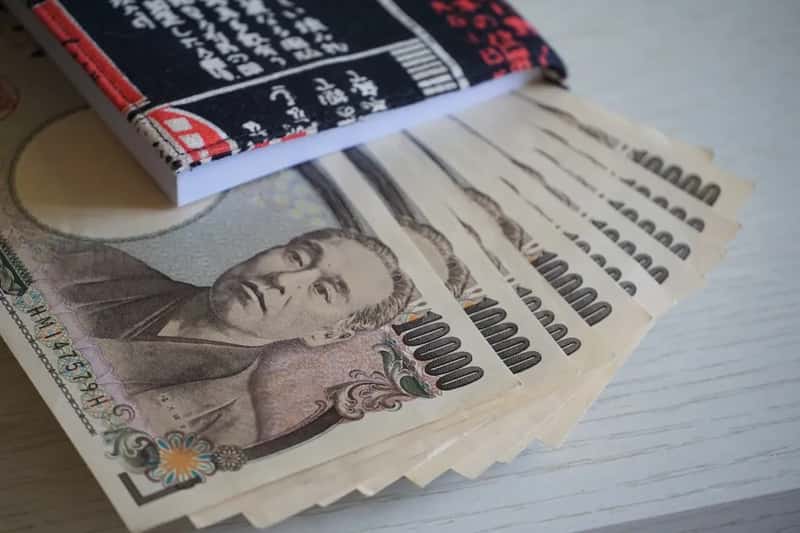
Japan’s wage story is less about crisis and more about a long, gradual plateau. Stagnant real wages have plagued high-income nations like Japan, Italy and Spain for the past three decades.[8] The country that once produced some of the world’s most competitive electronics firms has seen its workers’ paychecks barely move since the early 1990s.
The comparison with peer economies is telling. Japan did have a comparable average wage with Canada, Australia or Germany in 1990, but this is not the case anymore 30 years later as the latter countries have seen real wages increase between 34 and 40 percent, while Japan has not.[8] Analysts point to years of low economic growth, low inflation and deflation, a business culture that has been called adverse to change and a growing low-wage and short-term contract sector[8] as the underlying causes.
Mexico: Low wages that barely moved for a generation
Mexico’s situation combines two problems at once: wages that are both low by international standards and essentially frozen in real terms. OECD real wage statistics show Mexico had the lowest average annual full-time wage before tax out of the 36 countries surveyed at just $16,429 in 2021, calculated at purchasing power parity.[8] That’s not a temporary dip, it’s the result of decades of minimal progress.
The long view makes the stagnation even clearer. The average wage in Mexico increased by only 6 percent since 1990 after adjusting for inflation.[8] Over more than three decades, that works out to barely any meaningful gain at all, especially once compared against the wage growth seen in most other OECD member states during the same window.
United Kingdom: The decade earnings went nowhere
Britain’s wage freeze became one of the most cited examples of post financial crisis stagnation. According to figures from the Office for National Statistics, workers in the UK were earning no more than they were 10 years earlier once adjusted for inflation, with pay levels peaking in 2009 and falling by 3% in real terms between 2009 and 2012, leaving average earnings roughly the same as they had been back in 2003.[9]
The numbers behind that trend were striking at the time. Average pay in 2009 stood at £12.25 an hour, but after adjusting for inflation that fell to £11.92 in 2010 and £11.41 in 2011.[9] Economists at the Resolution Foundation warned that without a return to steady real earnings growth, living standards would keep drifting, and for much of the following decade that warning largely held true.
Spain: A long stretch without meaningful pay growth

Spain rounds out the list of high income economies where paychecks have failed to keep pace with the cost of living for an extended stretch. It’s grouped alongside Japan and Italy in OECD level comparisons as one of the nations where stagnant real wages, wages that are not increasing after inflation, have plagued high-income nations like Japan, Italy and Spain.[10] That’s a three decade pattern, not a brief post pandemic blip.
Spain’s labor market has also carried structural features that make wage stagnation stickier than in some neighboring economies, including a large share of temporary contracts and youth unemployment rates that have stayed elevated for years. Even as the country’s tourism and services sectors have expanded, average pay for many workers has struggled to translate that growth into durable, inflation beating raises. The gap between Spain’s economic output and its median household income has remained a persistent talking point among European labor economists.
What ties these seven economies together

The countries on this list don’t share a single cause. The United States has a politically frozen federal minimum wage, Greece is still digging out from a sovereign debt crisis that started in 2009, Italy has a bargaining system with no statutory floor, and Japan has spent decades battling deflation rather than inflation.
What does connect them is a mismatch between productivity, policy, and pay. In each case, either wage setting mechanisms failed to adjust, inflation quietly outran nominal raises, or a crisis knocked earnings down to a level workers have never fully climbed back from. The result, no matter the underlying cause, is the same: a decade or more where the number on the paycheck simply stopped telling the story of the economy around it.