Every year, a handful of nations quietly reset the bar for what a good life actually looks like. It’s rarely about flashy GDP numbers alone. Instead, it comes down to smaller, more personal things: whether a hospital visit bankrupts a family, whether a train runs on time, whether people trust their neighbors and their government in equal measure.
In 2026, several major indices, from U.S. News & World Report to Numbeo and The Wharton School’s Best Countries survey, point to a familiar but evolving group of countries leading the pack. Some names have held their spots for years. Others have climbed thanks to policy shifts, safety improvements, or simple consistency. Here is a closer look at nine nations currently setting the standard.
Switzerland

Switzerland enters 2026 as the country to beat, at least according to U.S. News & World Report’s newly overhauled Best Countries methodology. Switzerland was propelled to the top spot by ranking at or near the top in categories including Economic Development, Governance, and Opportunity.[1] That is not a fluke driven by one strong sector. It reflects a country that performs consistently across nearly every measure that matters to daily life.
Part of the appeal is simply visual. Switzerland, home to the famed Landwasser Viaduct in the Swiss Alps, lands at No. 1 overall in the 2026 U.S. News Best Countries rankings, marking the second consecutive year it has topped the list.[2] Life there is not cheap. The Swiss lifestyle doesn’t come cheap, and daily expenses can be eye-wateringly high in major cities like Zurich and Geneva, though many consider it a small price for access to breathtaking scenery and outdoor adventures.[3] Life expectancy backs up the reputation for good healthcare too, with Switzerland among the countries where residents typically live into their mid eighties.
Denmark
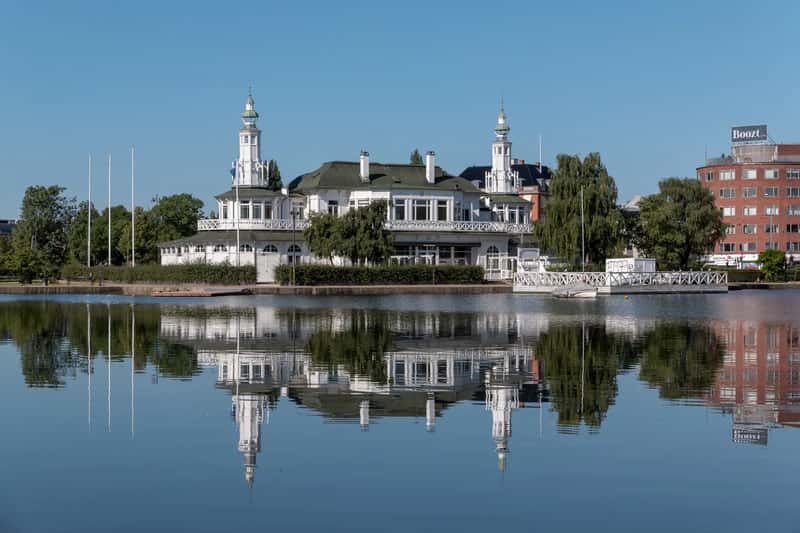
Denmark shows up near the top of practically every ranking system in 2026, and that consistency is the real story. Denmark placed second overall in the revamped U.S. News Best Countries report.[1] It also leads in areas that rarely make headlines but shape everyday life enormously. Denmark ranked first in the Civic Health category, reflecting strong institutional trust and community engagement.[1]
The country’s reputation for safety keeps reinforcing itself across separate surveys. Iceland, Finland, and Denmark consistently rank among the safest countries in the world.[4] On the cost of living side, Numbeo’s data has Denmark sitting near the very top of its Quality of Life Index as well, trailing only a small handful of Western European peers. Combine that safety record with reliable public services and a functioning welfare state, and it becomes easier to understand why Denmark rarely slips far from the top three in any serious global comparison.
Netherlands
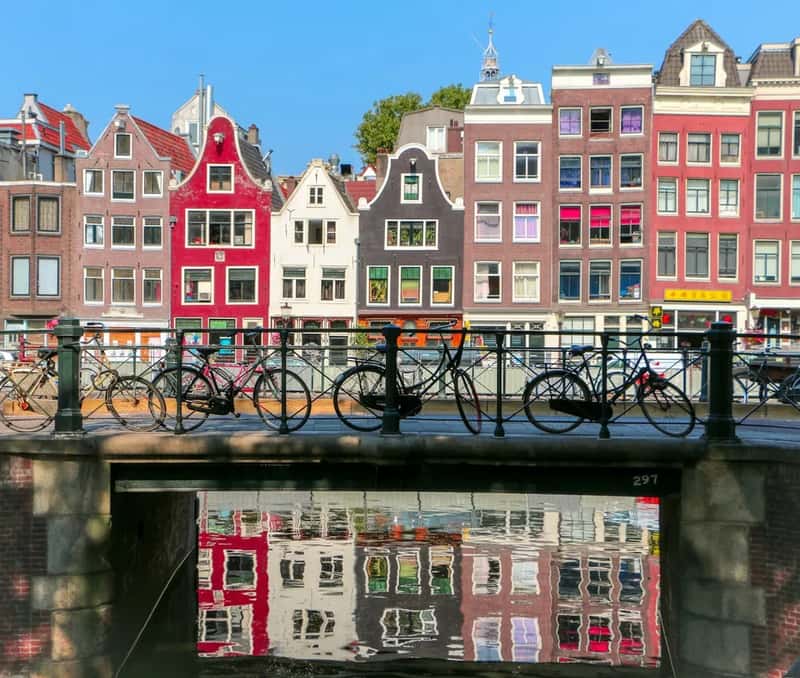
The Netherlands has had a particularly strong run through 2025 and into 2026. The Numbeo ranking shows a clear reshuffle among the leaders, with the Netherlands moving into first place, overtaking Luxembourg, which dropped to third.[4] That shift wasn’t cosmetic. One of the most dramatic shifts in 2026 involved the Netherlands’ rise in global safety rankings, with Berkshire Hathaway Travel Protection naming it the number one safest country for travelers, a jump from 14th place in 2025.[4]
Daily life there tends to be practical rather than glamorous, which seems to be exactly the point. Life in the Netherlands is defined by balance, with decent salaries and strong purchasing power giving residents financial stability while well-planned cities make everyday life easier.[3] The cycling culture is almost a symbol of that mindset. The country is also famous for its cycling culture, with more than 35,000 kilometers of dedicated bike paths, perfect for stress-free commutes.[3] Add in strong English proficiency for newcomers, and it’s clear why so many expats and remote workers have made the country their first stop in Europe.
Sweden
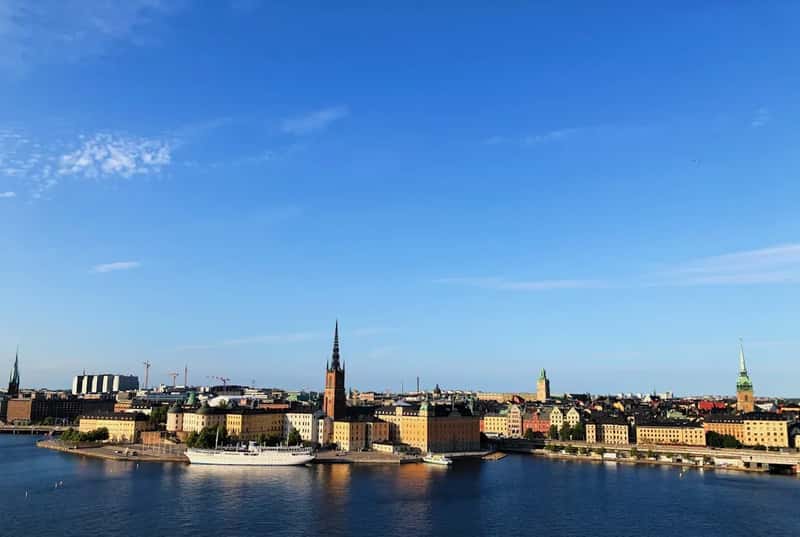
Sweden currently tops the perception-based rankings that ask people directly where they believe life is best. Sweden ranks first in the 2026 index, followed closely by Denmark and Canada, according to The Wharton School’s Best Countries Index, which is based on perceptions from more than 15,000 adults across 33 countries.[5] That is a notable distinction from the more data-driven rankings, since it measures reputation as much as raw statistics.
Sweden’s economic backbone helps explain why that reputation holds up under scrutiny. The country has built a strong social system and a well-structured economy with companies like carmaker Volvo and housewares powerhouse IKEA.[6] It also placed third overall in the newer U.S. News framework, with particularly strong marks in the Opportunity category. Between generous parental leave, accessible healthcare, and a functioning safety net, Sweden continues to be a reference point for what a modern welfare state can deliver without collapsing under its own cost.
Norway

Norway rarely dominates headlines the way Sweden or Switzerland do, yet it consistently lands inside the top tier of nearly every list. Norway placed sixth overall in the 2026 U.S. News Best Countries rankings.[1] Its strongest showing came in health-related measures. In the Health category specifically, Iceland took first place followed closely by Norway in second.[1]
Norway’s oil-funded sovereign wealth reserves have long given it room to invest heavily in public services without the fiscal strain many other nations face. That financial cushion shows up in everyday quality markers, from parental leave policies to clean, well-maintained public infrastructure. Iceland, Norway, and Finland rank high not only for wealth but for secure, clean, and healthy living conditions.[4] It is a quieter kind of success than Switzerland’s polish or Sweden’s brand recognition, but the underlying numbers are just as strong.
Finland

Finland’s calling card is not any single index but a streak that has become almost impossible to ignore. Finland has topped the World Happiness Report for nine consecutive years, while Denmark, Norway, and Sweden consistently rank among the world’s leaders for well-being, social trust, and life satisfaction.[5] That kind of longevity suggests something structural rather than a one-year fluke.
Within the specific quality of life subcategory tracked by U.S. News, Finland actually leads the entire group. Finland takes the No. 1 spot, followed by Iceland, Norway and Denmark, with Sweden rounding out the top five.[2] Locals often describe the appeal in fairly modest terms. In Finland, quality of life is closely tied to nature, simplicity, and a strong sense of social trust, with the country consistently ranking among the happiest nations thanks to friendly communities and top-quality public services.[3] The trade-off, as anyone who has spent a winter there will mention, is the long stretch of northern darkness that tests even the most resilient residents.
Iceland

Iceland punches well above its population size in these rankings, and 2026 is no exception. In the Health category of the U.S. News Best Countries rankings, Iceland took the top spot.[1] It repeated that feat elsewhere too. Iceland also ranked first in the Opportunity category for 2026.[1]
What makes Iceland’s case interesting is how it manages to combine remoteness with genuine livability. Iceland offers safe, nature-rich environments with moderate costs, appealing to lifestyle-focused expats.[4] With a population under 400,000, the country avoids many of the strains that larger nations face when trying to deliver consistent public services. Low crime, clean air, and geothermal energy security round out a profile that keeps Iceland near the top of health and safety rankings year after year.
Luxembourg

Luxembourg is small enough that it rarely gets the attention its numbers deserve. Luxembourg has the highest Quality of Life Index score globally at 218.20, with the Netherlands and Denmark following close behind.[7] That figure, calculated by Numbeo, blends purchasing power, safety, healthcare, and cost of living into a single composite measure.
Wealth is really the engine behind the country’s strong showing. Countries with strong purchasing power, such as Luxembourg and Switzerland, balance higher costs with higher incomes, significantly improving overall quality of life.[4] Luxembourg also secured a top ten finish in the broader U.S. News overall rankings for 2026, buoyed by a small but highly efficient economy built around finance and EU institutions. For residents, that translates into short commutes, strong wages, and public services that punch well above the country’s modest geographic footprint.
Canada

Canada stands out on this list as the strongest performer from outside Europe, and it holds that position across more than one major index. Sweden ranks first in the 2026 index, followed closely by Denmark and Canada.[5] Its regional standing is even clearer when the comparison narrows. Canada is the highest-ranked country in the Americas, while the U.S. ranks below every other G7 nation.[8]
That gap between Canada and its southern neighbor has become one of the more talked about details in this year’s rankings. In fact, only two non-European countries, Canada and Australia, made the top 10 best countries for quality of life.[6] Universal healthcare, comparatively low income inequality, and generally high levels of institutional trust all help explain why Canada keeps earning that distinction, even as it faces its own affordability pressures in major cities like Toronto and Vancouver.
What ties these countries together

Looking across all nine nations, a pattern emerges that goes beyond wealth alone. Economic strength alone is no longer enough to shape perceptions of quality of life. Instead, countries with trusted institutions, accessible healthcare, public safety, and strong social support continue to set the global benchmark.[5] That single idea explains why smaller nations like Iceland and Luxembourg can outperform far larger economies on these measures.
Geography plays a role too, though not an exclusive one. Europe dominates the rankings overall, with 20 of the top 30 countries coming from the region.[5] Canada’s presence on this list is a reminder that the formula isn’t strictly a European one. It simply requires the same underlying ingredients wherever they show up: dependable institutions, functioning healthcare, and a society where people generally feel they can trust the systems around them.