
Most people picture a crocodile doing exactly two things: lurking in the water and sunning itself on a muddy bank. So when researchers confirmed that certain West African crocodiles actually climb trees – scaling trunks and branches several meters off the ground – it stopped the scientific community cold. This wasn’t a fluke observation. It was a survival trick millions of years in the making, and most of us had no idea it existed.
But here’s the gut-punch twist: the very crocodile most associated with this astonishing behavior is now in a race against extinction that most Americans know absolutely nothing about. Fewer than 500 adult West African slender-snouted crocodiles are believed to remain in the wild. A creature ancient enough to have outlasted the dinosaurs may not outlast the next few decades – and the reason why is stranger and sadder than you’d expect.
The Crocodile That Actually Climbs – and Why It Does It
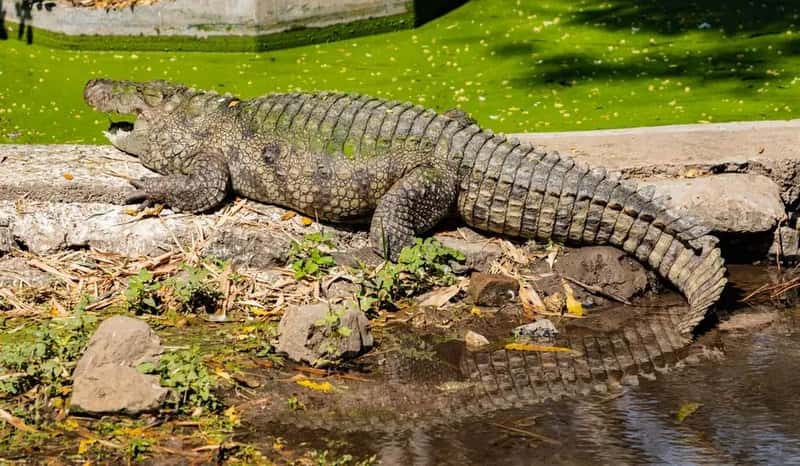
Researchers observing crocodile species across Australia, Africa, and North America found that four species climbed trees, typically above water. Smaller crocodiles could climb higher and further than larger ones, with some observed reaching four meters high and five meters out along a branch. That’s a genuinely sophisticated physical feat for an animal with no specialized climbing anatomy – no curved claws, no gripping tail, nothing you’d expect from a climber.
The reason isn’t what you’d guess. Researchers concluded the behavior is driven by two things: thermoregulation and habitat surveillance. In the deep forest rivers of West Africa, where dense canopy blocks sunlight from ever reaching the riverbanks, climbing into the trees isn’t a curiosity – it’s a survival strategy. People who live near these rivers had known about it for decades. Scientists, it turns out, were among the last to find out.
Fast Facts
- A 2014 study published in Herpetology Notes was the first to formally document crocodile tree-climbing across three continents
- Four crocodile species are known to climb – observed in Australia, Africa, and North America
- Crocodiles have been recorded as high as 4 meters up a trunk and 5 meters out along a branch
- When approached by observers, tree-climbing crocs consistently jumped or fell into the water below
- No specialized climbing anatomy exists – this is raw adaptability at work
Two Species That Science Almost Missed Entirely
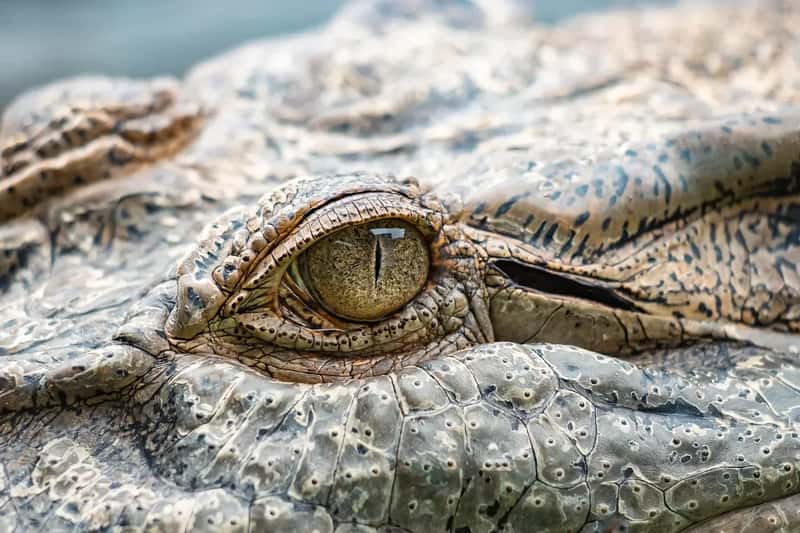
For most of modern science’s history, the slender-snouted crocodile was treated as a single species spread across West and Central Africa. Then DNA analysis changed everything. The West African and Central African populations turned out to be two entirely separate species – so distinct that they had diverged 6 to 8 million years ago, roughly the same window in which humans and chimpanzees last shared a common ancestor. The Central African species was formally named Mecistops leptorhynchus, becoming the first new living crocodile species described in more than 80 years.
That discovery, as thrilling as it was scientifically, carried an immediate and brutal consequence. As two separate species, both populations are smaller in number and at greater risk of extinction than anyone had previously calculated. Experts estimate only about 10 percent of all slender-snouted crocodiles occur in West Africa. In one stroke, what looked like a manageable population became a critically small one. The African dwarf and slender-snouted crocodiles are now considered the least-known crocodilians in the world – and the clock is running.
A Disappearing Act Across Multiple Countries
The slender-snouted crocodile once ranged across a sweeping stretch of West Africa – Angola, Benin, Cameroon, Côte d’Ivoire, Ghana, Guinea, Liberia, Nigeria, Sierra Leone, Togo, and beyond. But the species appears to have been entirely wiped out in several of those countries where it was formerly present. That’s not population decline. That’s local extinction, country by country, with almost no public attention.
The forests where these crocodiles live and climb are being cleared at a rate that outpaces conservation action in many places. Unsustainable fishing, direct hunting for meat and hides, deforestation, urbanization, and habitat fragmentation caused by dams are all pressing in at once. The cruel irony is that the same remote, densely forested rivers that make this crocodile so hard to study are now being stripped away faster than researchers can document what’s being lost.
At a Glance: Threats Stacking Up
- Hunting: Taken for meat and hides in unregulated bush meat markets
- Bycatch: Accidentally drowned in fishing nets set in their forest rivers
- Deforestation: Logging and land clearing eliminate both habitat and prey
- Dams: Fragment river corridors, cutting off isolated populations from each other
- Shyness: Abandons nesting sites and territories at the first sign of human disturbance
The Dwarf Crocodile’s Quieter Crisis
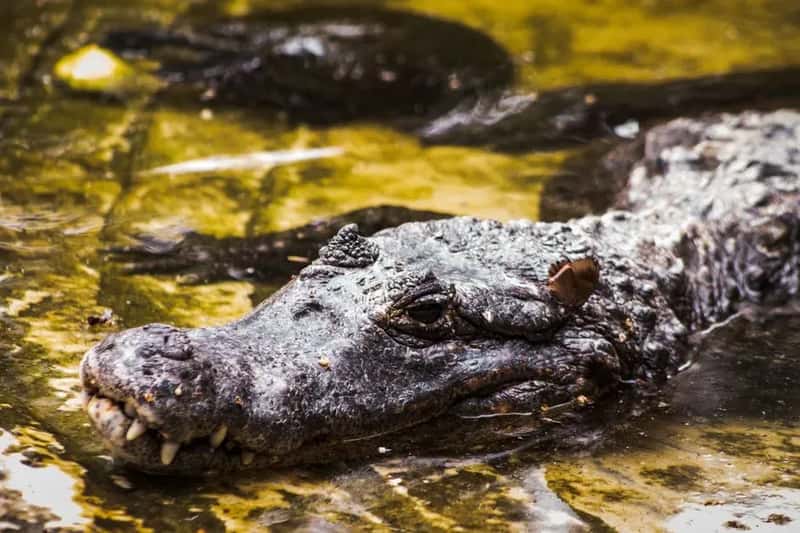
The slender-snouted crocodile isn’t the only West African species in trouble. The West African dwarf crocodile – the world’s smallest crocodile, topping out around 1.8 meters – is currently listed as Vulnerable on the IUCN Red List, driven by increasing habitat loss from logging and poaching. Small size, it turns out, is not an advantage when humans are involved.
The dwarf crocodile’s compact body and non-aggressive nature make it easy to capture and transport, which is exactly why it has become the most heavily hunted crocodile in the region – taken unsustainably for the unregulated bush meat trade. Both the dwarf and slender-snouted species have suffered large-scale local and regional extinctions over the past century. Two species, two crises, and most of the world isn’t paying attention to either one.
Quick Compare: Two Species in Trouble
| Slender-Snouted | Dwarf Crocodile | |
|---|---|---|
| Max length | Up to 4.5 m (15 ft) | Up to 1.8 m (5.9 ft) |
| IUCN status | Critically Endangered | Vulnerable |
| Est. wild adults | Fewer than 500 | 25,000–100,000 |
| Biggest threat | Habitat loss + bycatch | Bush meat hunting |
The Fishing Net Problem Nobody Talks About
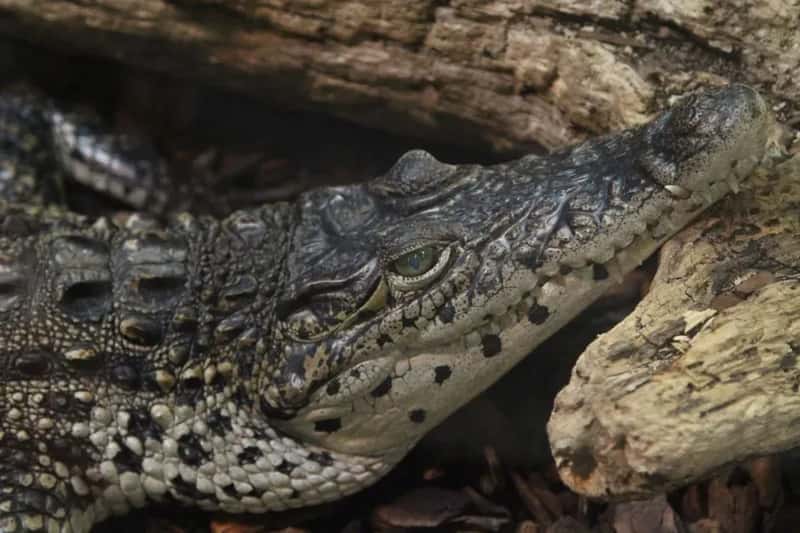
Hunting gets most of the headlines, but there’s another threat doing quiet, persistent damage. When fishermen set nets in the same forested rivers where slender-snouted crocodiles hunt, the crocodiles become accidental casualties – they drown. Overfishing depletes their prey base at the same time, pushing crocodiles into riskier territory just to find food. Every pressure compounds the next, and none of them make the news.
Their slender snouts evolved for precision – acting like tweezers to extract prey from holes and crevices along the water’s edge. That specialized anatomy, refined over millions of years, now works against them, because the specific prey and habitat niches they depend on are vanishing fast. The slender-snouted crocodile is described as a very shy species, rarely interacting with people, camouflaging itself in densely vegetated water. It’s being killed by forces it never developed any instinct to recognize or flee.
The Scientists Racing to Save What’s Left
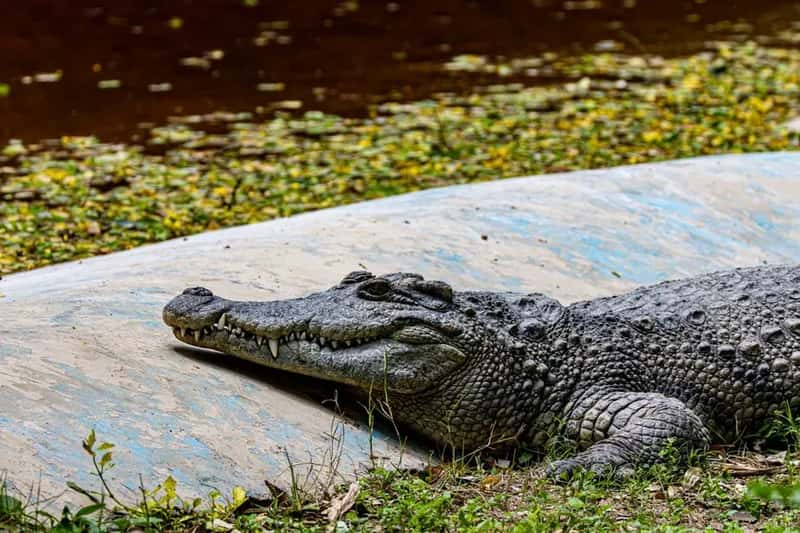
Conservation efforts have intensified since the early 2010s, with a primary initiative called Project Mecistops established to coordinate action across West Africa. The project works in collaboration with the Abidjan National Zoo in Côte d’Ivoire, which now houses the largest captive population of the critically endangered West African slender-snouted crocodile – making it ground zero for the fight to pull this species back from the edge.
The goal is scientific research, capacity building, and support of West African national partners – with a concrete target of reintroducing 100 percent of crocodiles captive-produced at the Abidjan National Zoo once they reach the optimal release size of 1 to 1.5 meters. The logistics are enormous. Suitable release sites must be identified and protected, local communities must be engaged, and the political will of multiple governments must hold. But the urgency is real: there may not be a second chance to get this right.
Worth Knowing: The Rescue Plan
- Project Mecistops was established to coordinate conservation across multiple West African nations
- The Abidjan National Zoo holds the world’s largest captive population of this species
- Juveniles are raised to 3–4 years old before release, improving their odds of survival in the wild
- U.S. zoos including the San Diego Zoo and Maryland Zoo provide expertise and breeding support
- Radio telemetry is now being used to map movement and habitat use to guide future reintroduction sites
A Population Survey That Found Something Unexpected
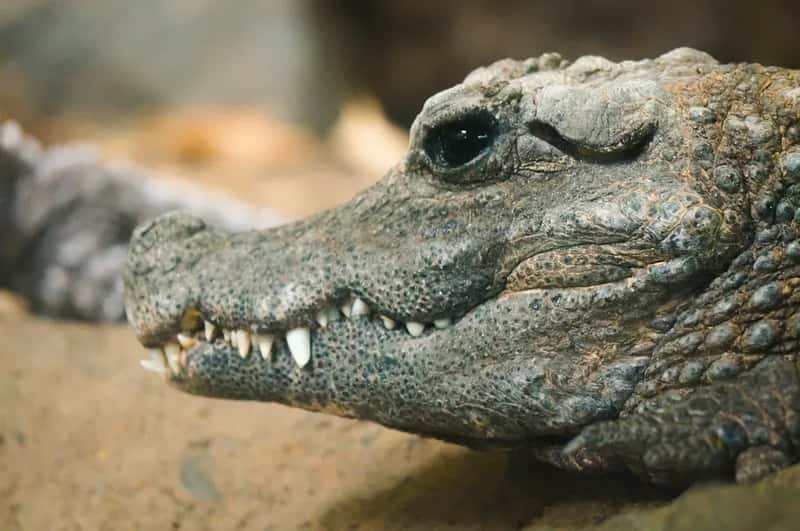
Researchers conducted surveys and habitat assessments in Senegal and Gambia supported by the Minnesota Zoo’s conservation grant program – and despite genuine fears that both the slender-snouted and dwarf crocodiles had already gone locally extinct, preliminary results found that both species can still be found in the Senegambia region. Populations are critically small, but they’re there. That’s a rare piece of cautiously good news in an otherwise grim picture.
The fact that a firm population count still doesn’t exist in 2025 says everything about how little attention this animal has received. First described in 1824, the slender-snouted crocodile lives in remote areas, has minimal contact with people, and blends almost invisibly into heavily vegetated water. It has been hiding in plain sight for two centuries. Science is only now catching up – and the window for that to matter may be closing faster than anyone wants to admit.
Why Losing This Crocodile Would Cost More Than Most People Realize
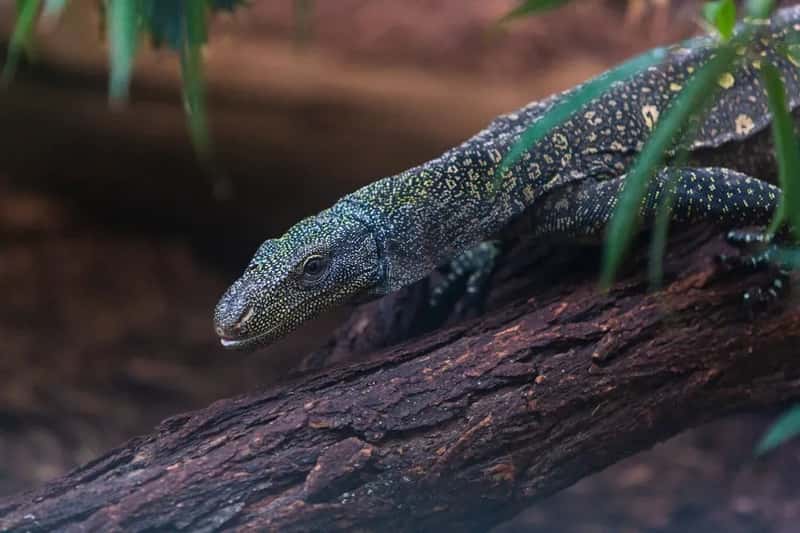
Crocodiles lived alongside dinosaurs and survived beyond them – a 200-million-year run that makes their current crisis feel almost impossible to comprehend. But their value isn’t just historical. Crocodiles at the top of their local food webs regulate fish populations, recycle nutrients through carcasses, and physically reshape riverbanks through burrowing. Remove them, and the entire ecosystem shifts in ways that ripple outward – affecting fisheries, water quality, and the human communities that depend on both.
And yet international conservation dollars and media attention overwhelmingly flow toward elephants, big cats, and great apes. The slender-snouted crocodile, with its eerie tree-climbing habits and its ghostlike presence in remote forest rivers, barely registers on the global radar. Fewer than 500 adults. Critically Endangered. The most at-risk crocodile on the African continent. The crocodile that climbed into the trees to stay alive is now running out of trees – and time – while the rest of the world looks the other way.
Why It Stands Out
- Slender-snouted crocodiles diverged from all other crocodilians more than 20 million years ago – a lineage older than most living mammal families
- Listed as one of six priority crocodilian species for conservation worldwide by the IUCN
- Crocodilians are considered flagship species that mobilize wetland conservation for entire ecosystems
- Their closest living relatives, surprisingly, are birds – both groups diverged from a common ancestor more than 230 million years ago
- Losing this species would remove a keystone predator from some of West Africa’s last intact forest river systems