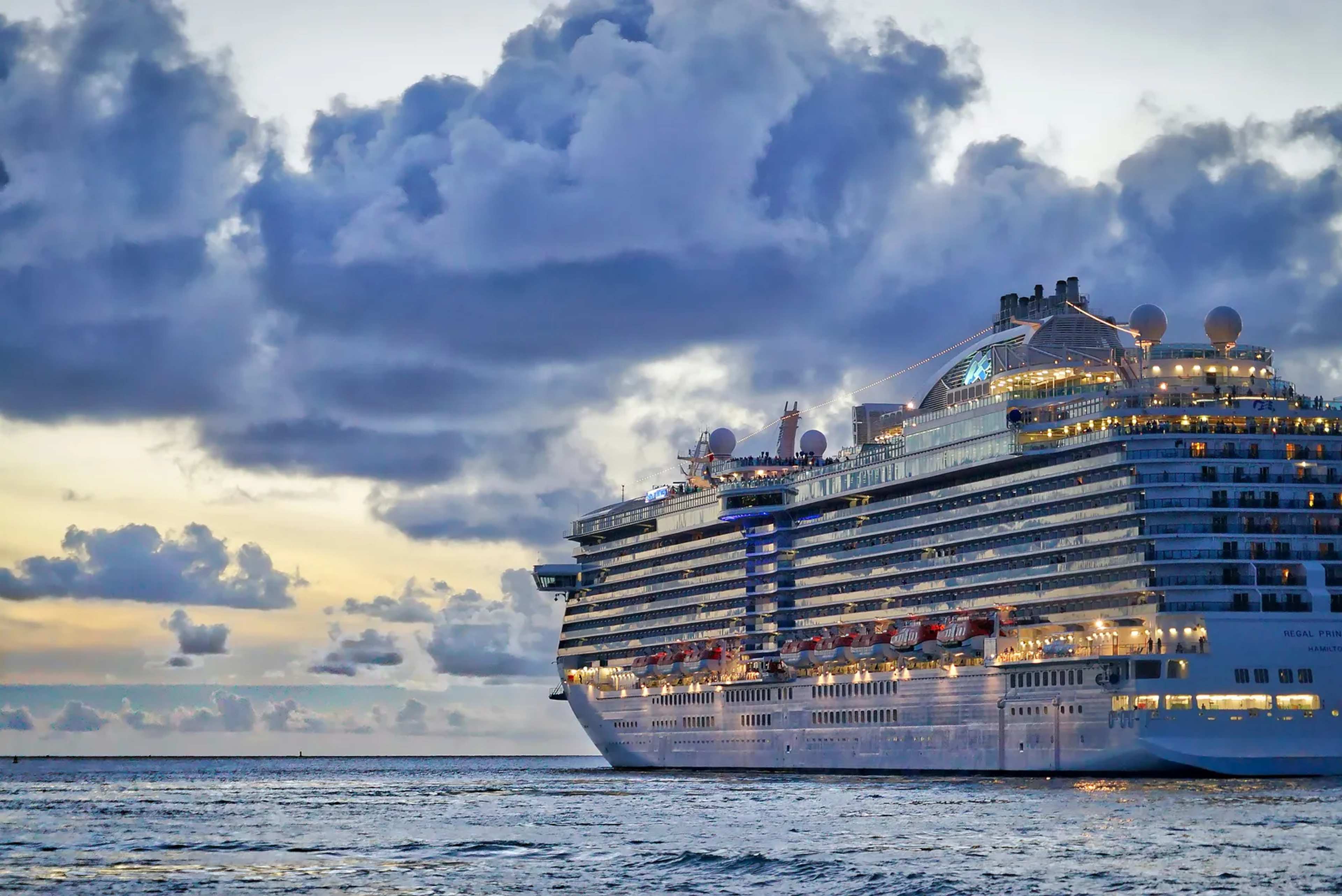
There is something almost irresistible about the image of a massive cruise ship gliding into a tropical port. The buffet, the pool deck, the promise of seeing five countries in seven days. Cruise lines have spent decades perfecting the art of making you feel like you are getting an unbeatable deal. But are you really?
Honestly, the more you dig into the real numbers, the more the cruise ship dream starts to look a little different. Hidden fees pile up. Your carbon guilt grows. Your itinerary is someone else’s idea, not yours. A well-planned land vacation, what some travelers now call a “land cruise” because of how richly you can move through multiple destinations, may have been the smarter financial play all along. Let’s dive in.
The Cruise Price Tag Is Never What It Seems
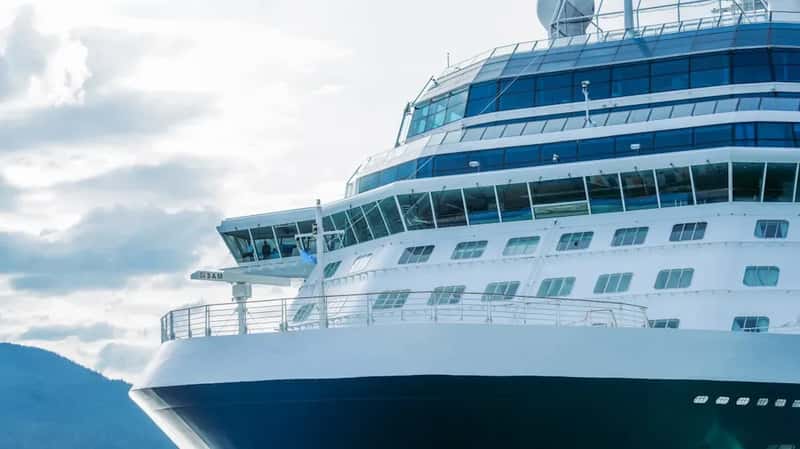
Here is the thing: that advertised fare on the cruise website is not the full story. Beyond a flight to get to your cruise ship, things like port fees, taxes, gratuities, excursions, beverages, and even some onboard activities can add up quickly. Those costs are real, and they accumulate fast once you’re on board.
Port fees and taxes alone often range from ten to twenty percent of your base cruise fare. Stack on top of that the daily gratuities. All major cruise lines charge a daily gratuity fee to your stateroom account, and most have set this daily charge to between thirteen and twenty US dollars per person per day, depending on your cabin class.
For the most part, cruises are not all-inclusive. On many ships, there are a lot of little things, and some big things, for which you will pay extra. This is the part where the dream quietly starts costing you several hundred dollars more than you planned.
Drinks, Wi-Fi, and Room Service: The Nickel-and-Diming Is Real
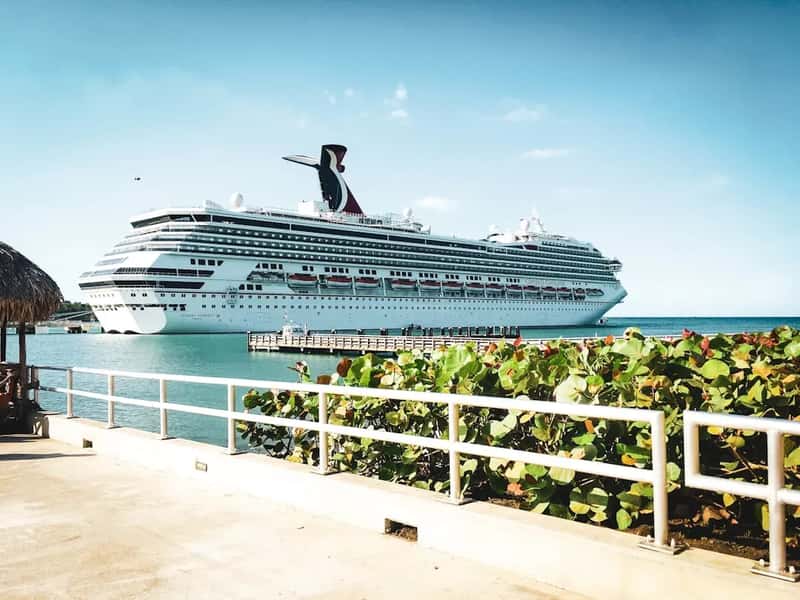
Let’s be real. One of the most common cruise myths is that you pay upfront and then everything else is just fun. Alcoholic beverages, specialty coffees, and soft drinks are often not included in the base fare and can add up quickly. Want to scroll social media from the pool deck? That is going to cost you too.
At many big brands such as Royal Caribbean, Carnival, and Princess Cruises, you will sometimes pay exorbitant amounts for internet access. The fastest service on Carnival vessels, for instance, was recently priced at around $23.80 per person per day. That is a stunning number for what most of us get free in any hotel lobby on land.
Royal Caribbean now levies a service charge of $7.95 per order for room service, even if all you order is a single side of hash browns. It also adds an 18% gratuity fee on top of the service charge. On a land vacation, you control every single one of these choices. Nobody charges you a gratuity on top of a service fee for breakfast.
Specialty Dining Feels Included. It Is Not.
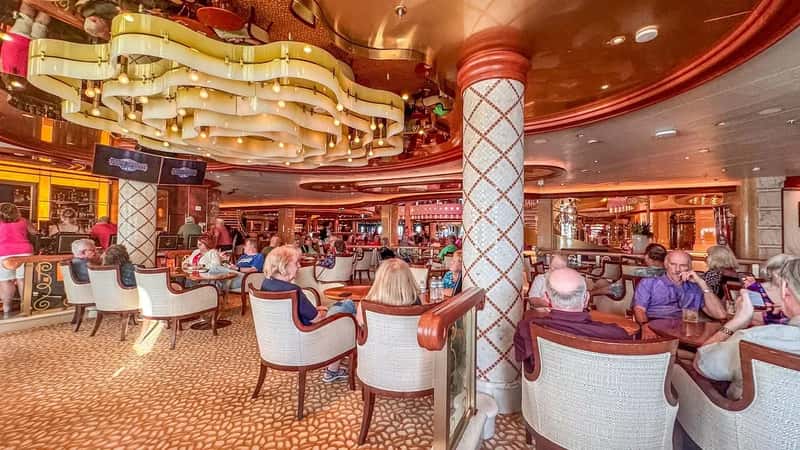
Cruise marketing loves to emphasize “dining included.” In truth, “all-inclusive” typically applies only to high-priced luxury cruises. For the mainstream lines that most travelers actually book, the fine print tells a very different story.
Each cruise ship has select dining venues that are complimentary and others that cost extra. These can include signature steakhouses, sushi and hibachi restaurants, and Italian eateries. You will smell them, you will walk past them every evening, and eventually the temptation will win.
Most specialty restaurants charge in the range of $15 to $60 per person, though a chef’s table experience or wine-paired meal could be upward of $100 per person. On land, you are free to find brilliant local restaurants at any price point you choose, often cheaper and more authentic than anything you will find floating in the middle of the ocean.
The “All-Inclusive” Label Has a Loose Definition
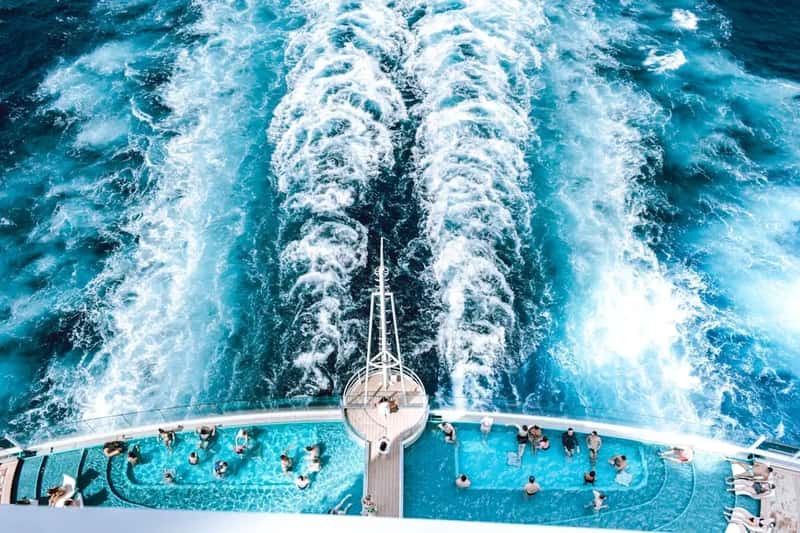
I know it sounds crazy, but the word “all-inclusive” on a cruise brochure means something quite different from what most people assume. While many onboard activities are free, other special activities incur extra fees, among them fitness classes like Pilates, yoga, and spinning, wine-tasting events, after-hours babysitting for young children, behind-the-scenes tours, and bingo.
New attractions like laser tag, escape rooms, and IMAX movies often come with an extra fee that can vary by line and ship. Think about that for a moment. You are on a ship you have already paid thousands for, and they are charging you extra to watch a movie. A land hotel or Airbnb will never do that to you.
From cooking classes to escape rooms, cruise ships offer tons of extra activities to keep you entertained. While many of these are free, the more unique or niche activities often come with a fee. It is easy to get caught up in the excitement and book several activities without realizing how much you are spending. A land vacation gives you one simple advantage: you know exactly what every activity costs before you set foot in the door.
Land Travel Gives You Total Budget Control

On a land vacation, you hold the steering wheel. Every dollar is a decision you make consciously. When you choose to explore a destination on land, you have the flexibility to plan your itinerary according to your preferences. You can select specific locations, attractions, and activities that you wish to visit. This level of control allows for a more personalized experience, ensuring you can immerse yourself in local culture at your own pace.
The flexibility to choose budget-friendly options can save significant money. Smart options like Airbnb for accommodation or planning your trip during off-peak periods for lower rates can make a dramatic difference. This kind of granular control is simply not possible once you are aboard a ship with a fixed schedule, fixed menus, and fixed pricing.
Among travelers reducing their summer travel budgets, roughly a third plan to cut back on their in-destination spending activity, such as food or paid guided excursions. A land vacation is the format that makes this flexibility possible. You can splurge on a single spectacular experience and save everywhere else. On a cruise, the ship decides what you will spend and when.
The Cruise Price Gap Is Actually Closing, and Not in Your Favor
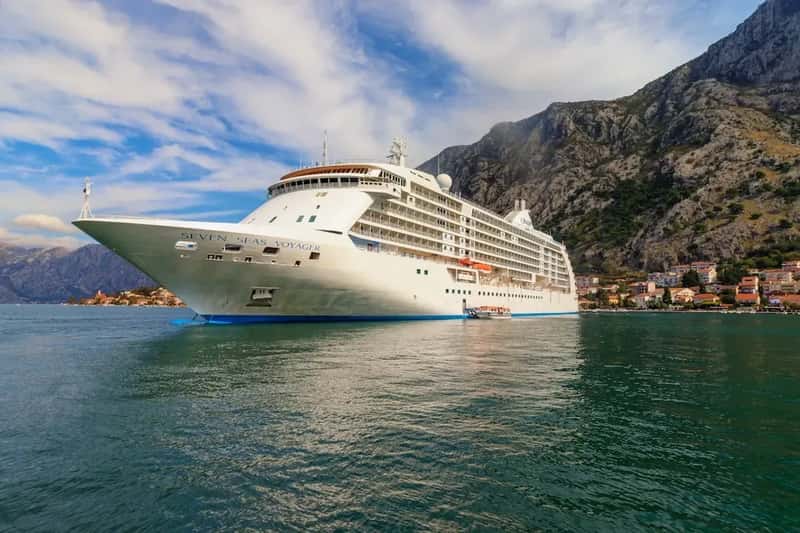
For years, cruise lines confidently told travelers that cruising was dramatically cheaper than a resort stay. That gap is shrinking fast. Royal Caribbean Group CEO Jason Liberty noted in a call with Wall Street analysts that the pricing gap between cruises and land-based vacations was around 40 to 45 percent, and that the company’s yields in 2023 rose 13.5%, “so we obviously made a dent into that.”
Liberty said the company expected to close the gap in pricing with land-based resorts even more. In plain language: cruise lines are actively working to raise their prices closer to land resort levels. They see it as a growth strategy, not a consumer benefit. The era of the unbeatable cruise deal is not what it was.
As The Points Guy summarized in early 2024, the era of the incredible cruise deal is over, at least for now. Meanwhile, land-based options from Airbnb apartments to boutique hotels continue to offer enormous range. You can go budget, you can go luxury, and you can shift your spending in real time based on what you actually experience.
Your Port Time Is Shorter Than You Think
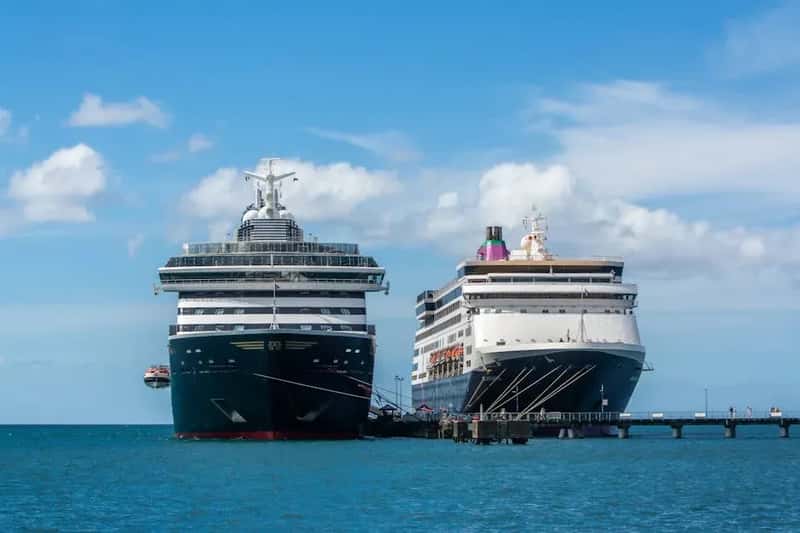
One of the most seductive cruise promises is the multi-destination itinerary. Five countries in seven days sounds incredible. The reality on the ground is more humbling. Ships spend a large portion of each day at sea, and time in port is often limited to just a few hours. You arrive, you look around, you sprint back to the gangway before the ship leaves without you.
Cruising provides the opportunity to visit multiple destinations within a single trip. You can explore different cities, islands, or countries without arranging separate accommodations or transportation. However, it only allows you to sample a range of destinations in a short period. Sampling is not experiencing. There is a big difference between ticking a port off a list and actually understanding a place.
A land-based multi-city trip, think trains across Europe or a road trip through national parks, lets you linger where you fall in love and move on when you are ready. Nobody blows a horn and forces you back to a floating hotel. That freedom alone is worth a great deal, and often costs less once you strip away the hidden cruise fees.
The Environmental Cost of Cruising Is Enormous
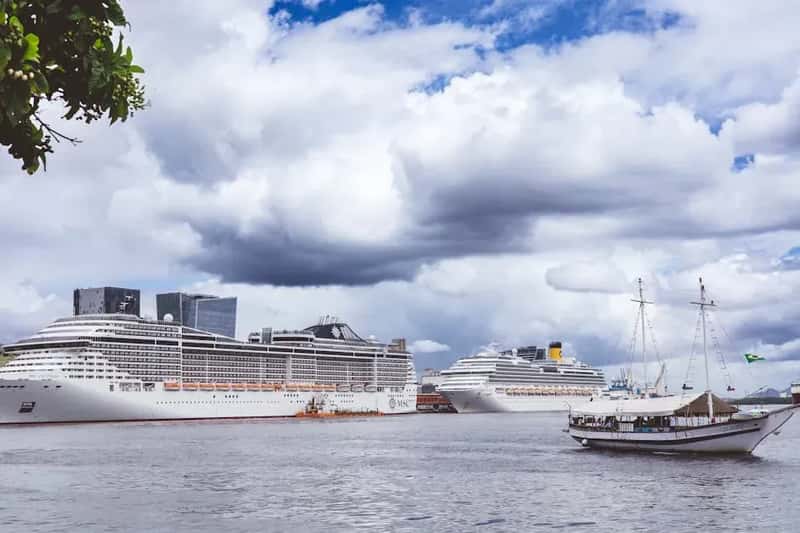
Here is a statistic that genuinely stops people in their tracks. The carbon footprint of an average land-based vacationer is around 51.88 kilograms, less than one-eighth of the average cruise passenger. That is a massive difference, and it matters more than ever in 2026 as travelers increasingly consider the full cost of their choices.
A person who takes a five-day cruise on even the most efficient cruise ship will be responsible for generating about 500 kilograms of CO2. This is about twice the total greenhouse gas emissions of an aeroplane flight. The cruise industry often markets itself with vague sustainability pledges, but the data tells a very different story.
A Transport and Environment report revealed that Carnival Corporation, the largest cruise operator globally, emitted more carbon pollution in 2023 than Glasgow, Scotland’s entire city. Carnival’s emissions reached 2.5 million tonnes of carbon dioxide, surpassing Glasgow’s 2021 levels. A land vacation, especially one using trains, buses, or an electric vehicle, carries a dramatically lighter footprint and keeps your money in local communities rather than in the fuel tanks of floating mega-resorts.
Land Vacations Support Local Economies More Directly

When you stay in a local guesthouse, eat at a family-run restaurant, and hire a local guide, your money circulates inside that community. Land-based vacations can often involve activities that are more directly engaged with the local environment and culture than is possible on a large boat. That connection is real, and it has real economic consequences for the people who live there.
On a cruise, the ship itself captures the vast majority of your spending. The specialty restaurant revenue, the bar revenue, the spa revenue, the excursion revenue, and often even the shore excursion fees all flow back to the cruise corporation. Port towns see relatively little of that money. It is a bit like visiting a country but never leaving the airport mall.
Land is often the more sustainable choice when it comes to vacationing, as opposed to cruise ship vacations. Sustainability is not just about carbon. It is about where your money goes, who benefits from your travel, and what kind of experience you build. A land vacation scores significantly higher on all three counts.
The Real Numbers: What a Land Vacation Actually Costs

It’s hard to say for sure which is cheaper in every scenario, because travel costs vary wildly. Still, the data gives us a clear picture. A seven-night Caribbean cruise is often priced from $800 to $1,200 per person. This cost typically includes your cabin, meals, onboard entertainment, and basic amenities. However, there are additional expenses to consider, such as gratuities, excursions, specialty dining, and beverages beyond the basic offerings.
For a land-based trip without an all-inclusive package, a one-week stay typically costs between $1,200 and $1,800 per person, with accommodations ranging from $200 to $300 per night. This type of trip offers the most flexibility, allowing you to explore local dining and attractions. Crucially, that is your ceiling before you apply any budget strategy at all. Use Airbnb, travel shoulder season, cook some meals yourself, and the land vacation often ends up costing less, with far more authentic experiences packed in.
The vast majority of 2026 summer travelers, nearly nine in ten, plan to take action to save money on their vacation. A majority of Americans also say it is worth paying extra for refundable flights and travel insurance for the flexibility they provide. That flexibility is the entire argument. A land vacation gives it to you naturally. A cruise takes it away the moment you board.
Conclusion: The “Land Cruise” Wins on Value, Freedom, and Honesty

The cruise ship industry has built one of the most effective marketing machines in the history of travel. The dream is gorgeous, and honestly, a cruise can be a great experience for the right person on the right budget. Nobody is saying cruises are worthless. What the evidence clearly shows, however, is that the idea of a cruise as the automatic budget-smart choice is a myth worth questioning seriously in 2026.
A well-designed land vacation gives you real budget control, genuine cultural immersion, a dramatically smaller carbon footprint, and the kind of flexibility that lets you actually live inside a destination rather than just photograph it from a gangway. The hidden fees on a cruise are not hidden anymore. They are documented, they are growing, and they are significant.
The next time a cruise deal catches your eye, take a moment to actually add up all the extras. Then compare that total to a thoughtfully planned land trip to the same region. You might be surprised by what you find. What would you have guessed before seeing the real numbers?