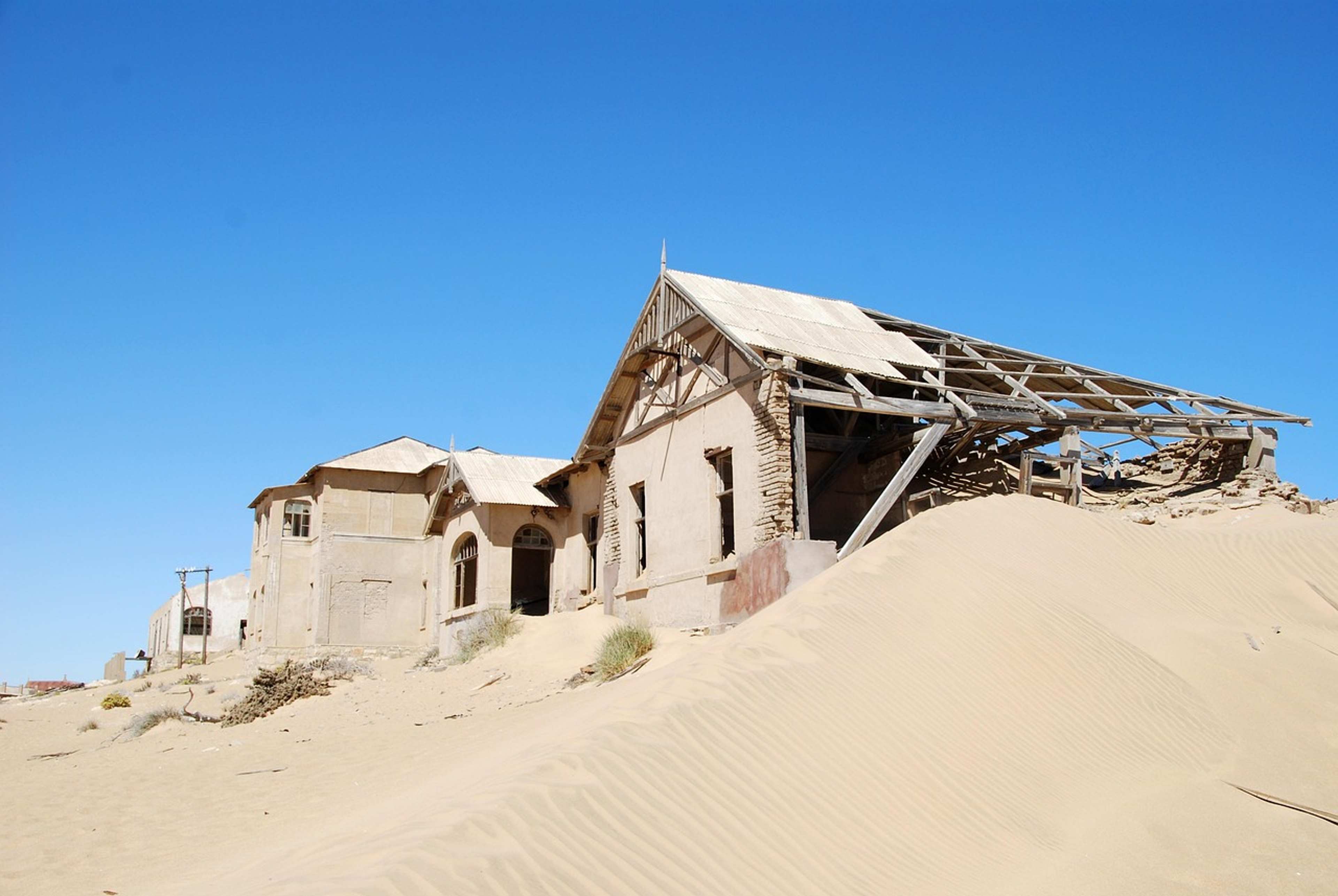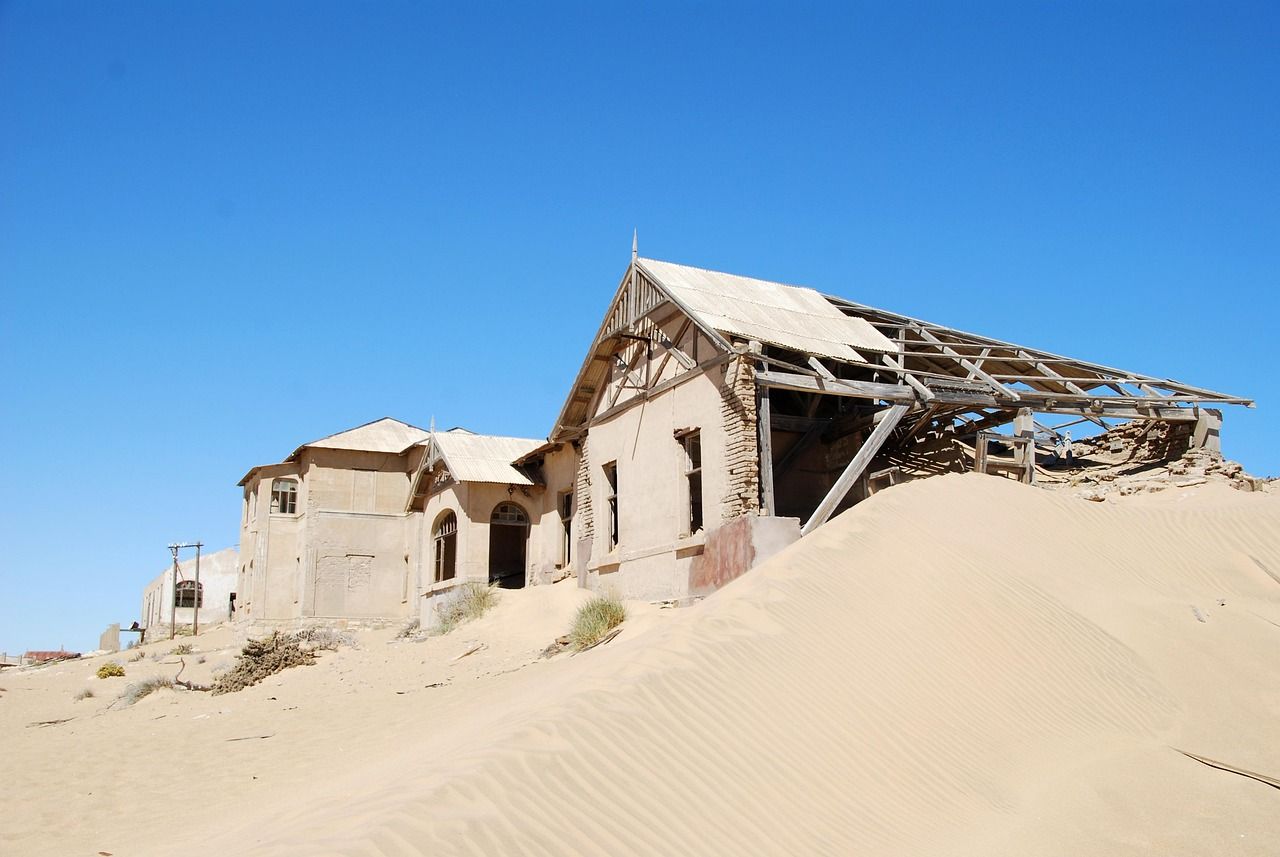
Photos of this Namibian ghost town tend to look like a shipwreck on land. Rooms are heaped with pale drifts, doorways are half buried, and the whole place seems to have gone under a slow tide.
The picture is close to the truth, though the tide isn’t water. Here is what actually happened to the houses, and how you can see them today.
Sand, Not Sea, Took the Houses
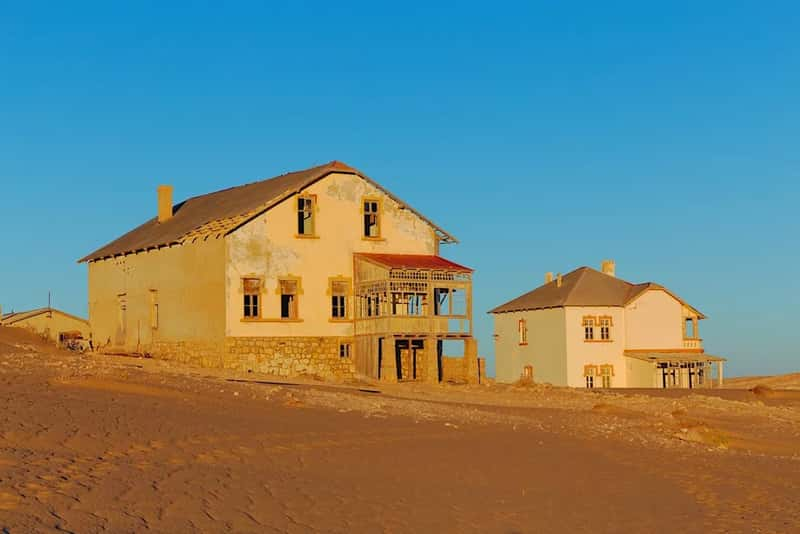
The town is Kolmanskop, and the force that filled its buildings is the desert, not the ocean. After it was abandoned in 1956, Kolmanskop was gradually engulfed by the Namib Desert sands.[1] The Atlantic is close, but it never flooded the streets.
Guides today take visitors through houses that, as one guide describes it, are filled only with sand[2]. The “swallowed” feeling comes from wind, dunes and decades without anyone to sweep them back. That distinction matters, because the real cause is a more interesting story than a flood.
A Town on the Edge of the Namib
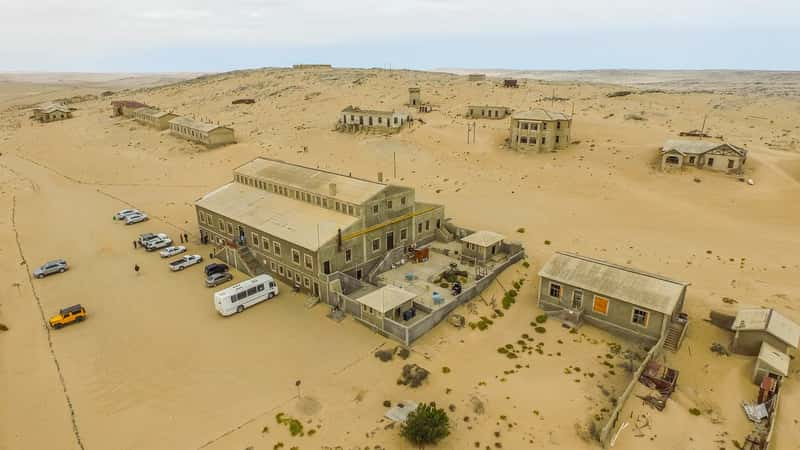
Kolmanskop sits in the Namib in southern Namibia, 10 kilometres inland from the port town of Lüderitz[3]. It lies roughly 700 kilometres from the capital, Windhoek, inside the historically restricted Sperrgebiet region[4].
The name has a small origin story of its own. It comes from a transport driver named Johnny Coleman, who abandoned his ox wagon on a small incline opposite the settlement during a sand storm[3]. The Afrikaans name means Coleman’s peak.
The Stone Found Beside a Railway

The story begins in 1908. A railway worker named Zacharias Lewala found a diamond while working in this area and showed it to his supervisor, the German railway inspector August Stauch[3]. Accounts differ slightly on the exact date, with some giving 10 April and others 14 April.
Stauch quickly acted on the find. He applied for a prospector’s license, and verification confirmed that the first diamond in the region had been found.[2] Word spread, and prospectors followed.
A Restricted Zone and Its Human Cost
Control came fast. In September 1908, the colonial rulers declared a forbidden zone that included Kolmanskop.[5] A central diamond market followed in 1909, accessible only to one German company[5].
The riches were not shared evenly. National Geographic notes that people displaced from their land by the zone were often employed as laborers in diamond mines[6], living in cramped compounds for months at a time. Lewala himself was not paid or rewarded for his find[6].
Luxury in a Hostile Place
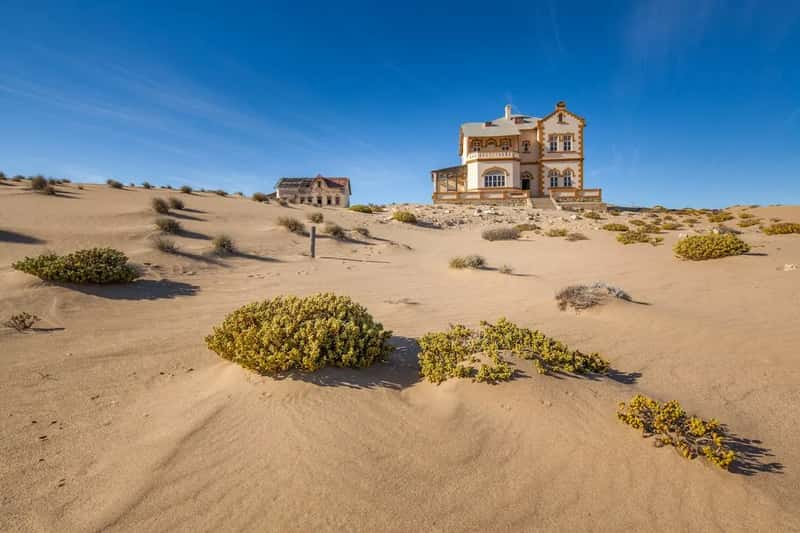
Within a few years, a town had risen from bare sand. By 1912, it was producing a million carats a year, roughly one eighth of the world’s diamond output.[6] Water was the hard part, and it had to be shipped from Cape Town to Lüderitz, taken by rail to Kolmanskop, then carried on to the diamond fields by mule[5].
Money bought comforts the desert didn’t offer. The German influenced town built ballrooms, casinos, theaters, ice factories, and hospitals, as well as the first X ray station in the southern hemisphere[2]. Some accounts also credit it with the first tram in Africa, linking it to Lüderitz.
Why the Residents Left
Kolmanskop didn’t fail overnight. Mining had thinned the local deposits by the 1930s, and in 1928 the richest diamond bearing deposits ever known were discovered on beach terraces 270 kilometres south of Kolmanskop[3].
People followed the stones. The townspeople left in droves, abandoning homes and possessions.[6] Mining ceased in 1950, and the town was abandoned by 1956[5].
How the Dunes Moved In
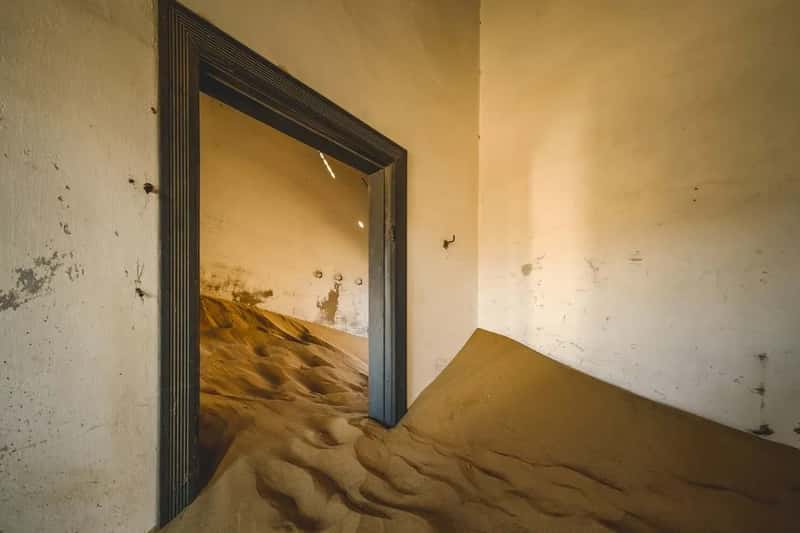
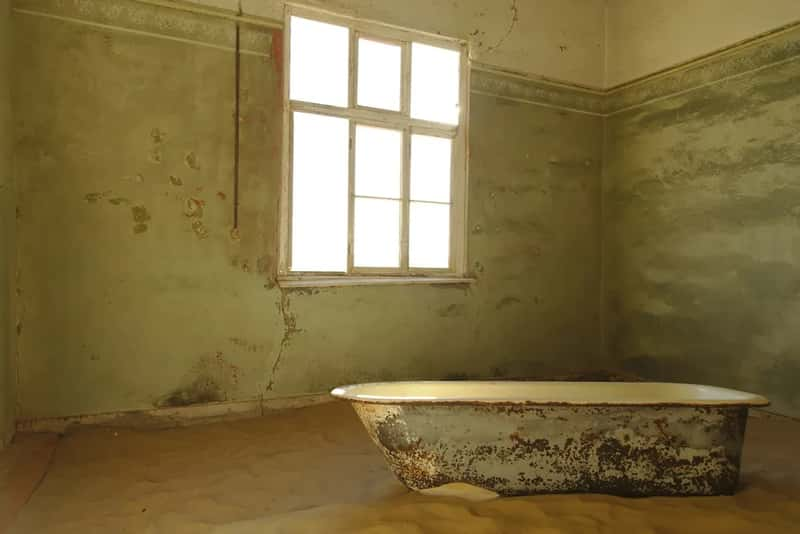
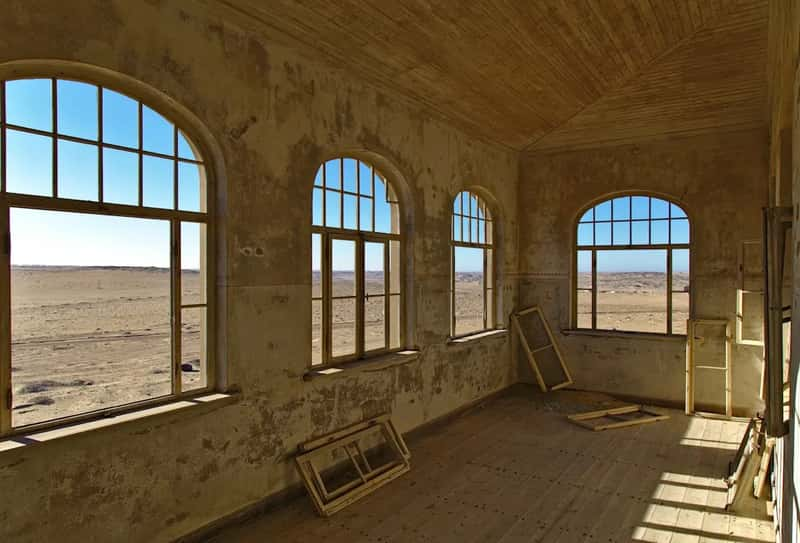
Once the people left, nobody held the sand back. National Geographic describes dunes that once rolled over Lewala’s railway tracks now bursting through the doors and porches, filling the rooms with smooth banks of sand[6].
The effect varies from building to building. Some rooms are only dusted, while others are packed to the window frames. Visitors often describe the hospital, casino and ballroom as the most atmospheric stops, though some buildings are better preserved than others[7].
A Ghost Town With a Second Life
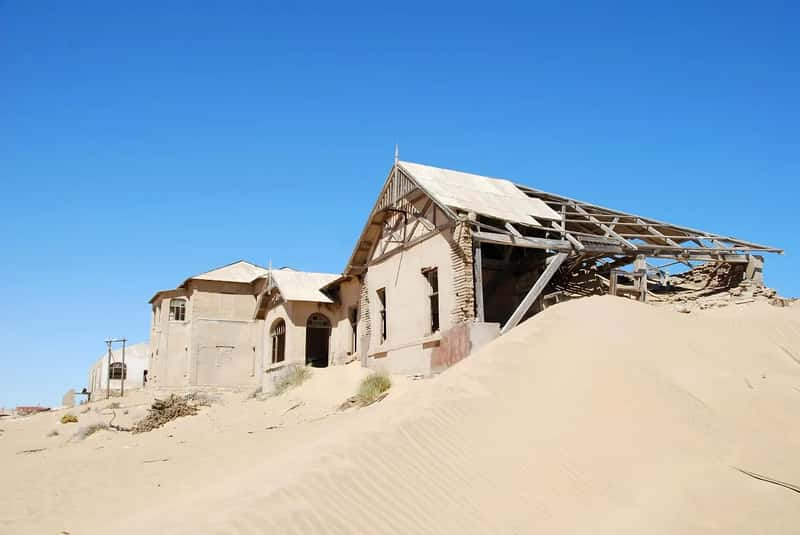
The eerie look has made Kolmanskop a favourite for cameras. The King Is Alive was filmed in Kolmanskop, with the town used as the film’s main setting.[3] Fashion shoots have used it too, including one with Agyness Deyn for Vogue UK in 2011.
Television has also visited. Kolmanskop was featured on the series Mysteries of the Abandoned in an episode that first aired on 18 October 2020.[3] Photographers value the place partly because, as one reviewer notes, the light changes every hour and gives each room a new look.
Visiting Kolmanskop in 2026
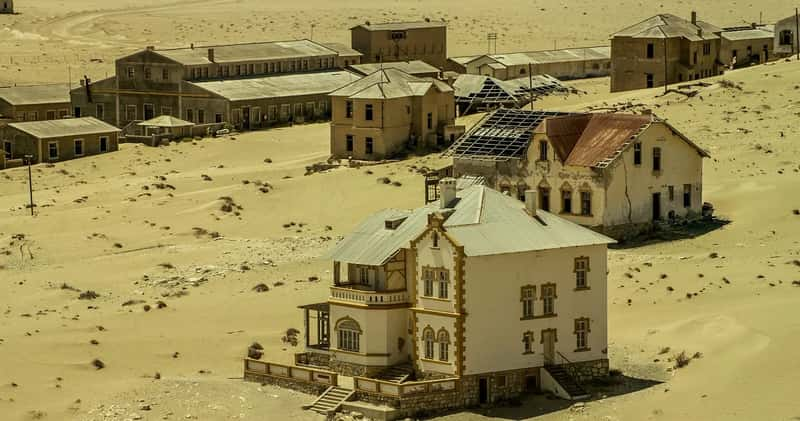
The site is open to the public as a managed attraction. One 2026 guide lists a standard ticket at N$230 for adults and N$90 for children aged 6 to 14 for 2026 and 2027[7]. A separate permit exists for amateur photographers, and some traveller reviews mention higher fees, so check the price before you go.
Opening hours can change by day. Atlas Obscura has listed visits between 8 a.m. and 1 p.m., with the schedule varying by day of the week[2]. Visitors report that early arrival means cooler temperatures and fewer people, and one 2026 traveller says to expect to spend way longer there than you think[8], with about four hours typical.