The gate opens at 5:47 AM.
Nobody knows your name here.
Nobody knows what you did last Tuesday, or what you said at dinner, or which version of yourself you’ve been performing for the last six months.
There’s a word for the gap between who you actually are and who you’ve agreed to be for everyone else. Psychologists might call it identity fragmentation. The rest of us just call it Tuesday. It’s the version of you that nods in meetings. The version that orders the same thing because it’s easier. The version that laughs at the right moments and goes quiet at the wrong ones.
But somewhere at 30,000 feet, you meet the other version of yourself who has always existed beneath the layers of responsibility, self-imposed pressure, and the quiet standards carried for years. This version wasn’t hidden by other people’s expectations. It was hidden by your own. Solo travel gave it space to breathe.
1. The Temporary Identity
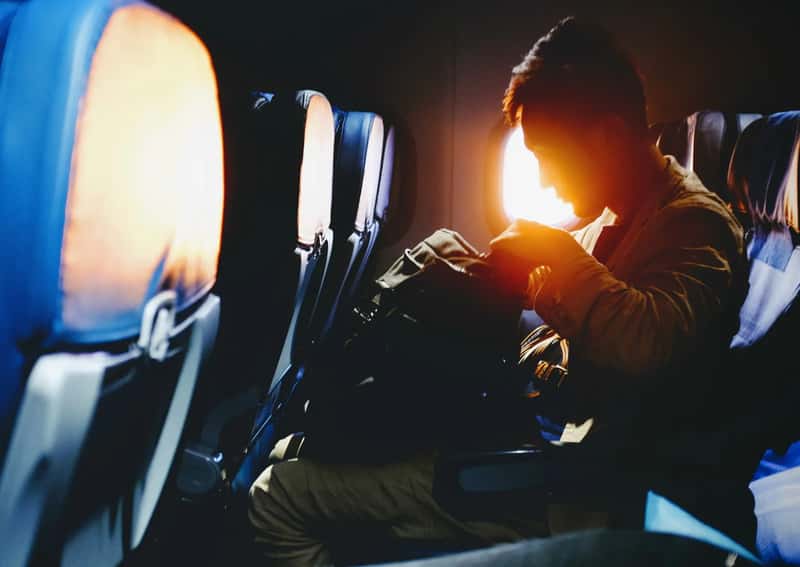
At altitude, you have no history.
No one on that plane knows your job title. No one knows your last relationship ended badly, or that you still flinch when someone mentions a specific city. You are, for approximately the duration of a flight, a clean slate with a window seat.
During solo travel, we are free from all kinds of expectations. The self is relational – formed not just by who we decide we are, but by how others formulate that conception. Our sense of self emerges from the alignment between our self-concept and others’ conception of us.
Take away the others. Watch what’s left.
What’s left is quieter than you expected. Less anxious. More curious. It orders coffee without apologizing for the order. It stares out the window for forty minutes without checking its phone.
The temporary identity isn’t fake. It’s the opposite. It’s what you look like when no one is running their own expectations through your nervous system. It’s the version of you that existed before you learned to edit yourself in real time. This is not escape. This is archaeology. You are digging through the sediment of everyone else’s opinion of you, looking for the original shape underneath.
2. The Exit Strategy
Let’s be honest about why you booked the ticket.
It wasn’t the destination. It was the departure.
The primary motivations for solo travel include transformative experiences, self-discovery, self-actualization, self-confidence, freedom, and escape. Researchers list these as separate motivations. They are not separate. They are the same impulse wearing different clothes.
You wanted out.
Not out of your life, precisely. Out of the self that your life had constructed around you. The self built from obligation and proximity and the accumulated weight of being known. Because being known – truly, routinely, historically known – is a kind of cage. A comfortable one. A cage with good lighting and people who love you inside it. But a cage nonetheless.
The exit strategy isn’t cowardice. It’s maintenance. Every identity needs a room of its own sometimes. Every person needs to exist, even briefly, outside the story other people are telling about them. The plane is that room. The boarding pass is the key. You already knew this. That’s why you booked a window seat.
3. The Permission Slip
You would never do this at home.
Sit at a restaurant alone for two hours. Take a long walk with no destination. Spend an entire afternoon in a bookshop without buying anything. Change your mind three times about where to go next and feel no guilt about any of it.
When travelling solo, travellers remove themselves from the continual negotiation that is often difficult with group dynamics. Travellers have control of the decisions and actions – what to eat, what to do, and when to have a break. Having this control removes perceived obligation and makes preferences resurface that might have become obscured by social obligation.
Solo travel is, among other things, a permission slip.
It gives you documented, socially acceptable reason to be unavailable. To be unaccountable. To be unreachable in the truest sense – not just in terms of signal bars, but in terms of social debt. Nobody can call in a favor when you’re somewhere between terminals. Nobody can need anything from you at 30,000 feet. And in that brief, pressurized, recycled-air silence, you discover that you were waiting for someone to give you permission to just be. You are the someone. You always were.
4. The Quiet Negotiation
At home, your identity is a constant negotiation.
You are someone’s partner, someone’s colleague, someone’s child, someone’s old friend from that thing years ago. Each relationship has its own contract. Its own vocabulary. Its own version of you that it requires in order to function.
One of the most overlooked forms of loneliness occurs when individuals feel they must present a socially acceptable version of themselves. In such cases, interactions happen regularly, but they lack authenticity. Over time, this creates a gap between a person’s true identity and their social identity, leading to a sense of emotional disconnection even in active social environments.
This is the exhaustion that no amount of sleep fixes.
It is not the tiredness of doing too much. It is the tiredness of being too many people simultaneously. The negotiation never stops. It runs beneath every conversation, every dinner, every casual text message. It asks: which version of me does this person need right now? And you deliver it. Reliably. Professionally. Until you’re on a plane somewhere over the Atlantic and nobody needs anything and you realize you can’t remember the last time that was true.
5. The Reverse Culture Shock That Lives at Home
I remember the first time I understood this, not as a concept but as a physical sensation.
I was in a layover terminal – somewhere nondescript, all grey carpet and overpriced sandwiches – and I was sitting alone watching the departures board flip. Nobody knew me. Nobody needed me to be anything. And I felt something that took me a while to name. It wasn’t freedom exactly. It was more like the feeling of a muscle unclenching that I hadn’t realized was clenched.
I thought about home. About my apartment. About the person I was in my apartment – the one who answered emails at 11 PM and always had a reason why things couldn’t be different yet. And I thought: I don’t particularly want to spend time with that version of me.
While solo travel can often result in a profound change within the individual traveller, the real challenge may start when you come home from your travels. The certainty, independence, and outlook acquired in life may just not fit in with your daily routines. The feeling of discontent when the daily routines are resumed may deepen feelings of disconnection.
The reverse culture shock isn’t about coming home to a different world. It’s about coming home to a smaller self.
6. The Stranger in the Mirror
Solo travel allows you to try out new behaviors uncharacteristic of yourself without being judged by those you meet. Everyone you meet is a stranger, and because of this, social mistakes in one-time meetings carry fewer consequences. No one encountered along the way knows about your anxieties or self-perceived social limitations. You can be anyone you please, which gives permission to try on new ways of being.
This is the quietly radical part.
The stranger you meet in foreign cities – the one who laughs more easily, who asks questions without embarrassment, who sits with uncertainty instead of fighting it – that stranger is not a character you invented. That stranger is what you look like when the accumulated weight of other people’s expectations is temporarily lifted.
The mirror in a foreign hotel room shows you the same face. But the posture is different. The jaw is unclenched. The eyes look less like they’re trying to figure out what’s expected of them. You keep looking, not because you’re vain, but because you’re trying to memorize this version. Trying to find some way to carry it home without it dissolving the second you land.
7. The Solitude That Isn’t Loneliness
People confuse these two things constantly. Solitude and loneliness are not the same animal.
Research demonstrates that voluntary solitude, when balanced with social connection, contributes positively to well-being. Solo travelers typically experience chosen solitude interspersed with social interactions, creating a self-directed balance that differs fundamentally from chronic loneliness. Studies indicate that solo travelers report high life satisfaction and low loneliness despite extended alone time.
Loneliness is the pain of unwanted absence.
Solitude is the luxury of chosen presence – with yourself. On a solo trip, when you sit at a cafe table for one and watch a city move through its afternoon, you are not lonely. You are fully occupied. You are watching, absorbing, thinking thoughts that belong entirely to you, in a sequence nobody else has influenced. Your ongoing internal dialogue takes your observations and sensations and assembles them into stories. Alone, there’s no one else to affect or taint your creation – whether a visual image, a series of sounds, or an emotion.
This is not a consolation prize. This is the whole point.
8. The Autonomy Muscle
You forget how strong you are when nobody is helping you carry things.
One of the most immediate benefits of travelling alone is the development of independence and self-reliance. When you’re responsible for planning your itinerary, navigating new environments, and solving problems on your own, you quickly learn to trust yourself and your instincts. These experiences force you to become more adaptable and resourceful, strengthening your decision-making skills and boosting your confidence.
The autonomy muscle atrophies in comfort.
It gets soft when there’s always someone to defer to, always a group consensus to hide inside, always a shared itinerary so that no single person has to own the decision. Solo travel forces the muscle back to work. You miss a train and you solve it alone. You don’t speak the language and you find a way anyway. Small crises, resolved without an audience, without a committee, without anyone to report back to. And each resolution leaves a deposit in the account of your self-trust that no group holiday ever could. When one travels alone – into fear, isolation, and uncertainty – the traveler is able to trust their own abilities. They become more resilient, self-sufficient, and closer in harmony with personal identity.
9. The Meaning Engine
Travel does something to time.
It stretches it. A week abroad returns more memories than a month at home, because every day delivers genuine novelty – the kind that forces real attention, forces presence, forces your brain to actually record what’s happening rather than running on autopilot through familiar grooves.
Research on existential growth suggests that confronting existential realities, rather than avoiding them, promotes psychological maturity and well-being. Solo travelers frequently report existential insights: recognition of life’s temporality, appreciation for freedom and choice, acceptance of fundamental aloneness, and clarification of what provides meaning.
Alone, the meaning-making is entirely yours.
You don’t have to negotiate what this trip meant. You don’t have to reconcile your experience with someone else’s memory of the same events. The story belongs to you, start to finish. And because it belongs to you entirely, it becomes part of you in a way that shared experiences – beautiful as they are – cannot quite replicate. Solo travel’s psychological value lies not in escaping life but in engaging more fully with it – confronting challenges, embracing uncertainty, connecting across differences, and discovering one’s capabilities and values. The meaning engine runs cleanest on solitude.
10. The Version You Keep Coming Back To
Here is the heaviest truth of all.
You keep booking solo trips not because you love airports or foreign beds or the logistical chaos of navigating a new city alone. You keep booking them because the version of you that shows up when you travel alone is the version you most want to be. And going back to the other version – the domesticated, obligation-saturated, socially-negotiated one – feels less and less like coming home, and more and more like putting on a costume.
“Solo travel is not just about seeing the world; it’s about discovering who you are when no one else is shaping your choices.”
This is the final reason. Not the adventure. Not the freedom. Not the novelty or the stamps in the passport. The final reason is that you’ve met yourself – properly, without introduction, without the buffer of other people’s ideas about who you are – and you’ve found the meeting unexpectedly pleasant. You’ve found the company good. You’ve found that you are, in fact, someone you want to keep spending time with. And that discovery changes everything about how you look at the life waiting for you when you land.
There is a particular kind of grief that comes after every solo trip. It is not sadness about the trip ending. It is the slow recognition that the version of you who existed in transit – lighter, more honest, more present, more genuinely at ease in their own skin – will now have to negotiate with all the other versions again. The grief is not about the destination. It is about the self you have to partially set aside when you walk back through the door.
But here is what changes, quietly, over time: each trip deposits something that doesn’t fully dissolve. A little more willingness to take up space. A little less tolerance for performing. A slightly shorter distance between who you are in transit and who you are standing still. The gap narrows. Not all at once. Not dramatically. But with each departure, the version of you at 30,000 feet and the version of you at sea level inch toward each other, like two strangers who have finally been formally introduced.
Maybe that’s what the solo travel was always for – not to escape the version of yourself that lives at home, but to introduce that version, slowly and with great patience, to the one who exists above the clouds, and to see if, in time, they can learn to share the same ground.